You are the teacher.
You know your students and what they need today.
Use what works. Change what doesn’t. Make it yours.
Five books for K–2 that treat a feeling as something to look at rather than something to fix. The set opens on fear as a joke everyone is in on, moves to sadness that a child can describe out loud, then to anger that visibly wrecks things, then to a feeling changed by changing a thought — and closes on the one that cannot be fixed at all.
Where does a feeling go when it gets too big to hold?
This curated reading sequence is not itself a region-specific standards claim. Review the documentary status on any linked lesson plan.
The sequence
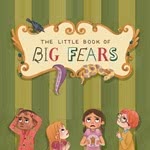
The Little Book Of Big Fears
Book ID 7011An alphabet of absurd fears — legumes, raccoons, baths, maths, needles — with the joke being that every single character is frightened of something. Three minutes, and it makes the room safe to admit things before a single real feeling is named.
Ira Crumb Feels the Feelings
Book ID 7370Ira is left out when Malcolm goes off to play tag, and his feelings start producing more feelings — sad about being sad. It gives a K–2 class the actual vocabulary for a mixed-up state that most books flatten into 'upset'.
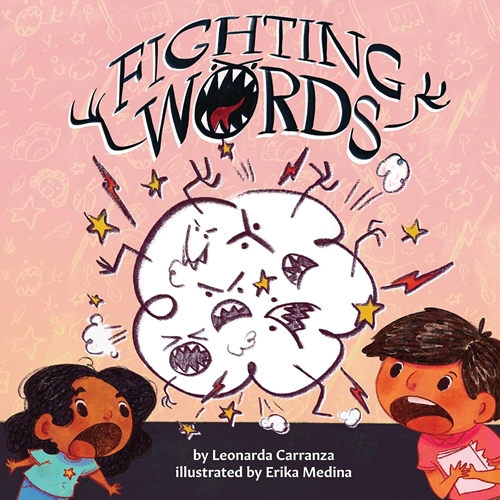
Fighting Words
Book ID 8425Ali's cousin tears his insect book, and his furious words leap off the page as letters, grow into creatures, and start wrecking the house and the street. The metaphor is literal, which is why it works — the class can see the size of the thing.
Abigail the Whale
Book ID 7074Abigail is teased at swimming for being bigger, and her teacher shows her that what she thinks changes what her body can do. The first book here that offers a method rather than a description.
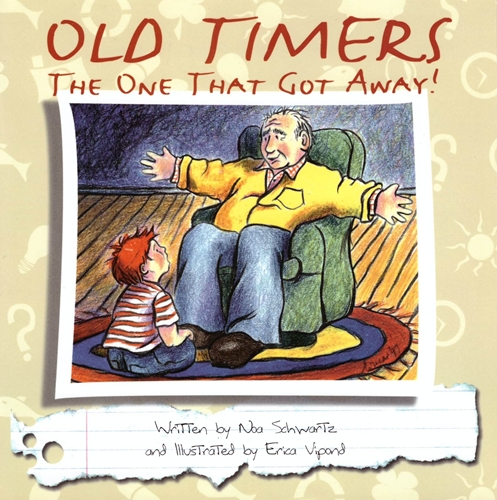
Old Timers
Book ID 4945A child visits Pop, who is forgetting things, and they go through photographs together holding onto the lake and the summers. Four minutes, a poem, and it is honest that some feelings are not problems to be solved.
Also in the collection

Book 5 is the reason for the order. The first four all resolve — the fear is funny, the sadness gets named, the anger is repaired, the thought is changed. Then Old Timers arrives and nothing gets better, and the child stays anyway. A class that met it first would read it as the sad book; met last, it is the honest one.
Nothing here is longer than nine minutes. This set is built for the ten minutes after lunch, one book at a time, over a fortnight.