You are the teacher.
You know your students and what they need today.
Use what works. Change what doesn’t. Make it yours.
Six books that walk a K–2 class from counting things they can see to estimating a number nobody can. It opens on a story where counting is the joke, does the real work in the middle — adding, taking away, and the pairs that make ten — and ends on a million jellybeans, which is where counting stops working and estimating starts.
When do you stop counting and start working it out?
This curated reading sequence is not itself a region-specific standards claim. Review the documentary status on any linked lesson plan.
The sequence
Monster Mash
Book ID 6480Monsters arrive one at a time, from one to nine, and the narrator gets steadily more alarmed until bedtime settles it. Three minutes, and the class counts along without being asked to. This title has a full lesson plan.
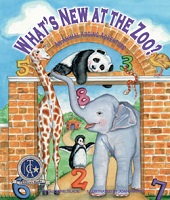
What's New at the Zoo
Book ID 463Groups of zoo animals, then babies added to the group, and the reader works out the new total each time. The step from book 1 is small and exact: the same counting, with one operation on top.
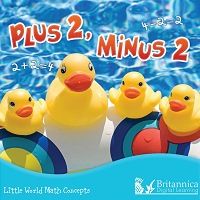
Plus 2, Minus 2
Book ID 483Shells, cupcakes, butterflies, shoes and kites, each set gaining or losing exactly two. Holding the change constant is the whole design — the class sees that plus two always does the same thing regardless of what is being counted.
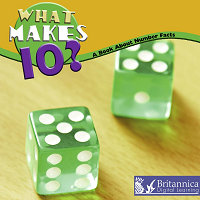
What Makes Ten
Book ID 487Why ten is special, how our number system is built on ten fingers and ten symbols, and every pair that adds to ten. The most useful single page in the set, and it needs the three books before it to land as a discovery rather than a drill.
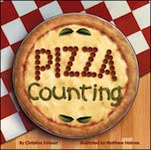
Pizza Counting
Book ID 88Counting from zero to twenty on pizza toppings, then into multiplication, slices and large-number estimation. The pizza is doing real work here — a sliced pie is the easiest picture of a group there is.
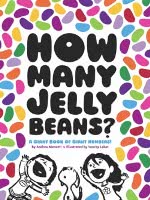
Speak for Yourself, a Million Jellybeans is Probably Too Many
Book ID 274Jellybeans used to get at what a million actually looks like, with the joke that a million is probably too many. The end of the road the set has been on: the number is real, and counting is no longer the tool for it.
Also in the collection
Book 4 is the one to slow down on. Everything before it is counting; everything after it depends on knowing the pairs that make ten. A class that owns those pairs finds Pizza Counting easy and a class that does not will struggle with it — so if the set has to be cut short, cut after book 4, not before.
Monster Mash is the only title here with a full lesson plan, and it is deliberately first: the set opens in a story and only then becomes mathematics.