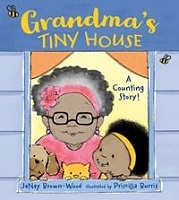
Grandma's Tiny House
Grade K
3 skill lessons · 2 math-through-reading
Math
Skill lessons
The mathematics the book carries, taught directly. Printable workbook pages and teacher keys are not available for this book yet.
- 1How Many Came Through the Door
- 2Who Comes Next Through the Door
- 3People at the Door, Food on the Table
Math + reading
Math through the reading
The same book, entered through a sentence it prints. Change one word in the reading and the numbers change with it.
- 4Six Biscuits or Six Dozen
- 5Tell Grandma Who Goes Out First
Reading
Reading and language lessons
The same book read as a text. What a word means in its sentence, how a character is shown, how the writing is put together - no mathematics.
- 6The word that waits at the end of the line
- 7How every group gets to the door
- 8Sentences that ask and sentences that tell
- 9First the trouble, then the idea
- 10Words that tell you what the food is like
Skill lessons
3 lessons on the mathematics the book carries. Printable workbook pages and teacher keys are not available for this book yet.
1. How Many Came Through the Door
The book names fifteen arrivals and hands each one a number, and every one of those numbers is a group a child can build. Students take one arrival card at a time, put out that many cubes with one number word per cube, and then answer a partner's how many with a single number rather than a fresh recitation. That single-word answer is the concept here: the last number said is not just the end of a chant, it is the size of the whole group. The final step scatters the cubes and counts them again so children meet the fact that moving them changes nothing.
Full lesson — 20 minutes
1. Count one group onto the mat (6 min)
Each pair takes one arrival card, reads the number on it with the teacher, and puts that many cubes onto the doorway mat one at a time. Say one number word for each cube as it lands, and stop the mouth when the hand stops. The last word you said is how many cubes are on the mat.
Word preview: knock, pots
Three neighbors knock on the brown wooden door with four pots of hot greens and ham-hawks galore.
2. Answer how many with one word (5 min)
A partner asks how many are on the mat. Answer with one number and nothing else, not by counting the whole line again. If you start counting from one, the partner asks a second time and waits for the single word.
3. Count the biggest group in the book (6 min)
The teacher reads the last arrival aloud. Pairs put that many cubes on the mat, touching one cube per number word all the way to the end, then lay the line of cubes along the counting strip and read off the number the last cube sits on.
Word preview: grandkids, feast
Last but not least, 15 hungry grandkids dampied to the feast.
4. Push the cubes into a heap and count again (3 min)
Sweep the fifteen cubes into a loose heap, then count them again touching each cube once in any order you like. Say whether the number came out the same, and say the number.
Short version — 9 minutes
1. Count one group onto the mat (5 min)
Take one arrival card, read its number, and put that many cubes onto the doorway mat one at a time, saying one number word per cube. The last word you said is how many.
Word preview: knock, pots
Three neighbors knock on the brown wooden door with four pots of hot greens and ham-hawks galore.
2. Count the biggest group in the book (4 min)
Put fifteen cubes on the mat for the last arrival, touching one cube per number word, then lay them along the counting strip and read the number the last cube sits on.
Word preview: grandkids, feast
Last but not least, 15 hungry grandkids dampied to the feast.
Three levels
- Support
- Work only with the arrivals numbered one to five, and keep the cubes in a straight line against the counting strip so each cube sits on its own number. Push each cube onto the mat with one finger while saying its number word, and answer how many by saying the last word again rather than by starting over.
- At Grade
- Build any arrival card from one to fifteen, answer how many with a single number without recounting, and count the scattered heap again to confirm the number holds.
- Extension
- Take two arrival cards face down, build one group, then say what the mat will hold before turning the second card over and building it. After the heap is counted, start the recount from a cube in the middle and go round any way you like, then say why the last number came out the same.
English learners
The number words one to fifteen are among the first things a child learns in any language, and a child counting in Spanish, Amharic or Vietnamese is doing exactly the mathematics this lesson collects. The single-word answer to how many does not transfer: in many classrooms a child answers a counting question by counting again, which is the very habit this lesson works on, and that habit is about the question rather than about English. Rehearse one frame before the second step: I have ___ on my mat. Invite children to count aloud in their strongest language and to give the one-word answer in English, which is what this step collects. The book's own words for the arrivals are damaged in several places in this text, so name the groups from the arrival cards rather than asking children to read the line.
Materials
- Fifteen arrival cards, one per group, each printed with its number and its group named as the book names it
- Linking cubes, twenty per pair, all one colour
- A paper doorway mat per pair with a door drawn at one end
- A counting strip printed one to fifteen
- Word cards: count, how many
Standards & curriculum
Choose your curriculum above to see the standards for this lesson.
Standards are held back while this plan is edited. Every standard shown here was matched against the supplied wording of this lesson, quoting its steps, so a changed step is no longer the thing that was checked. Undo your changes to bring the standards back — your edits stay in this browser either way.
2. Who Comes Next Through the Door
This book hands out the numbers one to fifteen in order and never repeats one, so the arrival cards are the number sequence wearing a story. Students receive four cards shuffled and restore them using the numbers alone, then meet a run with one card missing and have to name it from its two neighbours. The reasoning the lesson collects is the second half: a child who can chant to fifteen cannot always say what sits between eleven and thirteen, because chanting runs forward from one and this question does not. Naming the two numbers that fixed the answer is required every time, so the number never arrives without its reason.
Full lesson — 20 minutes
1. Hear the arrivals and hold up your card (5 min)
Each pair holds one arrival card. Listen as the book is read from the beginning, and stand your card up on the table the moment your number is said. By the end every card is standing and the table shows the order the book used.
Word preview: waits, chair
One grandma waits in her big easy chair.
2. Put four shuffled cards back in order (7 min)
The teacher hands each pair four arrival cards face down and shuffled. Lay them out, then move them into the order the book would say them, using only the numbers on the cards. Say the four numbers aloud from left to right and check that each one is the next number after the one before it.
Word preview: uncles, jugs
7 cool uncles draw up and align With 8 jugs of lemonade, ice cold and fine.
3. Fill the gap in a short run (5 min)
The teacher lays three cards in the number track with one pocket left empty between two of them. Say which number belongs in the empty pocket and say the two numbers that told you, then put that card in.
4. Say who comes next (3 min)
One pair reads their number aloud and the pair holding the next number stands up and reads theirs. Keep going along the table until the last number is read.
Short version — 9 minutes
1. Put four shuffled cards back in order (5 min)
Take four shuffled arrival cards, lay them out, and move them into the order the book would say them using only the numbers. Read the four numbers aloud from left to right.
Word preview: uncles, jugs
7 cool uncles draw up and align With 8 jugs of lemonade, ice cold and fine.
2. Fill the gap in a short run (4 min)
Look at three cards in the number track with one pocket empty between two of them. Say which number belongs there and say the two numbers that told you, then put the card in.
Three levels
- Support
- Work with three cards drawn from one to eight and lay them straight into the number track, where each pocket is already printed with its number, so ordering is matching rather than remembering. For the gap, keep the empty pocket between two cards a child can see and let them run the count from one along the track until they reach it.
- At Grade
- Order four cards drawn from anywhere in one to fifteen without the printed track, and name the missing card from its two neighbours rather than by counting up from one.
- Extension
- Order four cards that are not next to each other, such as three, seven, eleven and fourteen, and say how you knew the order without any card being the next number after another. Then take a run with the two end cards missing rather than a middle one and say why one neighbour is not enough to fix a number.
English learners
Counting to fifteen in a first language transfers here whole, and children often arrive able to do all of it. The question is what carries the language here, not the number: what comes after and what comes between are asked with words that a child may know only as everyday prepositions, and between in particular is a spatial word being used about a sequence. Rehearse two frames before the third step: The missing number is ___. I knew because ___ and ___. Let a child count along the track in their strongest language and give the missing number and its two neighbours in English, which is the whole of what this step collects.
Materials
- Fifteen arrival cards, one per group, each printed with its number and its group named as the book names it
- A fifteen-pocket number track, one pocket per number, laid along a table
- Word cards: after, between
Standards & curriculum
Choose your curriculum above to see the standards for this lesson.
Standards are held back while this plan is edited. Every standard shown here was matched against the supplied wording of this lesson, quoting its steps, so a changed step is no longer the thing that was checked. Undo your changes to bring the standards back — your edits stay in this browser either way.
3. People at the Door, Food on the Table
Every arrival in this book counts one of two things: somebody who came through the door, or something they carried in to eat. Students sort their arrival card into one of two hoops, build the group as cubes on a plate so the number is a thing they can touch, and then count the cards in each hoop, which is a second count over a set they made rather than one the book handed them. The application is saying what a number counted: a child who says nine without saying nine aunties has produced a number with nothing attached, and this lesson's final step will not accept that.
Full lesson — 20 minutes
1. Sort one arrival into a hoop (5 min)
Each pair reads their arrival card with the teacher and puts it in the hoop for the people who came or the hoop for the food they carried. Say the number on the card as you drop it in.
Word preview: set down, den
Nine chatting anties all head for the den and set down the cheesecakes that add up to ten.
2. Build both hoops with cubes (7 min)
Take the two arrival cards your pair is holding and build a plate of cubes for each one, putting one cube on the plate for each thing the card counts. Put each plate beside its own hoop and count the cubes on it aloud, touching one cube per number word.
Word preview: biscuits, pears
with 6 dozen biscuits and jam made of pears.
3. Count how many cards landed in each hoop (5 min)
Count the cards sitting in the people hoop, touching one card per number word, and say the number. Do the same for the food hoop. Say both numbers aloud.
4. Say what your hoop holds (3 min)
Tell a partner which hoop your card went in and why, naming the number on your card and what it counted. The partner says so if the number is missing from your sentence.
Short version — 9 minutes
1. Sort one arrival into a hoop (4 min)
Read your arrival card with the teacher and put it in the hoop for the people who came or the hoop for the food they carried, saying the number on the card as you drop it in.
Word preview: set down, den
Nine chatting anties all head for the den and set down the cheesecakes that add up to ten.
2. Build both hoops with cubes (5 min)
Build a plate of cubes for each of your two arrival cards, one cube per thing the card counts, and put each plate beside its own hoop. Count the cubes on each plate aloud, touching one cube per number word.
Word preview: biscuits, pears
with 6 dozen biscuits and jam made of pears.
Three levels
- Support
- Work with arrival cards numbered one to six only, and build the plate by putting one cube on for each picture on the card so the cubes and the pictures match one to one. Say the number and the thing it counted as two words together, such as four pots, rather than in a full sentence.
- At Grade
- Sort a card from anywhere in one to fifteen, build both plates, count the cards in each hoop, and say the number together with what it counted in one turn.
- Extension
- Take an arrival card without looking at what it counts, hear only the number, and say why that alone cannot tell you which hoop it belongs in. Then look at the cards already in the people hoop and say what you notice about their numbers, and whether the next people card could be an even number.
English learners
Sorting into two named groups is a familiar classroom act in every language, and the cube-and-plate building carries across with no English at all. The load here is the naming half: a child must attach a count word to a number, and count words behave differently across languages, with some marking plurals on the noun and some not, so nine auntie and nine aunties are both things a learner will say. Do not correct the plural during the count; collect the number and the thing. Rehearse one frame before the fourth step: This is ___ ___, and they are people who came. Several of the book's own words for these groups are mistranscribed in this text, so take the words from the arrival cards rather than from the line.
Materials
- Fifteen arrival cards, one per group, each printed with its number and its group named as the book names it
- Two labelled hoops or trays, one for the people who came and one for the food they carried
- Linking cubes, twenty per pair, all one colour
- Paper plates, fifteen per pair
- Word cards: people, food
Standards & curriculum
Choose your curriculum above to see the standards for this lesson.
Standards are held back while this plan is edited. Every standard shown here was matched against the supplied wording of this lesson, quoting its steps, so a changed step is no longer the thing that was checked. Undo your changes to bring the standards back — your edits stay in this browser either way.
Math through the reading
The mathematics is reached through a sentence the book prints: change one word in the reading and the numbers change with it. These carry their own standards, matched against these lessons rather than inherited from the skill ones.
4. Six Biscuits or Six Dozen
Children build two plates from two versions of one sentence and say what the word dozen did to the number.
Full lesson — 20 minutes
1. Build the plate the sentence says (6 min)
Pairs hear the biscuit line read aloud and build what it says, putting out six paper plates and standing a bundle card on each. Count the plates aloud, one number word per plate, and leave the arrangement where it is.
2. Take the word out and build again (6 min)
The teacher reads the same line with one word gone. Pairs build that version beside the first, putting six single cubes on one plate. Count those aloud too and leave both arrangements on the table.
3. Say what the word did (5 min)
Each child tells a partner one turn naming the word that changed and what each build came out as. The partner points at the two arrangements while the turn is said and says so if the word or a number is missing from it.
4. Run the same test on the cheesecake line (3 min)
Pairs hear the cheesecake line and put out what it says, then hear it with add up to replaced by are and put out what that says. Say whether the two builds came out the same, and say the number.
Short version — 9 minutes
1. Build the plate the sentence says (6 min)
Pairs hear the biscuit line read aloud and build what it says, putting out six paper plates and standing a bundle card on each. Count the plates aloud, one number word per plate, and leave the arrangement where it is.
2. Take the word out and build again (6 min)
The teacher reads the same line with one word gone. Pairs build that version beside the first, putting six single cubes on one plate. Count those aloud too and leave both arrangements on the table.
Three levels
- Support
- Work with the cheesecake line alone, where both readings produce something a child can build without a bundle card. Put out ten cubes for the book's sentence, then hear a version that says the cheesecakes add up to nine and one, and try to build that. Say only which sentence you could build and the number you built, rather than a full turn about the word.
- At grade
- Both lines are swapped and both pairs of builds are made, and each child names the changed word and both results in one turn without the partner prompting.
- Extension
- Find the other place in the book where a number sits in front of a word that is not the thing being counted, and say why that one is not the same as dozen. Then say what would have to change in the biscuit line for six to count biscuits again, and build it.
English learners
Dozen is a word that exists in some of these children's languages and not in others, and where it does exist the grouping is often the same twelve, so a child may have the concept and not the word or the word and not this use of it. Introduce it as a number word rather than as a food word, which is what it is doing here. Add up to is the harder one, because a learner is taught to read multi-word phrases for their meaning and this phrase's ordinary meaning is exactly wrong in this sentence. Rehearse one frame before the third segment: The word ___ made ___, not ___. Invite children to count and to reason in their strongest language and to give the word and the two builds in English, which is what the third segment collects. Take the group names from the plate cards rather than from the line, because several of this book's own words for its groups are mistranscribed in this text.
Materials
- Paper plates, ten per pair
- Linking cubes, twenty per pair, all one colour
- Bundle cards, six per pair, each showing a tied bundle and standing for one dozen
- The biscuit line and its swapped version written large on chart paper with the changed word underlined
- The cheesecake line written large beside them
Standards & curriculum
Choose your curriculum above to see the standards for this lesson.
Standards are held back while this plan is edited. Every standard shown here was matched against the supplied wording of this lesson, quoting its steps, so a changed step is no longer the thing that was checked. Undo your changes to bring the standards back — your edits stay in this browser either way.
5. Tell Grandma Who Goes Out First
Children build the groups as cube towers, pick which one should leave the crowded house first, and tell grandma why with the number in their mouth.
Full lesson — 20 minutes
1. Build the three groups as towers (6 min)
Pairs take three group cards, the grandkids, the nieces and the aunties, and build a tower of cubes for each one, putting on one cube per number word. Stand the three towers on their cards on the table and count each aloud.
2. Pick the group and get ready to say why (4 min)
Each child picks the group they would send out first and puts a hand on its tower. Say the number on that tower and the number on one tower you did not pick, so both numbers are in your mouth before you speak to grandma.
3. Tell grandma which group goes out (7 min)
One at a time, each child speaks to grandma in her chair and says which group should carry out first, how many are in it, and which group they did not choose and how many are in that one. The partner listens for the number and asks once more if it did not come.
4. Hear a child who chose differently (3 min)
Two children who picked different groups say their turns one after the other, and the class points at the two towers being talked about. Say what the two children disagreed about, and whether they disagreed about the numbers or about what soonest means.
Short version — 9 minutes
1. Build the three groups as towers (6 min)
Pairs take three group cards, the grandkids, the nieces and the aunties, and build a tower of cubes for each one, putting on one cube per number word. Stand the three towers on their cards on the table and count each aloud.
2. Tell grandma which group goes out (7 min)
One at a time, each child speaks to grandma in her chair and says which group should carry out first, how many are in it, and which group they did not choose and how many are in that one. The partner listens for the number and asks once more if it did not come.
Three levels
- Support
- Build only two towers, the grandkids at fifteen and the aunties at nine, and stand them side by side from a common base so the taller one is plain without counting. Say the choice with a frame that carries the number for you: I pick the ___ because there are ___. The partner supplies the group name from the card if it is not to hand.
- At grade
- All three towers are built and counted, and each child says one turn to grandma carrying the chosen group with its number and a rejected group with its number, without the partner prompting for either.
- Extension
- Take the aunties position, which is the one with the smallest number, and argue it against a child who picked the grandkids. You will have to say why nine should beat fifteen, and the only thing you have is the ten cheesecakes, so the turn has to carry three numbers. Then say what would change your mind.
English learners
Choosing and then defending a choice is an act children do fluently in whatever language they have, and the mathematics here, counting three towers and seeing which is tallest, needs no English at all. The load is entirely in the shape of the turn: a justification in English puts the reason after the word because, and children who are new to that pattern often give the choice and stop, or give the reason and leave the choice implied. The lesson collects both halves, so rehearse the frame before the third segment and let a child practise it once with a partner before speaking to grandma: I would send the ___ out first because there are ___ of them, and there are only ___ ___. Let children count and decide in their strongest language and give the turn in English. Take the group names from the tower cards rather than from the book's lines, several of which are mistranscribed here.
Materials
- Linking cubes, forty per pair
- Group cards naming the grandkids, the nieces and the aunties, each with its number printed on it
- A chair set at the back door with a grandma puppet or a labelled picture in it, so there is somebody to speak to
- The three group lines written large on chart paper with the numerals circled
Standards & curriculum
Choose your curriculum above to see the standards for this lesson.
Standards are held back while this plan is edited. Every standard shown here was matched against the supplied wording of this lesson, quoting its steps, so a changed step is no longer the thing that was checked. Undo your changes to bring the standards back — your edits stay in this browser either way.
Reading and language lessons
5 lessons on the reading and language the book carries - what a word means in its sentence, how a character is shown, how a text is built. No mathematics: these are matched against the English language arts curricula, which are a different and smaller set than the mathematics ones.
6. The word that waits at the end of the line
This book is built out of rhyming pairs, and the pairs sit in exactly the same place every time: the last word before the full stop in each half of the line. Students hear a pair, then isolate the two ending words on their own, then meet a line whose middle has come out damaged and discover that the rhyme at its end still holds. They finish by offering rhymes of their own. Numbers open most of these lines, but no step asks a child to read, say or use one; the work is hearing where two words match at the back.
Full lesson — 20 minutes
1. Hear the two words that rhyme (6 min)
The teacher reads each line below twice, slowly, letting the very last word ring. Listen only to the word at the end of each half. Clap once when you hear two ending words that sound the same at the back. Then say the two rhyming words aloud together: door and galore, stairs and pears.
Word preview: rhyme, door, galore
Three neighbors knock on the brown wooden door with four pots of hot greens and ham-hawks galore.
Five family friends struts straight up the stairs. with 6 dozen biscuits and jam made of pears.
2. Say the ending word by itself (5 min)
Read the two lines below with the teacher. Put your finger on the very last word of each half of the line. Say just those words, one after the other: chair, air, den, ten. Say which pair sounds the same at the back and which does not, and say how you can tell.
Word preview: chair, air, den, ten
One grandma waits in her big easy chair.
while two turkeys and scrumptious smells through the air.
Nine chatting anties all head for the den and set down the cheesecakes that add up to ten.
3. Find the rhyme in a line that is hard to say (5 min)
This line has come out muddled in this telling, and some of the words are not words you know. Read it anyway, exactly as it is printed, and listen only to the last word of each half: align and fine. Say those two words aloud. Then say whether a word being strange to you stops it from rhyming.
Word preview: align, fine
7 cool uncles draw up and align With 8 jugs of lemonade, ice cold and fine.
4. Offer a rhyme of your own (4 min)
Read the line below. Its two ending words are green and, in the line before it, another word that sounds the same at the back. Say green aloud, then say two more words of your own that rhyme with it. They may be silly. Say each one and let the class say green after it, so everyone hears the match.
Word preview: green
with 14 fresh honeydew juicy and green.
Short version — 9 minutes
1. Hear the two words that rhyme (5 min)
The teacher reads each line below twice, letting the last word ring. Clap when you hear two ending words that sound the same at the back, then say the pair aloud: door and galore, stairs and pears.
Word preview: rhyme, door, galore
Three neighbors knock on the brown wooden door with four pots of hot greens and ham-hawks galore.
Five family friends struts straight up the stairs. with 6 dozen biscuits and jam made of pears.
2. Say the ending word by itself (4 min)
Put your finger on the last word of each half of these lines and say just those words: chair, air, den, ten. Say which pair sounds the same at the back.
Word preview: chair, air, den, ten
One grandma waits in her big easy chair.
while two turkeys and scrumptious smells through the air.
Nine chatting anties all head for the den and set down the cheesecakes that add up to ten.
Three levels
- Support
- Work one pair at a time in step 1. Say door and galore yourself, then have the child echo them, then clap together. One matched pair heard clearly is the whole goal; leave the pair that does not match out.
- At Grade
- Clap the matching pairs in step 1 and then say the two ending words on their own for both lines.
- Extension
- After step 1, say which sound the two words share at the back, and say a third word of your own that would rhyme with door and galore.
English learners
Rhyme depends on hearing the end of an English word, and languages that stress the beginnings of words train the ear elsewhere. Read each pair as two isolated words before reading the line, so the match is heard without the sentence around it. Invite children to say a rhyming pair from a song or chant in their strongest language, then hear the English pair beside it, so the idea travels before the words do. Rehearsable frame: ___ and ___ sound the same at the end.
Materials
- Grandma's Tiny House, the passages printed in this step
- Hands for clapping
- Pointing finger
- Word cards: rhyme, door, galore, chair, air, den, ten, align, fine, green
Standards & curriculum
Choose your curriculum above to see the standards for this lesson.
Standards are held back while this plan is edited. Every standard shown here was matched against the supplied wording of this lesson, quoting its steps, so a changed step is no longer the thing that was checked. Undo your changes to bring the standards back — your edits stay in this browser either way.
7. How every group gets to the door
Fifteen groups reach grandma's house and almost none of them arrive the same way: one waits, some knock, some strut, some draw up, some head for the den, and the last group runs. Students move each arrival with their bodies, mark the arriving word in two lines, weigh a quiet arrival against a busy one, and then supply a word of their own for the one arrival whose verb has come out damaged in this telling. The skill is verb choice. The numbers sit at the front of these lines and no step asks a child to use one.
Full lesson — 20 minutes
1. Act out how each group arrives (6 min)
Stand up. As each line below is read, arrive at the door the way its group does: knock, then struts up the stairs, then draw up, then head for the den. Say the arriving word aloud as you move. Then sit and say which arrival was the loudest.
Word preview: knock, struts, head
Three neighbors knock on the brown wooden door with four pots of hot greens and ham-hawks galore.
Five family friends struts straight up the stairs. with 6 dozen biscuits and jam made of pears.
7 cool uncles draw up and align With 8 jugs of lemonade, ice cold and fine.
Nine chatting anties all head for the den and set down the cheesecakes that add up to ten.
2. Mark the arriving word (5 min)
With a partner, read these two lines and put a counter on the one word in each that says how the group gets there: knock and struts. Say each word aloud and show it with your hand on the table. Then say which of the two tells you something about how the group is feeling, and what it tells you.
Word preview: knock, struts
Three neighbors knock on the brown wooden door with four pots of hot greens and ham-hawks galore.
Five family friends struts straight up the stairs. with 6 dozen biscuits and jam made of pears.
3. A quiet arrival and a busy one (5 min)
Read the two lines below with your partner. One group waits and one group hurries. Say the word in each line that tells you so: waits, and running. Show each one with your hand. Then say which line you would read in a quiet voice and which in a loud one, and why.
Word preview: waits, running
One grandma waits in her big easy chair.
And who's that running? Last but not least, 15 hungry grandkids dampied to the feast.
4. Choose the arriving word yourself (4 min)
Read the line below. The word that should say how this last group reached the feast has come out wrong in this telling, so it is not a word you can use. Say an arriving word of your own that would suit hungry grandkids, then say the line with your word standing in place of the muddled one. Say why your word fits somebody who is running.
Word preview: running
And who's that running? Last but not least, 15 hungry grandkids dampied to the feast.
Short version — 9 minutes
1. Act out how each group arrives (5 min)
Arrive at the door the way each line's group does: knock, then struts up the stairs, then head for the den. Say the arriving word aloud as you move.
Word preview: knock, struts, head
Three neighbors knock on the brown wooden door with four pots of hot greens and ham-hawks galore.
Five family friends struts straight up the stairs. with 6 dozen biscuits and jam made of pears.
Nine chatting anties all head for the den and set down the cheesecakes that add up to ten.
2. Mark the arriving word (4 min)
Put a counter on the word in each line that says how the group gets there, say it aloud, and show it with your hand on the table.
Word preview: knock, struts
Three neighbors knock on the brown wooden door with four pots of hot greens and ham-hawks galore.
Five family friends struts straight up the stairs. with 6 dozen biscuits and jam made of pears.
Three levels
- Support
- Take one line at a time in step 1 and move it with the child before asking for the word, saying the word together as you both move. Two arrivals done well is enough; leave the loudest question out.
- At Grade
- Move all four arrivals in step 1, saying each arriving word aloud as you go.
- Extension
- After moving all four, say which two arriving words could swap groups without the line looking silly, and which one could not, and say what about the group decides it.
English learners
Verbs of arriving divide differently in every language, and one language's single word may cover three of English's. Let the body answer first: a child who struts correctly has understood the word whether or not they can yet say it. Rehearse the frame they get there by before step two. Invite the child to name the movement in their strongest language and then hear the English word beside it. The last line's arriving word is damaged in this telling, so treat it as a puzzle to solve rather than a model to copy.
Materials
- Grandma's Tiny House, the passages printed in this step
- Open floor space for arriving across
- One counter per child to mark words
- Word cards: knock, struts, head, waits, running
Standards & curriculum
Choose your curriculum above to see the standards for this lesson.
Standards are held back while this plan is edited. Every standard shown here was matched against the supplied wording of this lesson, quoting its steps, so a changed step is no longer the thing that was checked. Undo your changes to bring the standards back — your edits stay in this browser either way.
8. Sentences that ask and sentences that tell
This book keeps turning to the reader and asking: will everyone fit, who knows, how will we all eat, and who is that running. Students hear the difference between an asking sentence and a telling one, find the question mark that shows it on the page, watch the book ask a question and answer it one sentence later, and then ask a question of their own aloud and have it answered. The work is sentence purpose and the punctuation that carries it; nothing in any step is counted or computed.
Full lesson — 20 minutes
1. Hear a question and hear a telling (6 min)
The teacher reads the passage below twice. One of its sentences tells you something and two of them ask you something. Put your thumb up when you hear a sentence that asks. Then say the two asking sentences aloud with your voice going up at the end, and say the telling sentence with your voice going down.
Word preview: ask, tell
Grandma's house tastes small as the family grows. Will everyone fit inside this time? Who knows?
2. Find the mark that shows a question (5 min)
Read the passage below with a partner. Put your finger on the curly mark at the end of the sentence that asks. Say what that mark is called. Then find the two sentences that end with a different mark and say what those sentences do instead of asking.
Word preview: question mark, asks
That's when the walls bulge. There is no more space. How will we all eat in this too tiny place?
3. Answer the question the book asks (5 min)
Read the passage below. Somebody in the house asks a question and then answers it in the very next breath. Say the asking sentence aloud, then say the sentence that answers it. Then say, in your own words, what the answer is.
Word preview: answer
I know. We've stuffed this old house, but the yard's long and wide. Why don't we move our big dinner outside?
4. Ask a question of your own (4 min)
Read the passage below, where the book asks who is running. Then ask a question of your own about grandma's house, out loud, with your voice going up at the end. A partner answers it with a telling sentence, voice going down. Swap and do it again.
Word preview: ask, answer
And who's that running? Last but not least, 15 hungry grandkids dampied to the feast.
Short version — 9 minutes
1. Hear a question and hear a telling (5 min)
The teacher reads the passage twice. Thumb up when you hear a sentence that asks. Then say the asking sentences with your voice going up and the telling sentence with your voice going down.
Word preview: ask, tell
Grandma's house tastes small as the family grows. Will everyone fit inside this time? Who knows?
2. Find the mark that shows a question (4 min)
Put your finger on the curly mark at the end of the sentence that asks, and say what it is called. Then say what the other two sentences do instead of asking.
Word preview: question mark, asks
That's when the walls bulge. There is no more space. How will we all eat in this too tiny place?
Three levels
- Support
- Read one sentence at a time and ask only for the thumb, not for the reading aloud. Say the sentence yourself with your voice going up, then have the child echo it. One asking sentence heard clearly is the goal.
- At Grade
- Sort all three sentences in step 1 with your thumb, then read the asking ones with your voice rising and the telling one with it falling.
- Extension
- After sorting, say what the book wants from you when it asks who knows, given that nobody in the house answers it, and say whether that is a real question or a way of talking.
English learners
Many languages mark a question by adding a word or changing word order rather than by lifting the voice, so a child may hear an English question as an ordinary statement. Read each pair back to back, telling then asking, exaggerating the rise, and let children hold up a thumb before they are asked to produce the intonation themselves. Invite them to ask a question in their strongest language and notice how their own language shows it. Rehearsable frame: This one asks. This one tells.
Materials
- Grandma's Tiny House, the passages printed in this step
- Pointing finger
- Word cards: ask, tell, answer, question mark, asks
Standards & curriculum
Choose your curriculum above to see the standards for this lesson.
Standards are held back while this plan is edited. Every standard shown here was matched against the supplied wording of this lesson, quoting its steps, so a changed step is no longer the thing that was checked. Undo your changes to bring the standards back — your edits stay in this browser either way.
9. First the trouble, then the idea
Under the arrivals this book has a plain little story: the house fills up, somebody has an idea, and the family carries it outside. Students read the trouble and name it, read the idea and say it in their own words, read the family acting on it, and then lay three order cards down and retell the whole thing in three sentences. The skill is retelling in sequence and saying what caused what. The counting that fills the middle of the book is never touched.
Full lesson — 20 minutes
1. Read the trouble (6 min)
The teacher reads the passage below. Something has gone wrong in grandma's house. Say aloud, in one sentence, what the trouble is. Then say the two words in the passage that told you: bulge and space.
Word preview: trouble, bulge, space
That's when the walls bulge. There is no more space. How will we all eat in this too tiny place?
2. Read the idea that fixes it (5 min)
Read the passage below with a partner. Somebody has an idea. Say aloud what the idea is, in your own words. Then say which word in the passage names the new place, and say why a yard would help when a house will not.
Word preview: idea, outside, yard
I know. We've stuffed this old house, but the yard's long and wide. Why don't we move our big dinner outside?
3. Read what everybody does about it (5 min)
Read the passage below. This is the family carrying the idea out. Say aloud two things somebody grabs and one thing somebody brings. Then say whether this passage comes before or after the idea, and say how you know.
Word preview: grab, bring, after
Friends grab the tables, grandkids grab the chairs. The rest bring the food down grandma's back stairs.
4. Retell it in order, first, next, last (4 min)
Lay your three order cards down. Read the three passages below again in the order they happened and put a card on each: first the trouble, next the idea, last the carrying out. Then tell a partner the whole thing in three sentences, starting each one with first, next and last.
Word preview: first, next, last
That's when the walls bulge. There is no more space. How will we all eat in this too tiny place?
I know. We've stuffed this old house, but the yard's long and wide. Why don't we move our big dinner outside?
Friends grab the tables, grandkids grab the chairs. The rest bring the food down grandma's back stairs.
Short version — 9 minutes
1. Read the trouble (5 min)
The teacher reads the passage. Say in one sentence what has gone wrong in grandma's house, and say the two words that told you.
Word preview: trouble, bulge, space
That's when the walls bulge. There is no more space. How will we all eat in this too tiny place?
2. Retell it in order, first, next, last (4 min)
Read the three passages again in the order they happened, lay an order card on each, and tell a partner the whole thing in three sentences beginning first, next and last.
Word preview: first, next, last
That's when the walls bulge. There is no more space. How will we all eat in this too tiny place?
I know. We've stuffed this old house, but the yard's long and wide. Why don't we move our big dinner outside?
Friends grab the tables, grandkids grab the chairs. The rest bring the food down grandma's back stairs.
Three levels
- Support
- Read the trouble passage aloud and ask only for the trouble in your own words, accepting a few words rather than a sentence. Point at bulge and say it together. Leave the second word out.
- At Grade
- Say the trouble in one sentence and name both words in the passage that show it.
- Extension
- Say the trouble in one sentence, then say which of the passage's three sentences is the one that actually names the problem and which two only lead up to it.
English learners
Retelling asks a child to hold a whole sequence in a second language at once, which is a heavier load than any single sentence in it. Let the order cards carry the sequence so the words do not have to: a child who lays first, next and last correctly has retold the story. Accept a retelling in the strongest language and then rebuild it in English one card at a time. Rehearsable frames: First, ___. Next, ___. Last, ___.
Materials
- Grandma's Tiny House, the passages printed in this step
- Three order cards marked first, next, last
- Word cards: trouble, bulge, space, idea, outside, yard, grab, bring, first, next, last
Standards & curriculum
Choose your curriculum above to see the standards for this lesson.
Standards are held back while this plan is edited. Every standard shown here was matched against the supplied wording of this lesson, quoting its steps, so a changed step is no longer the thing that was checked. Undo your changes to bring the standards back — your edits stay in this browser either way.
10. Words that tell you what the food is like
Almost every dish that comes through grandma's door arrives with a word attached to it: hot greens, ice cold lemonade, honeydew that is juicy and green. Students find those describing words, meet a food carrying two of them at once and separate what each one does, then notice that some describing words in this book are about the house and the family rather than the food. They finish by supplying one of their own. The skill is what an adjective adds to a noun; the quantities in these lines are never used.
Full lesson — 20 minutes
1. Find the words that describe the food (6 min)
The teacher reads the two lines below. Each names food and then tells you something about it. Say aloud the words that describe: hot, ice cold, fine. Then say which of those words tells you how a drink would feel in your hand.
Word preview: hot, cold, describe
Three neighbors knock on the brown wooden door with four pots of hot greens and ham-hawks galore.
7 cool uncles draw up and align With 8 jugs of lemonade, ice cold and fine.
2. Two describing words for one food (5 min)
Read the line below with a partner. One food here gets two describing words in a row: juicy and green. Say them both aloud. Then say what each one tells you that the other does not, and say which one you could see across a room and which one you would have to taste.
Word preview: juicy, green
with 14 fresh honeydew juicy and green.
3. A describing word that is not about food (5 min)
Read the two lines below. Some describing words here are about the house and the family, not the food: big, tiny, hungry. Put your finger on each one and say what it is describing. Then say which of the three describes a feeling rather than a thing you can see.
Word preview: big, tiny, hungry
One grandma waits in her big easy chair.
And who's that running? Last but not least, 15 hungry grandkids dampied to the feast.
4. Add a describing word of your own (4 min)
Read the line below, which names food but does not describe it much. Say a describing word of your own that you would put in front of one of these foods, then say the food with your word in front of it. Say why you chose that word and not another one.
Word preview: describe
Nine chatting anties all head for the den and set down the cheesecakes that add up to ten.
Short version — 9 minutes
1. Find the words that describe the food (5 min)
The teacher reads the two lines. Say aloud the words that describe: hot, ice cold, fine. Then say which one tells you how a drink would feel in your hand.
Word preview: hot, cold, describe
Three neighbors knock on the brown wooden door with four pots of hot greens and ham-hawks galore.
7 cool uncles draw up and align With 8 jugs of lemonade, ice cold and fine.
2. Two describing words for one food (4 min)
One food gets two describing words in a row. Say them both aloud, then say what each one tells you that the other does not.
Word preview: juicy, green
with 14 fresh honeydew juicy and green.
Three levels
- Support
- Read one line and ask for one describing word, pointing at it together as you say it. Hot is enough. Leave the question about the drink out.
- At Grade
- Name all the describing words in both lines and say which one tells you how a drink would feel.
- Extension
- Name all the describing words in both lines, then say which single word would change the most about the food if it were taken away, and why.
English learners
Adjective and noun sit in the opposite order in many languages, so ice cold lemonade may be heard as the food first and the description second. Say the noun on its own, then the noun with its describing word, so the addition is heard as an addition. Invite children to describe a dish from their own family table in their strongest language and then find one English word for it. Rehearsable frame: The ___ is ___.
Materials
- Grandma's Tiny House, the passages printed in this step
- Pointing finger
- Word cards: hot, cold, describe, juicy, green, big, tiny, hungry
Standards & curriculum
Choose your curriculum above to see the standards for this lesson.
Standards are held back while this plan is edited. Every standard shown here was matched against the supplied wording of this lesson, quoting its steps, so a changed step is no longer the thing that was checked. Undo your changes to bring the standards back — your edits stay in this browser either way.