One Duck Stuck
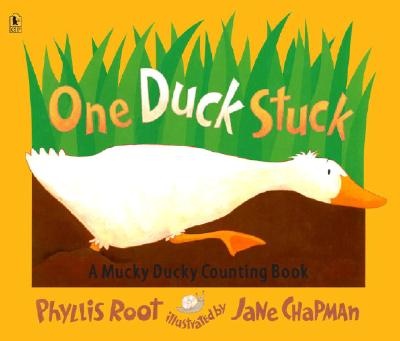
Grade K
3 skill lessons · 1 math-through-reading
Math
Skill lessons
The mathematics the book carries, taught directly. Printable workbook pages and teacher keys are not available for this book yet.
- 1One pile for every arrival
- 2Which helper comes next
- 3How many came to help
Math + reading
Math through the reading
The same book, entered through a sentence it prints. Change one word in the reading and the numbers change with it.
- 4How many came to help
Reading
Reading and language lessons
The same book read as a text. What a word means in its sentence, how a character is shown, how the writing is put together - no mathematics.
- 5How each animal gets there
- 6Two words that change the marsh
- 7Words that are just a noise
Skill lessons
3 lessons on the mathematics the book carries. Printable workbook pages and teacher keys are not available for this book yet.
1. One pile for every arrival
The book names ten groups and says every number twice over, from one duck to ten dragonflies, and it never joins two of them. Students count each arrival into its own pile of cubes, one cube per number word, then answer how many with a single number word instead of reciting from one again. This is cardinality: the last word said in a count is how many the pile holds, and it stays true when nobody counts a second time.
Full lesson — 20 minutes
1. Build the duck's group first (4 min)
Each pair puts one cube on the first square of the marsh strip and says the word one while touching it. That single cube is the duck, and it stays on the strip for the whole lesson. Nobody adds to it yet.
Word preview: one
one one duck gets stuck in the muck.
2. Count out each helper group as it arrives (8 min)
As each arrival is read aloud, pairs count that many cubes into a fresh pile beside the strip, one cube for each number word, and stop on the last word. The pile is not pushed onto the duck's cube and is not joined to the pile before it. Each group sits on its own square.
Word preview: two, six, ten
Two, two fish, tails going swish, swim to the duck, splish, splish, no luck.
Six, six skunks climbing over trunks crawl to the duck.
Ten, ten dragonflies zooming through the sky's word to the duck.
3. Say how many are in a pile without counting again (5 min)
A partner points at any finished pile and asks how many. The child answers with one number word and does not recount from one. If the answer is not ready, the child counts the pile again touching each cube, then says the last number on its own.
Word preview: four
Four, four crickets chirping in the thickets leap to the duck.
4. Put the piles back in the book's order (3 min)
Pairs shuffle their helper cards, then lay them along the strip so the dots go up by one from the duck's square to the last. Each card is matched to its pile by counting the dots and counting the cubes.
Short version — 9 minutes
1. Count out each helper group as it arrives (6 min)
As each arrival is read aloud, pairs count that many cubes into a fresh pile, one cube for each number word, and stop on the last word. Each pile stays separate from the one before it.
Word preview: two, ten
Two, two fish, tails going swish, swim to the duck, splish, splish, no luck.
Ten, ten dragonflies zooming through the sky's word to the duck.
2. Say how many are in a pile without counting again (3 min)
A partner points at a finished pile and asks how many. The child answers with one number word and does not recount from one.
Word preview: four
Four, four crickets chirping in the thickets leap to the duck.
Three levels
- Support
- Stay with the first four arrivals and stop at four cubes. Count each pile onto a drawn frame of that many squares so a finished pile fills its frame exactly, and answer how many by reading the last square touched. One pile at a time is on the desk.
- At Grade
- All ten arrivals are counted into separate piles, and how many is answered with one number word for any pile a partner points at, without recounting.
- Extension
- Cover a finished pile with a cloth after it is counted, then answer how many from memory and lift the cloth to check by touching each cube. Do this for three piles the partner chooses, and say which pile was hardest to hold in mind.
English learners
Number words one to ten transfer directly from a first language and most children arrive with them; the English rule that the last word said is the answer to how many has to be taught, because many languages mark that with a separate counting word. Rehearse the frame Six skunks, so there are six, pointing at the pile on the second half. Invite the count in the child's strongest language first, then in English, since the cubes make the two counts visibly the same.
Materials
- Linking cubes, fifty-five per pair, all one colour
- A marsh strip, one long sheet per pair with ten squares drawn along it
- Ten helper cards, each showing one arrival group as dots, from one dot to ten
- One enlarged set of the ten helper cards for the class check
- Word cards: duck, count, how many
Standards & curriculum
Choose your curriculum above to see the standards for this lesson.
Standards are held back while this plan is edited. Every standard shown here was matched against the supplied wording of this lesson, quoting its steps, so a changed step is no longer the thing that was checked. Undo your changes to bring the standards back — your edits stay in this browser either way.
2. Which helper comes next
This book advances its count by exactly one at every arrival and never skips a word, so the order of the story and the order of the number words are the same order. Students build the ten arrivals into a line from the shuffled cards, find a missing number by walking the line aloud until a word is skipped, and name what comes before and after a given card. What they are learning is that the number words have a fixed order that can be used to place a group without recounting the whole line.
Full lesson — 20 minutes
1. Say the count with the book (5 min)
Students say each arrival number aloud with the class as it is read, touching one square of the marsh strip for each number word. One touch, one number word, and the finger never goes back to a square it has left.
Word preview: three
Three, three moose munching on spruce plod to the duck.
2. Lay the cards in the order the book says them (7 min)
Pairs take the ten shuffled helper cards and build a line from the duck's card to the last, deciding each card's place by counting its dots and saying which number word comes next. A card put in the wrong place is found by walking the line and saying the numbers aloud until a word is skipped.
Word preview: five, eight
Five, five frogs hopping on logs jump to the duck.
Eight, eight possums nibbling on blossoms crawl to the duck.
3. Name the card that comes next (5 min)
One child hides a card from the finished line and closes the gap. The partner says which number word is missing and how many dots the hidden card holds, then names the card that came before it and the card that came after.
Word preview: seven
seven, seven snails making slippery trails slide to the duck.
4. Walk the line and stop where you are told (3 min)
A partner names a number word and the child walks a finger along the finished card line, saying each number in turn, and stops on the card named. The child then says how many dots are on that card without counting them one by one.
Word preview: nine
nine, nine snakes leaving little wakes slither to the duck.
Short version — 9 minutes
1. Lay the cards in the order the book says them (6 min)
Pairs take the ten shuffled helper cards and build a line from the duck's card to the last, counting each card's dots and saying which number word comes next. A misplaced card is found by walking the line aloud until a word is skipped.
Word preview: five
Five, five frogs hopping on logs jump to the duck.
2. Name the card that comes next (3 min)
One child hides a card from the finished line and closes the gap. The partner says which number word is missing and how many dots the hidden card holds.
Word preview: seven
seven, seven snails making slippery trails slide to the duck.
Three levels
- Support
- Work with six cards, the duck's through the frogs', and lay them in order with the duck's card already down as a start. The number line stays visible on the desk so a child can match a card to its place by touching the same number on the line.
- At Grade
- All ten cards are ordered from a shuffle, a hidden card is named by its number word and its dot count, and the cards before and after it are named too.
- Extension
- Hide two cards that are not next to each other and close both gaps before the partner looks. The partner names both missing numbers and says which gap was easier to spot and why, using the words before and after.
English learners
The ordinal frame comes next is harder than the number words themselves, because many languages build ordinals from the counting words in a way English does not, and a child who counts fluently to ten may still have no phrase for the relation. Rehearse After six comes seven with a finger moving one card to the right, so the word after is tied to a direction on the table. Let children say the sequence in their strongest language while pointing at the same cards; the order is identical and hearing that is the point.
Materials
- A marsh strip, one long sheet per pair with ten squares drawn along it
- Ten helper cards, each showing one arrival group as dots, from one dot to ten
- One enlarged set of the ten helper cards for the class check
- Word cards: next, before, after
Standards & curriculum
Choose your curriculum above to see the standards for this lesson.
Standards are held back while this plan is edited. Every standard shown here was matched against the supplied wording of this lesson, quoting its steps, so a changed step is no longer the thing that was checked. Undo your changes to bring the standards back — your edits stay in this browser either way.
3. How many came to help
The book never says how many groups of helpers arrive, but it prints their sounds in one line at the end, one sound for each group, and that line settles the number at nine. Students drop a counter for each arrival, count the sounds on the printed line, and match the two sets one to one to check. The reasoning that matters is that a group counts as one thing here: the answer is nine groups and not nine snakes, and it is not ten, because the duck is the one being helped.
Full lesson — 20 minutes
1. Mark a counter for every arrival (5 min)
Each time an arrival is read, a child drops one counter into a cup. Only one counter goes in, however many animals arrive, because the counter stands for the group and not for the animals. The cup is not looked into until later.
Word preview: group
Two, two fish, tails going swish, swim to the duck, splish, splish, no luck.
2. Read the sound line and count the sounds (7 min)
Pairs read the line of helper sounds the book prints at the end and touch each sound once, counting aloud. They stop on the last sound and say that number on its own. Nobody counts the animals; the count is of sounds, one sound for each group that came.
Word preview: sound
Splish! Clump! Bleep! Plop! Plunk! Slush! Slosh! Slink! Zing!
3. Check the cup against the sound line (5 min)
Pairs tip out the cup and lay one counter beside each sound on the line. Every counter should land on a sound and every sound should get a counter, with none left over on either side. If some are left over, the pair counts both again and says where the extra came from.
Word preview: match
They all helped the duck who got stuck in the muck.
4. Say why the answer is not ten (3 min)
Each child tells a partner how many groups came to help and why that number is not ten, pointing at the duck's own square as the one that did not help. The reason is said as a sentence with the number in it.
Word preview: helper
Thanks to the duck who got out of the muck
Short version — 9 minutes
1. Read the sound line and count the sounds (6 min)
Pairs read the line of helper sounds the book prints at the end and touch each sound once, counting aloud. They stop on the last sound and say that number on its own, counting sounds rather than animals.
Word preview: sound
Splish! Clump! Bleep! Plop! Plunk! Slush! Slosh! Slink! Zing!
2. Say why the answer is not ten (3 min)
Each child tells a partner how many groups came to help and why that number is not ten, pointing at the duck as the one that did not help.
Word preview: helper
Thanks to the duck who got out of the muck
Three levels
- Support
- Use the sound line alone with the sounds already cut into nine separate slips. Lay the slips in a row, put one counter on each, and count the counters by touching them. The question stays how many slips, and the cup is left out of this tier.
- At Grade
- Counters are dropped one per arrival, the printed sound line is counted, the two are matched one to one, and the child says why the answer is nine and not ten.
- Extension
- Cover the sound line and answer how many groups came from the cup alone, then uncover the line and check. Then say what would have to change in the sound line if the moose had never come, and why the number of sounds and the number of groups always move together.
English learners
The distinction between counting groups and counting members has no shortcut in any language, and children who count accurately will still count animals here unless the unit is named every time. Rehearse the frame One sound, one group, said while dropping a single counter, so the counter is visibly not an animal. Ask for the answer in the child's strongest language first and accept a number alone; the sentence with why in it can come afterwards in English, and the matched rows carry the reason without words.
Materials
- Two-colour counters, sixty per pair
- A sound line, the nine helper sounds printed large in the order the book says them
- One enlarged set of the ten helper cards for the class check
- Word cards: group, sound, helper
Standards & curriculum
Choose your curriculum above to see the standards for this lesson.
Standards are held back while this plan is edited. Every standard shown here was matched against the supplied wording of this lesson, quoting its steps, so a changed step is no longer the thing that was checked. Undo your changes to bring the standards back — your edits stay in this browser either way.
Math through the reading
The mathematics is reached through a sentence the book prints: change one word in the reading and the numbers change with it. These carry their own standards, matched against these lessons rather than inherited from the skill ones.
4. How many came to help
Children count the helpers' sounds in the book's closing line to settle a number the story never says, and learn that one sound stands for one whole group.
Full lesson — 20 minutes
1. Drop one counter for each arrival (5 min)
As each verse is read, one child in a pair drops a single counter into a cup, whatever the size of the group arriving. The rule is said aloud before the reading begins and repeated at the third arrival: one counter for one group, not one for each animal. The cup is not looked into.
2. Count the sounds in the closing line (6 min)
Pairs read the closing line of sounds and touch each sound once, counting aloud together, then stop and say the last number on its own. They then say what one of those sounds stands for, pointing back at the verse it came from.
3. Match the cup against the line (5 min)
Pairs tip out the cup and lay one counter beside each sound. Every counter should land on a sound and every sound should take a counter. A pair with something left over counts both rows again and says aloud where the extra came from.
4. Say why it is not ten (4 min)
Each child tells a partner how many groups came to help and why the answer is not ten, pointing at the duck as the one being helped rather than one of the helpers. The reason is said as a whole sentence with the number inside it.
Short version — 9 minutes
1. Count the sounds in the closing line (6 min)
Pairs read the closing line of sounds and touch each sound once, counting aloud together, then stop and say the last number on its own. They then say what one of those sounds stands for, pointing back at the verse it came from.
2. Say why it is not ten (4 min)
Each child tells a partner how many groups came to help and why the answer is not ten, pointing at the duck as the one being helped rather than one of the helpers. The reason is said as a whole sentence with the number inside it.
Three levels
- Support
- Work from the sound line alone, cut into nine slips and laid in a row before the child arrives. The child puts one counter on each slip and counts the counters by touching them, answering how many slips. The cup and the reading are left out of this tier, and the answer may be the number word alone.
- At grade
- Counters go in one per arrival during the reading, the printed line is counted by touching, the two rows are matched with none left over, and the child says nine groups and gives the reason the duck is not counted.
- Extension
- Answer how many groups came from the cup alone with the sound line covered, then uncover it and check by matching. Then say what the line would look like if the moose had never come, and why the sounds and the groups always change together.
English learners
The mathematics here is a unit problem and it lives in a noun, which is where it is hardest for a child working in a new language: nine groups and nine animals are the same number attached to different things, and English marks the difference only with the word after the number. Rehearse One sound, one group while dropping a single counter, so the phrase is tied to an action the child performs rather than to a definition. The nine sounds themselves are onomatopoeia and carry no meaning to translate, which makes the closing line unusually fair ground; a child can count it as accurately as anyone in the room before understanding a word of the story. Take the answer in the child's strongest language first and accept the number alone, then build to nine groups in English. The matched rows of counters and sounds carry the reason without any language at all, so a child who cannot yet say why can still show it.
Materials
- Two-colour counters, ten per pair
- One paper cup per pair
- The closing sound line printed large, one per pair
- The closing sound line enlarged for the class count
- The nine arrival verses listed in order for the check
Standards & curriculum
Choose your curriculum above to see the standards for this lesson.
Standards are held back while this plan is edited. Every standard shown here was matched against the supplied wording of this lesson, quoting its steps, so a changed step is no longer the thing that was checked. Undo your changes to bring the standards back — your edits stay in this browser either way.
Reading and language lessons
3 lessons on the reading and language the book carries - what a word means in its sentence, how a character is shown, how a text is built. No mathematics: these are matched against the English language arts curricula, which are a different and smaller set than the mathematics ones.
5. How each animal gets there
Every rescue in this story arrives by a different word, and the words are chosen so precisely that a kindergartner can feel the difference in their own body. Students plod, leap and jump across the floor, mark crawl, slide and slither in three lines, meet the one word the book gives to two unlike animals, and finish by supplying a travelling word for a flier where this telling has muddled the words. The lesson is verb choice; the counts sit at the front of the quoted lines and no step asks a child to use them.
Full lesson — 20 minutes
1. Move the way the line says (5 min)
Stand up. As each line is read, travel across a small piece of floor the way its animal does: plod like the moose, then leap like the crickets, then jump like the frogs. Say the travelling word aloud as you move, then sit and say which of the three was slowest.
Word preview: plod, leap, jump
Three, three moose munching on spruce plod to the duck.
Four, four crickets chirping in the thickets leap to the duck.
Five, five frogs hopping on logs jump to the duck.
2. Mark the travelling word (6 min)
With a partner, read these three lines and put a counter on the one word in each that says how the animal gets to the duck: crawl, slide, slither. Say each word aloud and show it with your hand on the table. Then say which two of the three look most alike when you show them, and what makes the third one different.
Word preview: crawl, slide, slither
Six, six skunks climbing over trunks crawl to the duck.
seven, seven snails making slippery trails slide to the duck.
nine, nine snakes leaving little wakes slither to the duck.
3. Two animals, one travelling word (5 min)
Read these two lines with your partner. They use the same travelling word for two very different animals. Say the word, then say what a skunk doing it would look like and what a possum doing it would look like, and show each one with your hand. Say whether one word for both was a good choice.
Word preview: same
Six, six skunks climbing over trunks crawl to the duck.
Eight, eight possums nibbling on blossoms crawl to the duck.
4. Choose the travelling word yourself (4 min)
Read this line, in which the animals reach the duck but the words for how they got there have come out wrong in this telling. Say a travelling word of your own that would suit an animal with wings, then say the line with your word standing in the place of the muddled part. Say why the word you chose fits a flier and not a snail.
Word preview: wings
Ten, ten dragonflies zooming through the sky's word to the duck.
Short version — 9 minutes
1. Move the way the line says (4 min)
Travel across a small piece of floor the way each line's animal does, plodding, then leaping, then jumping. Say the travelling word aloud as you move.
Word preview: plod, leap, jump
Three, three moose munching on spruce plod to the duck.
Four, four crickets chirping in the thickets leap to the duck.
Five, five frogs hopping on logs jump to the duck.
2. Mark the travelling word (5 min)
Put a counter on the word in each line that says how the animal gets to the duck, say it aloud, and show it with your hand on the table.
Word preview: crawl, slide, slither, same, wings
Six, six skunks climbing over trunks crawl to the duck.
seven, seven snails making slippery trails slide to the duck.
nine, nine snakes leaving little wakes slither to the duck.
Three levels
- Support
- Take one line at a time and move it with the child before asking for the word, saying the word together as you both travel. Ask for the marking only once the movement is easy, and two of the three lines is enough. Leave the alike-and-different question out.
- At Grade
- Mark the travelling word in all three lines, say each aloud, and show it with a hand.
- Extension
- After marking all three, say which two travelling words could be swapped between their animals without the line looking silly, and which one could not, saying what about the animal decides it.
English learners
Travelling verbs are among the hardest words to carry between languages, because languages divide them differently and one language's single word may cover three of English's. Let the body answer first: a child who plods correctly has understood the word whether or not they can say it. Rehearse the frame it gets to the duck by before step two. Invite the child to name the movement in their strongest language, then say the English word beside it, and accept the gesture as the answer for as long as it takes. The tenth line is muddled in this telling, so treat it as a puzzle to be solved rather than a model to be copied.
Materials
- Open floor space for travelling across
- One counter per child to mark words
- Word cards: plod, leap, jump, crawl, slide, slither, same, wings
Standards & curriculum
Choose your curriculum above to see the standards for this lesson.
Standards are held back while this plan is edited. Every standard shown here was matched against the supplied wording of this lesson, quoting its steps, so a changed step is no longer the thing that was checked. Undo your changes to bring the standards back — your edits stay in this browser either way.
6. Two words that change the marsh
The refrain of this story returns nine times and each time only two words change, which puts a pair of rhyming describing words under a spotlight a kindergartner cannot miss. Students isolate squishy and fishy by ear, collect three more pairs with counters, compare two versions of the same refrain to say what each pair makes them picture, and finish by making a pair of their own. The work is entirely in the describing words; the refrain's number of returns is never counted and no step gives a child a quantity.
Full lesson — 20 minutes
1. Hear the two words for the marsh (5 min)
Listen to this line read twice. Say the two describing words that come just before the word marsh, squishy and fishy, and clap once on each. Say whether they end the same way, then say the ending sound on its own.
Word preview: squishy, fishy
The duck stays stuck deep in the muck down by the squishy, fishy marsh.
2. Collect three more pairs (6 min)
With a partner, read each of these lines and say the two describing words that sit before marsh, then put a counter down for each pair you hear: soggy and loggy, reedy and weedy, muggy and buggy. Say each pair twice, then say what all three pairs have in common at the end.
Word preview: soggy, reedy, muggy
down by the soggy, loggy marsh.
down by the reedy, weedy marsh.
down by the muggy, buggy marsh.
3. Say what the words make you picture (5 min)
Read these two lines with your partner. The part about the duck is the same in both and only the two words before marsh have changed. Say the two pairs, then say what each pair makes you smell, hear or feel, and say which of the two marshes you would rather stand in and why.
Word preview: chompy
The duck stays stuck deep in the muck down by the squishy, fishy marsh.
The duck stays stuck deep in the muck down by the swampy, chompy marsh.
4. Make a pair of your own (4 min)
Read this line, say its pair of describing words, then make a pair of your own for a marsh: a word that tells what the marsh is like, and a second word that ends the same way. Say your line aloud with your pair standing in the place of the poet's, and let your partner say your two words back.
Word preview: creaky, croaky
The ducks stay stuck, deep in the muck, down by the creaky, croaky marsh.
Short version — 9 minutes
1. Hear the two words for the marsh (4 min)
Listen to the line twice, say the two describing words that come just before marsh, and clap once on each. Say the ending sound they share.
Word preview: squishy, fishy
The duck stays stuck deep in the muck down by the squishy, fishy marsh.
2. Collect three more pairs (5 min)
Read each line, say the two describing words that sit before marsh, and put a counter down for each pair you hear. Say each pair twice.
Word preview: soggy, reedy, muggy, chompy, creaky, croaky
down by the soggy, loggy marsh.
down by the reedy, weedy marsh.
down by the muggy, buggy marsh.
Three levels
- Support
- Take one line at a time and say only the two words before marsh, soggy loggy, soggy loggy, until the child can say the pair without the line. Leave the what-they-share question out. One pair heard cleanly is the goal.
- At Grade
- Find all three pairs, put a counter down for each, and say what the three pairs share at their ends.
- Extension
- After finding all three pairs, say which pair tells you most about what the marsh would feel like underfoot and which tells you most about what you would hear, using the words themselves to say why.
English learners
These pairs are almost pure sound and only half of each pair is a word a child is likely to know, which makes them friendly rather than difficult: a child can join the refrain long before they can define soggy. Say each pair slowly side by side and let the child answer by pushing two counters together. Rehearse the frame down by the marsh before step two so only the two changing words are new. Invite the child to say a sound-alike pair from their strongest language, then put an English pair beside it.
Materials
- One Duck Stuck, read aloud by the teacher
- One counter per child to mark words
- Word cards: squishy, fishy, soggy, reedy, muggy, chompy, creaky, croaky
Standards & curriculum
Choose your curriculum above to see the standards for this lesson.
Standards are held back while this plan is edited. Every standard shown here was matched against the supplied wording of this lesson, quoting its steps, so a changed step is no longer the thing that was checked. Undo your changes to bring the standards back — your edits stay in this browser either way.
7. Words that are just a noise
This story runs on words that are not naming words or doing words but noises, and it gathers all of them into a single line near the end. Students say two arrival noises the way their animals would, tap through the line of nine, match a noise to the animal it suits and hear the swap fail, and finish on two closing lines that carry no noise at all. Students say and tap the sounds rather than tally them, and the story's counts stay in the lines that are read.
Full lesson — 20 minutes
1. Say the sound each animal makes arriving (5 min)
Read these two lines aloud. Each ends with a small word said twice that is not a naming word or a doing word but the noise of the arrival itself. Say splish twice the way the fish would, then say plop twice the way the frogs would, and say which of the two lands heavier.
Word preview: splish, plop
Two, two fish, tails going swish, swim to the duck, splish, splish, no luck.
Five, five frogs hopping on logs jump to the duck.
2. Count the sounds in the closing line (6 min)
Read this line with your partner. It is nothing but sound words, one after another with a mark after each. Tap the table once for each sound word as you read it aloud, and say the one you think is loudest. Then say which of them you had already heard earlier in the story and which is new to you here.
Word preview: zing, slink
Splish! Clump! Bleep! Plop! Plunk! Slush! Slosh! Slink! Zing!
3. Match a sound word to its animal (5 min)
Read these two lines and say the sound word at the end of each. Say which animal made which sound and what about the animal makes the sound fit: one is small and quick, the other is heavier over the ground. Then swap the two sounds between the animals and say aloud why the swap sounds wrong.
Word preview: bleep, plunk
Four, four crickets chirping in the thickets leap to the duck.
Six, six skunks climbing over trunks crawl to the duck.
4. Say the ending in your own sound (4 min)
Read these two closing lines. Neither of them has a sound word in it, which makes the ending quiet after all that noise. Say a sound word of your own for a duck pulling free of the mud, say it twice, and say whether the story ends better with your sound in it or without.
Word preview: quiet
They all helped the duck who got stuck in the muck.
Thanks to the duck who got out of the muck deep by the deep green marsh.
Short version — 9 minutes
1. Say the sound each animal makes arriving (4 min)
Read these two lines and say the small word at the end of each that is the noise of the arrival. Say splish twice as the fish would and plop twice as the frogs would, and say which lands heavier.
Word preview: splish, plop
Two, two fish, tails going swish, swim to the duck, splish, splish, no luck.
Five, five frogs hopping on logs jump to the duck.
2. Count the sounds in the closing line (5 min)
Read this line of nothing but sound words, tapping the table once for each as you say it. Say which one is loudest and which you had already heard earlier in the story.
Word preview: zing, slink, bleep, plunk, quiet
Splish! Clump! Bleep! Plop! Plunk! Slush! Slosh! Slink! Zing!
Three levels
- Support
- Say the closing line one sound at a time with the child, tapping together, and stop after four rather than pushing to the end. Let the child choose a favourite and say it three times. Leave out the question about which they had heard before.
- At Grade
- Tap through the whole closing line, name the loudest sound, and say which sounds had appeared earlier in the story.
- Extension
- After tapping the whole line, say which two sounds in it would be hardest to tell apart with your eyes shut, and say what you would change about one of them to make it clearer.
English learners
Sound words are the one part of English that a child can join on the first day, because they are made of noise rather than meaning and no translation is needed to say them. Start here with any child new to English: let them say splish and plop with the class before any other task, and count that as full participation. Rehearse the frame it goes before step two. Invite the child to say the noise their strongest language gives to water or to a jump, and put it beside the book's, so the class hears that different languages hear the same splash differently.
Materials
- One Duck Stuck, read aloud by the teacher
- Word cards: splish, plop, zing, slink, bleep, plunk, quiet
Standards & curriculum
Choose your curriculum above to see the standards for this lesson.
Standards are held back while this plan is edited. Every standard shown here was matched against the supplied wording of this lesson, quoting its steps, so a changed step is no longer the thing that was checked. Undo your changes to bring the standards back — your edits stay in this browser either way.