The Word file and the PDF carry the whole guide. The student pages are the two checkpoints and the culminating task, one to a sheet.
About this unit
This unit gives Kindergarten the part of measurement that comes before any number: deciding which of two things is bigger, heavier or holds more, and being able to say what settled it. Nothing is measured with a ruler and no reading is taken off a scale. Children hold one object in each hand, slide one bag inside another, and pour one container into the next.
The unit takes two turns that five-year-olds find genuinely hard. First, that size and weight are separate questions the same object can answer differently. Second, that the middle of three wins one comparison and loses the other, so only the ends of a line can carry a word like biggest. It ends by turning a comparison into a count.
The mathematical arc
Each lesson does one job the lesson before it made possible.
Heavy and light are answers to a comparison, not properties
Size and weight are two different questions about one object
Three in order: the middle one wins once and loses once
Slot a new object into an order already built
Smaller or smallest: the ending of the word picks the thing
Which holds the most, settled by pouring
How many of the small one fill the big one
Source books
Every lesson in this unit is already published under Math lessons. Nothing here asks you to teach anything you cannot open today.
Each day names one lesson that already exists under Math lessons, with its book, its number and its title. This guide says what that lesson is doing in the sequence and what to collect from it; the lesson itself carries the steps, the printables and the answers.
Thirty minutes a day.
Five minutes to connect to yesterday, the twenty-minute source lesson, five minutes to close on something you can see. A day that runs long should lose the close, never the core.
Teach a lesson on its own if you need to.
Every day carries a one-sentence opening for a teacher who is using that lesson outside the sequence.
Stop after a checkpoint.
The unit holds together if you stop after either checkpoint and come back to it. Stopping between a checkpoint and the next one leaves a lesson without the evidence it was built on.
Where this fits in your year
When to teach it
Any time after the class can compare two objects by eye. It sits well beside a science unit on materials, and it needs no counting until lesson 7.
What students need first
Children can hold an object in each hand and can say bigger and smaller about a pair.
What this unit develops
Direct comparison by weight, size and capacity; separating two attributes of one object; ordering three objects and inserting a fourth; the comparative and superlative endings; iterating a smaller unit inside a larger one.
What it prepares them for
Grade 1 measurement, where a length becomes a count of units, and Grade 2 work on choosing a unit that fits.
Curriculum connections
None claimed. The lessons in this unit carry their own standards classifications on their own pages, checked lesson by lesson. A unit-level expectation is a different claim, and none has been verified for this unit, so none is printed here. Use the placement guide above to site the unit in your year, and the individual lesson pages for the codes.
Unit at a glance
#
Mathematical move
Source lesson
Collect
1
Heavy and light are answers to a comparison, not properties — and one pair gets said both ways
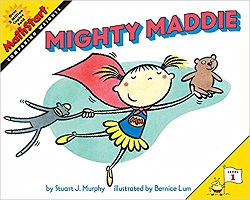
Mighty Maddie lesson 1, One in Each Hand
Two loaded mats, every object on them having been held first, and each child's spoken pair of sentences about one pair.
2
Size and weight are two separate questions about one object Checkpoint after this lesson
Mighty Maddie lesson 2, Small and Heavy, Big and Light
Two lines of the same six objects, one built by eye and one by hand, with at least one object marked as having moved.
3
Order three by size: the middle one wins one comparison and loses the other
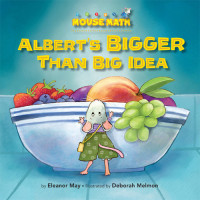
Albert's Bigger Than Big Idea lesson 1, Small, Smaller, Smallest
Three bags in order with their sashes, and each child saying the line pointing bag by bag.
4
Slot a new object into an order already built — biggest is a claim that can change
Albert's Bigger Than Big Idea lesson 3, Bigger Than the Last One
One class size strip carrying every group's bags in order, with each child naming the two bags theirs sits between.
5
Smaller or smallest: the ending of the word picks the bag Checkpoint after this lesson
Albert's Bigger Than Big Idea lesson 5, The Word That Picks the Bag
Two bags each holding the blueberry in turn, and each child naming the bag a version sends it to and the word ending that decided it.
6
Which holds the most, settled by pouring rather than by looking
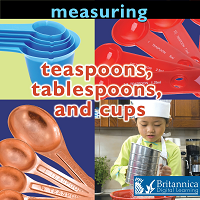
Teaspoons, Tablespoons, and Cups lesson 2, Which One Holds the Most
The three containers standing in the order the pouring settled, and each pair's spoken answer with the overflow named as the reason.
7
How many of the small one fill the big one — the comparison becomes a count
Teaspoons, Tablespoons, and Cups lesson 3, Three Teaspoons Fill One Tablespoon
A filled tablespoon reached by counted teaspoons, and each pair's prediction written or said before the second pour.
Unit vocabulary
Words students say, not words they are taught to define.
heavier, lighter
Said about a pair the child is holding, never about one object alone.
bigger, biggest
Lesson 3 separates the two: biggest is a claim about everything in the line.
holds more
Used in lesson 6, settled by pouring rather than by how tall the container looks.
fills
Used in lesson 7, when the small container is counted into the large one.
Materials
From the source lessons
Each day's materials are listed on that day's page below and on the source lesson itself. Nothing is duplicated here.
New for this unit
Checkpoint 1 page, one per child
Checkpoint 2 page, one per child
Performance task set: three containers of clearly different capacity, a jug of water, a tray, and three objects of clearly different weight, one set per pair
Performance task page, one per child
Assessment plan
Daily evidence
Keep each child's spoken pair of sentences from lesson 1 and their placement sentence from lesson 4. The evidence this unit collects is spoken: a comparison that names both objects and says what settled it.
Checkpoint 1, after lesson 2: Which is heavier, and does it look it?
A small heavy object and a large light one. The child says which looks heavier, then holds both and says which is heavier, then says whether the hands agreed with the eyes.
Book-free. Two classroom objects and no book.
Look for. The child changes the answer when the hands disagree with the eyes, and says so out loud. A child who keeps the eye answer has not separated the two questions.
Checkpoint 2, after lesson 5: Put it in the line
Three objects already lined up by size. The child is handed a fourth and slots it in without moving the others, then says which two it sits between.
Book-free. Classroom objects, no book.
Look for. The placement is right and the child names both neighbours. Naming only one neighbour is a partial answer.
Culminating task: Order them, then fill them
Each pair takes three containers, puts them in order from holds-least to holds-most, and settles the order by pouring rather than by looking. They then take the smallest container and count how many of it fill the largest, saying the number aloud. Finally they take three objects, order them by weight by holding two at a time, and say one sentence about the middle object naming both of its neighbours.
Collect. The ordered containers with the pouring count, the ordered objects, and the spoken sentence about the middle object.
What it assesses. Direct comparison, ordering three, inserting into an order, and iterating a small unit inside a large one — every move the unit built, and no reading off any scale.
Daily lesson pages
Lesson 1Heavy and light are answers to a comparison, not properties — and one pair gets said both ways
Skill lessonMighty Maddie · lesson 1, One in Each Hand · Grade K · 20 minutes Comparing two objects by weight by holding one in each hand
I can
I can hold two things and say which is heavier.
Big idea
Heavy is not something an object is by itself; it is an answer about a pair, and the hands give it.
Success
The child says both sentences about one pair — which is heavier and which is lighter — with an object in each hand.
Connect | 5 min
First lesson. Hold up one object and ask whether it is heavy. Take the question seriously and let the class find that they cannot answer it.
Taught on its own
Dad divides the job by weight and not by size, and the only way either of them knows which is which is by picking the thing up.
Source core | 20 min
Children take two objects from the tray, hold one in each hand at the same time, say which hand is pulling down harder, and put the heavier one on Dad's mat and the lighter on Maddie's.
Collect
Two loaded mats, every object on them having been held first, and each child's spoken pair of sentences about one pair.
Close | 5 min
Each child picks one pair back up, one object in each hand, and says a heavier sentence and a lighter sentence naming both objects.
From the source lesson: A tray of eight paired classroom objects per group: a full glue bottle and an empty one, a hardcover book and a single sheet, a fistful of clay and a cotton ball, a closed marker and a feather; Two paper sorting mats per pair, one marked Dad and one marked Maddie; One eye-fooling pair per child: a fist-sized bag of pennies and a large empty cardboard carton; The sentence frame card: The ___ is heavier than the ___.; Word cards: heavier, lighter, than
Watch for: A child puts an object down without holding it against anything. The rule is that nothing lands on a mat that has not been in a hand.
Lesson 2Size and weight are two separate questions about one object
Skill lessonMighty Maddie · lesson 2, Small and Heavy, Big and Light · Grade K · 20 minutes Separating how big something looks from how heavy it feels
I can
I can tell how big something looks from how heavy it feels.
Big idea
Size and weight are two separate questions, and answering one does not answer the other.
Success
The child finds an object that sits near one end of the eye line and near the other end of the hand line, and says what is surprising about it.
Connect | 5 min
Yesterday your hands settled which was heavier. Today your eyes will get one of them wrong on purpose.
Taught on its own
The piggy bank is small but heavy and the pillow is big but very light, and both halves sit in one sentence joined by but.
Source core | 20 min
Pairs order six objects by size using their eyes only and hands off, then order the same six by weight using their hands only, building the second line underneath the first.
Collect
Two lines of the same six objects, one built by eye and one by hand, with at least one object marked as having moved.
Close | 5 min
Each child picks one object that moved and says a sentence about it with but in the middle, naming how big it looks and how heavy it feels.
From the source lesson: A tray of six objects per pair chosen so size and weight disagree: a sealed jar of rice, a beach ball, a rolled sock, a large foam block, a fistful of washers in a bag, an empty tissue box; Two long paper strips per pair, one labelled with eyes and one labelled with hands; The sentence frame card: The ___ is big, but it is light.; Word cards: big, small, but
Watch for: Children peek at the first line while building the second. Ask them to cover the eye line with a sheet of paper before the holding starts.
Checkpoint after this lesson: Which is heavier, and does it look it?. The page is at the end of this guide.
Lesson 3Order three by size: the middle one wins one comparison and loses the other
Skill lessonAlbert's Bigger Than Big Idea · lesson 1, Small, Smaller, Smallest · Grade K · 20 minutes Ordering three objects by size and naming the smallest
I can
I can put three in order and say which is smallest.
Big idea
The middle one is smaller than one neighbour and bigger than the other, so only the ends of a line can carry a word like smallest.
Success
The child proves each placement by sliding one bag inside the next and can say the line in both directions.
Connect | 5 min
You have compared two things all week. Today there are three, and one of them will be both.
Taught on its own
Cousin Pete hands out three bags and the book chants small, smaller, smallest four separate times.
Source core | 20 min
Groups lay three bags in a line roomiest first, prove every placement by sliding one bag inside the one they called bigger, and lay the three word sashes across them.
Collect
Three bags in order with their sashes, and each child saying the line pointing bag by bag.
Close | 5 min
Turn the whole line round so the tightest bag is on the left, read it the other way, and say whether any bag changed size.
From the source lesson: Three cloth bags per group, cut small, smaller and smallest from the same fabric; Three paper sashes per group reading small, smaller, smallest; Word cards: small, smaller, smallest
Watch for: A child calls the middle bag small on its own. Ask which bag it is smaller than, and then which bag it is bigger than.
Lesson 4Slot a new object into an order already built — biggest is a claim that can change
Skill lessonAlbert's Bigger Than Big Idea · lesson 3, Bigger Than the Last One · Grade K · 20 minutes Placing a new object into an order already built
I can
I can put a new one into a line that is already made.
Big idea
Biggest is a claim about everything on the line right now, so it can change the moment a new thing arrives.
Success
The child slides a new bag into the right place without moving the others, and says which two it landed between.
Connect | 5 min
Yesterday you built a line of three. Today somebody else's bag has to fit into it.
Taught on its own
Albert makes each new bag bigger than the one before, and the book measures each against the last rather than against the first.
Source core | 20 min
Children tape their own bags to hold a plum and then a peach, lay both on the shared size strip, and slot another group's bag into the strip without disturbing what is already down.
Collect
One class size strip carrying every group's bags in order, with each child naming the two bags theirs sits between.
Close | 5 min
The class points at the one bag nothing on the strip is bigger than, names it the biggest, then takes it off and says which bag is the biggest now.
From the source lesson: Newspaper, one sheet per child, and a roll of tape per group; A set of five play fruits per group: blueberry, grape, strawberry, plum, peach; A size strip, a long paper lane marked smallest at one end and biggest at the other; Word cards: big, bigger, biggest
Watch for: A child shifts the whole line to make room. Hold the two neighbouring bags down while they place theirs.
Lesson 5Smaller or smallest: the ending of the word picks the bag
Math through the readingAlbert's Bigger Than Big Idea · lesson 5, The Word That Picks the Bag · Grade K · 20 minutes Children hear one sentence twice, once with smallest and once with smaller, and put the blueberry in the bag each version sends it to, then say which word sent it where.
I can
I can hear which bag the sentence means.
Big idea
There is no number anywhere in this book; the ending of the word is doing the work a numeral would do.
Success
The child puts the blueberry in the bag each version of the sentence names, and says which word sent it where.
Connect | 5 min
Yesterday the line changed when a bag arrived. Today the line stays put and the sentence changes instead.
Taught on its own
Everything mathematical in this book is carried by the ending of an adjective: small, smaller and smallest name three different bags.
Source core | 20 min
Groups rank the three bags by nesting, put the blueberry into the bag the book's sentence names, then hear the same sentence with smaller in place of smallest and move the fruit to the bag that version names.
Collect
Two bags each holding the blueberry in turn, and each child naming the bag a version sends it to and the word ending that decided it.
Close | 5 min
Each child picks a bag from their line and says a sentence about it using smaller or smallest correctly, with a hand on the bag. A partner agrees or does not.
From the source lesson: Three cloth bags per group, cut small, smaller and smallest from the same fabric; A set of five play fruits per group: blueberry, grape, strawberry, plum, peach; Three paper sashes per group reading small, smaller, smallest; The book's page where the three bags are handed out; The two versions of the sentence written large, one under the other
Watch for: A child hears the two words as the same. Say them one after the other with the sashes in front of them before the fruit moves.
Checkpoint after this lesson: Put it in the line. The page is at the end of this guide.
Lesson 6Which holds the most, settled by pouring rather than by looking
Skill lessonTeaspoons, Tablespoons, and Cups · lesson 2, Which One Holds the Most · Grade K · 20 minutes Ordering three containers by how much each holds
I can
I can pour to find out which holds the most.
Big idea
Which container holds more is settled by pouring one into the other, not by which one looks taller.
Success
The child names the largest container and gives the overflow as the reason.
Connect | 5 min
So far you have compared how big and how heavy. Today it is how much, and looking will not settle it.
Taught on its own
The book asks which container is largest and which is smallest, puts the three under the question, and answers neither.
Source core | 20 min
Pairs guess an order, then fill the cup and try to empty it into the tablespoon, and fill the tablespoon and try to empty it into the teaspoon, saying which container overflowed each time.
Collect
The three containers standing in the order the pouring settled, and each pair's spoken answer with the overflow named as the reason.
Close | 5 min
Pairs say the three names smallest first, then say them backwards largest first, and say which container they had in the wrong place at the start.
From the source lesson: Metal teaspoon per pair; Metal tablespoon per pair; Clear cup marked at one cup per pair; Tray per pair; Small jug of water per pair; Word cards: largest, smallest, order
Watch for: A child answers from the picture or from how tall a container looks. Ask what happened when they poured before the answer is accepted.
Lesson 7How many of the small one fill the big one — the comparison becomes a count
Skill lessonTeaspoons, Tablespoons, and Cups · lesson 3, Three Teaspoons Fill One Tablespoon · Grade K · 20 minutes Iterating a smaller unit to fill a larger one
I can
I can count how many small ones fill the big one.
Big idea
A comparison can be turned into a count: the large unit is made of a countable number of small ones, and the count comes out the same every time.
Success
The child pours one number word per spoonful and predicts the second tablespoon before pouring it.
Connect | 5 min
Yesterday you found which holds more. Today you find out how many of the small one it takes.
Taught on its own
The book states its first relation three times over and never pours anything, so the three is a fact on the page rather than a result.
Source core | 20 min
Pairs fill the teaspoon level and tip it into the empty tablespoon saying one, two, three, stopping when it is full, then predict the count for a second tablespoon before pouring to check.
Collect
A filled tablespoon reached by counted teaspoons, and each pair's prediction written or said before the second pour.
Close | 5 min
Each pair says the book's rule aloud with the spoons on the tray, holding up a finger for each spoonful they poured.
From the source lesson: Metal teaspoon per pair; Metal tablespoon per pair; Small jug of water per pair; Tray per pair; Second tablespoon per pair; Word cards: teaspoon, tablespoon, fill
Watch for: Heaped spoonfuls make the count come out at two. Empty and start again rather than accepting the number; the level spoonful is the unit.
Culminating performance task
Order them, then fill them
Each pair takes three containers, puts them in order from holds-least to holds-most, and settles the order by pouring rather than by looking. They then take the smallest container and count how many of it fill the largest, saying the number aloud. Finally they take three objects, order them by weight by holding two at a time, and say one sentence about the middle object naming both of its neighbours.
Collect. The ordered containers with the pouring count, the ordered objects, and the spoken sentence about the middle object.
What it assesses. Direct comparison, ordering three, inserting into an order, and iterating a small unit inside a large one — every move the unit built, and no reading off any scale.
Teacher key and rubric
Key
Checkpoint 1: whichever object is genuinely heavier; the point is the revision, not the object.
Checkpoint 2: the correct gap, with both neighbours named.
Task: the pouring count depends on the containers; choose them so the answer is between three and six and comes out even, and check it yourself before the lesson.
Rubric
Strand
Secure looks like
Developing
Not yet
Representation
The comparison is made by holding, nesting or pouring, not by looking.
Does it with the arrangement in front of them.
Produces an answer without the arrangement or the reason.
Calculation
The pouring count is one number word per pour, with no spilling and no skipped pour.
Does it with the arrangement in front of them.
Produces an answer without the arrangement or the reason.
Meaning
Every comparison word is said about a pair, with both things named.
Does it with the arrangement in front of them.
Produces an answer without the arrangement or the reason.
Explanation
The child says what settled it, naming the other object or the pouring.
Does it with the arrangement in front of them.
Produces an answer without the arrangement or the reason.
Print-ready student pages
These three pages print one to a sheet. Everything above them is the teacher guide.
Checkpoint 1 · Kindergarten
Which is heavier, and does it look it?
NameDate
Look at the two things. Which one looks heavier? Now hold one in each hand. Which one is heavier? Did your hands agree with your eyes?
Checkpoint 2 · Kindergarten
Put it in the line
NameDate
Here are three things in a line. Take the new one. Put it where it belongs without moving the others. Which two is it between?
Culminating task · Kindergarten
Order them, then fill them
NameDate
Put the three containers in order, from holds least to holds most. Pour to find out; do not just look. Now fill the biggest one with the smallest one and count. How many did it take? Last, put the three objects in order by weight, holding two at a time, and say one sentence about the middle one that names both its neighbours.
Teacher planning and handoff
Children who could not hold the superlative in lesson 3 will need it again before any ordering work in Grade 1.
Lesson 7 is the bridge to measurement proper; if the class is going on to the Grade 1 measuring unit, do not skip it.
Mighty Maddie's benchmark sorting and Albert's fit test were left out of this unit because the moves they teach are already carried by lessons 1 and 3.