Math units
Teach a concept from start to finish.
A unit is a sequence, not a pile of lessons on one topic. It takes the strongest lessons from several TumbleMath books and puts them in the order that builds the mathematics, so each one answers something the one before it raised.
What a unit is for
One question, followed all the way through.
What is in a unit
Every unit is built the same way, so the second one you teach is easier to plan than the first.
- 1One question
Stated on the unit's first page, and followed all the way through. Every lesson moves it along. - 2A numbered arc
Every lesson fills a position in one progression and says what new mathematical work becomes possible there. - 3Lessons you already have
Each day names one lesson published under Math lessons, with its book and its number. The guide says what that lesson is doing in the sequence and what to collect from it. - 4Two checkpoints
Short book-free problems partway through — evidence you can see in the room, not a test to mark. - 5A culminating task
One synthesis that uses only the mathematics the unit built, with a teacher key and a four-part rubric. - 6Print-ready pages
The two checkpoints and the culminating task, one to a sheet, at the end of every guide.
The units
46 units, 330 lessons, grouped by grade. Every lesson in every unit is already published under Math lessons.
Kindergarten
Kindergarten · 7 lessons · 3 books
Comparing two things without counting anything
Heavy, big and full are not things an object is on its own. They are answers to a comparison, and the answer is settled by holding, nesting or pouring rather than by looking.
Kindergarten · 8 lessons · 4 books
Counting a group, and saying how many
The last number you say is how many there are, it does not change when the things move, and once you know it you never have to start at one again.
Kindergarten · 6 lessons · 5 books
Matching before counting
Two groups can be compared before either one has a number. Push them together a pair at a time and what is left over answers the question, which is why a child who cannot yet count to ten can already say fewer and mean it.
Kindergarten · 7 lessons · 3 books
Saying where something is
A position word does no work on its own. It needs a thing to be measured from, and the only test of whether it was the right word is whether the person you said it to arrives at the right place.
Kindergarten · 6 lessons · 3 books
Sorting by a rule you can say out loud
A pile is not a heap. It is everything that makes one stated rule true, and the rule has to be said before the sorting starts.
Grade 1
Grade 1 · 7 lessons · 5 books
A graph that answers a question
Data is collected in order to answer something. A record is only worth keeping if everyone is counted once, and every chart both answers some questions and refuses others — which is a fact about the chart, not a shortcoming of the child reading it.
Grade 1 · 7 lessons · 3 books
Days, weeks and a calendar row
A day name is a position, not a label. Wednesday is fixed by having Tuesday on one side and Thursday on the other, which is why you can step forward and back along the week and land somewhere you can check.
Grade 1 · 6 lessons · 3 books
Doubling: making a second group that matches
To double is to build a second group that matches the first exactly, and the word each is what makes it happen.
Grade 1 · 7 lessons · 3 books
Getting to one hundred, and how many words it takes
Skip counting is not a trick for going faster. It works because a group can stop being counted and start being counted with, so ten number words and a hundred number words can arrive at the same place.
Grade 1 · 8 lessons · 4 books
One whole, two equal parts
Two pieces is not enough. A half is a piece with a matching partner, and the test for that is physical.
Grade 1 · 7 lessons · 4 books
Two groups side by side: how many more, how many fewer
Match the two rows and the leftover is the answer to two questions at once — and the answer only means something once you say what you compared.
Grade 1 · 6 lessons · 3 books
Keeping a record you can trust
One mark for one thing, made as the thing happens. A record that breaks that rule can still be tidy, and it will still be wrong.
Grade 1 · 7 lessons · 3 books
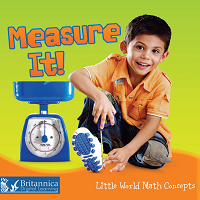
Measuring with a unit you lay end to end
A length is a count of copies of one unit. Change the unit and the number changes, so a number without its unit has not answered anything.
Grade 1 · 7 lessons · 3 books
Shapes and their parts
A shape's name follows from its parts, and its parts are things a child can count and compare. Four sides is not enough to make a square, and the thing that finishes the job is a comparison, not a glance.
Grade 1 · 7 lessons · 4 books
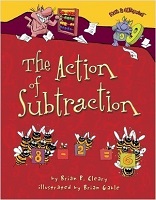
Taking away, and what is left
A take-away has three numbers in a fixed order, and the one you want is the part your hand did not touch.
Grade 1 · 6 lessons · 5 books
Ten ones make a ten, and what the places say
A two-digit number is not two numbers written next to each other. It is a count of bundles and a count of loose ones, and the column a digit sits in is what says which it is counting.
Grade 1 · 7 lessons · 4 books
What a coin is worth
A coin's worth is carried by its name, not by its size, and a fair trade is one where the worth on both sides is the same even though the number of coins is not.
Grade 2
Grade 2 · 7 lessons · 4 books
A rule that makes the next number
A rule is a claim about every place in the row, so one place where it produces the wrong number is enough to beat it. That is what makes a rule different from a guess that happened to work.
Grade 2 · 7 lessons · 3 books
Equal groups, and what is left over
Two numbers live in one arrangement, and a leftover is information, not a mistake.
Grade 2 · 8 lessons · 4 books
Even and odd
Even and odd are not labels to remember. They are the two things that can happen when a group pairs off, and the leftover is the proof.
Grade 2 · 7 lessons · 3 books
How heavy, and how much it holds
A balance gives three answers and no numbers, a scale gives a number and no comparison, and a pour settles a question looking cannot. The tool has to match the question, and a number without its unit is not an answer.
Grade 2 · 7 lessons · 3 books
Making a graph somebody else can read
A graph means something because somebody stated the categories, the unit and the scale. Take any of those away and the picture is decoration.
Grade 2 · 7 lessons · 3 books
Measuring with a unit that has a name
A measurement is a number and a unit, and neither half means anything alone. The bigger number can be the shorter distance, and the only way to know is to compare the units.
Grade 2 · 6 lessons · 3 books
Sorting with two conditions
Two overlapping circles make four places, not three. Outside both circles is a real region with a meaning of its own, and a card's place is decided by testing it against both labels rather than by where it looks as if it belongs.
Grade 2 · 8 lessons · 3 books
Telling time on a clock
A clock face is two scales drawn on top of each other. The short hand reads the numerals as hours and the long hand reads the same numerals as fives, and every reading is a decision about which hand you are looking at.
Grade 2 · 7 lessons · 4 books
The unit decides the number
A measurement is a number, a unit and a procedure. Change the unit and the number changes; change the attribute and the winner changes.
Grade 2 · 7 lessons · 3 books
Two-digit adding and taking away, and knowing the answer is right
A two-digit sum comes apart into tens and ones. So does the check on it, and so does the sentence that told you which operation to do.
Grade 2 · 7 lessons · 3 books
What a handful of coins comes to
An amount is a property of the money, not of the coins it happens to be made of. Counting a mixed handful means starting with the largest coin and changing step when the coin changes, and the answer does not depend on the order you were handed them in.
Grade 2 · 8 lessons · 5 books
What money is worth, and what comes back
A coin's worth has nothing to do with its size, an amount can be built many ways, and change is the same amount arriving from the other direction.
Grade 3
Grade 3 · 8 lessons · 4 books
A graph with a key
Once one mark stands for more than one thing, the graph cannot be read without the sentence that says how much. Choosing that key is arithmetic — it has to divide every count in the data — and writing it down is what makes the graph readable by somebody who was not in the room.
Grade 3 · 8 lessons · 4 books
All the way round, and what it covers
The distance round a figure and the amount it covers are two different measurements, and neither one fixes the other. Both are counts of a unit somebody chose, and both are only as good as the discipline of the counting: every side touched once, every length between knots the same, every row the same length.
Grade 3 · 7 lessons · 3 books
Division: sharing into equal groups
Three numbers, and you are always given two of them: the total, the number of groups, and what is in one. Which two decides everything you do next.
Grade 3 · 7 lessons · 3 books
Equal parts of one whole
A fraction names a part only once the whole is named and the parts are equal. Change either and the same words describe a different amount.
Grade 3 · 7 lessons · 3 books
Flips, turns and matching halves
Symmetry is the answer to a test a child performs, not a judgement made by looking at the front of a shape. There are two different tests — the fold and the turn — a figure can pass one and fail the other, and an answer is only worth as much as the test behind it.
Grade 3 · 8 lessons · 3 books
How long until
A start time, an amount of minutes and a finish time are three different things, and any two of them give you the third. Which one is missing decides whether you count forward, count back, or count the hops between — and the amount of minutes is never a time of day.
Grade 3 · 8 lessons · 4 books
Multiplication as equal groups
In a multiplication the two numbers do different jobs — one counts the groups, the other counts what is in one — and the word in the sentence is what sets the operation.
Grade 3 · 7 lessons · 3 books
Place value to the thousands
A digit does not stand for itself. It counts how many groups of one size are there, and the size is ten times the size to its right. Grouping by ten is a choice people made because it makes a pile sayable, and every exchange in the written form is that choice being paid out.
Grade 3 · 8 lessons · 5 books
Which number counts the groups
In a story the division is carried by the words. One number counts the things and the other counts the groups, and which is which is settled by a noun or by a small word like each — not by the order the numbers turn up in.
Grade 4
Grade 4 · 7 lessons · 3 books
Around it, or across it: perimeter and area
One rectangle carries two numbers and two units. The digits do not decide which one you want; the word does.
Grade 4 · 8 lessons · 3 books
Corners and degrees
A right angle is a fixed thing that a tester either fits or does not, and ninety degrees is the number for it. Once angles carry numbers they can be added, subtracted and compared, which is how a point is shown to close and how a missing corner is found before it is cut.
Grade 4 · 8 lessons · 6 books
Finding an unknown
An unknown is found, not guessed. Either the two sides of a sentence have to stay balanced while you strip the known numbers away, or the text supplies constraints that leave exactly one number possible — and in both cases the answer comes with the thing that forced it.
Grade 4 · 7 lessons · 4 books
How many times as much
Two quantities stand in two relations at once — a factor and a difference — and English marks them with different machinery that does not reverse the way children expect.
Grade 4 · 8 lessons · 3 books
One amount, many names: fractions, decimals and percents
Renaming changes what an amount is called and leaves how much is there alone — and where the bottom number is a hundred, the three names are already the same three numerals.
Grade 4 · 7 lessons · 4 books
One amount, three ways
The same quantity can be written as a fraction, a decimal or a percent, and when the bottom number is a hundred the three are already the same numerals. Renaming has to be justified rather than announced, choosing between the forms is a matter of occasion, and not everything written as one number over another is a fraction.

Grade 4 · 8 lessons · 5 books
Reading a scale and a table
A dot, a row or a mark is only read when both of its readings are taken, and what a display is asked for is decided by one word in the question. When the number that comes off it is a range, the answer stays a range all the way through, because collapsing it to one number is a guess wearing an answer's clothes.
Grade 4 · 7 lessons · 3 books
What a thing really costs
A column of prices carries no operation sign. The word does, the unit does, and a percentage acts on whatever the fine print points it at.