The Word file and the PDF carry the whole guide. The student pages are the two checkpoints and the culminating task, one to a sheet.
About this unit
This is the unit the 2026-09-02 audit could not build. It needed a third Grade 2 book on clock reading, and the shelf now carries six; the three chosen here between them supply the hands, the five-count, the three ways to say one time, and the two things a clock is actually for — knowing what time it is, and knowing how long until something happens.
The unit opens on the distinction children get wrong most: which hand did the work. Lesson 1 has them trade the two hands without changing a numeral and read the second clock that comes out of the same two positions, which makes the question unavoidable. From there the minute scale is built by counting fives all the way round and labelling every numeral, so that half past and quarter after arrive as names for a count rather than as phrases to memorise. The last two lessons turn the clock outward: a written time is cut in two at the point, and then two times are held beside each other and the gap between them is walked and counted.
The mathematical arc
Each lesson does one job the lesson before it made possible.
Trade the two hands and the same numerals say something else
Park the long hand and walk the short one round the hours
Build the minute scale by counting fives all the way round
Five minutes at a time, and the short hand between two numerals
One time, three names
Cut a written time in two at the point
Walk the gap between two times and count it in fives
Two faces side by side, and a judgement that carries a number
Source books
Every lesson in this unit is already published under Math lessons. Nothing here asks you to teach anything you cannot open today.
Each day names one lesson that already exists under Math lessons, with its book, its number and its title. This guide says what that lesson is doing in the sequence and what to collect from it; the lesson itself carries the steps, the printables and the answers.
Thirty minutes a day.
Five minutes to connect to yesterday, the twenty-minute source lesson, five minutes to close on something you can see. A day that runs long should lose the close, never the core.
Teach a lesson on its own if you need to.
Every day carries a one-sentence opening for a teacher who is using that lesson outside the sequence.
Stop after a checkpoint.
The unit holds together if you stop after either checkpoint and come back to it. Stopping between a checkpoint and the next one leaves a lesson without the evidence it was built on.
Where this fits in your year
When to teach it
After the class can count by fives to sixty. It does not depend on any other Grade 2 unit and is a good one to run early, because the classroom clock then becomes usable for the rest of the year.
What students need first
Children can count by fives to sixty and can read the numerals one to twelve.
What this unit develops
Naming the two hands and reading the hour off the short one; the minute scale built by counting fives; reading and writing times to five minutes past; one time said three ways; reading a written time as an hour and minutes past; counting the minutes between two times; judging early, on time or late.
What it prepares them for
Grade 3 elapsed time, where the gap runs across an hour boundary, and any timetable work.
Curriculum connections
None claimed. The lessons in this unit carry their own standards classifications on their own pages, checked lesson by lesson. A unit-level expectation is a different claim, and none has been verified for this unit, so none is printed here. Use the placement guide above to site the unit in your year, and the individual lesson pages for the codes.
Unit at a glance
#
Mathematical move
Source lesson
Collect
1
Trade the two hands and the same numerals say something else
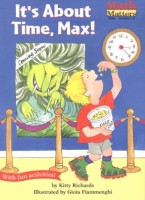
It's About Time, Max! lesson 1, Which Hand Tells the Hour?
Two drawn clocks side by side, one as written and one with the hands traded, and a spoken statement of which numeral changed jobs.
2
Park the long hand and walk the short one round the hours Checkpoint after this lesson
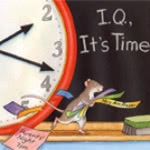
Its Time lesson 1, Which Hand Tells the Hour
Five hours from the story set and held up, and a strip carrying each one written in clock numbers in the order the story reaches them.
3
Build the minute scale by counting fives all the way round
It's About Time, Max! lesson 2, Count by Fives All the Way Around
A labelled face, checked by counting aloud and lifting each card as its number is said.
4
Five minutes at a time, and the short hand between two numerals
Its Time lesson 4, Half Past Ten and Forty-Five Past Two
Both of the story's times set and written in clock numbers, with the short hand between numerals on each.
5
One time, three names Checkpoint after this lesson
It's About Time, Max! lesson 4, Three Ways to Say the Same Time
A recording sheet with one clock face and all three names filled in, the minutes-after name reached by counting fives.
6
Cut a written time in two at the point
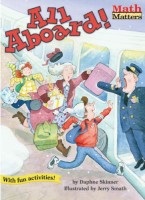
All Aboard! lesson 1, The Hour Part and the Minutes Past
Five of the trip's written times turned into set faces, each checked by a partner against the two halves of its card.
7
Walk the gap between two times and count it in fives
All Aboard! lesson 3, How Much Time Before It Starts?
A strip carrying four counted gaps — the taxi, Corndale, the wedding morning and the Herdville bus.
8
Two faces side by side, and a judgement that carries a number
All Aboard! lesson 2, On Time, or Not?
Two pairs of faces, one pair with a counted gap and one with a word card where a time should be, each with the book's own judgement word chosen for it.
Unit vocabulary
Words students say, not words they are taught to define.
hour hand, minute hand
Named in lesson 1 and used in every lesson after. The short one is the hour hand, whatever numeral it sits on.
minutes past
The count from the twelve round to the long hand, said in fives from lesson 3.
half past, quarter after
Lesson 5's names for counts children have already made, not phrases to be learned first.
due
Lesson 7's word: a time something is supposed to happen, which is what a gap is measured to.
on time, late
Lesson 8. A judgement about two faces, and it has to carry a number.
Materials
From the source lessons
Each day's materials are listed on that day's page below and on the source lesson itself. Nothing is duplicated here.
New for this unit
Checkpoint 1 page, one per child
Checkpoint 2 page, one per child
Performance task set: a paper clock with movable hands, a set of minute cards, a card carrying a written time, two clock faces for a promise and what happened, and red and blue counters, one set per pair
Performance task page, one per child
Assessment plan
Daily evidence
Keep the two drawn clocks from lesson 1, the as-written one and the hands-traded one. A child who cannot say which numeral changed jobs is the child to watch through lessons 3 and 4, because every later reading depends on that distinction.
Checkpoint 1, after lesson 2: Which hand gave you the hour?
A clock set to twenty past four. The child reads the hour, says which hand gave it, and then says what the clock would read if the two hands were swapped.
Book-free. A paper clock, no book.
Look for. The hour read off the short hand with a finger on it. A child who reads the hour off whichever hand is nearer a numeral will be right about half the time, so ask for the finger.
Checkpoint 2, after lesson 5: Say it three ways
A clock set to half past nine. The child gives three names for the time and says which they would use to somebody in a hurry.
Book-free. A paper clock, no book.
Look for. The minutes-past name is reached by counting fives from the twelve, not recalled. Ask them to count it aloud even when the answer comes quickly.
Culminating task: Read it, write it, and say how long until
Each pair does three things. They read a clock the teacher sets, say which hand gave them the hour, and write the time in clock numbers. They take a card carrying a written time, fold it at the point, set both hands from the two halves, and say the time two ways. Then they put a red counter on a stated time and a blue counter on a time something is due, walk the long hand from one to the other counting in fives, and say the gap and whether that leaves enough time.
Collect. The written time, the clock set from the folded card with both spoken names, and the counted gap with the enough-or-not judgement.
What it assesses. Reading a face, writing a time, turning a written time back into a face, and counting a gap in fives — the four things the unit built, with no time recalled and no gap guessed.
Daily lesson pages
Lesson 1Trade the two hands and the same numerals say something else
Skill lessonIt's About Time, Max! · lesson 1, Which Hand Tells the Hour? · Grade 2 · 20 minutes Naming the hour hand and the minute hand on an analog clock
I can
I can say which hand tells the hour.
Big idea
Two hands read the same twelve numerals in two different ways, so every reading starts with deciding which hand you are looking at.
Success
The child reads the hour off the short hand with a finger on it, and can say which numeral changed jobs when the hands were traded.
Connect | 5 min
First lesson. Set a classroom clock to twenty past four and ask what time it is. Take every answer offered, including four twenty and twenty past eight, and write them all up.
Taught on its own
The book never prints a clock for a reader to look at. It prints sentences about where two hands point, and Mom's rhyme supplies the rule that sorts them out.
Source core | 20 min
Children lay the two hands on a paper face longest first, chant the rhyme touching the short hand on the word hour, then set the clock as the book's sentence describes and say the hour with a finger on the hand that gave it.
Collect
Two drawn clocks side by side, one as written and one with the hands traded, and a spoken statement of which numeral changed jobs.
Close | 5 min
Each pair finishes the frame aloud for both clocks — the short hand is on ___, so the hour is ___ — and a partner who hears the wrong hand named answers try the other hand rather than giving the time.
From the source lesson: Paper clock faces with a movable short hand and a movable long hand, one per pair; Sentence strips carrying the book's hand sentences, one set per pair; Recording sheet with two blank clock faces side by side, one headed as written and one headed hands traded; Word cards: big hand, hour, hour hand, little hand
Watch for: The hour read off whichever hand is nearer a numeral. It is right half the time, so ask for the finger every time.
Lesson 2Park the long hand and walk the short one round the hours
Skill lessonIts Time · lesson 1, Which Hand Tells the Hour · Grade 2 · 20 minutes Telling time to the hour from the positions of the two hands
I can
I can set and read any o'clock time.
Big idea
With the long hand parked on the twelve, the short hand alone says the time, and the written form always ends in two zeros for the same reason.
Success
The child sets all five of the story's hours, moving both hands themselves and returning the long hand to the twelve before each reading.
Connect | 5 min
Yesterday both hands moved and the reading changed. Today one hand is parked, so the other one can be studied on its own.
Taught on its own
The story calls out the hour more than a dozen times as IQ crosses his school day, and once it stops and reads a face hand by hand: the big hand on the 12, the small hand on the 1.
Source core | 20 min
Children turn both hands right round once, point out which tells hours and which minutes, then park the long hand on the twelve and walk the short hand from numeral to numeral, saying the hour at each stop.
Collect
Five hours from the story set and held up, and a strip carrying each one written in clock numbers in the order the story reaches them.
Close | 5 min
Children read their finished strip aloud touching each line, and check that two zeros sit after every colon because the long hand never left the twelve.
From the source lesson: Paper clock with a long minute hand and a short hour hand, one per pair; Story time cards, one o'clock sentence per card; Recording strip with five blank clock lines; Word cards: hour hand, minute hand, o'clock
Watch for: A long hand that has drifted. Send it back to the twelve before the hour is read, or the written form will not match the face.
Checkpoint after this lesson: Which hand gave you the hour?. The page is at the end of this guide.
Lesson 3Build the minute scale by counting fives all the way round
Skill lessonIt's About Time, Max! · lesson 2, Count by Fives All the Way Around · Grade 2 · 20 minutes Counting by fives around the clock face to find the minutes
I can
I can count by fives round the face and say the minutes.
Big idea
The numerals carry a second set of numbers. Labelling each one with its minute is what turns twelve numerals into sixty minutes.
Success
The child labels every numeral with its minute and can carry the five-count on from a numeral the teacher names rather than from the twelve.
Connect | 5 min
The hours are settled. Today the other hand gets a scale of its own, and it is not the one printed on the face.
Taught on its own
A single line carries the rule, and Max has to use it three times, running the count from the twelve round to the six before he can name a time.
Source core | 20 min
Children put a finger on the twelve and count by fives right round to sixty, one touch per number word, three times over — slowly, at speaking pace, and then with no help from the other hand — before dealing the minute cards beside their numerals.
Collect
A labelled face, checked by counting aloud and lifting each card as its number is said.
Close | 5 min
The teacher names a numeral and children start the five-count there instead of at the twelve, carry it on to the long hand and say only the number they land on, while a partner checks by counting from the twelve.
From the source lesson: Paper clock faces with a movable short hand and a movable long hand, one per pair; Minute cards 5, 10, 15, 20, 25, 30, 35, 40, 45, 50, 55 and 60, one set per pair; Sentence strips carrying the book's hand sentences, one set per pair; Word cards: count by fives, hour, minutes
Watch for: A card that does not match its count. Back to the pile, and placed again by counting rather than by shuffling it along.
Lesson 4Five minutes at a time, and the short hand between two numerals
Skill lessonIts Time · lesson 4, Half Past Ten and Forty-Five Past Two · Grade 2 · 20 minutes Reading and writing times to five minutes past the hour
I can
I can read and write a time that is not on the hour.
Big idea
Once the long hand leaves the twelve the short hand stops sitting on a numeral, and that is not a mistake — it is what a time between two hours looks like.
Success
The child sets both of the story's times, puts the short hand between the right two numerals, and can say why it will not sit on one.
Connect | 5 min
The minutes now have a scale. Today the hour hand has to move off its numeral to match.
Taught on its own
Twice the story leaves the hour behind, at the name cards in the middle of the morning and at the bell that sends everyone home.
Source core | 20 min
Children walk the long hand from the twelve one numeral at a time saying the minutes, stop where a partner says stop and report the minutes past, then find half past ten and place the short hand where it has to go.
Collect
Both of the story's times set and written in clock numbers, with the short hand between numerals on each.
Close | 5 min
Pairs trade clocks without a word about the time, read the other pair's face, write down what they read, and settle any disagreement by walking the fives from the twelve together.
From the source lesson: Paper clock with a long minute hand and a short hour hand, one per pair; Time card with two blank clock readings; Word cards: between, half past, minutes past
Watch for: A short hand left on the numeral at half past. Ask where it should be if half the hour has gone.
Lesson 5One time, three names
Skill lessonIt's About Time, Max! · lesson 4, Three Ways to Say the Same Time · Grade 2 · 20 minutes Naming one clock time as o'clock, quarter after and half past
I can
I can say the same time three different ways.
Big idea
Half past and quarter after are names for counts a child has already made. They are not extra facts to learn, and the chart says all three names for one time.
Success
The child produces all three names for a time they have set, counting by fives before writing the minutes-after name.
Connect | 5 min
The class can now read a face and write it. Today one face gets three different sentences said about it.
Taught on its own
A closing chart says one single time three different ways, and the story before it shows exactly what it costs a child to know only one of them.
Source core | 20 min
Children set the clock to half past two, hunt through the name cards for every card that describes it, lay the three they find beneath the clock and read them in a row, saying which card left over describes a different clock and which one.
Collect
A recording sheet with one clock face and all three names filled in, the minutes-after name reached by counting fives.
Close | 5 min
Pairs swap sheets, set their own clock to the other pair's drawn time, test each of the three names against it, and cross out only a name the clock cannot show — saying which hand disagrees with it.
From the source lesson: Paper clock faces with a movable short hand and a movable long hand, one per pair; Time-name cards in three forms, minutes-after, numeral and quarter-or-half, one set per pair; Recording sheet with one clock face and three blank name slots beneath it, one per pair; Word cards: half past, o'clock, quarter after
Watch for: Quarter after used for quarter to. Send them to the chart's own definition and to a five-count from the twelve.
Checkpoint after this lesson: Say it three ways. The page is at the end of this guide.
Lesson 6Cut a written time in two at the point
Skill lessonAll Aboard! · lesson 1, The Hour Part and the Minutes Past · Grade 2 · 20 minutes Reading a written clock time as an hour and the minutes past that hour
I can
I can turn a written time into two hand positions.
Big idea
A written time is two numbers doing different jobs. The left half names an hour and the right half counts minutes, and a reader has to know which is which before either means anything.
Success
The child sets both hands from the two halves of a folded card and says the time two ways.
Connect | 5 min
Every time so far has been read off a face. Today the times arrive as numerals with no face at all.
Taught on its own
The book never draws a clock. It writes nineteen times as numerals across four days and expects a reader to know what each half is doing.
Source core | 20 min
Children fold the card reading 10.30 along the point, lay the two halves apart and say which half names an hour and which counts minutes, then set the short hand from the left half and count the right half round in fives.
Collect
Five of the trip's written times turned into set faces, each checked by a partner against the two halves of its card.
Close | 5 min
For each clock they have set, children finish two frames aloud — the hour is ___ and it is ___ minutes past, and then half past ___ or ___ o'clock — answering from the clock rather than from the card.
From the source lesson: Time cards carrying the trip's written times, folded at the point, one set per pair; Paper clock faces with a movable short hand and a movable long hand, one per pair; Sorting mat headed on the hour and past the hour, one per pair; Word cards: half past, hour, minutes past, o'clock
Watch for: The right half read as an hour. Fold the card and put the two halves in two places on the desk before anything is set.
Lesson 7Walk the gap between two times and count it in fives
Skill lessonAll Aboard! · lesson 3, How Much Time Before It Starts? · Grade 2 · 20 minutes Finding the minutes between a stated time and the time something is due to start
I can
I can count how many minutes there are between two times.
Big idea
A clock answers two questions: what time is it, and how long until. The second one is a walk between two marks, counted rather than subtracted.
Success
The child records all four gaps and can say which one is the odd size and by how many minutes.
Connect | 5 min
The class can read any time now. Today two times are put on one face and the space between them gets measured.
Taught on its own
Three times on this trip the family has exactly half an hour between one clock time and the next fixed thing, and the book never adds one of them up.
Source core | 20 min
Children put a red counter where the taxi was due and a blue counter where the show begins, say which the long hand reaches first, then walk the hand from red to blue saying five, ten, fifteen, one number word per five-minute mark.
Collect
A strip carrying four counted gaps — the taxi, Corndale, the wedding morning and the Herdville bus.
Close | 5 min
Children read their four counts aloud in order, say the number three of them share, say which one is different and say how many minutes shorter it is.
From the source lesson: Clock faces with a movable long hand and red and blue counters, one set per pair; Recording strip with four boxes headed taxi, Corndale, wedding morning and Herdville bus; Word cards: due, minutes, shorter
Watch for: A gap counted backwards. Ask which counter the long hand reaches first, and start there.
Lesson 8Two faces side by side, and a judgement that carries a number
Skill lessonAll Aboard! · lesson 2, On Time, or Not? · Grade 2 · 20 minutes Judging early, on time or late by holding a planned clock time beside what happened
I can
I can say whether something was early, on time or late, and by how much.
Big idea
Late is not a feeling about a story. It is what two faces say when you hold them beside each other, and the judgement has to carry the count between them.
Success
The child says the frame with a number in it — they said ___, it was really ___, so they were ___ — and can name the two faces it came from.
Connect | 5 min
Yesterday's gaps were between a time and a plan. Today one face is the plan and the other is what happened.
Taught on its own
This book almost never says how late anyone was. It says a word instead and leaves a reader to work out what the word does to a clock: on schedule, behind schedule, late, on time.
Source core | 20 min
Children read the promise strip and set the left clock to the time in it, then read the second strip and set the right clock beside it — leaving the taxi's face blank with a word card on it, because the book gives that stop no time at all.
Collect
Two pairs of faces, one pair with a counted gap and one with a word card where a time should be, each with the book's own judgement word chosen for it.
Close | 5 min
Children finish the frame aloud for each stop, and a partner who hears a judgement with no number in it answers by asking which two faces it came from.
From the source lesson: Promise strips and what-happened strips in two colours, one set per pair; Two paper clock faces per pair with a movable short hand and a movable long hand; Schedule word cards reading on schedule, behind schedule, late and on time, one set per pair; Word cards: behind schedule, on schedule, on time, promise
Watch for: A judgement taken from the story's tone rather than the faces. Ask for the two times before the word.
Culminating performance task
Read it, write it, and say how long until
Each pair does three things. They read a clock the teacher sets, say which hand gave them the hour, and write the time in clock numbers. They take a card carrying a written time, fold it at the point, set both hands from the two halves, and say the time two ways. Then they put a red counter on a stated time and a blue counter on a time something is due, walk the long hand from one to the other counting in fives, and say the gap and whether that leaves enough time.
Collect. The written time, the clock set from the folded card with both spoken names, and the counted gap with the enough-or-not judgement.
What it assesses. Reading a face, writing a time, turning a written time back into a face, and counting a gap in fives — the four things the unit built, with no time recalled and no gap guessed.
Teacher key and rubric
Key
Checkpoint 1: four twenty, off the short hand, and the swapped clock reads twenty-five past eight.
Checkpoint 2: half past nine, nine thirty, and thirty minutes past nine.
Task: choose the two gap times so the walk takes more than two number words and does not cross the hour — the hour crossing is Grade 3 and it will produce a wrong answer that looks like carelessness.
Rubric
Strand
Secure looks like
Developing
Not yet
Representation
Both hands are set by the child, and the long hand is returned to the twelve before a new reading begins.
Does it with the arrangement in front of them.
Produces an answer without the arrangement or the reason.
Calculation
The minutes are counted in fives from the twelve, one number word per five-minute mark, and a gap is walked rather than estimated.
Does it with the arrangement in front of them.
Produces an answer without the arrangement or the reason.
Meaning
The hour is read off the short hand and said with a finger on it, and a written time is read as an hour and minutes past.
Does it with the arrangement in front of them.
Produces an answer without the arrangement or the reason.
Explanation
A judgement of on time or late carries a number, and the child can say which two faces it came from.
Does it with the arrangement in front of them.
Produces an answer without the arrangement or the reason.
Print-ready student pages
These three pages print one to a sheet. Everything above them is the teacher guide.
Checkpoint 1 · Grade 2
Which hand gave you the hour?
NameDate
What is the hour? Put your finger on the hand that told you. Now if I swapped the two hands over, what would it say?
Checkpoint 2 · Grade 2
Say it three ways
NameDate
Tell me this time. Now tell me two more ways to say the same time. Which one would you use if somebody was in a hurry?
Culminating task · Grade 2
Read it, write it, and say how long until
NameDate
Read this clock. Which hand gave you the hour? Write the time down. Now fold this card at the point and set both hands from the two halves, and say the time two ways. Last, put the red counter here and the blue counter on the time it starts, walk the long hand round in fives, and tell me how long there is and whether that is enough.
Teacher planning and handoff
A child who cannot say which numeral changed jobs in lesson 1 should do that trade again before lesson 6, where a written time has to be turned back into two hand positions.
Lesson 7 is the bridge to Grade 3. If the class is going on to elapsed time, keep it, and note which children counted the gap in fives rather than subtracting.
The two mid-morning lessons on ordering the hours of a day and matching times to a schedule were left out because the ordering is carried by the gap work and the matching adds no new reading.