The Word file and the PDF carry the whole guide. The student pages are the two checkpoints and the culminating task, one to a sheet.
About this unit
This unit is about a sort with two questions running at once. Children lay two string loops that cross, name the four places out loud before touching a card, and then place every card by answering both label questions — saying the region as the card goes down. The fourth region is the whole difficulty: a card that answers no twice is still in the set, and the pile outside the loops has to be defended rather than swept aside as leftovers.
The middle lessons put the same diagram to work on a real question. A character labels one circle with everyone who was close enough and the other with anyone who had a reason, finds the middle empty, and has to decide what an empty middle means — nobody meets both conditions, or a card is in the wrong circle. Children then build the diagram from their own class, which forces the labels to be sharp enough to give a clean yes or no, and check four region counts against the number of people they asked. The unit ends on two sorts where the words matter: more against most, and money in against money out.
The mathematical arc
Each lesson does one job the lesson before it made possible.
Two loops make four places, and the fourth one is the hard one
Test the card against both labels before it touches the mat
An empty middle is an answer, and it has two meanings
Build it from the class, and make the counts add up
More is about two groups, most is about all of them
Two columns that are opposites, and a slip that fits neither
Source books
Every lesson in this unit is already published under Math lessons. Nothing here asks you to teach anything you cannot open today.
Each day names one lesson that already exists under Math lessons, with its book, its number and its title. This guide says what that lesson is doing in the sequence and what to collect from it; the lesson itself carries the steps, the printables and the answers.
Thirty minutes a day.
Five minutes to connect to yesterday, the twenty-minute source lesson, five minutes to close on something you can see. A day that runs long should lose the close, never the core.
Teach a lesson on its own if you need to.
Every day carries a one-sentence opening for a teacher who is using that lesson outside the sequence.
Stop after a checkpoint.
The unit holds together if you stop after either checkpoint and come back to it. Stopping between a checkpoint and the next one leaves a lesson without the evidence it was built on.
Where this fits in your year
When to teach it
After the class has sorted by one attribute and can tally. It is a good unit to run alongside any topic that produces class data.
What students need first
Children can answer a yes-or-no question about themselves and can count a group of twenty.
What this unit develops
Reading the overlap and the outside of a two-circle diagram; placing a card by testing it against both labels; what an empty middle can mean; writing labels sharp enough to answer; checking four region counts against a total; telling more from most; sorting amounts into two opposite columns.
What it prepares them for
Grade 3 data work, where a display has to be chosen as well as read, and any later logic where two conditions apply at once.
Curriculum connections
None claimed. The lessons in this unit carry their own standards classifications on their own pages, checked lesson by lesson. A unit-level expectation is a different claim, and none has been verified for this unit, so none is printed here. Use the placement guide above to site the unit in your year, and the individual lesson pages for the codes.
Unit at a glance
#
Mathematical move
Source lesson
Collect
1
Two loops make four places, and the fourth one is the hard one
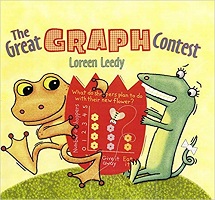
The Great Graph Contest lesson 4, Both Goes in the Middle, Neither Goes Outside
The whole deck placed into left only, right only, both or neither, with the region said out loud for every card.
2
Test the card against both labels before it touches the mat Checkpoint after this lesson
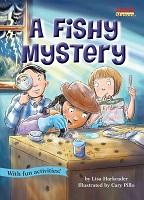
Fishy Mystery lesson 2, The Middle Means Both, The Outside Means Neither
Every both-card slid into the lens with both labels named aloud, and every no-and-no card parked inside the rectangle and counted.
3
An empty middle is an answer, and it has two meanings
Fishy Mystery lesson 3, An Empty Middle Is an Answer Too
Four placed name cards, an empty middle counted, and both of its possible meanings said aloud with a choice made between them.
4
Build it from the class, and make the counts add up Checkpoint after this lesson
Fishy Mystery lesson 4, Our Own Two Circles
A sorted mat with every name card placed by the recorded answers, and a recording strip carrying four region counts and a total.
5
More is about two groups, most is about all of them
The Great Graph Contest lesson 6, More Is Two Groups, Most Is All of Them
A three-group sort of twenty-four counters, all three groups counted, with the case found where more is true and most is false.
6
Two columns that are opposites, and a slip that fits neither
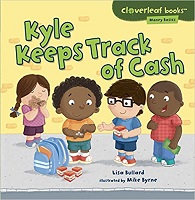
Kyle Keeps Track of Cash lesson 4, Two Columns on the Board
A headed sheet with every amount the story names written on a slip and placed, and any unplaceable slip defended aloud.
Unit vocabulary
Words students say, not words they are taught to define.
both
The middle region. A card gets there by answering yes twice, not by looking like it belongs.
neither
Outside both loops. Lesson 1's hardest region, and still part of the set.
condition
A label written as a question that gives a clean yes or no.
more, most
Lesson 5's pair. More compares two groups; most is a claim about the whole.
income, expenses
Lesson 6's two columns, one for money arriving and one for money leaving.
Materials
From the source lessons
Each day's materials are listed on that day's page below and on the source lesson itself. Nothing is duplicated here.
New for this unit
Checkpoint 1 page, one per child
Checkpoint 2 page, one per child
Performance task set: two string loops, a deck of twenty picture cards carrying two attributes, two blank label cards, a recording strip with four region boxes and a total, and a pencil, one set per pair
Performance task page, one per child
Assessment plan
Daily evidence
Keep the recording strip from lesson 4 with the four region counts and the total. A total that does not match the number of people asked is the most useful thing this unit produces, because it sends children back to find the card in two places or the person never asked.
Checkpoint 1, after lesson 2: Where does this one go?
Two labelled loops and four cards: one that passes both labels, one that passes each label alone, and one that passes neither. The child places all four and names each region as the card goes down.
Book-free. Loops, labels and cards, no book.
Look for. The no-and-no card placed inside the rectangle and named as a region rather than pushed aside. A child who leaves it in their hand has three regions, not four.
Checkpoint 2, after lesson 4: Do the counts add up?
A completed two-circle sort of twelve name cards with the four region counts written. The child adds the four counts, compares the total with twelve, and says what a mismatch would mean.
Book-free. A completed sort and a pencil, no book.
Look for. The child can name both causes of a mismatch — a card counted twice, or somebody never asked. Adding correctly is the easy half.
Culminating task: Two labels, four places, and a total that checks
Each pair does three things. They choose two labels sharp enough that every card gives a clean yes or no, write one on each loop, and check that a card exists for all four places. They place the whole deck, saying each region aloud as the card goes down, and defend the outside pile by naming both things each of those cards does not have. Then they count all four regions, add the counts, and check the total against the number of cards.
Collect. The two written labels, the sorted deck with the outside pile defended, and the recording strip with four counts and a total that checks.
What it assesses. A sort run on two conditions at once, with the fourth region defended and the counts reconciled against a total — the three things the unit built, with no card left in a hand because it was hard.
Daily lesson pages
Lesson 1Two loops make four places, and the fourth one is the hard one
Skill lessonThe Great Graph Contest · lesson 4, Both Goes in the Middle, Neither Goes Outside · Grade 2 · 20 minutes Sorting into two overlapping groups, including both and neither
I can
I can put a card in one of four places and say which place it is.
Big idea
Two overlapping loops make four regions. A card that answers no to both labels is still in the set, and outside both loops is where it lives.
Success
The child places every card saying the region aloud as it goes down, and defends the outside pile by naming both things each of those cards does not have.
Connect | 5 min
First lesson. Put two loops on the table so they cross and ask how many different places a card could go. Take the answers, including three.
Taught on its own
The bathing suits have flowers, or bugs, or flowers and bugs, and the book adds the fourth case in a single line: a suit with neither goes outside both circles.
Source core | 20 min
Children lay two string loops so they cross with a lens-shaped space in the middle, point to all four places and name them aloud before touching a card, then choose two attributes so that some cards have one, some the other, some both and at least one neither.
Collect
The whole deck placed into left only, right only, both or neither, with the region said out loud for every card.
Close | 5 min
Children find the cards they put outside both loops, say both things each one does not have, and hold their ground when a partner tries to move one in — saying why outside is a real place on this graph and not a leftover heap.
From the source lesson: Two loops of string per pair; A deck of about twenty picture cards carrying two attributes; Blank label cards, two per pair; Word cards: both, middle, neither, outside, overlap
Watch for: A hard card left in the hand. Hold it up, have both children say a place and a reason, and put it down.
Lesson 2Test the card against both labels before it touches the mat
Skill lessonFishy Mystery · lesson 2, The Middle Means Both, The Outside Means Neither · Grade 2 · 20 minutes Reading the overlap and the outside of a two-circle diagram
I can
I can answer both questions about a card before I place it.
Big idea
A region is not a place a card looks as though it belongs. It is the result of two answers, and both of them have to be given before the card is put down.
Success
The child holds a card in the air, answers both label questions in order, and only then places it.
Connect | 5 min
Yesterday the four places got named. Today the placing gets a rule: both answers first, then the card.
Taught on its own
The book uses the word both twice and means opposite regions with it: some children had both, so their names go where the circles cross, and Charlotte's name goes outside both circles.
Source core | 20 min
Children take a card off the deck and hold it in the air between the two circles, answer the blue question and then the square question keeping both answers in their head, say the two answers to a partner in that order and then place it.
Collect
Every both-card slid into the lens with both labels named aloud, and every no-and-no card parked inside the rectangle and counted.
Close | 5 min
Children pick one card from the middle and one from outside both circles and defend each to a partner using the frame strip; a partner may challenge a placement only by naming the label the card fails, never by saying it looks wrong.
From the source lesson: Large paper mat with a rectangle and two overlapping circles, one per pair; Deck of twelve shape cards per pair: three blue squares, four blue circles, three red squares, two red triangles; Sentence frame strip: it goes ___ because it is ___ and it is ___; Word cards: both, middle, neither, outside
Watch for: A card placed and then justified. Ask for both answers with the card still in the air.
Checkpoint after this lesson: Where does this one go?. The page is at the end of this guide.
Lesson 3An empty middle is an answer, and it has two meanings
Skill lessonFishy Mystery · lesson 3, An Empty Middle Is an Answer Too · Grade 2 · 20 minutes Using two conditions and their overlap to answer a question
I can
I can say what an empty middle means and which meaning I believe.
Big idea
An empty overlap is a finding, not a dead end. Either nobody meets both conditions, or a card is in the wrong circle — and deciding which is the work.
Success
The child names both meanings of an empty middle and says which they believe and what makes them believe it.
Connect | 5 min
The sorts so far have all had something in the middle. Today the middle comes out empty and the class has to decide what that tells them.
Taught on its own
Thea labels one circle with everyone who sat close enough to grab the fishbowl and the other with anyone who had a reason to take Rocky, and finds the middle empty.
Source core | 20 min
Children copy the book's two conditions onto their circles word for word, then take the four name cards one at a time and read out the sentence that decides one of each card's answers before it touches the mat.
Collect
Four placed name cards, an empty middle counted, and both of its possible meanings said aloud with a choice made between them.
Close | 5 min
Children go back to the reason circle and ask its question again about two of the names using a line they had not used, move any card that now answers yes twice into the middle, count it again and write one sentence naming who is in the middle and the two conditions they meet.
From the source lesson: Large sheet of paper, one per pair; Two blank label strips per mat; Name cards: Charlotte, Mr. Olson, Austin, Zoe; Detective notebook page, one per student; Word cards: condition, empty, evidence, reason
Watch for: An empty middle accepted as the end of the job. Ask what else it could mean, and send them back to one card's second condition.
Lesson 4Build it from the class, and make the counts add up
Skill lessonFishy Mystery · lesson 4, Our Own Two Circles · Grade 2 · 20 minutes Collecting class data and sorting it into a two-circle diagram
I can
I can collect two answers from everybody and check my four counts against the number of people.
Big idea
A label has to be sharp enough to give a clean yes or no, and the four regions have to account for everybody. The total is the check that nobody was counted twice or missed.
Success
The child's four region counts add to the number of people asked, and they can say what a mismatch would mean.
Connect | 5 min
The diagrams so far came out of a book. Today the data is the class in the room, and the labels have to be written by the children who will use them.
Taught on its own
The book's first diagram is built out of the class itself: dog owners, cat owners, the children with both in the middle, and Charlotte in the rectangle outside.
Source core | 20 min
Pairs agree two questions every classmate can answer yes or no, test them on themselves first and rewrite until both give a clean answer, then carry the tally sheet and ask every classmate both questions in the same words every time.
Collect
A sorted mat with every name card placed by the recorded answers, and a recording strip carrying four region counts and a total.
Close | 5 min
Pairs read their four region counts to the class, say what the names in their middle have in common, add the four counts and check the total against the number of people asked, then say one thing the diagram shows that the tally sheet did not.
From the source lesson: Large sheet of paper, one per pair; Two blank label strips per mat; Class tally sheet, one per pair; Name card for every student in the class; Recording strip with four region boxes and a total box; Word cards: data, label, sort, tally
Watch for: A card placed from memory of the person rather than from the recorded answers. Read the two marks aloud before the card goes down.
Checkpoint after this lesson: Do the counts add up?. The page is at the end of this guide.
Lesson 5More is about two groups, most is about all of them
Math through the readingThe Great Graph Contest · lesson 6, More Is Two Groups, Most Is All of Them · Grade 2 · 20 minutes Students find that swapping one small word changes how many stacks they have to look at, and build a sort where more is true and most is false at the same time.
I can
I can say which of more and most fits my own sort.
Big idea
One small word changes how many stacks you have to look at. More compares two groups; most is a claim about the whole, and a sort can make one true and the other false at the same time.
Success
The child builds a sort where more is true and most is false and holds it up, then says the fitting sentence and why the other word makes it false.
Connect | 5 min
The sorts are reliable now. Today the sentences said about them get tested, and two words that sound alike turn out to ask different questions.
Taught on its own
The book's sentence about its rock counts is true with one of the two words and not with the other, and it never says so.
Source core | 20 min
Children build the book's two rock counts as two rows, match them one to one and say the book's sentence, then say the swapped sentence with most in place of more and decide whether it is also true of these two rows.
Collect
A three-group sort of twenty-four counters, all three groups counted, with the case found where more is true and most is false.
Close | 5 min
Each pair says one true sentence about their own stacks using whichever word fits and says why the other word makes it false, pointing at the stacks that make it false; a listening pair rebuilds the claim from the sentence alone by pointing at the right stacks.
From the source lesson: Counters, thirty per pair; Base line card for building three stacks; The two versions of the rock sentence, written large one above the other; Three unlabelled graph set-ups: two squares, three stacks, four columns
Watch for: Most used of the biggest group without checking the whole. Ask how many that group has and how many there are altogether.
Lesson 6Two columns that are opposites, and a slip that fits neither
Skill lessonKyle Keeps Track of Cash · lesson 4, Two Columns on the Board · Grade 2 · 20 minutes Sorting amounts of money into the two columns of a budget
I can
I can sort amounts into money coming in and money going out.
Big idea
Some sorts have two columns that are opposites rather than overlapping circles. Direction is what decides the column, and a slip that will not go in either has to be defended rather than forced.
Success
The child explains each heading once in their own words without using the heading word, and defends any slip that will not go in either column.
Connect | 5 min
Overlapping loops have four places. Today there are two columns and they are opposites, so a card cannot be in both.
Taught on its own
The book opens with a club leader writing three words on a board — budget, expenses, income — and defining the last two in a sentence apiece.
Source core | 20 min
Children fold a sheet down the middle, head each half with one of the club leader's two words and the third across the whole sheet, say which heading means money arriving and which means money leaving, and draw an arrow on each heading to show it.
Collect
A headed sheet with every amount the story names written on a slip and placed, and any unplaceable slip defended aloud.
Close | 5 min
Children put the thirty dollars of expenses next to the thirty dollars Kyle ends up with, match them one dollar against one dollar down the page, and say whether the money coming in covers the money going out and how the matching told them rather than the counting.
From the source lesson: A sheet of paper per pair, folded down the middle; A marker per pair for the two headings and the arrows; Six blank money slips per pair, and two spares; A camping expense card per pair reading campground and supplies; Two strips of thirty play dollars per pair, one for each column; Word cards: budget, income, expenses
Watch for: An amount placed by size rather than by direction. Ask which way the money moved, and point at the arrow.
Culminating performance task
Two labels, four places, and a total that checks
Each pair does three things. They choose two labels sharp enough that every card gives a clean yes or no, write one on each loop, and check that a card exists for all four places. They place the whole deck, saying each region aloud as the card goes down, and defend the outside pile by naming both things each of those cards does not have. Then they count all four regions, add the counts, and check the total against the number of cards.
Collect. The two written labels, the sorted deck with the outside pile defended, and the recording strip with four counts and a total that checks.
What it assesses. A sort run on two conditions at once, with the fourth region defended and the counts reconciled against a total — the three things the unit built, with no card left in a hand because it was hard.
Teacher key and rubric
Key
Checkpoint 1: the both card in the lens, one card in each single region, and the neither card inside the rectangle outside both loops.
Checkpoint 2: twelve. A mismatch means either a card in two regions or somebody left out, and both answers are wanted.
Task: check the deck yourself before the lesson so that at least one card genuinely belongs in each of the four places. A deck with no neither card lets a child finish without ever meeting the hard region.
Rubric
Strand
Secure looks like
Developing
Not yet
Representation
Two loops that actually overlap, with all four places pointed to and named before any card is placed.
Does it with the arrangement in front of them.
Produces an answer without the arrangement or the reason.
Calculation
The four region counts are added and reconciled against the number of cards or people, with no card counted twice.
Does it with the arrangement in front of them.
Produces an answer without the arrangement or the reason.
Meaning
A card's region is decided by testing it against both labels, and outside both loops is described as a place rather than as leftovers.
Does it with the arrangement in front of them.
Produces an answer without the arrangement or the reason.
Explanation
A placement is challenged only by naming the label a card fails, and a card outside both loops is defended by naming both things it does not have.
Does it with the arrangement in front of them.
Produces an answer without the arrangement or the reason.
Print-ready student pages
These three pages print one to a sheet. Everything above them is the teacher guide.
Checkpoint 1 · Grade 2
Where does this one go?
NameDate
Put each of these where it goes, and say the place out loud as you put it down. Tell me about that last one.
Checkpoint 2 · Grade 2
Do the counts add up?
NameDate
Add up your four counts. How many people were there? What would it mean if those two numbers did not match?
Culminating task · Grade 2
Two labels, four places, and a total that checks
NameDate
Choose two labels and write one on each loop. Check there is a card for all four places. Now place every card and say the place out loud as you put it down. Tell me about the cards outside both loops — both things each one does not have. Last, count the four places, add them up, and check against the number of cards.
Teacher planning and handoff
A child who cannot say what an empty middle means will read every future diagram as finished. Give them lesson 3 again before any Grade 3 data work.
Lesson 4's reconciliation — four counts against the number of people asked — is the habit worth carrying. It catches the two commonest survey errors and costs one addition.
Fishy Mystery's fourth-region proof was left out because it would have been a fourth lesson from that book; the four places are established in lesson 1 and counted in lesson 4 instead.