The Word file and the PDF carry the whole guide. The student pages are the two checkpoints and the culminating task, one to a sheet.
About this unit
Grade 2 is where measurement stops being comparison and starts being reading a tool. This unit begins by having children measure badly on purpose — reporting a height as up to my knee — so that a stated procedure arrives as a fix for a real problem rather than as a rule.
It then takes the four moves that a measurement actually needs. One object measured in two units gives two numbers and the same winner. One object measured under two attributes gives a different winner. A hundred of a long unit beats two hundred of a short one. And a big unit is made of a countable number of small ones, which is what lets two names describe one amount.
The mathematical arc
Each lesson does one job the lesson before it made possible.
A number, a unit and a procedure two people can repeat
One object, three measurements: the unit moves the number, the attribute moves the winner
Read to the nearest half inch, and settle a comparison against a stated relation
Choose the unit that fits, judged against a benchmark you can hold
Build a pound as sixteen slices, and say the relation from both ends
The capacity ladder: each unit twice the one below
Two names for one bottle, which the book never sets side by side
Source books
Every lesson in this unit is already published under Math lessons. Nothing here asks you to teach anything you cannot open today.
Each day names one lesson that already exists under Math lessons, with its book, its number and its title. This guide says what that lesson is doing in the sequence and what to collect from it; the lesson itself carries the steps, the printables and the answers.
Thirty minutes a day.
Five minutes to connect to yesterday, the twenty-minute source lesson, five minutes to close on something you can see. A day that runs long should lose the close, never the core.
Teach a lesson on its own if you need to.
Every day carries a one-sentence opening for a teacher who is using that lesson outside the sequence.
Stop after a checkpoint.
The unit holds together if you stop after either checkpoint and come back to it. Stopping between a checkpoint and the next one leaves a lesson without the evidence it was built on.
Where this fits in your year
When to teach it
Any term after the class counts reliably past fifty. It needs real tools — a yardstick, a tape, a scale and measuring cups — so it wants a session to set up.
What students need first
Children can count to one hundred, can read numbers off a marked tool, and can compare two numbers.
What this unit develops
Measuring by a stated procedure; the effect of changing the unit; separating attributes; reading to a half unit; benchmark reasoning; the relation between a small unit and a large one; recognising two names for one amount.
What it prepares them for
Grade 4 work on unit price and on rates, where a number is inert until its unit is read.
Curriculum connections
None claimed. The lessons in this unit carry their own standards classifications on their own pages, checked lesson by lesson. A unit-level expectation is a different claim, and none has been verified for this unit, so none is printed here. Use the placement guide above to site the unit in your year, and the individual lesson pages for the codes.
Unit at a glance
#
Mathematical move
Source lesson
Collect
1
A measurement is a number, a unit and a procedure two people can repeat
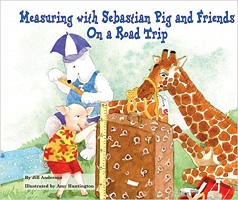
Measuring with Sebastian Pig and Friends on a Road Trip lesson 1, Take the End With the 1
A record sheet carrying one object's height as a number and a unit, with a second pair's independent number beside it.
2
One unchanged object, three measurements: the unit changes the number and the attribute changes the winner
Measuring with Sebastian Pig and Friends on a Road Trip lesson 2, Still the Winner
A three-line record, each line carrying two numbers and a unit word, with the winner of each contest named.
3
Read to the nearest half inch and settle less-than-a-foot against a stated relation Checkpoint after this lesson
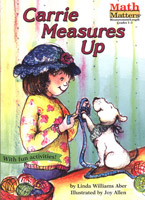
Carrie Measures Up lesson 2, Less Than a Foot
A record card carrying the slipper's length as a whole number and a half, and a sorting mat with four slippers placed above or below the foot line.
4
Choose the unit that fits, judged against a benchmark you can hold
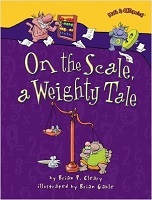
On the Scale, a Weighty Tale lesson 1, Which Unit Fits This Thing?
Four unit cards holding eight sorted objects, with two of them checked on a scale.
5
Build a pound as sixteen slices beside one, and say the relation from both ends
On the Scale, a Weighty Tale lesson 7, One Slice Against Sixteen
A counted stack of sixteen standing beside one slice, with the pears weighed on the same table.
6
The capacity ladder: each unit is twice the one below it in ounces Checkpoint after this lesson
Four rows of ounce tokens built by doubling, with the unit cards laid beside the rows they name.
7
Two cups and one pint — two names for one bottle the book never sets side by side
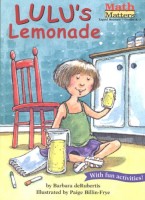
Lulu's Lemonade lesson 4, Two Cups, One Pint, One Bottle
The container marked at one cup and at two, with the pint card set at the second mark.
Unit vocabulary
Words students say, not words they are taught to define.
unit
The word that has to go with the number. Children are asked for both, every time.
about
Used in lesson 4, for a benchmark that a scale can disagree with.
half inch
Lesson 3: the long mark between two whole numbers.
ounce
Lessons 5 and 6, the small unit the larger ones are counted in.
Materials
From the source lessons
Each day's materials are listed on that day's page below and on the source lesson itself. Nothing is duplicated here.
New for this unit
Checkpoint 1 page, one per child
Checkpoint 2 page, one per child
Performance task set: one object per pair that can be stood up, wrapped and weighed; a yardstick, a flexible tape and a scale shared between pairs; a three-row record sheet
Performance task page, one per child
Assessment plan
Daily evidence
Keep the three-line record from lesson 2, the sorted unit cards from lesson 4, and the ounce rows from lesson 6.
Checkpoint 1, after lesson 3: Measure it and say the unit
An object and a yardstick. The child measures its height in inches with the 1 at the bottom, records the number with its unit, and a second child measures the same object without seeing the first number.
Book-free. A classroom object and a yardstick.
Look for. Two numbers that agree, both written with the unit word. Two numbers that disagree by more than one send both children back to the procedure.
Checkpoint 2, after lesson 6: How many of the small one?
A cup and a pint container, and water. The child finds how many cups fill the pint and says the relation both ways.
Book-free. Plain measuring cups and water.
Look for. Two, with both sentences said about the same two containers. A child who can only say it in one direction has half the relation.
Culminating task: One object, three answers
Each pair takes one object and measures it three ways: its height in inches with the yardstick, the distance round it with the tape, and its weight in pounds on the scale. Each number is written with its unit and with the word that called for it. They then read the three rows back and say which two of their numbers a classmate could confuse if the unit word were dropped. Finally they take one measuring word, swap it for another, and say which tool the new question needs and whether their object's answer would change.
Collect. The three-row record with word, tool, number and unit in each row, and the rewritten question with its spoken prediction.
What it assesses. A measurement as a number, a unit and a procedure, and the word that chooses the tool — the whole of what the unit built, with no conversion required.
Daily lesson pages
Lesson 1A measurement is a number, a unit and a procedure two people can repeat
I can measure so that somebody else gets my number.
Big idea
A measurement is a number, a unit and a procedure anyone can repeat, and the evidence is that two pairs measuring one object agree.
Success
Two pairs measure the same object without seeing each other's number, and the two numbers match.
Connect | 5 min
First lesson. Ask two children how tall the bookcase is and let them answer however they like. Write both answers up and leave them there.
Taught on its own
The book shows two friends settle a contest badly, by standing beside their suitcases and reporting a chest and a knee, and then shows Sebastian do it properly.
Source core | 20 min
Pairs first report both objects against their own bodies and swap with another pair to hear the same object reported differently, then find the 1 and the 36 on a yardstick and run the book's four moves in order on the taller object.
Collect
A record sheet carrying one object's height as a number and a unit, with a second pair's independent number beside it.
Close | 5 min
Pairs put the body report and the two yardstick numbers side by side and say which report another class could check and why, each finishing with one sentence naming their object, number and unit.
From the source lesson: Two objects of clearly different heights per pair, a backpack and a lunchbox or similar, standing on the floor; Yardstick or metre rule marked in inches on one side and centimetres on the other, one per pair; Measurement record sheet, one per pair, ruled for a number and a unit word; Word cards: height, inch, measure, tall
Watch for: The yardstick's end sitting below the object rather than the 1. Check that first; it is the commonest source of a number that will not repeat.
Lesson 2One unchanged object, three measurements: the unit changes the number and the attribute changes the winner
Skill lessonMeasuring with Sebastian Pig and Friends on a Road Trip · lesson 2, Still the Winner · Grade 2 · 20 minutes Measuring one unchanged object in two different units, and separating how tall a thing is from how heavy it is
I can
I can measure one thing three ways.
Big idea
Changing the unit changes the number without changing the object; changing the attribute can change which object wins.
Success
The child says which contest the tall object won and which it lost, and says it was the same object every time.
Connect | 5 min
Yesterday two pairs got the same number. Today one pair gets three different numbers for one object, and none of them is wrong.
Taught on its own
The book measures the same two suitcases three times over: in inches, in centimetres, and on the scale.
Source core | 20 min
Pairs measure both objects in inches and write both numbers with the unit, turn the yardstick to its centimetre side and measure the same unchanged objects again, then weigh two packed bags and read the pounds off the dial.
Collect
A three-line record, each line carrying two numbers and a unit word, with the winner of each contest named.
Close | 5 min
Each pair reads their three lines aloud, says what each pair of numbers is a measurement of, and names the contest the tall object won and the one it lost.
From the source lesson: Two objects of clearly different heights per pair, a backpack and a lunchbox or similar, standing on the floor; Yardstick or metre rule marked in inches on one side and centimetres on the other, one per pair; Measurement record sheet, one per pair, ruled for a number and a unit word; Two packed bags per group, the taller one deliberately the lighter; Bathroom or kitchen scale reading in pounds, one per group; Word cards: centimetre, heavy, pound, unit
Watch for: A child decides one of the three numbers must be a mistake. Ask what each number measured before any of them is doubted.
Lesson 3Read to the nearest half inch and settle less-than-a-foot against a stated relation
Skill lessonCarrie Measures Up · lesson 2, Less Than a Foot · Grade 2 · 20 minutes Reading a length to the nearest half inch and comparing it with one foot
I can
I can read to the half inch and compare it with a foot.
Big idea
The comparison is settled by two fingers on one tape, not by taking one number from another.
Success
The child finds the long mark halfway between two numbers and says the length as a whole number and a half.
Connect | 5 min
You can read a whole number off a tool. Today the object stops between two of them.
Taught on its own
Dad's foot measures eleven and a half inches, and the book says the foot is less than a foot, which is a joke and a genuine comparison at once.
Source core | 20 min
Pairs find the half-inch mark between 11 and 12, and between two other pairs of numbers, then measure a paper slipper cut to exactly eleven and a half inches with its heel flush at the start of the tape.
Collect
A record card carrying the slipper's length as a whole number and a half, and a sorting mat with four slippers placed above or below the foot line.
Close | 5 min
Pairs measure three more slippers, place each above or below the one-foot line, and say a full sentence for each naming its inches and whether it is less than a foot; a slipper landing exactly on twelve goes on the line.
From the source lesson: A cloth or paper tape measure marked in inches with half-inch lines, one per pair; A large paper tape strip for the desk, marked 1 to 12 with the half-inch lines drawn long; A paper slipper cut to exactly eleven and a half inches, one per pair; A record card per pair with one blank line for the slipper's length; A sentence strip carrying the frame, the slipper is ___ than one foot, one per pair; Three more paper slippers per pair, cut to ten and a half, twelve, and thirteen inches; A sorting mat with one horizontal line labelled one foot; Word cards: half, inch, foot, less than
Watch for: The tape started at the 1 instead of at its very beginning. Check the heel against the tape's end before any reading is written.
Checkpoint after this lesson: Measure it and say the unit. The page is at the end of this guide.
Lesson 4Choose the unit that fits, judged against a benchmark you can hold
Skill lessonOn the Scale, a Weighty Tale · lesson 1, Which Unit Fits This Thing? · Grade 2 · 20 minutes Choosing a fitting unit of weight for an object
I can
I can choose a unit that fits the thing.
Big idea
A unit has a size you can feel, and choosing one is a judgement about the object rather than a rule to recall.
Success
Every object on the tray sits on a unit card, and the child can name the reference object that decided it.
Connect | 5 min
You have been given the unit all week. Today you choose it, and the choice has to be defended.
Taught on its own
The book gives four objects whose weights are each about one unit: a paperclip, a slice of bread, two pears, a walrus.
Source core | 20 min
Pairs hold each of eight objects against the reference object on each unit card and lay it on the card it feels closest to, weighing nothing; then check the two lightest against a real scale and compare the reading with what the book claimed.
Collect
Four unit cards holding eight sorted objects, with two of them checked on a scale.
Close | 5 min
Each child picks one object and says a sentence naming the unit they chose and the reference object that decided it; the partner holds both and says whether they agree.
From the source lesson: Tray of eight classroom objects per pair, ranging from a paperclip to a full water bottle; Four unit cards reading gram, ounce, pound and ton, each carrying the book's example object; A paperclip, a slice of bread and two pears per pair, as the reference objects; Scale reading in whole grams, one per two pairs; Scale reading in whole ounces, one per two pairs; Sentence strip showing the frame: I put the ___ on ___ because it feels like the ___; The four unit cards laid in a row from gram to ton; Reduced tray of four objects chosen to be far apart in weight; Word cards: gram, ounce, pound, scale
Watch for: An object placed without being held against the reference. Nothing lands on a card until both objects have been in the same hands.
Lesson 5Build a pound as sixteen slices beside one, and say the relation from both ends
Math through the readingOn the Scale, a Weighty Tale · lesson 7, One Slice Against Sixteen · Grade 2 · 20 minutes The book makes a slice of bread weigh an ounce and two pears weigh a pound, and students build the sixteen-to-one relation as a stack and then say it from both ends.
I can
I can build the relation between two units.
Big idea
Sixteen is reached by counting sixteen slices beside one, so the relation is seen rather than calculated, and it has two true sentences.
Success
The child says both sentences with both numbers in each, pointing at the stack for one and the single slice for the other.
Connect | 5 min
Yesterday you chose between units. Today two of them are set against each other and the counting says by how much.
Taught on its own
The book puts a slice of bread at about an ounce and two pears at about a pound, four lines apart, and sets them against nothing.
Source core | 20 min
Pairs read the two object sentences, count sixteen paper slices into a stack and stand one more beside it, then weigh two real pears on the ounce scale and say whether the reading is near the pound the book claims.
Collect
A counted stack of sixteen standing beside one slice, with the pears weighed on the same table.
Close | 5 min
Each child says one heavier-than sentence and one lighter-than sentence with both numbers in each, and a partner says whether the second sentence said the same thing as the first.
From the source lesson: Sixteen paper bread-slice rectangles per pair, plus one more to stand beside the stack; Two real pears per group; Scale reading in whole ounces, one per two pairs; Two sentence frames on one strip, one with heavier than and one with lighter than, each with a box under every blank; Number cards reading 1 and 16, two of each per pair; The book's slice sentence and pears sentence written large and side by side; The pound-to-ounce table line written large beneath them
Watch for: A child multiplies to reach sixteen. Count the slices into the stack; the count is what makes the relation visible.
Lesson 6The capacity ladder: each unit is twice the one below it in ounces
Skill lessonLulu's Lemonade · lesson 2, Eight, Sixteen, Thirty-Two, Sixty-Four · Grade 2 · 20 minutes Relating cup, pint, quart and half-gallon by their ounce sizes
I can
I can build the ladder of capacity units.
Big idea
Each customary capacity unit is twice the one below it, so the ladder can be built by doubling rather than remembered.
Success
Each row is built by doubling the row beneath it, and the child says what they did each time.
Connect | 5 min
Yesterday sixteen ounces made a pound. Today four units are going to line up and each one is twice the one under it.
Taught on its own
The recipe at the back prints four liquids with both a unit name and an ounce number, and each number is twice the one below it.
Source core | 20 min
Pairs read the four ounce numbers aloud with both name and number, then build the smallest row in ounce tokens and make each next row by making a second row just like it and pushing the two together.
Collect
Four rows of ounce tokens built by doubling, with the unit cards laid beside the rows they name.
Close | 5 min
Pairs write the four pairs on a strip, largest first, and write one sentence saying what happens to the ounce number each time you go down a line.
From the source lesson: Recipe strip printed with the book's six lines, one per pair; Ounce tokens, one hundred and thirty per group, each token standing for one ounce; Unit cards reading cup, pint, quart, half-gallon and gallon, one set per pair; Recording strip, one per student; Pencil; Word cards: ounce, cup, pint, quart
Watch for: A pair counts each row out from scratch. The doubling is the lesson; make them build the new row from a copy of the last.
Checkpoint after this lesson: How many of the small one?. The page is at the end of this guide.
Lesson 7Two cups and one pint — two names for one bottle the book never sets side by side
Skill lessonLulu's Lemonade · lesson 4, Two Cups, One Pint, One Bottle · Grade 2 · 20 minutes Recognising that two cups and one pint name the same amount
I can
I can find two names for one amount.
Big idea
The same bottle is two cups in the story and one pint in the recipe, and nothing in the book says they agree.
Success
The child says one sentence using both names and the ounce number.
Connect | 5 min
Yesterday you built the ladder. Today two rungs of it turn out to be describing the same bottle.
Taught on its own
In the kitchen Martin finds about two cups of soda left; in the recipe at the back the same soda is one pint.
Source core | 20 min
Pairs read the two cards and say why they do not look like they agree, then pour one measuring cup into the empty container and mark where it stops, pour a second, count the ounces to sixteen and set the pint card at the line.
Collect
The container marked at one cup and at two, with the pint card set at the second mark.
Close | 5 min
Each pair writes the soda amount twice, once as the story says it and once as the recipe says it, with the ounce number beside each, and joins them with a line marked same.
From the source lesson: Recipe strip printed with the book's six lines, one per pair; An eight-ounce measuring cup, one per pair; Ounce tokens, one hundred and thirty per group, each token standing for one ounce; Unit cards reading cup, pint, quart, half-gallon and gallon, one set per pair; Recording strip, one per student; Pencil; Word cards: pint, equals, about
Watch for: A pair concludes the book contradicts itself. Ask what each name counted before either is doubted.
Culminating performance task
One object, three answers
Each pair takes one object and measures it three ways: its height in inches with the yardstick, the distance round it with the tape, and its weight in pounds on the scale. Each number is written with its unit and with the word that called for it. They then read the three rows back and say which two of their numbers a classmate could confuse if the unit word were dropped. Finally they take one measuring word, swap it for another, and say which tool the new question needs and whether their object's answer would change.
Collect. The three-row record with word, tool, number and unit in each row, and the rewritten question with its spoken prediction.
What it assesses. A measurement as a number, a unit and a procedure, and the word that chooses the tool — the whole of what the unit built, with no conversion required.
Teacher key and rubric
Key
Checkpoint 1: whatever the object measures; the pass is the agreement between two measurers and the unit word on the page.
Checkpoint 2: two cups fill a pint. Both sentences: a pint is two cups, and a cup is half a pint.
Task: no fixed answer. A row is correct when the number carries its unit and the word beside it is the one that calls for that tool.
Rubric
Strand
Secure looks like
Developing
Not yet
Representation
The tool is used as the procedure states, with the 1 at the bottom edge and the tape meeting itself.
Does it with the arrangement in front of them.
Produces an answer without the arrangement or the reason.
Calculation
Two measurers of one object agree, and the ounce counts are reached by counting rather than by rule.
Does it with the arrangement in front of them.
Produces an answer without the arrangement or the reason.
Meaning
No number is written or said without its unit.
Does it with the arrangement in front of them.
Produces an answer without the arrangement or the reason.
Explanation
The child says which measuring word each number answers, and what a different word would require.
Does it with the arrangement in front of them.
Produces an answer without the arrangement or the reason.
Print-ready student pages
These three pages print one to a sheet. Everything above them is the teacher guide.
Checkpoint 1 · Grade 2
Measure it and say the unit
NameDate
Measure the object in inches with the yardstick. Put the end with the 1 at the bottom. Write the number and the unit. Now let your partner measure it without seeing your number.
Checkpoint 2 · Grade 2
How many of the small one?
NameDate
Find out how many cups fill the pint. Pour, do not guess. Now say it both ways: a pint is how many cups, and a cup is how much of a pint?
Culminating task · Grade 2
One object, three answers
NameDate
Take your object and measure it three ways: how tall it is with the yardstick, how far around it is with the tape, and how heavy it is on the scale. Write each number with its unit and with the word that asked for it. Read your three rows back. Which two of your numbers could somebody confuse if the unit word were missing? Last, take one of the measuring words, swap it for another, and say which tool the new question needs.
Teacher planning and handoff
Children who wrote a bare number in the task need lesson 1 again; the unit word is the whole of this unit.
Lesson 6's ladder is the piece that carries into fractions of a whole, where halving twice is the same move.
Carrie Measures Up supplies only one lesson here; its ordering work is Grade 1 territory and is already covered there.