The Word file and the PDF carry the whole guide. The student pages are the two checkpoints and the culminating task, one to a sheet.
About this unit
This unit is the Grade 1 time work that does not involve a clock. Children lay the seven days in order and walk a pointer along them, answer tomorrow from any starting day with the cards face down, then use the same stepping to fill in a rota the book never writes out. Halfway through, the week stops being a strip and becomes a grid: one anchor date is given — the tenth of May is a Tuesday — and everything else has to be counted out from it.
Two turns are worth watching for. The first is that stepping back and stepping forward are one walk in two directions, and a child who restarts at Monday for every answer cannot keep up with a question asked mid-conversation. The second is that a calendar answers some questions and not others: a rota can be filled where the story constrains it and has to be left empty where it does not, and an activity pinned to one day behaves differently from one allowed on any. The unit ends by widening the same stepping from days to months.
The mathematical arc
Each lesson does one job the lesson before it made possible.
The seven days are a line, and tomorrow is a direction along it
Answer tomorrow from any day, with the cards face down
Count back along the days to place something the story never lists
One dated day anchors the whole row
Find the date the quiz withholds, then check the columns
Some rules name a day and some name none
The same stepping, on months instead of days
Source books
Every lesson in this unit is already published under Math lessons. Nothing here asks you to teach anything you cannot open today.
Each day names one lesson that already exists under Math lessons, with its book, its number and its title. This guide says what that lesson is doing in the sequence and what to collect from it; the lesson itself carries the steps, the printables and the answers.
Thirty minutes a day.
Five minutes to connect to yesterday, the twenty-minute source lesson, five minutes to close on something you can see. A day that runs long should lose the close, never the core.
Teach a lesson on its own if you need to.
Every day carries a one-sentence opening for a teacher who is using that lesson outside the sequence.
Stop after a checkpoint.
The unit holds together if you stop after either checkpoint and come back to it. Stopping between a checkpoint and the next one leaves a lesson without the evidence it was built on.
Where this fits in your year
When to teach it
Early in the year, and again as a reference unit whenever the class calendar routine is introduced. It needs no clock and no arithmetic beyond counting to twelve.
What students need first
Children can say the days of the week in order with help, and can read the day names on a card.
What this unit develops
Ordering the seven days; naming tomorrow and yesterday from any day; counting back along days to place events; building a calendar row from one dated anchor; finding a date the text withholds; telling a fixed day from any day; counting whole months between two named months.
What it prepares them for
Grade 2 clock work, where elapsed time is the same stepping on a different scale, and any classroom routine that asks children to find a date on a real calendar.
Curriculum connections
None claimed. The lessons in this unit carry their own standards classifications on their own pages, checked lesson by lesson. A unit-level expectation is a different claim, and none has been verified for this unit, so none is printed here. Use the placement guide above to site the unit in your year, and the individual lesson pages for the codes.
Unit at a glance
#
Mathematical move
Source lesson
Collect
1
The seven days are a line, and tomorrow is a direction along it
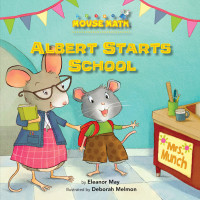
Albert Starts School lesson 1, The Week Albert Walks
An ordered seven-card strip, one hidden day named from its neighbours, and a pointer walk of four days forward and two back.
2
Answer tomorrow from any day, with the cards face down Checkpoint after this lesson
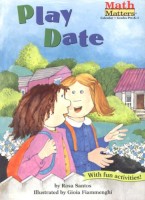
Play Date lesson 1, What Comes After Tuesday?
Every one of the book's tomorrow sentences answered with a whole day name, and three runs of three days from a spun start with the ring face down.
3
Count back along the days to place something the story never lists
Albert Starts School lesson 3, Whose Turn Was Wednesday
A rota with four names placed, Albert's card reached by two different roads, and one school day left deliberately empty.
4
One dated day anchors the whole row
Play Date lesson 3, Where May 10th Sits
A three-row grid with every square filled and a recording strip naming the day for the 7th, the 10th and the 21st.
5
Find the date the quiz withholds, then check the columns Checkpoint after this lesson
Play Date lesson 4, The Day the Quiz Leaves Out
A recording card carrying the birthday date and the day it falls on, with the columns checked by counting back to the tenth.
6
Some rules name a day and some name none
Albert Starts School lesson 4, One Day Only, or Any Day
Two rows with their rules said aloud, and one activity that has been in both with its day count named each time.
7
The same stepping, on months instead of days
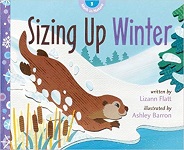
Sizing Up Winter lesson 4, Count the Months the Bear Slept
Two month counts reported aloud, one to March and one to April, and a coloured strip showing the child's own winter.
Unit vocabulary
Words students say, not words they are taught to define.
tomorrow, yesterday
Used from lesson 1 as directions along the strip, with the pointer showing which way each one moves.
the day before
Lesson 3's phrase, for two steps back rather than one.
date
The number in a calendar square, said together with its day: the tenth of May is a Tuesday.
row
Seven squares, one week. Lesson 4 counts along it and then into the rows either side.
any day
Lesson 6's phrase, for a rule that names no day at all and so cannot be checked against the strip.
Materials
From the source lessons
Each day's materials are listed on that day's page below and on the source lesson itself. Nothing is duplicated here.
New for this unit
Checkpoint 1 page, one per child
Checkpoint 2 page, one per child
Performance task set: a seven-card day strip, a blank grid of seven columns and three rows, a twelve-month strip, two counters and a pencil, one set per pair
Performance task page, one per child
Assessment plan
Daily evidence
Keep the grid from lesson 4 and the answer card from lesson 5. The thing to note is not whether a date was right but whether the child counted from the anchor or from the start of the row: the second works on this grid and fails on a real calendar.
Checkpoint 1, after lesson 2: Tomorrow, from anywhere
The seven day cards, face down. The teacher names a day and the child says tomorrow, then the day before, without turning the cards over. Four days are asked, none of them Monday.
Book-free. Day cards, no book.
Look for. The child answers without restarting at Monday. A child who recites the week under their breath each time has the order but not the stepping, and lesson 3 will be slow for them.
Checkpoint 2, after lesson 5: A date nobody told you
A grid with the seven day names and one date written in — the 14th under Wednesday. The child is asked for the date of the Monday in that row and for the day the 20th falls on, and has to count from the anchor both times.
Book-free. A grid and a pencil, no book.
Look for. Counting starts from the written date. A child who starts at the left-hand column and counts up has assumed the row begins at the first of the month, which is true of this grid only by accident.
Culminating task: Walk the week, build the row, count the months
Each pair does three things. They lay the seven day cards in order, turn them face down, and answer four tomorrow-and-yesterday questions from days the teacher names. They then head a grid with the seven day names, write one anchor date the teacher gives under its day, and count out along that row and into the row below until they can say the date of a day the teacher asks for. Finally they take a twelve-month strip, put a counter on two named months and hop from one to the other, saying every month aloud and reporting the count.
Collect. The four spoken day answers with the cards face down, the filled grid with the asked-for date circled, and the month count said aloud.
What it assesses. Stepping along the days in both directions, building a calendar row from one anchor, and counting whole intervals on a month strip — the three moves the unit built, in the three settings it built them in.
Daily lesson pages
Lesson 1The seven days are a line, and tomorrow is a direction along it
Skill lessonAlbert Starts School · lesson 1, The Week Albert Walks · Grade 1 · 20 minutes Ordering the seven days of the week and stepping forward and back along them
I can
I can put the days in order and step one day forward or back.
Big idea
A day name is a position. Wednesday is fixed by Tuesday on one side and Thursday on the other, and moving forward and moving back are one walk in opposite directions.
Success
The child names a hidden day from the cards either side of it, and can say which direction the pointer moves for tomorrow and which for yesterday.
Connect | 5 min
First lesson. Ask what day it is, then what day it will be tomorrow. Take the answer, then ask how they knew, and let the class find that they said the week to themselves.
Taught on its own
The book names all seven days in order across five school days and moves along them with the same three words a child uses: tomorrow, yesterday and the day before.
Source core | 20 min
Children deal the seven day cards in a jumble, lay them left to right in the story's order, read the line aloud touching one card per name, then walk a pointer one card right for each tomorrow and one card left for each yesterday, saying the day they land on.
Collect
An ordered seven-card strip, one hidden day named from its neighbours, and a pointer walk of four days forward and two back.
Close | 5 min
Children clip the cards into a ring so Saturday touches Sunday, walk the pointer round from Monday until it returns, and say how many days that walk took.
From the source lesson: A seven-card day strip per pair: Sunday, Monday, Tuesday, Wednesday, Thursday, Friday, Saturday, one day to a card; A wooden pointer or lolly stick per pair for walking the day strip; A seven-place paper loop per pair, the day cards clipped round it end to end; Word cards: yesterday, tomorrow, Wednesday
Watch for: A child who counts the card they start on as the first step. Count the landings, not the starting square.
Lesson 2Answer tomorrow from any day, with the cards face down
Skill lessonPlay Date · lesson 1, What Comes After Tuesday? · Grade 1 · 20 minutes Naming the day that comes after a named day
I can
I can say tomorrow's name without starting again at Monday.
Big idea
A question about tomorrow arrives in the middle of a conversation. Reciting the week to reach the answer is too slow to be an answer.
Success
The child names three days on from a spun start with the ring face down, and asks and answers the book's own question form at least three times.
Connect | 5 min
Yesterday the pointer did the work. Today the cards go face down and the child has to hold the order in their head.
Taught on its own
The book heads its seven pages Monday through Sunday and pushes the play date forward one day at a time, so six of the seven days are spoken as somebody's tomorrow.
Source core | 20 min
One partner reads a strip and says which day the scene happens on; the other names tomorrow as a whole day name and moves a counter one card round the ring, and they swap after every strip.
Collect
Every one of the book's tomorrow sentences answered with a whole day name, and three runs of three days from a spun start with the ring face down.
Close | 5 min
Partners take turns finishing the book's own question — tomorrow is ___, isn't it — with a day that may be right or wrong, and the listener either agrees or names the day that should have been there.
From the source lesson: Seven day-name cards per pair, one for each day from Monday to Sunday; Sentence strips carrying the book's tomorrow sentences, one set per pair; A counter for marking the day on the ring, one per pair; A spinner marked with the seven day names, one per pair; Word cards: day, tomorrow, week
Watch for: An answer given as next rather than as a day name. Ask for the name; next is what the question already said.
Checkpoint after this lesson: Tomorrow, from anywhere. The page is at the end of this guide.
Lesson 3Count back along the days to place something the story never lists
Skill lessonAlbert Starts School · lesson 3, Whose Turn Was Wednesday · Grade 1 · 20 minutes Counting back along the days to place turns in a rotation
I can
I can count back two days and check the answer against what the story said.
Big idea
A position reached by stepping back can be checked against one the story stated outright. When both roads land on the same card, the rota is right — and a day the story never constrains has to stay empty.
Success
The child places Albert twice, once from the story as it happens and once by counting back from Friday, and points out that both landed on the same card.
Connect | 5 min
Both walks so far have gone where the teacher said. Today the walk answers a question: whose turn was Wednesday?
Taught on its own
The class feeds the fish on a rota the book gives away in two separate places without ever writing it out: one classmate claims Tuesday and tells Albert his turn is tomorrow, and on Friday Albert names three days backwards.
Source core | 20 min
Children lay the school-day cards in order, put the two turns the story shows onto their days, then put Rachel on Friday and walk one day back for yesterday's feeder and one further back for Albert's own turn, saying each day name as a card goes down.
Collect
A rota with four names placed, Albert's card reached by two different roads, and one school day left deliberately empty.
Close | 5 min
Children find the one school day with no name on it, say which day it is, and say whether the story anywhere tells them who fed the fish that day and why guessing a name would not be reading.
From the source lesson: A seven-card day strip per pair: Sunday, Monday, Tuesday, Wednesday, Thursday, Friday, Saturday, one day to a card; Four name cards per pair reading Melody, Albert, Charlie, Rachel; A paper fish bowl per pair with Mini drawn in it; A wooden pointer or lolly stick per pair for walking the day strip; Blank slips and a pencil per pair; Word cards: turn, yesterday
Watch for: A name written on the empty day to finish the row. The empty square is the answer; ask what sentence would have to exist to fill it.
Lesson 4One dated day anchors the whole row
Skill lessonPlay Date · lesson 3, Where May 10th Sits · Grade 1 · 20 minutes Building a calendar row from one dated day
I can
I can build a calendar row from one date I am given.
Big idea
A calendar is not given, it is built. One date under its own day fixes every other square in the row, and the count runs both ways from it.
Success
The child's row has the anchor under its own day and no column holding two numbers, and they can read the row aloud as date and day together.
Connect | 5 min
The week has been seven cards in a line. Today it becomes seven columns with numbers under them, and only one number is given.
Taught on its own
The back pages set three children a calendar quiz and give away exactly one anchor, that the 10th of May is a Tuesday. No calendar is ever drawn for the reader.
Source core | 20 min
Children head seven columns with the day names in the book's order, write 10 in the Tuesday column of the middle row, then count back across the row to Monday and on to the end of the row, one number to a column.
Collect
A three-row grid with every square filled and a recording strip naming the day for the 7th, the 10th and the 21st.
Close | 5 min
Children fill the rows above and below, seven squares to a row, then find 7, 10 and 21 and write the day each sits under, saying each pair aloud before writing it.
From the source lesson: A blank grid of seven columns and three rows, one per pair; Seven day-name cards per pair, one for each day from Monday to Sunday; A recording strip headed with the three dates the quiz names, one per pair; Word cards: calendar, date, row
Watch for: Counting from the left-hand column instead of from the anchor. It happens to work on this grid and fails on a real calendar; ask where they counted from.
Lesson 5Find the date the quiz withholds, then check the columns
Skill lessonPlay Date · lesson 4, The Day the Quiz Leaves Out · Grade 1 · 20 minutes Finding a date the calendar quiz does not print
I can
I can find a date the book never prints and check it against the anchor.
Big idea
The quiz gives the day after and never the day itself. One step back along the row answers it, and counting on to the anchor proves the columns stand where the book put them.
Success
The child names what the question withholds before answering it, and gives the finished answer with both parts: the date, and the day it falls on.
Connect | 5 min
Yesterday's grid was built to be filled. Today it is used to answer something the book refuses to say.
Taught on its own
The quiz's last question gives a day name and the date of the day after it, and never gives the date of the day it is asking about.
Source core | 20 min
Children read the question twice, point at the two things the book gives and say the one thing it never gives, then find 21 on their grid, step one square left, and write the date they land on.
Collect
A recording card carrying the birthday date and the day it falls on, with the columns checked by counting back to the tenth.
Close | 5 min
Children read the day name above the square they landed on, count back along the grid to the tenth under Tuesday saying every date as they pass, and say whether the day they read is the Friday the quiz prints.
From the source lesson: The finished seven-column grid from the calendar lesson, one per pair; A counter for marking the square being counted from, one per pair; A recording card headed birthday date and birthday day, one per pair; Word cards: date, next day
Watch for: Answering before the withheld quantity has been named. The naming is the reading half of this lesson; do not let the arithmetic start early.
Checkpoint after this lesson: A date nobody told you. The page is at the end of this guide.
Lesson 6Some rules name a day and some name none
Skill lessonAlbert Starts School · lesson 4, One Day Only, or Any Day · Grade 1 · 20 minutes Sorting events by whether they are fixed to one day or allowed on any day
I can
I can say whether an activity happens on one day or on any day.
Big idea
A rule that names a day can be checked against the strip and gives one answer. A rule that says any day cannot be checked that way, and gives many.
Success
The child says each row's rule in one sentence and says which row you could ask about Thursday and get one answer.
Connect | 5 min
The grid answered a question about a date. Today the class finds a kind of question a calendar cannot answer at all.
Taught on its own
Albert keeps colliding with school because at home nothing is pinned to a day and at school everything is. The book states both rules outright, three times each, and never resolves them.
Source core | 20 min
Children build a school row where every activity sits on exactly one day card and a home row with no day cards at all, then move the painting card between the rows and say how many days it is allowed on in each.
Collect
Two rows with their rules said aloud, and one activity that has been in both with its day count named each time.
Close | 5 min
Children put a nap slip on the school row where the teacher's rule puts it and one in the home row, say what decides it there, and say which of the two rules a clock could check.
From the source lesson: Two setting cards per pair, one reading school and one reading home; A seven-card day strip per pair: Sunday, Monday, Tuesday, Wednesday, Thursday, Friday, Saturday, one day to a card; Five activity cards per pair: library, art, music, gym, class snack; Blank slips and a pencil per pair; Word cards: anytime, any
Watch for: A day card sneaking into the home row. The absence of day cards is the whole representation; ask what the home row has none of.
Lesson 7The same stepping, on months instead of days
Skill lessonSizing Up Winter · lesson 4, Count the Months the Bear Slept · Grade 1 · 20 minutes Counting whole months on a calendar between two named months
I can
I can count the months from one named month to another.
Big idea
Months step the way days do. Count the landings and not the box you started in, and the answer is a number of months rather than a pair of names.
Success
The child hops both counts — to March and then to the later month the book allows — and reports both numbers.
Connect | 5 min
Six lessons of stepping along days. Today the boxes are months, and the walk is the same walk.
Taught on its own
The book asks how long winter is four times over and answers it none of them, but its notes name two months: the den is dug around the middle of October and the bears leave in March or April.
Source core | 20 min
Children find both months on a twelve-month strip, put a red counter on the month the den is dug and a blue one on the month the bears come out, and hop a finger one box at a time saying each month name aloud, counting the hops rather than the starting box.
Collect
Two month counts reported aloud, one to March and one to April, and a coloured strip showing the child's own winter.
Close | 5 min
Children line their coloured strip under the bear's, January under January, say which winter has more months in it and put a finger where the shorter run stops — without working out how many more.
From the source lesson: A twelve-month strip per pair, January to December, one box to a month; Two red and two blue counters per pair; A blank twelve-month strip per child, January to December, with each box big enough to colour; A crayon per child; Word cards: month, calendar, winter, between
Watch for: Counting the starting box. Ask them to say the first month aloud and then start counting at the next hop.
Culminating performance task
Walk the week, build the row, count the months
Each pair does three things. They lay the seven day cards in order, turn them face down, and answer four tomorrow-and-yesterday questions from days the teacher names. They then head a grid with the seven day names, write one anchor date the teacher gives under its day, and count out along that row and into the row below until they can say the date of a day the teacher asks for. Finally they take a twelve-month strip, put a counter on two named months and hop from one to the other, saying every month aloud and reporting the count.
Collect. The four spoken day answers with the cards face down, the filled grid with the asked-for date circled, and the month count said aloud.
What it assesses. Stepping along the days in both directions, building a calendar row from one anchor, and counting whole intervals on a month strip — the three moves the unit built, in the three settings it built them in.
Teacher key and rubric
Key
Checkpoint 1: Friday and Wednesday for a Thursday, and whatever the other three days give. The cards stay face down; that is the point of the checkpoint.
Checkpoint 2: the 12th for the Monday, and Tuesday for the 20th. A child who answers the 1st for the Monday has counted from the left edge rather than from the anchor.
Task: choose an anchor that is not in the first column and not the 1st of the month, and check the month pair yourself — the hop counts the landings, not the box you start from, so October to March is five.
Rubric
Strand
Secure looks like
Developing
Not yet
Representation
The grid is headed with seven day names in order and the anchor date sits under its own day before anything else is written.
Does it with the arrangement in front of them.
Produces an answer without the arrangement or the reason.
Calculation
Counting along days or months lands one name per step, and a count back is the same walk in the other direction.
Does it with the arrangement in front of them.
Produces an answer without the arrangement or the reason.
Meaning
A date is said with its day, and a day the text does not fix is left empty rather than guessed.
Does it with the arrangement in front of them.
Produces an answer without the arrangement or the reason.
Explanation
The child can say where they counted from, and why counting from the anchor is not the same as counting from the edge of the grid.
Does it with the arrangement in front of them.
Produces an answer without the arrangement or the reason.
Print-ready student pages
These three pages print one to a sheet. Everything above them is the teacher guide.
Checkpoint 1 · Grade 1
Tomorrow, from anywhere
NameDate
The cards are face down. If today is Thursday, what is tomorrow? What was yesterday? Now I will say three more days.
Checkpoint 2 · Grade 1
A date nobody told you
NameDate
The fourteenth is a Wednesday. What is the date of the Monday in that row? Now tell me which day the twentieth falls on. Show me where you counted from.
Culminating task · Grade 1
Walk the week, build the row, count the months
NameDate
Lay the seven days in order, then turn them over. If today is Friday, what is tomorrow? I will ask you three more. Now head your grid with the day names and write the date I give you under its day. Count out until you can tell me the date I ask for. Last, put your counters on the two months I name and hop from one to the other, saying every month out loud.
Teacher planning and handoff
A child who recites the whole week to answer tomorrow will find lesson 3's counting back slow. Give them the face-down cards again before the clock unit in Grade 2, where the same stepping runs on sixty.
Lesson 6 is the one that looks least like mathematics and is the one that makes a calendar useful: a rule that names no day cannot be checked against the strip, and children need to hear that said.
Play Date's second lesson and Albert Starts School's matching lesson were left out because they are counting and matching rather than stepping along a week, and both are carried by other units on this shelf.