The Word file and the PDF carry the whole guide. The student pages are the two checkpoints and the culminating task, one to a sheet.
About this unit
Division goes wrong in Grade 3 for a reason that is not arithmetic. Children are handed two numbers and cannot tell which one counts the groups. This unit deals the counters slowly on purpose so the third number is something they produced, and then puts the reading problem in front of them directly: divided by three and into groups of three sound almost the same and predict different arrangements.
The unit then varies the two given numbers one at a time, so the direction each change pushes the answer is something children watch rather than something they are told. It finishes on the share that does not come out even, and on what a book can and cannot settle about the leftover.
The mathematical arc
Each lesson does one job the lesson before it made possible.
Deal one at a time, and name what each number counts
Equal groups are what make the question answerable
Divided by three, or into groups of three?
Find the divisor when only the group size is known
Hold the groups and grow the total: the share climbs
Hold the total and grow the sharers: the share shrinks
When it does not come out even
Source books
Every lesson in this unit is already published under Math lessons. Nothing here asks you to teach anything you cannot open today.
Each day names one lesson that already exists under Math lessons, with its book, its number and its title. This guide says what that lesson is doing in the sequence and what to collect from it; the lesson itself carries the steps, the printables and the answers.
Thirty minutes a day.
Five minutes to connect to yesterday, the twenty-minute source lesson, five minutes to close on something you can see. A day that runs long should lose the close, never the core.
Teach a lesson on its own if you need to.
Every day carries a one-sentence opening for a teacher who is using that lesson outside the sequence.
Stop after a checkpoint.
The unit holds together if you stop after either checkpoint and come back to it. Stopping between a checkpoint and the next one leaves a lesson without the evidence it was built on.
Where this fits in your year
When to teach it
After multiplication as equal groups. It reads as the same arrangement asked a different question, so it is worth running the two units in the same term.
What students need first
Children can build equal groups, can say which number counts groups and which counts items, and can skip count.
What this unit develops
Partitive division by dealing; the requirement that groups be equal; distinguishing partitive from quotitive division; finding an unknown divisor; the effect of varying the total and of varying the number of sharers; remainders.
What it prepares them for
Division with larger numbers, unit rate in Grade 4, and any later work where the remainder has to be interpreted rather than discarded.
Curriculum connections
None claimed. The lessons in this unit carry their own standards classifications on their own pages, checked lesson by lesson. A unit-level expectation is a different claim, and none has been verified for this unit, so none is printed here. Use the placement guide above to site the unit in your year, and the individual lesson pages for the codes.
Unit at a glance
#
Mathematical move
Source lesson
Collect
1
Deal one at a time into a stated number of groups, and name what each number counts
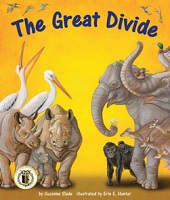
The Great Divide lesson 1, One Plate at a Time: How Many in Each Group
A recording strip carrying the number on one plate for four different verses.
2
Equal groups are what make the question answerable — make the wrong split on purpose
The Great Divide lesson 3, The Word This Book Forgot to Print
The number of moves it took, and the word the table would add to the verse, written on the strip.
3
Divided by three, or into groups of three? The frog count rules one reading out Checkpoint after this lesson
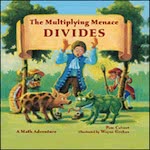
The Multiplying Menace Divides: A Math Adventure lesson 6, Divided By Three, or Into Groups of Three?
Two built arrangements side by side, each with its equation, and one plate pushed forward on each as the group that turns into frogs.
4
Find the divisor when only the size of one group is known
The Multiplying Menace Divides: A Math Adventure lesson 3, How Many Groups Made Four Frogs?
The cups on the desk with the divisor written and the equation that proves it.
5
Hold the groups and grow the total: the share climbs
The Great Divide lesson 4, Three Verses, Four Groups, Three Answers
A row of three answers with the total that produced each written above it.
6
Hold the total and grow the sharers: the share shrinks Checkpoint after this lesson
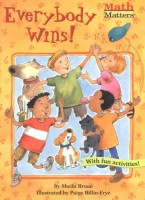
Everybody Wins! lesson 2, Thirty-six boxes, three sharers then four
Two recorded shares from one unchanged total, with both printed lines set beside them.
7
When it does not come out even: the remainder the book leaves standing
Everybody Wins! lesson 3, Twenty-four bags for twenty kids
The leftovers tray holding four, with all four numbers of the share pointed at on the printed line.
Unit vocabulary
Words students say, not words they are taught to define.
share
What one group gets, found by dealing.
groups
How many piles there are. Children say which number counts these before dealing.
equal
The condition that makes the question have one answer.
left over
What remains when the deal does not come out even, kept visible rather than tidied.
Materials
From the source lessons
Each day's materials are listed on that day's page below and on the source lesson itself. Nothing is duplicated here.
New for this unit
Checkpoint 1 page, one per child
Checkpoint 2 page, one per child
Performance task set: thirty counters, six paper plates, a leftovers tray and a card naming a total and a number of groups, per pair
Performance task page, one per child
Assessment plan
Daily evidence
Keep the recording strip from lesson 1, the two built arrangements from lesson 3, and the row of three answers from lesson 5.
Checkpoint 1, after lesson 3: Which number is the groups?
Eighteen counters and the sentence 'shared into three'. The child deals, reads one plate, and says which number counted the plates, which counted the counters, and which one they produced.
Book-free. Plain counters and plates.
Look for. Six on a plate, and all three numbers correctly named. A child who cannot say which number they produced has done the dealing without following it.
Checkpoint 2, after lesson 6: Which way does it move?
Twenty-four shared among four, then among six, then among three. The child records the three shares and says what happened to the share each time the number of sharers changed.
Book-free. Plain counters.
Look for. Six, four, eight, and a statement that more sharers give a smaller share. A child who computes all three without noticing the direction has missed the lesson.
Culminating task: Deal it, and say what is left
Each pair is given a total and a number of groups. They deal one at a time until the pile is gone, read one plate and say the three numbers with what each counts. They then deal the same total into one more group than before and say which way the share moved and why. Finally they deal a total that will not come out even, keep the leftover in the tray rather than tidying it away, and write the four numbers of that share.
Collect. The two even deals with their three numbers each, the direction statement, and the uneven deal with its leftover recorded.
What it assesses. Dealing, naming the three numbers, watching the direction of change, and reporting a remainder — everything the unit built, with totals under thirty.
Daily lesson pages
Lesson 1Deal one at a time into a stated number of groups, and name what each number counts
Skill lessonThe Great Divide · lesson 1, One Plate at a Time: How Many in Each Group · Grade 3 · 20 minutes Partitive division: sharing a total into a stated number of equal groups
I can
I can deal a total into equal groups.
Big idea
Dealing one at a time is what makes the sharing equal, and the answer is read off a single plate.
Success
The child says a full sentence naming all three numbers.
Connect | 5 min
First lesson. Put twenty counters and five plates in front of the class and ask what the question is. Take the answers and settle nothing yet.
Taught on its own
The book hands a student both numbers a sharing needs and withholds only the answer: it prints the animals and it prints the groups.
Source core | 20 min
Pairs count ten counters onto the mat and set five plates beside it, say aloud what each number counts, then deal one counter to a plate at a time until the pile is gone and count what sits on one plate.
Collect
A recording strip carrying the number on one plate for four different verses.
Close | 5 min
Each pair picks one verse and says a full sentence naming the total, the number of groups and the number on one plate; the partner checks the plates against the sentence.
From the source lesson: Counters, at least twenty per pair; Paper plates, five per pair; Recording strips, one per student; Pencils; Word cards: each, bail, groups
Watch for: A child deals in handfuls and lands unevenly. One counter to a plate at a time; the slowness is the point.
Lesson 2Equal groups are what make the question answerable — make the wrong split on purpose
Skill lessonThe Great Divide · lesson 3, The Word This Book Forgot to Print · Grade 3 · 20 minutes Why the groups in a division have to be the same size
I can
I can say why the groups have to be equal.
Big idea
An uneven split gives the question two answers, and the question asked for one.
Success
The child makes an uneven split on purpose, finds two answers, and moves counters until there is one.
Connect | 5 min
Yesterday every plate came out the same. Today you will split it wrongly on purpose and find out what goes missing.
Taught on its own
The book asks how many in each twelve times and never once prints the word equal.
Source core | 20 min
Pairs split sixteen counters onto two plates any way except evenly, answer the verse's question aloud and notice they have two answers, then slide counters across one at a time until both plates hold the same number.
Collect
The number of moves it took, and the word the table would add to the verse, written on the strip.
Close | 5 min
Pairs deal two more verses and check every plate holds the same number before writing anything down, dealing again from the start rather than moving one counter across if a plate is short.
From the source lesson: Counters, at least twenty per pair; Paper plates, five per pair; Recording strips, one per student; Pencils; Word cards: mob, equal
Watch for: A pair splits evenly out of habit. Insist on the uneven split first; the trouble it causes is the lesson.
Lesson 3Divided by three, or into groups of three? The frog count rules one reading out
Math through the readingThe Multiplying Menace Divides: A Math Adventure · lesson 6, Divided By Three, or Into Groups of Three? · Grade 3 · 20 minutes Students build both readings of the kitten spell with counters and use the book's own result sentence to decide which reading Rumpelstiltskin spoke.
I can
I can hear which number the divisor counts.
Big idea
Divided by three and into groups of three sound almost the same and build different arrangements, and the story's own result rules one of them out.
Success
Both arrangements stand on the desk with an equation under each, and the child names the number that settles which is the book's.
Connect | 5 min
You have dealt into a number of groups you were given. Today the sentence is going to be ambiguous, and only the story's own count will settle it.
Taught on its own
Rumpelstiltskin's spells are two words and a number, and the two words decide whether the three counts the groups or what sits in one.
Source core | 20 min
Pairs read the spell strip and the result strip aloud, count twelve counters into one pile, deal them onto three plates and write the equation, then sweep them up and deal them into plates of three and write that equation.
Collect
Two built arrangements side by side, each with its equation, and one plate pushed forward on each as the group that turns into frogs.
Close | 5 min
Pairs read the book's result strip with a hand on the plate that matches it, write one sentence naming which wording the book must have used, and circle the words that made the difference.
From the source lesson: Twelve two-color counters per pair; Seven paper plates per pair; Spell strip printed with the kitten spell sentence; Result strip printed with the sentence reporting the froggy kittens; Equation strip, one per student; Pencil per student; The two wordings written side by side where the class can see both; One enlarged pair of plates showing three of four and four of three
Watch for: A pair builds only the reading they expect. Both arrangements go on the desk before the result strip is read.
Checkpoint after this lesson: Which number is the groups?. The page is at the end of this guide.
Lesson 4Find the divisor when only the size of one group is known
When you are given the total and what one group holds, the number of groups is the thing to find.
Success
The child writes the divisor with the equation that proves it.
Connect | 5 min
Yesterday you decided which number the three was counting. Today that number is missing altogether.
Taught on its own
What number the knights were divided by is never stated: twelve stood at the gate, four frogs appeared, and the rule is shown elsewhere on the kittens.
Source core | 20 min
Pairs count twelve counters for the knights and four of another colour for the frogs, push four counters at a time into cups until the row is gone, count the cups and write the matching equation.
Collect
The cups on the desk with the divisor written and the equation that proves it.
Close | 5 min
Pairs check the rule on the kittens by dealing twelve into three cups, say which number the spell gives them, then test the rule on the smallest spell in the story and say whether it still holds.
From the source lesson: Twelve counters in one colour and four in another, per pair; Paper cups, four per pair; Equation strip, one per student; Two counters per pair; Word cards: divided by, divisor, in each group
Watch for: A child counts the counters in a cup rather than the cups. Ask which number they are looking for before they count.
Lesson 5Hold the groups and grow the total: the share climbs
Skill lessonThe Great Divide · lesson 4, Three Verses, Four Groups, Three Answers · Grade 3 · 20 minutes What happens to the group size when the total grows and the groups stay the same
I can
I can say what happens when the total grows.
Big idea
Hold the number of groups still and grow the total, and the share climbs by a predictable amount.
Success
The child predicts a fourth answer before touching a counter and says what made them think so.
Connect | 5 min
You can find any of the three numbers. Today two of the three are going to change on purpose, one at a time.
Taught on its own
The book puts three verses into a student's hands that all divide into four groups, and never lines them up or remarks on them.
Source core | 20 min
Pairs build all three verses on four plates each and write the number on one plate under each, then line the three answers up in the order they built them and say what happened across the three.
Collect
A row of three answers with the total that produced each written above it.
Close | 5 min
Given a fourth total that also makes four groups, pairs say what will be on one plate before touching a counter, say what made them think so, and then build it and check.
From the source lesson: Verse cards, one verse per card; Counters, at least twenty per pair; Paper plates, five per pair; Recording strips, one per student; Pencils; Word cards: each, groups
Watch for: A prediction with no reason. Ask what made them think so before the counters come out, not after.
Lesson 6Hold the total and grow the sharers: the share shrinks
Skill lessonEverybody Wins! · lesson 2, Thirty-six boxes, three sharers then four · Grade 3 · 20 minutes The size of one share when the number of sharers grows
I can
I can say what happens when more people share.
Big idea
Hold the total still and add a sharer, and the share has to shrink, because the same amount is going further.
Success
The child says the rule as a sentence and names what they would point at to convince somebody who did not deal the cubes.
Connect | 5 min
Yesterday the total grew and the share climbed. Today the total stays put and the number of sharers grows instead.
Taught on its own
This is the book's one place where the same amount is shared twice with different numbers of sharers and both results are printed.
Source core | 20 min
Pairs deal thirty-six cubes into three trays and count one tray, then put every cube back into one pile, add a fourth tray and deal the same thirty-six again.
Collect
Two recorded shares from one unchanged total, with both printed lines set beside them.
Close | 5 min
Each pair says in one sentence what happens to one person's share when more people join and the prize stays the same, and says what they would point at as the evidence.
From the source lesson: 36 cubes per pair; Four trays per pair; A recording sheet with two rows per pair; Both printed lines on the board; A sentence strip per pair; Word cards: share, split, smaller, fewer
Watch for: A pair adds cubes when the fourth tray arrives. The prize did not change; that is the whole point.
Checkpoint after this lesson: Which way does it move?. The page is at the end of this guide.
Lesson 7When it does not come out even: the remainder the book leaves standing
Skill lessonEverybody Wins! · lesson 3, Twenty-four bags for twenty kids · Grade 3 · 20 minutes Sharing that does not come out even, and naming what is left
I can
I can say what is left over and what it is not.
Big idea
When the sharing does not come out even, the leftover is part of the answer, and the book stops without saying what happens to it.
Success
The child keeps the four spare bags visible and can point at all four numbers of the share.
Connect | 5 min
Every share so far has come out even. Today it will not, and the leftover is not going to be tidied away.
Taught on its own
Twenty-four bags meet twenty kids at the campout and four bags do not fit the share.
Source core | 20 min
Pairs count twenty-four cubes as the bags and set out twenty counters as the kids, give one bag to each kid until every kid has one, and count what nobody received without putting the extras away.
Collect
The leftovers tray holding four, with all four numbers of the share pointed at on the printed line.
Close | 5 min
Pairs say aloud that the book stops here, then say one thing they would need to be told before they could work out what each person got from those four spare bags.
From the source lesson: 24 cubes per pair; 20 counters per pair; A leftovers tray per pair; The campout line on the board; A question card per pair; Word cards: left over, each, share
Watch for: A child invents a second share for the leftovers. The honesty is the lesson: the text stops, and so do we.
Culminating performance task
Deal it, and say what is left
Each pair is given a total and a number of groups. They deal one at a time until the pile is gone, read one plate and say the three numbers with what each counts. They then deal the same total into one more group than before and say which way the share moved and why. Finally they deal a total that will not come out even, keep the leftover in the tray rather than tidying it away, and write the four numbers of that share.
Collect. The two even deals with their three numbers each, the direction statement, and the uneven deal with its leftover recorded.
What it assesses. Dealing, naming the three numbers, watching the direction of change, and reporting a remainder — everything the unit built, with totals under thirty.
Teacher key and rubric
Key
Checkpoint 1: six in each; eighteen counts the counters, three counts the plates, six is the number the child produced.
Checkpoint 2: six, four, eight. More sharers, smaller share.
Task: choose one total that divides evenly by both the given number of groups and one more than it, and one that does not. Work all three yourself before the lesson.
Rubric
Strand
Secure looks like
Developing
Not yet
Representation
Counters are dealt one at a time, and the leftover stays visible in the tray.
Does it with the arrangement in front of them.
Produces an answer without the arrangement or the reason.
Calculation
Every plate holds the same number, and the leftover is smaller than the number of groups.
Does it with the arrangement in front of them.
Produces an answer without the arrangement or the reason.
Meaning
All three numbers are named with what each one counts.
Does it with the arrangement in front of them.
Produces an answer without the arrangement or the reason.
Explanation
The child says which way the share moved when the number of sharers changed, and why.
Does it with the arrangement in front of them.
Produces an answer without the arrangement or the reason.
Print-ready student pages
These three pages print one to a sheet. Everything above them is the teacher guide.
Checkpoint 1 · Grade 3
Which number is the groups?
NameDate
Eighteen counters, shared into three. Deal them out and read one plate. Which number counted the plates? Which counted the counters? Which one did you produce?
Checkpoint 2 · Grade 3
Which way does it move?
NameDate
Share twenty-four among four. Then among six. Then among three. Write the three shares. What happened to the share each time more people joined?
Culminating task · Grade 3
Deal it, and say what is left
NameDate
Deal your total into the number of groups on your card, one counter at a time. Read one plate and say the three numbers with what each one counts. Now deal the same total into one more group than before. Which way did the share move, and why? Last, deal the total that will not come out even. Keep the leftover in the tray and write the four numbers of that share.
Teacher planning and handoff
Children who could not say which number they produced in checkpoint 1 need lesson 1 again before any written division.
Lesson 7 stops where the book stops, without inventing a second share; that honesty is worth keeping if the class goes on to fractional remainders.
The Great Divide and The Multiplying Menace Divides both open on dealing; only one opening is used, so the other is available for reading.