The Word file and the PDF carry the whole guide. The student pages are the two checkpoints and the culminating task, one to a sheet.
About this unit
Doubles arrive in Grade 1 as facts to be recalled, and the recall works long before the idea does. This unit builds the idea underneath: a double is two equal groups, and equal is checked by matching cube against cube before any total is said.
The unit then meets the place where doubling is most often lost. One small word decides whether a quantity grows by two or doubles, and the two runs of numbers come apart within three rounds. Children build both runs and point at the round where they part. It closes by running the machine backwards, and by refusing the odd totals that will not go.
The mathematical arc
Each lesson does one job the lesson before it made possible.
Doubling is building a second group that matches, cube for cube
A double is two equal groups, and the equality is checked by matching
Name the double and its sum, and answer the question the book leaves open
Build it, draw it, write it: three records that must agree
The word each: two runs, and the round where they part
Halving undoes doubling, and odd totals are refused
Source books
Every lesson in this unit is already published under Math lessons. Nothing here asks you to teach anything you cannot open today.
Each day names one lesson that already exists under Math lessons, with its book, its number and its title. This guide says what that lesson is doing in the sequence and what to collect from it; the lesson itself carries the steps, the printables and the answers.
Thirty minutes a day.
Five minutes to connect to yesterday, the twenty-minute source lesson, five minutes to close on something you can see. A day that runs long should lose the close, never the core.
Teach a lesson on its own if you need to.
Every day carries a one-sentence opening for a teacher who is using that lesson outside the sequence.
Stop after a checkpoint.
The unit holds together if you stop after either checkpoint and come back to it. Stopping between a checkpoint and the next one leaves a lesson without the evidence it was built on.
Where this fits in your year
When to teach it
Mid-year, once the class adds within twenty. It reads well beside work on number pairs and it feeds directly into the equal-groups work of Grade 2.
What students need first
Children can count to twenty, can match two rows one to one, and can write an addition sentence.
What this unit develops
Doubling as a second matching group; equality checked by matching; the doubles facts with meaning attached; three representations of one double; distinguishing doubling from adding two; halving as the inverse.
What it prepares them for
Equal groups and skip counting in Grade 2, and multiplication as equal groups in Grade 3.
Curriculum connections
None claimed. The lessons in this unit carry their own standards classifications on their own pages, checked lesson by lesson. A unit-level expectation is a different claim, and none has been verified for this unit, so none is printed here. Use the placement guide above to site the unit in your year, and the individual lesson pages for the codes.
Unit at a glance
#
Mathematical move
Source lesson
Collect
1
Doubling is building a second group that matches the first, cube for cube
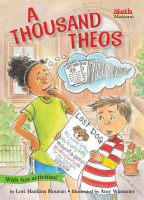
A Thousand Theos lesson 1, Two Signs Are Twice One Sign
The four totals said in order — two, four, eight, sixteen — with the mat showing the last one built.
2
A double is two equal groups — sort the pairs and repair the cheats two ways Checkpoint after this lesson
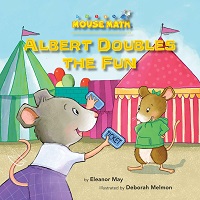
Albert Doubles the Fun lesson 3, Equal or Not a Double
Two sorted piles of tower pairs and every cheat repaired, with the repair described.
3
Name the double and its sum, and answer the question the book asks and leaves open
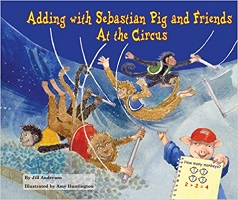
Adding with Sebastian Pig and Friends at the Circus lesson 2, Two rows that match: doubles to twenty
Two matched double-rows built and named, with the sum said as one sentence over each.
4
Build it, draw it, write it: three records of one double that must agree
Albert Doubles the Fun lesson 4, Two Equal Towers
A page holding two complete triples of towers, drawing and sentence.
5
The word each decides whether the quantity grows by two or doubles — two runs, and the round they part Checkpoint after this lesson
A Thousand Theos lesson 2, The Word Each Is Doing All the Work
Two runs of numbers said aloud in order, with the desks holding the last round of each.
6
Halving undoes doubling, and odd totals are refused at the door
Albert Doubles the Fun lesson 2, Share Twenty Fair
Each double's fair share predicted and then confirmed by dealing, with the pattern said aloud each time.
Unit vocabulary
Words students say, not words they are taught to define.
double
Used only for two groups that match; children check by matching before saying it.
equal
The test the matching settles.
each
Lesson 5: the word that turns adding two into doubling.
half
Lesson 6: the number that built the double, found by dealing it back out.
Materials
From the source lessons
Each day's materials are listed on that day's page below and on the source lesson itself. Nothing is duplicated here.
New for this unit
Checkpoint 1 page, one per child
Checkpoint 2 page, one per child
Performance task set: twenty cubes and two mats per pair, plus a card naming a starting number
Performance task page, one per child
Assessment plan
Daily evidence
Keep the repaired double from lesson 2, the three matching records from lesson 4, and the two runs of numbers from lesson 5.
Checkpoint 1, after lesson 2: Is it a double?
Three pairs of cube towers, one equal and two off by one. The child sorts them and repairs one of the unequal pairs, saying what they did.
Book-free. Plain cubes, no story.
Look for. The sorting is done by matching cube against cube, and the repair is described as adding to the short tower or taking from the tall one.
Checkpoint 2, after lesson 5: Doubling or adding two?
Start with one card. Run three rounds of the rule 'every card asks two more', then run three rounds of 'add two more cards'. Write both runs.
Book-free. Blank cards, no story.
Look for. 1, 3, 9, 27 against 1, 3, 5, 7, and the child pointing at the round where the two runs part. A child who produces the same run twice has not heard the word.
Culminating task: Double it, then undo it
Each pair takes the number on their card, builds it on the left mat, and builds a matching group on the right, cube for cube, then pushes them together and says the double as a sentence. They draw the two towers and write the addition underneath. They then deal the whole total back onto the two mats one at a time and say the half, and finally try the same with an odd total and report what is left.
Collect. The drawing with its written sentence, and the two mats after the dealing, with the odd total's leftover.
What it assesses. Doubling as a matching group, the three records, and halving as the inverse — with odd totals refused at the door, exactly as the unit taught.
Daily lesson pages
Lesson 1Doubling is building a second group that matches the first, cube for cube
Skill lessonA Thousand Theos · lesson 1, Two Signs Are Twice One Sign · Grade 1 · 20 minutes Doubling a quantity to twenty by making a second equal group
I can
I can build a second group that matches the first.
Big idea
Doubling means make another one just like it, and the second group is built against the first so the matching is visible before any total is said.
Success
Both rows of the doubling mat hold the same number, checked cube for cube, before the total is counted.
Connect | 5 min
First lesson. Put one cube on the mat and ask the class what to do to double it. Take the answers and do nothing yet.
Taught on its own
Jordan makes one sign, then makes a second, and the book says outright that two signs were twice as good as one.
Source core | 20 min
Pairs put one cube in the left row and match it in the right, push and count and say two; then slide all into the left row and match again for four, then eight, then sixteen, touching the cube being matched as they go.
Collect
The four totals said in order — two, four, eight, sixteen — with the mat showing the last one built.
Close | 5 min
Pairs look back along their four totals, say them in order, and say how many cubes they added at each step.
From the source lesson: Counting cubes, forty per pair, in one colour; Doubling mat, a paper strip ruled into two rows of boxes; Word cards: double, match, equal
Watch for: A child counts the right row into existence rather than matching it. Ask them to touch the cube they are copying as each new one goes down.
Lesson 2A double is two equal groups — sort the pairs and repair the cheats two ways
Skill lessonAlbert Doubles the Fun · lesson 3, Equal or Not a Double · Grade 1 · 20 minutes A double is two equal groups
I can
I can tell a double from a pair that only looks like one.
Big idea
A double is two equal groups, and the check is physical: if any cube sticks out past its partner, it is not a double.
Success
Six tower pairs are sorted correctly, and every repaired pair is described by what the child did to it.
Connect | 5 min
Yesterday you built matching rows yourself. Today somebody else built them and two of them cheat.
Taught on its own
Albert's plan only works because Leo's share always equals his own, and the mathematics under double the fun is two equal groups.
Source core | 20 min
Pairs match six ready-made tower pairs side by side cube against cube and sort them into doubles and not-doubles, then repair each cheat twice over, once by adding to the short tower and once by taking from the tall one.
Collect
Two sorted piles of tower pairs and every cheat repaired, with the repair described.
Close | 5 min
Each child holds up one repaired double and says it in a full sentence with the equality inside it, then says its total.
From the source lesson: Printed source passage in this step; Linking cubes per pair of students; Six prepared tower pairs per pair of students; Loose linking cubes per pair of students; Word cards: double, equal
Watch for: Sorting by which tower looks taller. Insist the two towers are stood base to base and matched cube by cube.
Checkpoint after this lesson: Is it a double?. The page is at the end of this guide.
Lesson 3Name the double and its sum, and answer the question the book asks and leaves open
Two rows that match with nothing left over at either end are what makes an addition a double.
Success
The child runs a finger down both rows and finds nothing left over before saying any number.
Connect | 5 min
Yesterday you repaired the pairs that were not doubles. Today every pair matches and the job is to name it.
Taught on its own
The book supplies two clean doubles and names the strategy on the second: five horses with five riders, and ten porcupines with ten children.
Source core | 20 min
Pairs build five and five as two rows one under the other, run a finger down both to find nothing left over, count straight through to ten and say the sentence; then build ten and ten and count through to twenty.
Collect
Two matched double-rows built and named, with the sum said as one sentence over each.
Close | 5 min
The book asks which number doubles to make ten and does not answer it. Children go back to the horses and riders, put a finger on the two rows of five, and say the answer with the rows in front of them.
From the source lesson: Two-colour counters, twenty per pair; A double ten-frame per pair; Word cards: doubles, same
Watch for: A child counts one row and doubles the number in their head. The finger down both rows comes first; the number comes after.
Lesson 4Build it, draw it, write it: three records of one double that must agree
Skill lessonAlbert Doubles the Fun · lesson 4, Two Equal Towers · Grade 1 · 20 minutes Building, drawing, and writing a double
I can
I can show one double three ways.
Big idea
Cubes, a drawing and a written sentence are three records of one double, and all three have to say the same thing.
Success
A partner can count the drawing, read the sentence and rebuild the towers, and all three agree.
Connect | 5 min
You have built doubles and named them. Today the double gets written down so somebody who was not here can read it.
Taught on its own
The book says its arithmetic out loud, four plus four equals eight, and this is where students become the ones who write it.
Source core | 20 min
Each child builds two equal towers of three, draws them as two columns of squares one square per cube, writes the plus sentence underneath, then does a second double of their own choice the same way.
Collect
A page holding two complete triples of towers, drawing and sentence.
Close | 5 min
Partners trade pages and check each triple: count the drawing, read the sentence, rebuild the towers if the two disagree.
From the source lesson: 12 linking cubes per student; Printed source passage in this step; Paper per student; Pencil per student; Word cards: equals, plus
Watch for: A drawing that a stranger could not count. The test is whether the partner reaches the right number without seeing the cubes.
Lesson 5The word each decides whether the quantity grows by two or doubles — two runs, and the round they part
Skill lessonA Thousand Theos · lesson 2, The Word Each Is Doing All the Work · Grade 1 · 20 minutes Reading each in an instruction to decide whether a quantity grows by two or doubles
I can
I can hear whether the rule doubles or adds two.
Big idea
The number two appears in both versions of the rule; the word each is what decides whether it is asked of the group or of every member of it.
Success
The child has two runs of numbers written down and can point at the round where they stop being the same.
Connect | 5 min
Every double so far has been announced. Today the rule sounds the same both ways and only the cards will tell you which one you followed.
Taught on its own
Jordan asks whether each child could get two more friends, and delete each from the sentence and the plan collapses into adding two.
Source core | 20 min
Each child starts with one sign card, runs the book's rule so every card on the desk asks two more, and counts; then clears to one card and runs a rule that adds only two more each round, counting after every round.
Collect
Two runs of numbers said aloud in order, with the desks holding the last round of each.
Close | 5 min
Children say both runs, point at the round where they part, and say in a whole sentence which single word made the difference.
From the source lesson: Sign cards, small blank squares a child can draw a dog face on, thirty per pair; Word cards: each, only, everyone
Watch for: A child adds two to each card in the second run too. Say the second rule again with only in it before they start.
Checkpoint after this lesson: Doubling or adding two?. The page is at the end of this guide.
Lesson 6Halving undoes doubling, and odd totals are refused at the door
Skill lessonAlbert Doubles the Fun · lesson 2, Share Twenty Fair · Grade 1 · 20 minutes Halving as the undo of doubling, within 20
I can
I can find the number that built a double.
Big idea
Halving runs the doubling machine backwards, and the fair share of a double is the number that built it.
Success
The child predicts the fair share before dealing and says both directions about one pair of numbers.
Connect | 5 min
All week doubling has gone one way. Today twenty arrives already doubled and you have to find what built it.
Taught on its own
Twenty action figures land for two friends, and the machine that made twenty has already been taught: ten and ten.
Source core | 20 min
Pairs deal twenty counters onto two mats one at a time and count each mat, repeat with eight, then predict the fair share for each of the story's doubles before dealing to confirm.
Collect
Each double's fair share predicted and then confirmed by dealing, with the pattern said aloud each time.
Close | 5 min
Each child takes one number pair and says both directions without dealing. Asked for half of seven, they deal it and report the leftover rather than forcing an equal split.
From the source lesson: Printed source passage in this step; 20 counters per pair of students; Me mat and Leo mat per pair of students; Word cards: fair, half
Watch for: A child forces an odd total into two unequal piles and calls it half. The refusal is the lesson: report the leftover.
Culminating performance task
Double it, then undo it
Each pair takes the number on their card, builds it on the left mat, and builds a matching group on the right, cube for cube, then pushes them together and says the double as a sentence. They draw the two towers and write the addition underneath. They then deal the whole total back onto the two mats one at a time and say the half, and finally try the same with an odd total and report what is left.
Collect. The drawing with its written sentence, and the two mats after the dealing, with the odd total's leftover.
What it assesses. Doubling as a matching group, the three records, and halving as the inverse — with odd totals refused at the door, exactly as the unit taught.
Teacher key and rubric
Key
Checkpoint 1: the equal pair is the double; the other two need one cube added or one removed.
Checkpoint 2: 1, 3, 9, 27 and 1, 3, 5, 7. The runs part at the third number.
Task: whatever card you set, the double is twice it and the half is the number that built it. Set cards between three and ten, and include one odd total for the last step.
Rubric
Strand
Secure looks like
Developing
Not yet
Representation
The second group is built against the first, cube for cube, before any total is said.
Does it with the arrangement in front of them.
Produces an answer without the arrangement or the reason.
Calculation
The double and the half are both correct, and the odd total is reported with its leftover.
Does it with the arrangement in front of them.
Produces an answer without the arrangement or the reason.
Meaning
The word double is used only where the two groups match.
Does it with the arrangement in front of them.
Produces an answer without the arrangement or the reason.
Explanation
The child can say what the fair share of a double is, and why.
Does it with the arrangement in front of them.
Produces an answer without the arrangement or the reason.
Print-ready student pages
These three pages print one to a sheet. Everything above them is the teacher guide.
Checkpoint 1 · Grade 1
Is it a double?
NameDate
Here are three pairs of towers. Which are doubles? Match them cube against cube to check. Now repair one that is not a double, and say what you did.
Checkpoint 2 · Grade 1
Doubling or adding two?
NameDate
Start with one card. Every card asks for two more. Do that three times and write your numbers. Now start again with one card and just add two more cards each time. Write those numbers too. Where do the two runs stop being the same?
Culminating task · Grade 1
Double it, then undo it
NameDate
Build the number on your card on the left mat. Build a group on the right that matches it, cube for cube. Push them together and say the double. Draw your two towers and write the sentence. Now deal the whole total back onto the two mats and say the half. Last, try it with an odd total: what is left?
Teacher planning and handoff
Children who produced the same run twice in checkpoint 2 need lesson 5 again before any work on equal groups.
Lesson 6 refuses odd totals rather than forcing them; if the class is going on to halving, that refusal is the thing to build on.
The doubles-fact fluency lesson in Albert Doubles the Fun is deliberately not used here; run it after this unit, not before.