The Word file and the PDF carry the whole guide. The student pages are the two checkpoints and the culminating task, one to a sheet.
About this unit
The unit starts with the equal sign, because most of the trouble is there. It is a claim that two sides name the same amount, not an instruction that an answer follows, and the book's own sentences prove it: four plus one equals three plus two has no lone number on either side. Children build both sides in counters, total each side without touching the other, and rule each sentence balanced or not balanced — saying which side is heavier and by how many. Then they do nothing but translate: name what the letter stands for, decide which number in the story is the amount that left and which is the amount still there, write the sentence and stop before solving it. Only after that comes the procedure — undo a minus six by adding six to both sides, undo a plus twelve by taking twelve off both — with a partner deliberately touching one side only so the class can see what breaks.
The rest of the unit finds unknowns that no letter was ever attached to. Seven lines drawn each way turn out to cut a sheet into eight bands and not seven, so the count the book never gives is sixty-four, and children predict the six-line case before drawing it. A softball diamond is given as two hundred and forty round the outside with four matching sides, and the spacing of the bases is never divided out: children sort the sentence cards into the ones that pin a number down and the ones that do not, cut a strip into four, and then add the sixty back four times to check. A hall pass has a stated size and an unstated area, and the number gets handed in with the sentence that made it the only possible answer and the two words underlined that decided it.
The last two lessons run time and arithmetic backwards. A shortfall is worked out from two book prices and a pocketful of money, the raking is taken out of it, and the rooms still needed are counted in fifty-cent jumps up a number line — which keeps the leftover visible, because three and a half rooms is what the arithmetic says and four rooms is what actually gets cleaned. The unit ends on a doubling wage with rows missing: children recover the pay for day five and the first day the wage passes a dollar, and hand in an evidence card that is returned if it carries numbers without sentences or sentences without numbers.
The mathematical arc
Each lesson does one job the lesson before it made possible.
The equal sign is a claim about two amounts, not a signal for an answer
Translate the story into a sentence, and stop there
Do the same thing to both sides until the letter is alone
Write the equation for a structure nobody counted
Sort what fixes the number from what does not, then undo the addition
Say what the sentence fixes and what it leaves out
Work backwards from what is missing, and decide what a leftover means
Recover the missing rows, and hand in the numbers with their sentences
Source books
Every lesson in this unit is already published under Math lessons. Nothing here asks you to teach anything you cannot open today.
Each day names one lesson that already exists under Math lessons, with its book, its number and its title. This guide says what that lesson is doing in the sequence and what to collect from it; the lesson itself carries the steps, the printables and the answers.
Thirty minutes a day.
Five minutes to connect to yesterday, the twenty-minute source lesson, five minutes to close on something you can see. A day that runs long should lose the close, never the core.
Teach a lesson on its own if you need to.
Every day carries a one-sentence opening for a teacher who is using that lesson outside the sequence.
Stop after a checkpoint.
The unit holds together if you stop after either checkpoint and come back to it. Stopping between a checkpoint and the next one leaves a lesson without the evidence it was built on.
Where this fits in your year
When to teach it
After children are fluent with the four operations on whole numbers and can read a two-sentence word problem. It is the right unit to run before any formal work with formulas.
What students need first
Children can add and subtract within a thousand, divide by four, double repeatedly, and read a short passage for numbers.
What this unit develops
The equal sign as a claim about two amounts; naming an unknown with a letter and writing the sentence; undoing an operation on both sides; writing an equation for a structure; recovering a quantity that a text constrains but never states; separating the sentences that fix a number from the ones that do not; working backwards from a shortfall; deciding what a leftover means; handing in a number with its evidence.
What it prepares them for
Formulas and multi-step problems in Grade 5, where the unknown is multiplied rather than added, and any later work where an answer has to be justified from a source.
Curriculum connections
None claimed. The lessons in this unit carry their own standards classifications on their own pages, checked lesson by lesson. A unit-level expectation is a different claim, and none has been verified for this unit, so none is printed here. Use the placement guide above to site the unit in your year, and the individual lesson pages for the codes.
Unit at a glance
#
Mathematical move
Source lesson
Collect
1
The equal sign is a claim about two amounts, not a signal for an answer
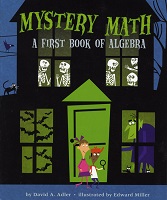
Mystery Math lesson 2, Both Sides of the Equal Sign
All four of the book's printed sentences built and ruled, including the two with an operation on both sides, with both totals said aloud before each ruling.
2
Translate the story into a sentence, and stop there
Mystery Math lesson 4, Turn the Story into a Sentence
Both sentences written from the stories with nothing pre-printed and neither one solved, read back to a partner with an account of where the numbers sit.
3
Do the same thing to both sides until the letter is alone Checkpoint after this lesson
Mystery Math lesson 1, Get the Mystery Number Alone
Both additive problems solved on the mat and each answer checked by putting the numbers back and watching the original total return.
4
Write the equation for a structure nobody counted
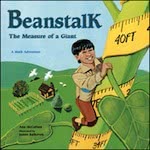
Beanstalk: The Measure of a Giant lesson 5, Seven Lines Each Way
The grid drawn and numbered with eight times eight equals sixty-four written underneath and checked by counting the shaded squares in eights.
5
Sort what fixes the number from what does not, then undo the addition
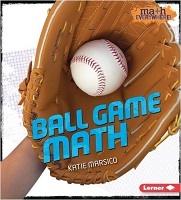
Ball Game Math lesson 7, The Number Sarah Needs and the Book Never Says
A 240-strip cut into four equal pieces with one counted, the division written, the sixty added back four times and all four sides of the outline labelled.
6
Say what the sentence fixes and what it leaves out Checkpoint after this lesson
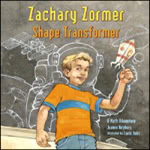
Zachary Zormer, Shape Transformer: A Math Adventure lesson 6, The Number Zack Did Not Say
The card covered corner to corner in one-inch squares with nothing overhanging, counted aloud by rows, and the count written with its unit and the matching multiplication underneath.
7
Work backwards from what is missing, and decide what a leftover means
Shopping Trip Math lesson 5, How many rooms pays off the books?
The shortfall worked in three labelled stages and a count of rooms reached by jumps rather than by division, with the jumps still visible.
8
Recover the missing rows, and hand in the numbers with their sentences
The Great Number Rumble lesson 8, The Rows Sam Never Showed Us
Day five and the dollar crossing both recovered, with only the sentences that force the answer underlined — not every sentence that has a number in it.
Unit vocabulary
Words students say, not words they are taught to define.
equal sign
The claim that the two sides name the same amount. Lesson 1 tests it with counters rather than reading it as an instruction.
balanced
What a true sentence is. A broken one has a heavier side, and by a countable amount.
unknown
The number nobody has told you. It gets a letter in lesson 2 and a value in lesson 3.
both sides
What you have to do the same thing to. Lesson 3's whole discipline.
undo
Add what was subtracted, subtract what was added, divide what was added up. Lessons 3 and 5.
shortfall
How much is still owed. Lesson 7 labels it so it does not get read as money in hand.
evidence
The sentence that makes an answer the only possible one. Lessons 5, 6 and 8 will not take a number without it.
Materials
From the source lessons
Each day's materials are listed on that day's page below and on the source lesson itself. Nothing is duplicated here.
New for this unit
Checkpoint 1 page, one per child
Checkpoint 2 page, one per child
Performance task set: a passage of four sentences written for the task, an equation mat divided by an equal sign, two-colour counters, a number line marked in fifty-cent steps, an evidence card with a box for the number, a box for the arithmetic and a box for the sentences, and a pencil, one set per pair
Performance task page, one per child
Assessment plan
Daily evidence
Keep the evidence cards from lesson 8. They are the only pages in the unit where a number and its justification have to arrive together, and the two failure modes are both instructive: a card with numbers and no sentences means the child computed something they cannot defend, and a card with sentences and no numbers means they found the constraint and did not use it.
Checkpoint 1, after lesson 3: Balance it, then find the letter
Three sentences: one balanced with an operation on both sides, one broken, and one containing a letter — n minus 8 equals 15 — with an equation mat and counters available.
Book-free. Three printed sentences, a mat and counters, no book.
Look for. Both sides totalled separately before a ruling, and the letter isolated by doing the same thing to both sides rather than by guess and check. A child who says twenty-three because eight and fifteen make twenty-three has the right answer and has not used the method.
Checkpoint 2, after lesson 6: What makes it the only answer?
A short passage giving the total length of a fence, the fact that its three sides are equal, and two facts that do not bear on it at all. The child finds the length of one side and names the sentences that force it.
Book-free. A four-sentence passage and a pencil, no book.
Look for. The two irrelevant sentences set aside, and the answer given with the two that fix it. A child who names every sentence with a number in it has not sorted anything.
Culminating task: One passage, one unknown, and the card that has to defend it
Each pair is given a four-sentence passage that states a total, states a rule about equal parts, and includes one sentence that bears on nothing. They first sort the four sentences into those that pin the unknown down and those that do not, and say what each of the useful ones contributes — a total, a rule, or a check. They then find the unknown by undoing the arithmetic, write the sentence with a letter in it, and check the answer by building it back up to the stated total. Last they work the passage's second question, where the answer comes out between two whole numbers, and write one sentence saying which way they went and why. The evidence card must come back with the number, the arithmetic and the sentences copied underneath.
Collect. The sorted sentence cards, the equation written with a letter, the answer checked by building back to the total, the rounding sentence, and a complete evidence card.
What it assesses. An unknown found from constraints rather than guessed, checked in the opposite direction, and handed in with the sentences that make it the only possible answer — which is what a card with numbers and no sentences is missing.
Daily lesson pages
Lesson 1The equal sign is a claim about two amounts, not a signal for an answer
Skill lessonMystery Math · lesson 2, Both Sides of the Equal Sign · Grade 4 · 20 minutes Reading an equation as two sides that must balance
I can
I can total both sides of a sentence and say whether it balances.
Big idea
The equal sign says the two sides name the same amount. It does not say that a single number follows, which is why a true sentence can have an operation on both sides.
Success
The child builds both sides of each sentence, totals each side without touching the other, rules it balanced or not, and for a broken one says which side is heavier and by how many.
Connect | 5 min
First lesson. Write four plus one equals three plus two on the board and ask whether it is allowed. Take the answers, then hand out the mats.
Taught on its own
The book opens by making the equal sign a physical claim rather than an instruction: a seesaw with a pumpkin on it, and then a run of sentences whose two sides are each computed and compared.
Source core | 20 min
Children put four counters on the left of the mat and one beyond the plus, then three and two on the far side of the equal sign, count each side aloud and say the total — then build five minus one equals three plus one, starting with five and taking one away on the left, and saying both totals before ruling anything.
Collect
All four of the book's printed sentences built and ruled, including the two with an operation on both sides, with both totals said aloud before each ruling.
Close | 5 min
Children sort a deck of sentence cards into a balanced pile and a not balanced pile, say for every broken card which side is heavier and by how many counters, and then say what they would add to one side to make it balance.
From the source lesson: A paper equation mat divided by a drawn equal sign; Two-colour counters; Index cards; Word cards: balanced, equation, equal sign
Watch for: A right-hand side worked while the left is still being built. Insist on one side finished and totalled before the other is touched.
Lesson 2Translate the story into a sentence, and stop there
Skill lessonMystery Math · lesson 4, Turn the Story into a Sentence · Grade 4 · 20 minutes Writing a word problem as an equation with a letter for the unknown
I can
I can say what the letter stands for and write the sentence without solving it.
Big idea
Writing the sentence is a separate job from solving it. It turns on deciding which number in the story is the amount that left and which is the amount still there.
Success
The child names what the letter stands for, sorts the story's two numbers into the one beside the letter and the one after the equal sign, writes both sentences without solving either, and says why one takes a minus and the other a plus.
Connect | 5 min
Yesterday every sentence was already written. Today the sentence has to be made, and nobody is allowed to solve anything.
Taught on its own
Between the story and the arithmetic the book performs a translation it names out loud: it says what the letter stands for, then writes the sentence.
Source core | 20 min
Children read the raven story and finish the line R is the number of, write it on a card and check it against the book's own line, then say which of the story's two numbers is the amount that left and which is the amount still there and put each on a card.
Collect
Both sentences written from the stories with nothing pre-printed and neither one solved, read back to a partner with an account of where the numbers sit.
Close | 5 min
Children say why the ravens got a minus and the bats got a plus using what happened in each story, then take the kitten story and say what its letter would stand for without writing the sentence.
From the source lesson: Index cards; Pencil and notebook; Word cards: unknown, equation
Watch for: A solution offered instead of a sentence. Take the answer, put it to one side, and ask for the sentence it came from.
Lesson 3Do the same thing to both sides until the letter is alone
Skill lessonMystery Math · lesson 1, Get the Mystery Number Alone · Grade 4 · 20 minutes Finding an unknown by undoing the operation on both sides
I can
I can undo an operation on both sides to find the unknown.
Big idea
The unknown is found by stripping the known numbers off its side — adding back what was subtracted, taking off what was added — and whatever is done to one side has to be done to the other or the claim stops being true.
Success
The child undoes both of the book's additive cases with counters, checks each answer by rebuilding the original sentence, and can show what goes wrong when only one side is touched.
Connect | 5 min
The sentences are written and unsolved. Ask how to get the letter by itself, and take the suggestions before touching the counters.
Taught on its own
The book works four haunted-house problems and each one runs the same procedure: name the unknown with a letter, write the sentence, then do one thing to both sides to strip the number away from the letter.
Source core | 20 min
Children put the letter card face down on the left of the mat and build the sentence round it, then — six ravens having flown off — put six counters back on the left and six on the right as well, count the right side and say that number, then undo the bats' plus twelve by taking twelve off each side.
Collect
Both additive problems solved on the mat and each answer checked by putting the numbers back and watching the original total return.
Close | 5 min
A partner deliberately works one side only and leaves the other alone; children say what goes wrong and show it on the mat, using the words both sides and still balanced.
From the source lesson: Index cards; A paper equation mat divided by a drawn equal sign; Two-colour counters; Word cards: unknown, eliminate, variable
Watch for: The answer read off the arithmetic rather than reached on the mat. It is right and it is not the lesson; ask what was done to each side.
Checkpoint after this lesson: Balance it, then find the letter. The page is at the end of this guide.
Lesson 4Write the equation for a structure nobody counted
Skill lessonBeanstalk: The Measure of a Giant · lesson 5, Seven Lines Each Way · Grade 4 · 20 minutes Building a rectangular array and writing its multiplication equation
I can
I can build an array, write its multiplication, and predict the next case before I draw it.
Big idea
Seven lines each way do not make seven rows. The count comes from the bands the lines cut, and the drawing, the labelled rows and the equation are three views of one arrangement.
Success
The child draws seven lines each way, numbers the bands, writes eight times eight equals sixty-four, checks by counting in eights, and predicts the six-line case with a reason before drawing it.
Connect | 5 min
The unknowns so far have had letters. Read the two sentences about how the board was drawn and ask how many squares that makes — the book never says.
Taught on its own
Jack draws seven lines one way and seven lines the other way and paints the squares, and the book never says how many squares that makes.
Source core | 20 min
Children rule seven evenly spaced lines across a sheet and seven more square to them, number the bands down the left edge and across the top, and say how many rows and columns the seven-and-seven lines made — anyone who wrote seven counts again with a finger in each band.
Collect
The grid drawn and numbered with eight times eight equals sixty-four written underneath and checked by counting the shaded squares in eights.
Close | 5 min
Before drawing anything, children write down how many squares six lines each way would make and why, then draw it in a fresh corner and count — saying whether the prediction held and what the count of lines has to do with the count of bands.
From the source lesson: Grid paper; Rulers; Pencils; Red and black crayons; Word cards: columns, parallel, perpendicular, rows
Watch for: Seven rows written because seven lines were drawn. Send a finger into each band and count out loud.
Lesson 5Sort what fixes the number from what does not, then undo the addition
Math through the readingBall Game Math · lesson 7, The Number Sarah Needs and the Book Never Says · Grade 4 · 20 minutes The book tells Sarah the whole way round a softball diamond and that its four sides match, then asks how far apart to space her bases and never divides; students find the side the book withholds and prove from the book's own sentences that only one number can be right.
I can
I can find a length the book never gives and name the sentences that make it certain.
Big idea
A text can fix a number without stating it. Two sentences are enough — the total and the fact that the parts match — and the rest of the numbers on the page have nothing to do with it.
Success
The child sorts the sentence cards into those that pin a number down and those that do not, finds the side, checks it by adding back four times, and names the two sentences that made the answer certain.
Connect | 5 min
Yesterday a number came out of a structure. Today it comes out of two sentences, and half the sentences on the card are no help at all.
Taught on its own
The book tells the reader the whole way round a softball diamond and that its four sides match, then asks how far apart to space the bases and never divides.
Source core | 20 min
Children read the sentences off the cards, put every number they find on the diamond outline where it belongs, discover the question about the bases has no number to answer it and mark where the missing number goes, then sort the cards into a pile that pins a number down and a pile that does not.
Collect
A 240-strip cut into four equal pieces with one counted, the division written, the sixty added back four times and all four sides of the outline labelled.
Close | 5 min
Children write one sentence naming the two cards that made sixty certain, then try a fifth number on the outline and say what goes wrong; a partner checks that the sentence names cards rather than repeating the answer.
From the source lesson: Sentence cards cut from the softball vignette, one set per pair; Diamond outline sheet, one per pair; Squared paper strip marked in tens to 240; Scissors, ruler and pencil; An unlabelled diamond with 240 written along the outside
Watch for: A sentence card sorted as useful because it has a number in it. Ask what it would change if it were missing.
Lesson 6Say what the sentence fixes and what it leaves out
Math through the readingZachary Zormer, Shape Transformer: A Math Adventure · lesson 6, The Number Zack Did Not Say · Grade 4 · 20 minutes Students find the area of Zack's hall pass — 24 square inches, a number nowhere in the book — and hand it in together with the one sentence that makes it the only possible answer.
I can
I can produce a measure the book never states and hand it in with the sentence that makes it the only answer.
Big idea
A sentence can name one measure of a thing and not another. Reading it carefully enough to say which is which is what makes the missing one findable at all.
Success
The child marks what the sentence fixes and what it does not, cuts the card to those dimensions, covers and counts to twenty-four by rows, and hands in the number with the sentence and the two deciding words underlined.
Connect | 5 min
Sentences decided the answer yesterday. Today one sentence gives two measures and withholds a third, and the question is which is which.
Taught on its own
The hall-pass sentence gives the card's two dimensions and never gives its area, and the number twenty-four appears nowhere in the book.
Source core | 20 min
Pairs read the sentence aloud twice, underline every number in it and write beside each what it measures, then write underneath the one measure of the card the sentence names and the one it does not — touching no card yet — before cutting a card to the two dimensions they underlined.
Collect
The card covered corner to corner in one-inch squares with nothing overhanging, counted aloud by rows, and the count written with its unit and the matching multiplication underneath.
Close | 5 min
Children put the number with its unit at the top of a sheet and copy the book's sentence beneath it, underline the two words that gave the size of the card, and write one sentence saying why no other card could have been meant — then say to another pair which number the book printed and which they produced, both with their units.
From the source lesson: Index card stock; Rulers marked in inches; Scissors; One-inch paper squares; Pencils; Lined paper; The hall-pass sentence written large; The fossil sentence written large
Watch for: The area given without a unit. Square inches and inches are different answers; ask what was counted.
Checkpoint after this lesson: What makes it the only answer?. The page is at the end of this guide.
Lesson 7Work backwards from what is missing, and decide what a leftover means
Skill lessonShopping Trip Math · lesson 5, How many rooms pays off the books? · Grade 4 · 20 minutes Working backwards from a shortfall to a count of equal payments
I can
I can find how many equal jobs close a gap, and say why a part one still counts as a whole one.
Big idea
Some unknowns are reached by running the arithmetic backwards. The quotient is not always the answer: three and a half rooms is what the numbers say and four rooms is what gets cleaned.
Success
The child computes the shortfall and labels it, takes out the raking, counts the rooms in fifty-cent jumps, and writes one sentence saying why a leftover of a few cents still costs a whole room.
Connect | 5 min
Every unknown so far has come out exactly. Today the number lands between two answers and somebody has to choose.
Taught on its own
The total is fixed by two book prices and the money in a pocket, and the number of fifty-cent jobs needed to close the gap is never worked out.
Source core | 20 min
Children add the two book prices and subtract the money in hand, labelling what is left as short by so it is not read as money held, then lay two three-dollar cards for the promised raking, subtract that total, and jump up the number line in fifty-cent steps from zero, tallying one room per jump until they reach or pass what is still owed.
Collect
The shortfall worked in three labelled stages and a count of rooms reached by jumps rather than by division, with the jumps still visible.
Close | 5 min
The jumps have probably landed past what is owed rather than exactly on it. Children say aloud what the leftover means — whether part of a room can be cleaned — and write the number of rooms with one sentence saying why they rounded as they did.
From the source lesson: A three-row shortfall card; Pencils; Three-dollar cards; A number line marked in fifty-cent steps; Counters; A sentence strip; Word cards: short, per room, round
Watch for: The shortfall read as money in hand. The label is there for that reason; ask whose money it is.
Lesson 8Recover the missing rows, and hand in the numbers with their sentences
Math through the readingThe Great Number Rumble · lesson 8, The Rows Sam Never Showed Us · Grade 4 · 20 minutes Students recover the day-five pay the book leaves out and the day the wage first passes a dollar, and must hand in each number with the sentences that force it.
I can
I can recover a number a table leaves out and show the sentences that force it.
Big idea
A rule plus a starting amount fixes every row, including the ones nobody printed. An answer is finished when the arithmetic and the sentences that force it arrive together.
Success
The child states the rule in their own words, recovers day five, checks the five-day total against the figure in the text, finds the first day the pay passes a dollar, and hands in a card carrying both numbers, the arithmetic and the underlined sentences.
Connect | 5 min
The unit has found lengths, areas and counts. Today it finds a row of a table, and the card will come back if the number arrives alone.
Taught on its own
The offer sentence states a rule and four days of pay, and the book never prints day five or the day the wage first passes a dollar.
Source core | 20 min
Partners read the offer sentence aloud twice and each says the rule back in their own words while the other checks it against the sentence, write the four given days into the recovery table, work out day five from day four using the rule, and add the five days in the running-total column to check against the figure the text gives.
Collect
Day five and the dollar crossing both recovered, with only the sentences that force the answer underlined — not every sentence that has a number in it.
Close | 5 min
Children keep doubling and comparing each day's pay against one hundred cents until one is bigger, write that day in the crossing box, and fill in the evidence card: both numbers, the arithmetic under each, and the underlined sentences copied below. A card with numbers and no sentences goes back, and so does one with sentences and no numbers.
From the source lesson: Recovery table per pair, ruled for ten numbered rows with two columns and a crossing box; Offer strip printed with Sam's sentence, one per pair; Ralph strip printed with the thirty-one-cent sentence, one per pair; Evidence sheet with four candidate sentences, one per student; Evidence card, one per student; Pencil per student; The offer sentence enlarged and kept up for the whole lesson; A hundred-square displayed as one dollar beside the crossing question
Watch for: A total that disagrees with the figure in the text. Find the row that is wrong rather than adjusting the total.
Culminating performance task
One passage, one unknown, and the card that has to defend it
Each pair is given a four-sentence passage that states a total, states a rule about equal parts, and includes one sentence that bears on nothing. They first sort the four sentences into those that pin the unknown down and those that do not, and say what each of the useful ones contributes — a total, a rule, or a check. They then find the unknown by undoing the arithmetic, write the sentence with a letter in it, and check the answer by building it back up to the stated total. Last they work the passage's second question, where the answer comes out between two whole numbers, and write one sentence saying which way they went and why. The evidence card must come back with the number, the arithmetic and the sentences copied underneath.
Collect. The sorted sentence cards, the equation written with a letter, the answer checked by building back to the total, the rounding sentence, and a complete evidence card.
What it assesses. An unknown found from constraints rather than guessed, checked in the opposite direction, and handed in with the sentences that make it the only possible answer — which is what a card with numbers and no sentences is missing.
Teacher key and rubric
Key
Checkpoint 1: the first is true, the second is broken by a stated amount, and n is twenty-three. Accept twenty-three only with an account of what was done to each side.
Checkpoint 2: write the fence at ninety feet with three equal sides, so one side is thirty. The two useful sentences are the total and the equal-sides rule; make one of the useless ones carry a plausible number, such as the number of posts.
Task: make the second question come out at three and a bit — a delivery that costs a fixed amount per trip, say — so the honest answer is four trips and the arithmetic says three and a half. The rounding sentence is the part to read first when you mark it.
Rubric
Strand
Secure looks like
Developing
Not yet
Representation
Both sides of a sentence are built or written separately, and a story is turned into an equation in which the letter is named before it is used.
Does it with the arrangement in front of them.
Produces an answer without the arrangement or the reason.
Calculation
The same operation is applied to both sides, the arithmetic of undoing is correct, and every answer is checked in the opposite direction — built back up to the stated total.
Does it with the arrangement in front of them.
Produces an answer without the arrangement or the reason.
Meaning
The equal sign is treated as a claim about two amounts rather than as an instruction, and a leftover is interpreted rather than reported: part of a room is a whole room's work.
Does it with the arrangement in front of them.
Produces an answer without the arrangement or the reason.
Explanation
An answer arrives with the sentences that make it the only possible one, and sentences that merely contain numbers are set aside as not bearing on it.
Does it with the arrangement in front of them.
Produces an answer without the arrangement or the reason.
Print-ready student pages
These three pages print one to a sheet. Everything above them is the teacher guide.
Checkpoint 1 · Grade 4
Balance it, then find the letter
NameDate
Are the first two true? Show me how you know, and for the broken one say which side is heavier and by how much. Now find n in the third, and tell me what you did to each side.
Checkpoint 2 · Grade 4
What makes it the only answer?
NameDate
How long is one side? Now tell me which sentences made that the only possible answer — and which ones did not help at all, even though they have numbers in them.
Culminating task · Grade 4
One passage, one unknown, and the card that has to defend it
NameDate
Sort these four sentences: which ones pin the number down, and which one does not help at all? Say what each useful one gives you. Now find the unknown, write the sentence with a letter in it, and check it by building back to the total. Then answer the second question and tell me which way you rounded and why. Fill in your evidence card — a card with numbers and no sentences comes back.
Teacher planning and handoff
The misconception this unit is built to break is the equal sign read as here comes the answer. It survives being taught once; lesson 1's broken pile is worth revisiting whenever a child writes a string of equals signs across a page.
Mystery Math builds a coat-hanger balance out of pennies and tape and solves an equation by hanging weights until it sits level. It was left out because the book already gives three lessons, and it is the lesson to add for any child who asserts that two sides balance instead of testing it — the hanger reports, and they do not.
Watch for guess and check dressed up as method. It gets the right answer on every problem in this unit, and it stops working next year. Ask what was done to each side.
The evidence card from lesson 8 is worth keeping as a routine for the rest of the year. Numbers with sentences, or it comes back — it costs nothing and it changes what children think an answer is.
Known gaps in this unit
An unknown that is multiplied. Every equation in these books is additive — a number added to or taken from the letter — and the one division that appears comes from a perimeter rather than from a sentence with a letter in it. Nothing here writes anything of the form four times n equals twenty-four, so that has to come from elsewhere before Grade 5.
An unknown on both sides. No candidate puts the letter on the left and the right of one sentence, which is where the both-sides discipline from lesson 3 actually pays off.