The Word file and the PDF carry the whole guide. The student pages are the two checkpoints and the culminating task, one to a sheet.
About this unit
This unit hands children two tests and keeps them apart. The fold test comes first: crease the figure, hold it to the light, and look along every edge for a part that sticks out. Children sort a tray of twelve figures by that test alone, draw the crease on every figure that passed, and then learn that a count of lines has to be built out of folds actually made — a claim of several means several creased copies on the desk, and a partner may refold any one of them.
The middle of the unit is about an answer being withdrawn. Eight figures are folded up and down and across, several are written off, and then the same figures are folded corner to corner and some of them close. A child crosses out their own no, writes yes over it, and says what they had not yet done when they answered the first time. Only then does the turn test arrive, with a pin through the centre and a fixed arrow to count matches against, and the two tests are immediately sorted against each other: passed both, passed only the fold, passed only the turn, passed neither.
The unit ends where the tests get harder to apply. Ten animal cards mostly fail both tests a little, so a group has to say what close is going to mean before it sorts, and a failure has to be funded by naming the part that broke the match. The last lesson puts the fold test on capital letters and asks children to take a side on whether a shortened name earns a title the story gives it, with the count of failed letters inside the sentence.
The mathematical arc
Each lesson does one job the lesson before it made possible.
Symmetry is what a test answers, not what a shape looks like
A count of lines is built out of folds you actually made
An answer you gave before you ran every test can be taken back
The second test: turn it and count the matches
Two tests, four answers, and you say which test you ran
Real things fail, and a failure has to name the part that broke it
Test the claim the story makes, and take a side with a count in it
Source books
Every lesson in this unit is already published under Math lessons. Nothing here asks you to teach anything you cannot open today.
Each day names one lesson that already exists under Math lessons, with its book, its number and its title. This guide says what that lesson is doing in the sequence and what to collect from it; the lesson itself carries the steps, the printables and the answers.
Thirty minutes a day.
Five minutes to connect to yesterday, the twenty-minute source lesson, five minutes to close on something you can see. A day that runs long should lose the close, never the core.
Teach a lesson on its own if you need to.
Every day carries a one-sentence opening for a teacher who is using that lesson outside the sequence.
Stop after a checkpoint.
The unit holds together if you stop after either checkpoint and come back to it. Stopping between a checkpoint and the next one leaves a lesson without the evidence it was built on.
Where this fits in your year
When to teach it
Any time in Grade 3 once children can use a ruler and handle scissors. It needs no arithmetic and runs well beside a measurement unit.
What students need first
Children can fold and crease paper deliberately, use a ruler to draw a straight line, and count a set of twelve.
What this unit develops
The fold test and the turn test as separate procedures; counting lines of symmetry from creased evidence; folding on a diagonal; counting matches in one full turn; sorting figures by which test they pass; deciding that a figure is asymmetrical and naming the part that breaks it; testing a claim the book itself makes.
What it prepares them for
Grade 4 work on angles and turns, where a quarter turn has to be measured rather than seen, and any later geometry where a property is established by a construction.
Curriculum connections
None claimed. The lessons in this unit carry their own standards classifications on their own pages, checked lesson by lesson. A unit-level expectation is a different claim, and none has been verified for this unit, so none is printed here. Use the placement guide above to site the unit in your year, and the individual lesson pages for the codes.
Unit at a glance
#
Mathematical move
Source lesson
Collect
1
Symmetry is what a test answers, not what a shape looks like
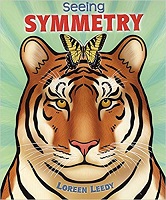
Seeing Symmetry lesson 1, The Fold That Decides
Twelve figures sorted by the fold, both counts written, and one line drawn along the crease of every figure that passed.
2
A count of lines is built out of folds you actually made Checkpoint after this lesson
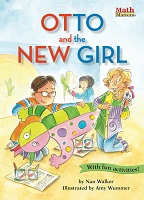
Otto and the New Girl lesson 2, None, One, or Several
Each figure in the tray its count earns — none, one or several — with the creased copies laid out in a row as the proof of that count.
3
An answer you gave before you ran every test can be taken back
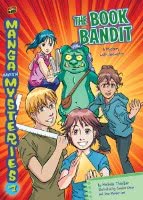
The Book Bandit lesson 2, Symmetrical Along Its Diagonal
Eight figures folded three ways, with every changed answer written over the first one so both are still readable.
4
The second test: turn it and count the matches
Seeing Symmetry lesson 2, Matches in One Turn
Three figures pinned and turned, two counts written and the flower's count checked against the number the book gives.
5
Two tests, four answers, and you say which test you ran Checkpoint after this lesson
Otto and the New Girl lesson 4, Turn It Instead of Folding It
Four figures in four places on the desk — passed both, only the fold, only the turn, passed neither — with the tracing kept for each turn result.
6
Real things fail, and a failure has to name the part that broke it
Seeing Symmetry lesson 5, When the Halves Do Not Match
Ten cards folded and sorted, both counts written and checked against ten, and the crab's claw named with what is different about the two of them.
7
Test the claim the story makes, and take a side with a count in it
Otto and the New Girl lesson 6, Does Viv Get Into the Club?
Every name built and folded, the failures counted per row, and each child standing at one of two mats with a position said aloud that has the count inside it.
Unit vocabulary
Words students say, not words they are taught to define.
line of symmetry
The crease a figure closes on. Lesson 1 draws it, so that a claim about a figure can be checked by somebody else.
overhang
The part sticking out past the fold. It is what decides the fold test, and looking for it is the whole of lesson 1.
diagonal
Corner to corner. Lesson 3's fold, and the reason several figures get a second answer.
rotational symmetry
What the turn test finds. A figure has it when it lands back inside its own outline before a full turn is done.
matches
How many times a figure looks the same in one full turn. Counted against a fixed arrow, not estimated.
asymmetrical
Lesson 6's word. It is a result, and it comes with the part that broke the match.
Materials
From the source lessons
Each day's materials are listed on that day's page below and on the source lesson itself. Nothing is duplicated here.
New for this unit
Checkpoint 1 page, one per child
Checkpoint 2 page, one per child
Performance task set: six paper figures including one symmetrical only on a diagonal and one that turns but does not fold, a card figure with a centre hole, a push pin and board, a fixed paper arrow, a ruler, scissors and a recording sheet ruled for two tests per figure, one set per pair
Performance task page, one per child
Assessment plan
Daily evidence
Keep the two-column results sheet from lesson 5 — folded in one column, turned in the other, for every figure. It is the one page in the unit that shows a child running both tests on the same figure, and a blank in either column is more useful than a wrong answer, because it names the test that was never run.
Checkpoint 1, after lesson 2: How many lines, and show me
Three figures and a stack of blank copies of each: one with no line of symmetry, one with exactly one, one with several. The child gives a count for each figure and lays out a creased copy for every line counted.
Book-free. Paper figures, spare copies and a light source, no book.
Look for. A count backed by that many creased copies. A child who says four and lays out two has given an impression, and the two copies are the honest part of the answer.
Checkpoint 2, after lesson 5: Which test, and what did it show
Two figures, one that folds but does not turn and one that turns but does not fold, with a pin, a board and a fixed arrow available. The child decides both figures and names the test before the answer each time.
Book-free. Two figures, a pin, a board and an arrow, no book.
Look for. The test named first and the evidence shown for it — the crease for the fold, the figure sitting back inside its outline for the turn. A child who only ever folds will call the second figure asymmetrical with confidence.
Culminating task: Both tests on all six, and one answer you changed
Each pair runs both tests on six figures. For the fold they crease each figure up and down, across, and corner to corner, and write how many of the three folds closed. For the turn they pin the figure through its centre, set the arrow, turn it one full way round and write how many matches it made. Then they sort all six into passed both, only the fold, only the turn, and neither, and find the one figure whose answer changed once the diagonal fold was run.
Collect. The results sheet with both columns filled for all six figures, the four sorted groups, and the changed answer with the first answer still legible underneath it.
What it assesses. Two tests run separately on the same figures, the results kept apart, and one answer withdrawn on the evidence of a fold that had not been tried — which is the whole unit in one page.
Daily lesson pages
Lesson 1Symmetry is what a test answers, not what a shape looks like
Skill lessonSeeing Symmetry · lesson 1, The Fold That Decides · Grade 3 · 20 minutes Testing a figure for a line of symmetry by folding it in half
I can
I can fold a figure and say whether the halves matched everywhere.
Big idea
A figure is symmetrical when a fold closes it with nothing sticking out. The answer comes from the fold, and the crease is the record of it.
Success
The child folds all twelve figures, sorts them by overhang rather than by appearance, writes both counts, and draws the crease on every figure that passed.
Connect | 5 min
First lesson. Hold up two figures, one symmetrical and one not, and ask the class which is which. Take the answers, then say that nobody has tested anything yet and hand out the paper.
Taught on its own
The book gives the test in one sentence — fold the shape exactly in half — and then says what to look at once it is folded: two halves that are mirror images.
Source core | 20 min
Children fold each figure so the two halves land on each other, hold the folded pair up to the window and look along every edge, then sort the whole tray of twelve onto a matched mat and a not-matched mat with both counts written at the top.
Collect
Twelve figures sorted by the fold, both counts written, and one line drawn along the crease of every figure that passed.
Close | 5 min
Children trace one hand, cut it out and try to fold it into matching halves, then set it beside a tracing of the other hand and say in one sentence what is true of the pair that was not true of the single hand.
From the source lesson: A tray of twelve paper figures per group, four of which do not fold into matching halves; A window or lamp to hold folded figures against; Two paper mats per pair, one marked matched and one marked not matched; A pencil; A ruler per child; Paper and scissors per child; Word cards: fold, half, mirror image, line of symmetry
Watch for: A figure passed because it looks neat. Send the child back to the window and ask them to run a fingertip round the folded edge before they answer.
Lesson 2A count of lines is built out of folds you actually made
Skill lessonOtto and the New Girl · lesson 2, None, One, or Several · Grade 3 · 20 minutes Counting how many lines of symmetry a figure has
I can
I can say how many lines of symmetry a figure has and show a creased copy for each one.
Big idea
How many is a claim, and a claim needs evidence. A figure with several lines means several creased copies on the desk, each one refoldable by somebody else.
Success
The child's count for each figure equals the number of creased copies they can lay out, and they lower the count when a partner's check finds a copy that does not close.
Connect | 5 min
Yesterday every figure that passed got one line drawn on it. Ask whether one was all there was, and let somebody find a second fold on a figure from the matched mat.
Taught on its own
The book sorts figures three ways by a count: no lines, one line, several lines.
Source core | 20 min
Children take a fresh copy of a figure for every line they want to test, crease each copy along a different line, keep the ones that closed with no overhang and set the failures aside, then count the copies that closed.
Collect
Each figure in the tray its count earns — none, one or several — with the creased copies laid out in a row as the proof of that count.
Close | 5 min
Children lay one figure's creases in front of a partner, say the count and the tray it earned, and let the partner refold a copy chosen at random; a copy that fails drops the count by one and may move the figure.
From the source lesson: Paper figures for folding, six copies of each of four figures; Three labelled sorting trays per table; Word cards: none, several, count, line of symmetry, asymmetrical
Watch for: Several claimed with two copies on the desk. Count the copies aloud together, touching each crease, and let the evidence set the number.
Checkpoint after this lesson: How many lines, and show me. The page is at the end of this guide.
Lesson 3An answer you gave before you ran every test can be taken back
Skill lessonThe Book Bandit · lesson 2, Symmetrical Along Its Diagonal · Grade 3 · 20 minutes Finding a line of symmetry that is not vertical or horizontal
I can
I can fold corner to corner, and I can change my own answer and say what changed it.
Big idea
A no that was reached without folding on the diagonal is not a finished answer. Withdrawing it is what the extra test is for.
Success
The child writes yes over their own no on at least one figure and says which fold changed it and what they had not done when they first answered.
Connect | 5 min
Both lessons so far folded up and down and across. Ask whether those are the only two ways to fold a rectangle of paper, and let somebody fold a corner over.
Taught on its own
The children in the story declare the monster not symmetrical, and much later one of them takes it back: it is symmetrical along its diagonal.
Source core | 20 min
Children fold each of eight figures top to bottom and left to right and write no on any figure where neither fold matched, then take that no pile and fold every figure in it corner to corner both ways, writing yes over their own no each time the halves close.
Collect
Eight figures folded three ways, with every changed answer written over the first one so both are still readable.
Close | 5 min
Children pick one figure that changed and say a sentence naming the answer they gave first, the fold that changed it, and what they had not yet done when they answered — then go back and fold the original yes figures corner to corner too, writing how many of the three folds matched.
From the source lesson: Eight paper figures per pair, three of them symmetrical only along a diagonal; A pencil; A recording strip ruled for two answers per figure, per child; Word cards: symmetrical, diagonal, fold, match
Watch for: A first answer rubbed out. Ask for it back in the margin; the point of the lesson is the pair of answers, not the second one.
Lesson 4The second test: turn it and count the matches
Skill lessonSeeing Symmetry · lesson 2, Matches in One Turn · Grade 3 · 20 minutes Counting how many matches a figure makes in one full turn
I can
I can turn a figure one full way round and count the times it looks the same.
Big idea
A figure can look the same at several points in one turn. That count is a property of the figure, and it is read off a fixed arrow rather than guessed.
Success
The child pins each figure, turns it one full way round against the arrow, and gets the same count twice — and checks the flower against the number the book states.
Connect | 5 min
Everything so far has been decided by a crease. Put a pinwheel on a pin, spin it, and ask what test would catch what just happened.
Taught on its own
The book turns from folding to spinning and hands over two counted cases: a flower with three matches in a rotation and a pinwheel with four.
Source core | 20 min
Children pin the letter Z through the dot at its centre and turn it slowly while a partner watches the fixed arrow, calling stop each time it looks exactly as it did at the start, then do the same with the three-petal flower and the four-bladed pinwheel, writing each count.
Collect
Three figures pinned and turned, two counts written and the flower's count checked against the number the book gives.
Close | 5 min
Children write their two counts side by side, read the book's name for what they have been testing, and say one sentence for each figure that uses that name with the number they counted in it.
From the source lesson: A letter Z card with a marked centre dot, per pair; A push pin and a cork board or thick card, per pair; A fixed paper arrow taped beside the pin; A three-petal paper flower with a marked centre, per pair; A four-bladed paper pinwheel with a marked centre, per pair; A recording strip ruled for two counts, per child; Word cards: turn, center point, matches, rotational symmetry
Watch for: A count that changes between turns. Have the partner hold the arrow and call the stops instead, and turn once more slowly.
Lesson 5Two tests, four answers, and you say which test you ran
Skill lessonOtto and the New Girl · lesson 4, Turn It Instead of Folding It · Grade 3 · 20 minutes Distinguishing rotational symmetry from line symmetry by turning a figure
I can
I can sort figures by which test they pass, and I name the test before I name the answer.
Big idea
The fold test and the turn test are different questions. A figure can pass either one alone, so an answer without its test attached does not say anything.
Success
The child sorts four figures into passed both, only the fold, only the turn and neither, and hands a partner a figure naming the test first and the answer second, with the evidence for each.
Connect | 5 min
Two tests are now on the table. Ask what a figure could do that would make the two tests disagree, and keep the answers up where they can be checked against the sort.
Taught on its own
The book's closing section says outright that this is a different kind of symmetry and gives its test: the figure looks the same after it has been turned.
Source core | 20 min
Children push a split pin through the centre of a card figure, trace all the way round it, turn the figure on the pin without lifting it and check every edge against the tracing, then run that test on all four figures and add what they already know about each figure's folds.
Collect
Four figures in four places on the desk — passed both, only the fold, only the turn, passed neither — with the tracing kept for each turn result.
Close | 5 min
Children take a figure from a pile that passed only one test, say which test it passed and which it failed in that order, and show the evidence for both: the tracing for the turn, the crease for the fold. The partner spins it on the pin before agreeing.
From the source lesson: Card figures with a centre hole, four per pair; Split pins and a pinboard, one set per pair; Pencils for tracing; Word cards: rotate, turn, trace, rotational symmetry
Watch for: A figure folded during the turn work. Put the folded figures out of reach at the start; the sort depends on yesterday's record, not on a new crease.
Checkpoint after this lesson: Which test, and what did it show. The page is at the end of this guide.
Lesson 6Real things fail, and a failure has to name the part that broke it
Skill lessonSeeing Symmetry · lesson 5, When the Halves Do Not Match · Grade 3 · 20 minutes Deciding that a figure is asymmetrical and naming the part that breaks the match
I can
I can say a figure is asymmetrical and put my finger on the part that breaks the match.
Big idea
Most things that were not drawn to be symmetrical fail the test a little. Deciding what close is going to mean, and naming what broke the match, is the child's job rather than the figure's.
Success
The group says what close means before it sorts, both counts add to ten, and three failures are described in sentences a partner can act on without being pointed at.
Connect | 5 min
Every figure so far was drawn on purpose. Hand out photographs of animals and ask whether the test still works on something nobody designed.
Taught on its own
Having taught two tests, the book is careful to say that living things mostly fail them a little, and gives a case that fails outright: the fiddler crab with one oversized claw.
Source core | 20 min
Children agree out loud what close is going to mean for their group, fold each of the ten animal cards down its middle and watch the edges, sort them onto a close mat and a not-close mat, then find the fiddler crab and put a finger on the part that stops the halves matching.
Collect
Ten cards folded and sorted, both counts written and checked against ten, and the crab's claw named with what is different about the two of them.
Close | 5 min
Children take three cards from the not-close mat and for each one name the part that broke the match in a sentence that would let a partner find the same part without any pointing.
From the source lesson: Ten animal cards per group, printed from photographs; Two sorting mats per group, one marked close and one marked not close; The fiddler crab card, one per group; A pencil; A recording strip ruled for three cards, per child; Word cards: exact, asymmetrical, claw
Watch for: Close used two ways inside one group. Stop the sort, get one sentence for it agreed aloud, and start the ten again.
Lesson 7Test the claim the story makes, and take a side with a count in it
Math through the readingOtto and the New Girl · lesson 6, Does Viv Get Into the Club? · Grade 3 · 20 minutes Students build the story's names from capital letter cards, run the folding test on them, take a position on whether the short name earns the mirror-name title, and defend it with a count of letters a partner can check.
I can
I can test the story's claim about a name and say where I stand with the number in my sentence.
Big idea
A claim in a book is something to test, not something to accept. Two checks have to agree — every letter has to close, and the row has to read the same reflected — and a position is only worth stating with the count attached.
Success
The child builds the names, folds every letter, counts the failures, stands the mirror on each row, takes a mat, and states a position containing the number of letters that failed.
Connect | 5 min
The unit has tested figures, letters and animals. Read the story's two sentences about its own names and ask whether anyone has checked them.
Taught on its own
The story claims two of its names are symmetrical in capital letters, and a third character shortens her name until it is.
Source core | 20 min
Each pair spells the story's names in capital letter cards one name per row, folds every card down the middle and turns face down any letter whose halves do not close, counts the face-down cards in each row, then stands a mirror upright on the middle of each name and says whether the two checks agree.
Collect
Every name built and folded, the failures counted per row, and each child standing at one of two mats with a position said aloud that has the count inside it.
Close | 5 min
Each child restates the other mat's reason in their own words before answering it, then names one thing they could find on the cards that would send them across; a partner from the other mat hands them a row to check, and anyone who moves says which card or which reversal did it.
From the source lesson: Capital letter cards, a full alphabet per pair; Small hand mirrors, one per pair; Two named position mats per table; The story's two sentences about names on large cards, read aloud twice as they are shown
Watch for: A position with no number in it. Ask how many letters went face down in that row and have the sentence said again.
Culminating performance task
Both tests on all six, and one answer you changed
Each pair runs both tests on six figures. For the fold they crease each figure up and down, across, and corner to corner, and write how many of the three folds closed. For the turn they pin the figure through its centre, set the arrow, turn it one full way round and write how many matches it made. Then they sort all six into passed both, only the fold, only the turn, and neither, and find the one figure whose answer changed once the diagonal fold was run.
Collect. The results sheet with both columns filled for all six figures, the four sorted groups, and the changed answer with the first answer still legible underneath it.
What it assesses. Two tests run separately on the same figures, the results kept apart, and one answer withdrawn on the evidence of a fold that had not been tried — which is the whole unit in one page.
Teacher key and rubric
Key
Checkpoint 1: the counts are whatever the figures you hand out actually carry — choose one with none, one with exactly one and one with four or more, and count them yourself by folding before the lesson.
Checkpoint 2: the folding figure is symmetrical and makes only one match in a full turn; the turning figure makes three or four matches and closes on no fold at all. Both answers are acceptable only with the test named.
Task: check your set before the lesson so at least one figure is symmetrical only on a diagonal. Without one, no answer gets changed and the last part of the task has nothing to bite on.
Rubric
Strand
Secure looks like
Developing
Not yet
Representation
Every claim carries its evidence: the crease drawn on the figure, a creased copy for each line counted, the tracing the turned figure landed back inside.
Does it with the arrangement in front of them.
Produces an answer without the arrangement or the reason.
Calculation
Counts of lines and of matches in one turn are right, and the two counts for a figure that does both are written side by side rather than merged.
Does it with the arrangement in front of them.
Produces an answer without the arrangement or the reason.
Meaning
The fold test and the turn test are held apart. A figure that passes one and fails the other is described as exactly that, not as half symmetrical.
Does it with the arrangement in front of them.
Produces an answer without the arrangement or the reason.
Explanation
The test is named before the answer, and a changed answer is explained by naming what had not been tried the first time.
Does it with the arrangement in front of them.
Produces an answer without the arrangement or the reason.
Print-ready student pages
These three pages print one to a sheet. Everything above them is the teacher guide.
Checkpoint 1 · Grade 3
How many lines, and show me
NameDate
How many lines of symmetry does each of these have? Fold a fresh copy for every line you count, and leave them on the desk so I can check one.
Checkpoint 2 · Grade 3
Which test, and what did it show
NameDate
Tell me about each of these. Say which test you ran before you say what you found, and show me what the test did.
Culminating task · Grade 3
Both tests on all six, and one answer you changed
NameDate
Fold each figure three ways and write how many folds closed. Then pin it, turn it all the way round and write how many matches it made. Sort your six by which tests they passed. Last, find the figure whose answer you changed after the corner-to-corner fold, and say what you had not done when you answered the first time.
Teacher planning and handoff
A child who folds without checking for overhang will pass almost everything. Watch the edges, not the crease, and hold the figure to the light with them once more before moving on.
The count-with-copies demand from lesson 2 is the transferable habit: a claim about how many is only as good as the pieces of evidence on the desk. It costs paper and nothing else.
Lesson 3's withdrawal is worth naming out loud as a good thing that happened. A class that treats a changed answer as a mistake will stop running the third fold.
Seeing Symmetry's lesson on the direction of a line — up and down, across, or both — was left out because this book already gives three lessons. It is the right follow-up for a class that wants more letter work after lesson 7.
Known gaps in this unit
Completing a figure across a given line. Every candidate tests, counts or sorts a figure that is already whole; none hands a child half a figure and a line and asks them to draw the rest. A book that does would slot in after lesson 2.