The Word file and the PDF carry the whole guide. The student pages are the two checkpoints and the culminating task, one to a sheet.
About this unit
Every child in a Grade 1 room already uses the word half, and most of them use it for any piece of anything. This unit puts a test underneath the word. Children fold, cut and stack, and the stack decides: if nothing sticks out, the two pieces are halves, and if something does, they are two pieces and the word is not available.
From there the unit does the three things that make halving mathematics rather than cutting. It goes backwards, putting the halves together to remake the whole. It moves from an object to a set, where halving is dealing rather than cutting. And it ends on the totals that will not halve at all, which is where the idea of an equal share meets the numbers it has to work on.
The mathematical arc
Each lesson does one job the lesson before it made possible.
Cut one whole into two matching parts, and test the match by stacking
Judge a cut somebody else made: the count and the size test together
The case the book never prints — two parts, wrong sizes
Put the halves back together, and meet a pair that will not rebuild
Where the line goes, and that more than one line works
Both folds match, so matching parts does not fix their shape
Half of a set: deal one and one instead of cutting
Which totals make halves at all
Source books
Every lesson in this unit is already published under Math lessons. Nothing here asks you to teach anything you cannot open today.
Each day names one lesson that already exists under Math lessons, with its book, its number and its title. This guide says what that lesson is doing in the sequence and what to collect from it; the lesson itself carries the steps, the printables and the answers.
Thirty minutes a day.
Five minutes to connect to yesterday, the twenty-minute source lesson, five minutes to close on something you can see. A day that runs long should lose the close, never the core.
Teach a lesson on its own if you need to.
Every day carries a one-sentence opening for a teacher who is using that lesson outside the sequence.
Stop after a checkpoint.
The unit holds together if you stop after either checkpoint and come back to it. Stopping between a checkpoint and the next one leaves a lesson without the evidence it was built on.
Where this fits in your year
When to teach it
Second half of the year, after the class can compare two groups by matching. It wants scissors, paper and a term of careful hands behind it.
What students need first
Children can fold paper on a crease, can match two rows one to one, and can count reliably to twelve.
What this unit develops
Partitioning a whole into two equal shares; composing two halves into one whole; judging equality by superposition; halving a set; deciding whether a total splits into two equal groups.
What it prepares them for
Fourths and the language of equal parts in Grade 2, and the Grade 3 work where the name of a part depends on how many equal parts the whole was cut into.
Curriculum connections
None claimed. The lessons in this unit carry their own standards classifications on their own pages, checked lesson by lesson. A unit-level expectation is a different claim, and none has been verified for this unit, so none is printed here. Use the placement guide above to site the unit in your year, and the individual lesson pages for the codes.
Unit at a glance
#
Mathematical move
Source lesson
Collect
1
Cut one whole into two matching parts and test the match by stacking
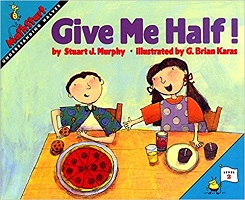
Give Me Half! lesson 1, Split It in Two, Cut It the Same
Two stacked pairs per child, one matching and one not, with a finger on the part that sticks out.
2
Judge a cut somebody else made: the piece count and the size test together
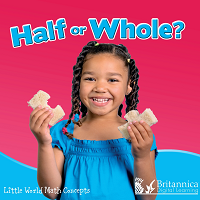
Half or Whole lesson 3, Whole One, or Half?
Each child's spoken judgement with the count inside it, for two pairs of objects.
3
The case the book never prints — right number of parts, wrong sizes Checkpoint after this lesson
Half or Whole lesson 5, Is Every Cut a Half?
The position mat with each child's marker, moved or not, and the spoken because sentence.
4
Compose the two halves back into the whole; halves of different wholes will not join
Give Me Half! lesson 2, Half and Half Makes One Whole
A rebuilt whole traced on paper, and the three sentences said with the pieces under the child's hand.
5
Where the line goes, and that more than one line works
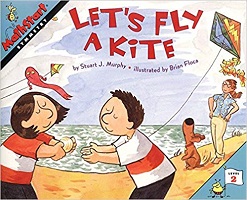
Let's Fly a Kite lesson 2, Two Lines on One Kite
Two stacks per pair, one from each line, with a part from each held up together.
6
Both folds match, so matching parts does not fix their shape Checkpoint after this lesson
Let's Fly a Kite lesson 5, Both Folds Match, So Which One Do You Sit On?
Two folded blankets with counters on them, and a spoken reason a partner has judged.
7
Half of a set: deal one and one instead of cutting
Give Me Half! lesson 3, One for You, One for Me: Half the Pack
Two plates holding one cupcake each, and the three items sorted with the halving move actually performed on each.
8
Which totals make halves at all — pair off and find the leftover
Equal Shmequal lesson 4, Will It Make Halves?
The two sorted mats of number cards, with any built card left beside the number it tested.
Unit vocabulary
Words students say, not words they are taught to define.
half
Used only about a piece that has a matching partner. Children are asked not to use it for the lopsided cut.
whole
The thing before it was cut, and the thing the two halves rebuild.
the same
The test the stack settles. Children say it about two pieces, never about one.
left over
Used in lesson 8, for the counter that has no partner.
Materials
From the source lessons
Each day's materials are listed on that day's page below and on the source lesson itself. Nothing is duplicated here.
New for this unit
Checkpoint 1 page, one per child
Checkpoint 2 page, one per child
Performance task set: two identical paper shapes per child, one pre-cut into two unequal parts, one pack of six counters, and two paper plates per pair
Performance task page, one per child
Assessment plan
Daily evidence
Keep each child's stacked pair from lesson 1, the position marker and revision from lesson 3, and the sorted number cards from lesson 8. Three pieces of evidence, each one a decision the child can defend.
Checkpoint 1, after lesson 3: Is this a half?
A paper shape cut into two parts that do not match. The child says whether the parts are halves, gives a reason with a number in it, and then does the same for a shape whose two parts do match.
Book-free. Plain paper shapes cut in advance; no book is open.
Look for. A because sentence containing the count of parts and the result of the stack. Two parts alone is not a reason, and neither is a verdict with no test.
Checkpoint 2, after lesson 6: Fold it two ways
A paper rectangle. The child folds it into two matching parts one way, then folds a second rectangle into two matching parts a different way, and says what is the same about the two folds and what is different.
Book-free. Blank paper, no story.
Look for. Both folds pass the stack test, and the child says that the parts match in both while the shapes of the parts differ. A child who says the second fold is wrong has not met lesson 6.
Culminating task: Cut it, deal it, or refuse it
Each child gets three jobs on one page. Fold and cut a paper shape into two halves and prove it by stacking. Take a pack of six counters and share it fairly between two plates without cutting anything, saying how many each plate holds. Then take five counters and say whether they can be shared the same way, and say what is left.
Collect. The stacked pair of pieces, the two plates with their counts, and the child's spoken or drawn answer for the five.
What it assesses. Halving an object, halving a set, and recognising a total that will not halve — the three moves the unit built. No fourths, no written fractions, and no number above six.
Daily lesson pages
Lesson 1Cut one whole into two matching parts and test the match by stacking
Skill lessonGive Me Half! · lesson 1, Split It in Two, Cut It the Same · Grade 1 · 20 minutes Partitioning one whole into two equal shares
I can
I can cut a whole into two pieces that match.
Big idea
A half is a piece with a matching partner, and the stack is what settles whether the partner matches.
Success
The child holds two pieces that stack with nothing sticking out, and says one half over each.
Connect | 5 min
First lesson. Hold up a whole paper pizza and ask the class how they would give half of it to somebody. Take the answers and cut nothing yet.
Taught on its own
The story hands a child one whole pizza and then hands the child a rule: it goes into two pieces, and the two pieces have to be cut the same.
Source core | 20 min
Each child traces the whole, folds one paper pizza so one edge lands on the other, cuts on the crease and stacks the two pieces; then cuts a second pizza carelessly and stacks that pair too.
Collect
Two stacked pairs per child, one matching and one not, with a finger on the part that sticks out.
Close | 5 min
Each child puts the matching pieces in front of them, touches one and says one half, touches the other and says one half, then slides them together and says the story's sentence.
From the source lesson: Paper pizza circles, one per student; Child-safe scissors; Word cards: half, more, same, whole
Watch for: A child trims the lopsided pair to make it match. The badly cut pizza is the evidence and has to stay as it is.
Lesson 2Judge a cut somebody else made: the piece count and the size test together
Skill lessonHalf or Whole · lesson 3, Whole One, or Half? · Grade 1 · 20 minutes Telling a whole object from two equal parts of one
I can
I can say whether something is whole or halves.
Big idea
Deciding takes two things: how many pieces there are, and whether they are the same size.
Success
The child gives the piece count as the reason before anyone agrees with them.
Connect | 5 min
Yesterday you cut the pieces yourself. Today somebody else cut them and you have to say what they made.
Taught on its own
Twice the book stops and asks the reader to judge before it answers: are these half sandwiches or whole ones.
Source core | 20 min
The teacher holds up one uncut paper sandwich and one already cut into two matching pieces; children point, say whole or half, then say the sentence with the piece count in it, and run it again on the fruit.
Collect
Each child's spoken judgement with the count inside it, for two pairs of objects.
Close | 5 min
The teacher shows an apple cut into two pieces that are not the same size. Children say whether it is halves and give a reason a partner has to check by stacking.
From the source lesson: Paper sandwich shapes, one uncut and one cut in two, per pair; Paper fruit shapes, one uncut and one cut in two, per pair; One paper apple cut into two unequal pieces; Word cards: whole, half, same
Watch for: A child says halves because there are two pieces. Hand them the unequal apple and ask for the stack.
Lesson 3The case the book never prints — right number of parts, wrong sizes
Math through the readingHalf or Whole · lesson 5, Is Every Cut a Half? · Grade 1 · 20 minutes Students take a position on a cut apple whose two parts do not match, defend it aloud with a count and a stacking test a partner can repeat, and change their mind on the record if the paper says so.
I can
I can change my mind when the paper says so.
Big idea
Two parts and the right sizes are both needed; a cut can pass one test and fail the other.
Success
The child gives a because sentence with a number in it, and moves their marker if the stack disagrees with it.
Connect | 5 min
Yesterday you judged a cut with two matching pieces and one without. Today everybody starts by taking a side before touching anything.
Taught on its own
The book asks the reader questions and settles them, but only ever for objects it has already declared whole; it never prints a cut that failed.
Source core | 20 min
Each pair gets an apple already cut into two parts that do not match, takes a position before touching it, then counts the parts and stacks them and says the reason to a partner who has to re-stack before agreeing.
Collect
The position mat with each child's marker, moved or not, and the spoken because sentence.
Close | 5 min
Every pair takes a second apple whose parts do match, runs both checks again, and says what is different about this apple and the first one.
From the source lesson: Paper apples cut into two unequal parts, one per pair; Paper apples cut into two matching parts, one per pair; Position mats with two answer spaces; Markers, one per child; The book's two reader questions written on cards; The frame sentence written where every child can see it
Watch for: Nobody changes their mind. Ask directly whether any marker moved, and give the children who did the floor first.
Checkpoint after this lesson: Is this a half?. The page is at the end of this guide.
Lesson 4Compose the two halves back into the whole; halves of different wholes will not join
Skill lessonGive Me Half! · lesson 2, Half and Half Makes One Whole · Grade 1 · 20 minutes Composing two halves into one whole
I can
I can put two halves back together to make one whole.
Big idea
Two halves rebuild the whole they came from, and pieces from two different wholes will not.
Success
The child slides the two pieces together with no gap and no overlap and traces the whole outline.
Connect | 5 min
So far the cutting has gone one way. Today it goes back: pick up your two matching pieces from yesterday and see whether they still make one thing.
Taught on its own
One fact is said three times running, as a long story sentence, then a short number sentence, then an equation, and again for the juice.
Source core | 20 min
Children slide the two matching pieces together, trace the outside edge, and say the fact three ways over the joined pieces; then do the whole thing again with a paper juice can they cut themselves.
Collect
A rebuilt whole traced on paper, and the three sentences said with the pieces under the child's hand.
Close | 5 min
Each pair opens an envelope holding two pieces from two different pizzas, tries to join them, and says what goes wrong at the join.
From the source lesson: Paper pizza halves, one matching pair per student; Paper juice-can rectangles, one per student; Child-safe scissors; Envelope of mismatched paper pieces, one per pair; Word cards: equals, half, same, whole
Watch for: Children overlap the pieces to make the outline look right. Ask them to trace it and look for the bulge.
Lesson 5Where the line goes, and that more than one line works
Skill lessonLet's Fly a Kite · lesson 2, Two Lines on One Kite · Grade 1 · 20 minutes Choosing where a line goes so two parts come out the same
I can
I can choose where the line goes.
Big idea
Where the line is put decides whether the parts match, and a whole can have more than one line that works.
Success
Two stacks stand side by side, one with an overhang and one without, and the child can say which line made which.
Connect | 5 min
Yesterday the two pieces went back together. Today the same shape gets two different lines and only one of them makes halves.
Taught on its own
Laura's first line runs across the kite and Bob says the bottom part is bigger; she rubs it out and draws one down the middle.
Source core | 20 min
Pairs draw Bob's line across a kite, cut and stack, and point at the strip with nothing above it; then draw Laura's line down the middle on a second kite, cut and stack, and show the edge that proves nothing sticks out.
Collect
Two stacks per pair, one from each line, with a part from each held up together.
Close | 5 min
Pairs fold a paper blanket down the middle and then fold a fresh one a second way that also matches, and keep both to show that a whole can take more than one line.
From the source lesson: Paper kites cut in a diamond shape, two per pair; Child-safe scissors; Paper rectangles for blankets, two per pair; Word cards: across, middle, part, fair
Watch for: A child concludes that only one line ever works. The second blanket fold is the whole point of the close, so leave time for it.
Lesson 6Both folds match, so matching parts does not fix their shape
Math through the readingLet's Fly a Kite · lesson 5, Both Folds Match, So Which One Do You Sit On? · Grade 1 · 20 minutes Students fold a paper blanket both of Laura's ways, sit two counters on each, and argue aloud to a partner which fold is the better one for two people, using the parts they folded as their reason.
I can
I can choose between two folds that both match.
Big idea
Matching parts does not fix what shape the parts are, so a tie on the matching test has to be broken by something else.
Success
The child gives a reason that names a side or a part, not just the fold they liked.
Connect | 5 min
Yesterday two lines both worked. Today both of them work again and you have to pick one anyway.
Taught on its own
Laura folds the blanket, Bob agrees the sides match and objects on other grounds, and the book never says which fold they used.
Source core | 20 min
Each child folds two paper blankets, one down the middle the long way and one the other way, checks that both folds match by stacking, then sets two counters on one side of each to find which fold holds them without overhang.
Collect
Two folded blankets with counters on them, and a spoken reason a partner has judged.
Close | 5 min
Bob's objection is read aloud. Each child holds up the fold they chose and says whether the objection is true of it, using the counters as evidence.
From the source lesson: Paper blankets, rectangles, two per student; Counters, two per student; Bob's objection to the first fold on one large card, read aloud twice as it is shown
Watch for: A reason with no side or part in it. The partner's job is to send it back once, and only once, for another try.
Checkpoint after this lesson: Fold it two ways. The page is at the end of this guide.
Lesson 7Half of a set: deal one and one instead of cutting
Skill lessonGive Me Half! · lesson 3, One for You, One for Me: Half the Pack · Grade 1 · 20 minutes Halving a set of two objects in a fair share
I can
I can share a pack fairly without cutting.
Big idea
Half of a set is dealt, not cut, and one of two is a half in exactly the way one piece of a pizza is.
Success
The child deals a pack of two one and one, and can say why the cupcakes were the only thing they did not cut.
Connect | 5 min
Every half so far has been made with scissors. Today one of the three things on the tray does not need them.
Taught on its own
The cupcakes are the one place the story halves a group instead of an object: a pack of two goes to two children and each ends up holding a whole cupcake.
Source core | 20 min
Pairs count the pack of two, deal it one to each plate saying one for you and one for me, then sort a pizza, a juice can and a pack of two into things you cut and things you deal, and carry out the move they chose.
Collect
Two plates holding one cupcake each, and the three items sorted with the halving move actually performed on each.
Close | 5 min
Each child points at one plate and says how many are on it, then at both and says how many altogether, and says the sentence naming one as half of two.
From the source lesson: Paper cupcakes, two per pair; Two paper plates per pair; Paper pizza circles, one per pair; Paper juice-can rectangles, one per pair; Child-safe scissors; Word cards: half, pack, share
Watch for: A child cuts the cupcakes because everything else was cut. Ask how many each child ends up holding under each plan.
Lesson 8Which totals make halves at all — pair off and find the leftover
Skill lessonEqual Shmequal · lesson 4, Will It Make Halves? · Grade 1 · 20 minutes Deciding whether a total splits into two equal groups
I can
I can say whether a number will make halves.
Big idea
Not every total splits into two equal groups, and pairing off is what finds the one that is left.
Success
The number cards are sorted onto a halves side and a left-over side, and the child can say one number they were sure about before testing it.
Connect | 5 min
Yesterday two cupcakes shared fairly. Today five will not, and the class has to say why.
Taught on its own
Mouse rules five out before anyone tries it, and Deer's arrival is what makes the line-up possible.
Source core | 20 min
Pairs push five counters together two at a time and show the one with no partner, add a sixth and pair again, add a seventh and pair again, then sort number cards two to ten onto a halves mat and a left-over mat, building any card they are unsure of.
Collect
The two sorted mats of number cards, with any built card left beside the number it tested.
Close | 5 min
Each child tells a partner one number they were sure about before they tested it, and says how they knew.
From the source lesson: Seven counters per two students; Number cards two through ten, one set per two students; Word cards: halves, left over, pair
Watch for: A child sorts by whether the number is big rather than by pairing. Hand them the counters for the card they got wrong and ask for the pairs.
Culminating performance task
Cut it, deal it, or refuse it
Each child gets three jobs on one page. Fold and cut a paper shape into two halves and prove it by stacking. Take a pack of six counters and share it fairly between two plates without cutting anything, saying how many each plate holds. Then take five counters and say whether they can be shared the same way, and say what is left.
Collect. The stacked pair of pieces, the two plates with their counts, and the child's spoken or drawn answer for the five.
What it assesses. Halving an object, halving a set, and recognising a total that will not halve — the three moves the unit built. No fourths, no written fractions, and no number above six.
Teacher key and rubric
Key
Checkpoint 1: not halves for the first shape, halves for the second. A correct reason names two parts and says the stack showed an overhang, or showed none.
Checkpoint 2: both folds give matching parts; the parts are different shapes. Down the middle and across both work on a rectangle.
Task: three and three on the plates for the six. Five will not share: two each with one left over.
Rubric
Strand
Secure looks like
Developing
Not yet
Representation
The two parts of the cut shape stack with nothing sticking out.
Does it with the arrangement in front of them.
Produces an answer without the arrangement or the reason.
Calculation
The six deals to three and three, and the five is reported with its leftover.
Does it with the arrangement in front of them.
Produces an answer without the arrangement or the reason.
Meaning
The word half is used only where the two parts match.
Does it with the arrangement in front of them.
Produces an answer without the arrangement or the reason.
Explanation
The reason names either the stack or the count, and a partner can repeat the test.
Does it with the arrangement in front of them.
Produces an answer without the arrangement or the reason.
Print-ready student pages
These three pages print one to a sheet. Everything above them is the teacher guide.
Checkpoint 1 · Grade 1
Is this a half?
NameDate
Here is a shape cut into two parts. Are they halves? Say why, and put a number in your reason. Now try the other shape.
Checkpoint 2 · Grade 1
Fold it two ways
NameDate
Fold this rectangle so the two parts match. Now fold the other rectangle so the two parts match a different way. What is the same about your two folds? What is different?
Culminating task · Grade 1
Cut it, deal it, or refuse it
NameDate
1. Fold and cut your shape into two halves. Stack them to prove it.
2. Share the six counters fairly onto two plates. How many on each?
3. Now try five counters. Can you share them the same way? What is left?
Teacher planning and handoff
Children who could not accept two different folds in lesson 6 will need it again before any work on fourths.
Lesson 7 is the only halving of a set here; if the class is going on to fair sharing, that is the lesson to revisit.
Half or Whole and Give Me Half! both teach the opening move; only the stronger version is used, so the other book is free for reading time.