The Word file and the PDF carry the whole guide. The student pages are the two checkpoints and the culminating task, one to a sheet.
About this unit
This unit runs two kinds of measuring that children usually meet only as vocabulary. The first three lessons build a balance out of a board and a block, the way the book's character does, and find out exactly what it can and cannot say: it gives heavier, lighter or level and never a number, and yet a known weight on one end can carry a number across to an unknown load on the other. That trade is the unit's best idea, and the lesson ends by splitting the level pair to show that neither half can be given a number on its own.
Then the scale arrives, and with it the discovery that a scale does not always repeat itself: one object gets weighed twice and both readings are written down. The last two lessons move to capacity, where an argument about which container holds more is settled by pouring in both directions — because one pour is a lucky result and two is a proof — and the recipe's six units get ordered and checked where the book gives no numbers at all.
The mathematical arc
Each lesson does one job the lesson before it made possible.
A board gives three answers and no numbers
Three columns, and nothing goes in that has not been on the board
A known weight on one end can name an unknown load on the other
A scale gives a number, and the number needs its unit
A ladder of weights, and a new object slid into it
Pour it both ways, because one pour is luck
Order the recipe's units, and check the two the book gives no numbers for
Source books
Every lesson in this unit is already published under Math lessons. Nothing here asks you to teach anything you cannot open today.
Each day names one lesson that already exists under Math lessons, with its book, its number and its title. This guide says what that lesson is doing in the sequence and what to collect from it; the lesson itself carries the steps, the printables and the answers.
Thirty minutes a day.
Five minutes to connect to yesterday, the twenty-minute source lesson, five minutes to close on something you can see. A day that runs long should lose the close, never the core.
Teach a lesson on its own if you need to.
Every day carries a one-sentence opening for a teacher who is using that lesson outside the sequence.
Stop after a checkpoint.
The unit holds together if you stop after either checkpoint and come back to it. Stopping between a checkpoint and the next one leaves a lesson without the evidence it was built on.
Where this fits in your year
When to teach it
After the length work, so that a number with a unit is already a habit. It needs water and a basin for the last two lessons.
What students need first
Children can read a two-digit number off a display and can say a comparison with heavier or lighter.
What this unit develops
Reading a balance's three results; recording them in three columns; naming an unknown weight from a known one; reading a scale in whole grams and writing the unit; ordering objects by stated weight and placing a new one; comparing capacity by pouring both ways; ordering capacity units and comparing two of them.
What it prepares them for
Grade 3 work on mass and volume, and any later measurement where the choice of instrument is part of the problem.
Curriculum connections
None claimed. The lessons in this unit carry their own standards classifications on their own pages, checked lesson by lesson. A unit-level expectation is a different claim, and none has been verified for this unit, so none is printed here. Use the placement guide above to site the unit in your year, and the individual lesson pages for the codes.
Unit at a glance
#
Mathematical move
Source lesson
Collect
1
A board gives three answers and no numbers
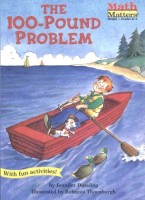
The 100-Pound Problem lesson 3, Which Way Did the Plank Go?
Six objects each run once against the reference bag, with the result said aloud as a sentence naming both sides.
2
Three columns, and nothing goes in that has not been on the board
The 100-Pound Problem lesson 4, Three Columns for One Board
A three-column chart filled only from the pair's own board results, and a second chart holding the book's four rows in their earned columns.
3
A known weight on one end can name an unknown load on the other Checkpoint after this lesson
The 100-Pound Problem lesson 2, How Patch Told Walt a Number
A card carrying the weight of the level pair, with the reason for writing it said aloud.
4
A scale gives a number, and the number needs its unit
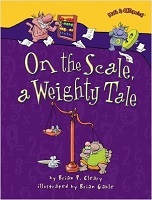
On the Scale, a Weighty Tale lesson 4, Read It, Write It, Say the Unit
A record sheet with three rows of object, number and unit, plus a second reading for one object and a fourth row the group chose and weighed themselves.
5
A ladder of weights, and a new object slid into it Checkpoint after this lesson
On the Scale, a Weighty Tale lesson 2, The Weight Ladder
A ladder of five objects including one the book does not list, with a two-part sentence naming its neighbours.
6
Pour it both ways, because one pour is luck
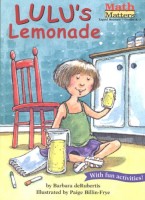
Lulu's Lemonade lesson 1, They Both Hold the Same Amount
A recording strip carrying the prediction, both pour results and the sentence the pouring settled.
7
Order the recipe's units, and check the two the book gives no numbers for
Lulu's Lemonade lesson 5, Put the Recipe in Order, Biggest First
The six units written in order, with one comparison sentence carrying both unit names and at least one ounce number.
Unit vocabulary
Words students say, not words they are taught to define.
level
The balance's third answer, and the hardest one to earn. It is what lets a known weight name an unknown one.
lighter than, heavier than
Said with both sides named. A comparison with one side missing is sent back.
grams
Written after every number from lesson 4. A number with no unit is not a reading.
holds more
Lesson 6's phrase, settled by pouring rather than by how tall a container looks.
largest to smallest
Lesson 7's ordering of the recipe's units, discovered rather than given.
Materials
From the source lessons
Each day's materials are listed on that day's page below and on the source lesson itself. Nothing is duplicated here.
New for this unit
Checkpoint 1 page, one per child
Checkpoint 2 page, one per child
Performance task set: a board and block balance, a bag marked with its weight, six unlabelled objects, a scale reading whole grams, a record sheet, and two clear containers of different shapes that hold the same amount, one set per group
Performance task page, one per child
Assessment plan
Daily evidence
Keep the three-column chart from lesson 2 and the record sheet from lesson 4. The chart shows whether anything was entered that had not been on the board; the sheet shows whether the unit was written every time and whether the repeat reading was recorded honestly.
Checkpoint 1, after lesson 3: What can the board tell you?
A board balance, a bag marked 10 pounds, and three unlabelled objects. The child finds one object lighter than the bag and says so with both sides named, then says whether they can give that object a number.
Book-free. A board, a marked bag and objects, no book.
Look for. The answer to the second question is no, with a reason. A child who offers a number for the single object has not noticed what the board refuses to say.
Checkpoint 2, after lesson 5: Read it and write it
A scale reading whole grams and two small objects. The child weighs each, writes object, number and unit, then weighs one of them a second time and records what happened.
Book-free. A scale and two objects, no book.
Look for. The unit written every time, and the second reading written down even when it differs. A child who quietly writes the first number twice has lost the point of the repeat.
Culminating task: Balance it, weigh it, pour it
Each group does three things. They run three objects against a marked bag on the board and say each result as a sentence naming both sides, then find a pair that sits level and say what they may write down and what they may not. They weigh two objects on a scale and record object, number and unit, weighing one twice. Finally they predict which of two unlike containers holds more, pour in both directions, and write the sentence the pouring settled.
Collect. Three spoken comparisons and the level pair with its written weight, the record sheet with units and a repeat reading, and the pouring sentence with the prediction marked right or wrong.
What it assesses. A balance read for what it can say, a scale read and recorded with its unit, and a capacity question settled by pouring both ways — the three tools the unit built, each used on the question it can answer.
Daily lesson pages
Lesson 1A board gives three answers and no numbers
Skill lessonThe 100-Pound Problem · lesson 3, Which Way Did the Plank Go? · Grade 2 · 20 minutes Comparing two weights on a balance and reading its three results
I can
I can build a balance and say which of three things it did.
Big idea
A balance compares and does not count. Its whole vocabulary is heavier, lighter and level, and every one of those is about two things at once.
Success
The child says each result as one sentence naming both sides, and relevels the board between objects.
Connect | 5 min
First lesson. Hold up two objects and ask which is heavier. Take the answers, then ask how they would settle it without a scale.
Taught on its own
Walt has no scale and makes one out of a plank and a rock, and from then on every weight judgement in the book is made by watching which end goes down.
Source core | 20 min
Children lay a board across a block so both ends can drop, level it with a matching can on each end and mark where the block sits, then put the reference bag on one end and set one test object on the free end before letting go of both together.
Collect
Six objects each run once against the reference bag, with the result said aloud as a sentence naming both sides.
Close | 5 min
Children put two of their test objects together on the free end against the bag, swapping one if the board tips, and say what a level board tells them about those two together that it does not tell them about either alone.
From the source lesson: A short board and a block to rest it on, one set per group; Two matching cans for levelling the board; A crayon to mark where the block sits; A reference bag every group weighs against, the same for all groups; Six unlabelled test objects per group; Three sentence strips per group reading is lighter than, is heavier than, weighs the same as; A tray for the objects that have already been tried; Word cards: lighter than, heavier than, weighs the same as
Watch for: A board that was not relevelled. Get it back to the mark before the next object; a tilted start makes every result wrong the same way.
Lesson 2Three columns, and nothing goes in that has not been on the board
Skill lessonThe 100-Pound Problem · lesson 4, Three Columns for One Board · Grade 2 · 20 minutes Recording balance results in lighter, same and heavier columns
I can
I can record what the balance said in the right column.
Big idea
A chart is a record of results, not of opinions. The middle column is the hardest to earn because level is the rarest thing a board does.
Success
The child says each entry aloud as a whole sentence while writing it, and nothing appears on the chart that has not been on the board.
Connect | 5 min
Yesterday the board gave you sentences. Today the sentences go somewhere, and the chart has a rule about what may enter it.
Taught on its own
The book finishes with a page it calls a weight chart, four rows comparing things to a box nobody opens.
Source core | 20 min
Children fold a sheet into three columns headed lighter, the same and heavier, say what has to have happened on the board before a name can go into each, then run six objects one at a time and write each name into the column its result earned.
Collect
A three-column chart filled only from the pair's own board results, and a second chart holding the book's four rows in their earned columns.
Close | 5 min
Children look at their chart of the book's rows and say what the box could weigh and what it could not, then say whether the chart settles what is inside it and, if not, which row they would need changed and what it would have to say.
From the source lesson: A sheet folded into three columns, one per pair; A thick marker; The reference bag and the board from the balance work; Six object name cards per pair; The book's four back-page sentences on separate strips; A second three-column sheet for the book's rows; A blank strip for the pair's answer or for their reason for not having one; A three-column sheet with the headings already written, for the Support level; Word cards: lighter, heavier, about the same
Watch for: A name written into the middle column because the board nearly levelled. Nearly is not level; run it again or put it in a side column.
Lesson 3A known weight on one end can name an unknown load on the other
Skill lessonThe 100-Pound Problem · lesson 2, How Patch Told Walt a Number · Grade 2 · 20 minutes Naming an unknown weight by balancing it against a weight you already know
I can
I can find two objects that balance a marked bag and say what they weigh together.
Big idea
The board cannot count, but a number can be carried across it. If one end holds a weight you already know and the board sits level, the other end weighs the same — and no more than that can be said.
Success
The child writes the weight of the level pair and says the reason they are allowed to write it, then says why neither half of the pair can be given a number.
Connect | 5 min
The board has given comparisons for two lessons. Today it gives a number, and the class has to work out where the number came from.
Taught on its own
Walt's plank cannot count, and yet he walks away from it knowing his fishing gear and his backpack come to twenty pounds. The number is Patch's, and the level board is what carries it across.
Source core | 20 min
Children put the bag marked with its weight on one end, run objects one at a time on the free end and keep the ones the board calls lighter, then take two from that pile and swap one at a time until the board sits level.
Collect
A card carrying the weight of the level pair, with the reason for writing it said aloud.
Close | 5 min
Children split the level pair, put one of the two back on alone, say what the board shows now and whether they can put a number on that object, and say what would have to happen for them to know it.
From the source lesson: The book read aloud; A card reading 20 pounds to stand beside the bag; A bag marked with its weight, one per group; A tray for the objects lighter than the bag; Blank cards for writing the pair's weight; The pair's weight card, kept where both partners can see it; Word cards: balanced, the same as, how much
Watch for: A number written for a single object. Ask which end it was level with, and let the missing answer stand.
Checkpoint after this lesson: What can the board tell you?. The page is at the end of this guide.
Lesson 4A scale gives a number, and the number needs its unit
Skill lessonOn the Scale, a Weighty Tale · lesson 4, Read It, Write It, Say the Unit · Grade 2 · 20 minutes Reading a scale in whole grams and recording a number with its unit
I can
I can weigh something in grams and write the number with its unit.
Big idea
A scale answers a different question from a board: it gives one number about one object. The number is only a reading once the unit is written beside it.
Success
The child writes object, number and unit for every row, and writes both readings when a repeat weighing disagrees.
Connect | 5 min
The board never gave a number. Today the machine does, and the class finds out that it does not always give the same one.
Taught on its own
The book names the scale as the tool and never shows a reading, so this lesson supplies the part the text asserts and skips.
Source core | 20 min
Groups weigh a paperclip, a pencil and a glue stick in turn, waiting for the number to settle, reading it aloud and writing it beside the object's name with the word grams after it — nobody writing a number without its unit.
Collect
A record sheet with three rows of object, number and unit, plus a second reading for one object and a fourth row the group chose and weighed themselves.
Close | 5 min
Groups take the glue stick off and put it straight back on, read the number again, write both numbers if it changed and same if it did not, and say aloud what they saw.
From the source lesson: Scale reading in whole grams, one per group; A paperclip, a pencil and a glue stick per group; Weight record sheet with three rows, each with a space for the object, the number and the unit; The weight record sheet, second column for the repeat reading; The completed weight record sheet; The weight record sheet, fourth row left blank; Weight record sheet with the unit word pre-printed in each row; Word cards: scale, grams, unit
Watch for: A reading taken while the display is still moving. Wait for it to settle; an unsettled number is the commonest cause of a repeat disagreeing.
Lesson 5A ladder of weights, and a new object slid into it
Skill lessonOn the Scale, a Weighty Tale · lesson 2, The Weight Ladder · Grade 2 · 20 minutes Ordering objects by stated weight and placing a new object in the order
I can
I can put objects in order by weight and say what a new one sits between.
Big idea
An order can be built from stated weights and then tested where the objects are small enough to hold. Placing a new object means naming both of its neighbours.
Success
The child slides an unlisted object into the line and says one sentence naming what it is heavier than and what it is lighter than.
Connect | 5 min
Single readings are on the sheet. Today four weights get put in order, and two of them get checked by hand.
Taught on its own
The back matter prints four objects each with a weight — a paperclip about a gram, a slice of bread about an ounce, two pears around a pound, a giraffe about a metric ton — and they are already in order.
Source core | 20 min
Groups read the weight printed on each of four picture cards aloud, lay the cards from lightest to heaviest, then hold the real paperclip and the real slice of bread one in each hand, say which hand is pulled down harder and check that against both scale readings.
Collect
A ladder of five objects including one the book does not list, with a two-part sentence naming its neighbours.
Close | 5 min
Groups read the finished line of five aloud from lightest to heaviest touching one object per name, read it back the other way, and say which two objects swapped places in their mouths when the direction changed.
From the source lesson: Four object cards carrying the book's back-matter weights: paperclip, slice of bread, two pears, giraffe; A real paperclip and a real slice of bread per group; Scale reading in whole grams, one per two groups; Scale reading in whole ounces, one per two groups; One unlisted object per group: a pencil, a shoe or a full backpack; Sentence strip showing the frame: the ___ is heavier than the ___ and lighter than the ___; The finished line of five objects and cards left standing on the table; Reduced set of three object cards, omitting the giraffe; Word cards: heavier, lighter, heaviest, lightest
Watch for: An order taken from the pictures rather than the printed weights. Read the weights aloud first; a giraffe is obvious and a paperclip against a slice of bread is not.
Checkpoint after this lesson: Read it and write it. The page is at the end of this guide.
Lesson 6Pour it both ways, because one pour is luck
Skill lessonLulu's Lemonade · lesson 1, They Both Hold the Same Amount · Grade 2 · 20 minutes Comparing the capacity of two containers by pouring one into the other
I can
I can find out which container holds more by pouring.
Big idea
How tall a container looks does not tell you how much it holds. Pouring settles it, and pouring in both directions is what turns a result into a proof.
Success
The child pours in both directions, says the result of each as it happens, and marks their own prediction right or wrong.
Connect | 5 min
Weight has been the question for four lessons. Today two containers are the question, and they will not go on a balance.
Taught on its own
The book settles an argument by pouring: Lulu is sure the big pitcher holds more, and Martin fills one, empties it into the other, and the water comes right up to the top.
Source core | 20 min
Children look at a tall narrow container beside a short wide one and write a three-word prediction, then fill the tall one to the very top and pour all of it into the wide one, watching whether the water lands short of the top, right at the top or over it.
Collect
A recording strip carrying the prediction, both pour results and the sentence the pouring settled.
Close | 5 min
Children write one sentence saying which container holds more with the words because I poured, then mark their own prediction right or wrong and say their partner's aloud and mark that one too.
From the source lesson: Two clear containers of different shapes that hold the same amount, one tall and narrow and one short and wide, per group; Recording strip, one per student; Pencil; A jug of water and a tray or basin to pour over, per group; An eight-ounce measuring cup, one per pair; Word cards: pour, holds, same amount
Watch for: A single pour treated as the answer. Ask what would happen the other way round, and make them do it.
Lesson 7Order the recipe's units, and check the two the book gives no numbers for
Skill lessonLulu's Lemonade · lesson 5, Put the Recipe in Order, Biggest First · Grade 2 · 20 minutes Ordering capacity units from largest to smallest and comparing two of them
I can
I can put the capacity units in order and compare two of them.
Big idea
The units come in an order, and the order can be discovered rather than recited. Where the book gives no numbers, pouring settles which is bigger.
Success
The child orders all six lines, checks the two smallest by pouring, and writes one comparison sentence carrying both unit names and an ounce number.
Connect | 5 min
Yesterday two containers were compared by pouring. Today six named amounts have to be put in order, and only four of them have numbers.
Taught on its own
The recipe lists six amounts and the book happens to print them from largest to smallest: half a gallon, quart, pint, cup, tablespoon, teaspoon.
Source core | 20 min
Children cut the recipe strip into its six lines and lay them out biggest first, read the row aloud by unit name, then check the two smallest by pouring a teaspoon and a tablespoon side by side into the measuring cup where no ounce number is given.
Collect
The six units written in order, with one comparison sentence carrying both unit names and at least one ounce number.
Close | 5 min
Children point at the largest line and say how many ounces it is, then at the smallest line with an ounce number, and say how many of the small one it would take to make the large one — working it out from the ounce rows rather than guessing.
From the source lesson: Recipe strip printed with the book's six lines, one per pair; An eight-ounce measuring cup, one per pair; A jug of water and a tray or basin to pour over, per group; Ounce tokens, one hundred and thirty per group, each token standing for one ounce; Recording strip, one per student; Pencil; Word cards: largest, smallest, bigger than, teaspoon, tablespoon
Watch for: An order recited from memory of a chart. Ask which two lines they had to think hardest about, and make them pour those.
Culminating performance task
Balance it, weigh it, pour it
Each group does three things. They run three objects against a marked bag on the board and say each result as a sentence naming both sides, then find a pair that sits level and say what they may write down and what they may not. They weigh two objects on a scale and record object, number and unit, weighing one twice. Finally they predict which of two unlike containers holds more, pour in both directions, and write the sentence the pouring settled.
Collect. Three spoken comparisons and the level pair with its written weight, the record sheet with units and a repeat reading, and the pouring sentence with the prediction marked right or wrong.
What it assesses. A balance read for what it can say, a scale read and recorded with its unit, and a capacity question settled by pouring both ways — the three tools the unit built, each used on the question it can answer.
Teacher key and rubric
Key
Checkpoint 1: whichever object is genuinely lighter; the second answer is no, because the board only says which side is heavier and never by how much.
Checkpoint 2: whatever your scale reads. The repeat may or may not change — both outcomes are correct, and the recording is what is being checked.
Task: choose two containers that genuinely hold the same amount and check them yourself by pouring before the lesson, because a mismatched pair turns the both-directions proof into a contradiction the child cannot resolve.
Rubric
Strand
Secure looks like
Developing
Not yet
Representation
The board is relevelled between objects, and a chart entry exists only for a result the board actually gave.
Does it with the arrangement in front of them.
Produces an answer without the arrangement or the reason.
Calculation
A scale reading is taken after the display settles and written with its unit, and a repeat reading is recorded as it came.
Does it with the arrangement in front of them.
Produces an answer without the arrangement or the reason.
Meaning
Every comparison names both sides, and a level board is described as what it is: the same as, not a number for either side.
Does it with the arrangement in front of them.
Produces an answer without the arrangement or the reason.
Explanation
A capacity claim is defended by a pour in both directions, and the child can say why one pour would not be enough.
Does it with the arrangement in front of them.
Produces an answer without the arrangement or the reason.
Print-ready student pages
These three pages print one to a sheet. Everything above them is the teacher guide.
Checkpoint 1 · Grade 2
What can the board tell you?
NameDate
Find something lighter than the bag and tell me about it — name both sides. Now: can you tell me how much that object weighs? Why not?
Checkpoint 2 · Grade 2
Read it and write it
NameDate
Weigh these two and write each one down. Now take this one off and put it straight back on. What does it say? Write that down too.
Culminating task · Grade 2
Balance it, weigh it, pour it
NameDate
Run these three against the bag and tell me each result, naming both sides. Now find two that make the board sit level, and tell me what you can write down. Weigh these two and write them down properly. Weigh this one again. Last: which container holds more? Say first, then pour it both ways, then write what the pouring settled.
Teacher planning and handoff
A child who offers a number for a single object on a balance has not seen what the tool refuses to say. Put the board back in front of them before any work with mass in Grade 3.
Lesson 6's two-directions rule is the one to carry forward. It is the clearest case on this shelf of a result that needs doing twice before it counts as a proof.
On the Scale, a Weighty Tale has two further lessons, on the difference between about and equals and on finding the weight of one pear from a weighed pair, which were left out: the first belongs to a unit about what a word does to a quantity, and the second is a withheld quantity rather than a measurement.