The Word file and the PDF carry the whole guide. The student pages are the two checkpoints and the culminating task, one to a sheet.
About this unit
The unit starts with the smallest gap there is: it is 3:38 and somebody wants a break until four. Children count on round the clock face in fives and then ones, check their number against the one a character says out loud, and find a pair of times whose two gaps add to sixty. Then the two halves of an amount get put back together. One book stamps five runs with a start and a finish and names how long each took in a different sentence, so children hop a minute track from one clock time to the other and only then find the sentence that says whether they agree. The lesson ends by asking what the middle number is, because it is the one number on the track that is not a time the day reaches.
The middle lessons take the counting off the track and then turn it round. Fives to the nearest mark and ones after that, stopping at the hour and starting again, until a run card can be counted with hands still while a partner checks every hop on the track. Counting forward then arrives in two stages — whole hours first, then minutes — and is immediately undone: a character says he will be collected at twenty past five, and children work back to what the clock must have said when he spoke. Counting back gets its own lesson on eight deadlines, where the answer is the latest possible time and every answer is checked by adding the amount forward again.
The keystone is a strip folded into three boxes — the time it starts, the minutes it takes, the time it finishes — with one box left empty. Which box is empty is what decides the direction of the count, and children end the lesson by building a row for a partner and writing the hint themselves. The last two lessons apply all of it. A delay of an hour and five minutes is added to eight timetabled pick-up times and each morning gets a verdict of walk, run or neither, with the two compared numbers written beside it. Then a whole afternoon is cut into strips at five minutes to a square, laid end to end, totalled in hours and minutes, and held against the time the day actually has.
The mathematical arc
Each lesson does one job the lesson before it made possible.
The gap to the next hour, counted on the face
Put the two halves of an amount back together, and say what the middle number is
Count forward without the track, and stop at the hour
Forward in two stages, hours first — then undo it
Count back from a deadline, and check it forwards
Which box is empty decides which way you count
Add the delay, then decide whether the walk still fits
Lay a whole day end to end and see whether it fits
Source books
Every lesson in this unit is already published under Math lessons. Nothing here asks you to teach anything you cannot open today.
Each day names one lesson that already exists under Math lessons, with its book, its number and its title. This guide says what that lesson is doing in the sequence and what to collect from it; the lesson itself carries the steps, the printables and the answers.
Thirty minutes a day.
Five minutes to connect to yesterday, the twenty-minute source lesson, five minutes to close on something you can see. A day that runs long should lose the close, never the core.
Teach a lesson on its own if you need to.
Every day carries a one-sentence opening for a teacher who is using that lesson outside the sequence.
Stop after a checkpoint.
The unit holds together if you stop after either checkpoint and come back to it. Stopping between a checkpoint and the next one leaves a lesson without the evidence it was built on.
Where this fits in your year
When to teach it
After children can read a clock face to the minute. If they cannot, teach that first — every lesson here assumes a time can be read and written with a colon.
What students need first
Children can read and write a time to the minute, count on in fives, and add and subtract within a hundred.
What this unit develops
The gap to the next hour; elapsed minutes between two stated times; counting forward in fives and then ones across an hour; counting forward in two stages, hours then minutes; counting back from a deadline; checking a count-back by counting forward; choosing the direction from which of the three numbers is missing; adding a delay to a timetable; totalling a day's durations.
What it prepares them for
Grade 4 work in hours and minutes, timetables and schedules, and any later problem where a deadline has to be worked back from.
Curriculum connections
None claimed. The lessons in this unit carry their own standards classifications on their own pages, checked lesson by lesson. A unit-level expectation is a different claim, and none has been verified for this unit, so none is printed here. Use the placement guide above to site the unit in your year, and the individual lesson pages for the codes.
Unit at a glance
#
Mathematical move
Source lesson
Collect
1
The gap to the next hour, counted on the face
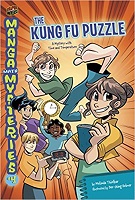
The Kung Fu Puzzle lesson 1, How Long Until Four O'Clock
Nine gaps found on the clock, with the first checked against the number the book's character says.
2
Put the two halves of an amount back together, and say what the middle number is
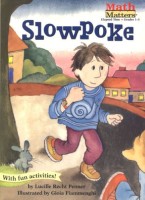
Slowpoke lesson 1, From Start to Finish
Three run cards with both clock times written and the amount hopped and recorded, each checked against the story sentence that names it.
3
Count forward without the track, and stop at the hour Checkpoint after this lesson
Slowpoke lesson 3, Count Forward to the Finish
Four runs counted, fives used wherever fives help, and the changeover point named aloud for each.
4
Forward in two stages, hours first — then undo it
The Kung Fu Puzzle lesson 2, Counting Forward to the Pick-Up Time
Eight finish times produced in two stages, with the hour-changing rows ringed.
5
Count back from a deadline, and check it forwards
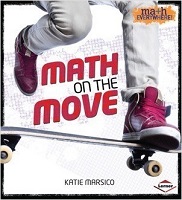
Math on the Move lesson 3, Counting Back From the Train
Ten latest-possible times written in colon notation, with the two rows that cross into the hour before ringed.
6
Which box is empty decides which way you count Checkpoint after this lesson
Slowpoke lesson 5, Which Box Is Empty
Both of the book's rows completed with the empty box ringed and the direction of the count said aloud for each.
7
Add the delay, then decide whether the walk still fits
Math on the Move lesson 1, The Bus Is Running Late
Eight late mornings worked, each with a delayed time, the minutes available, and a verdict carrying the two numbers that decided it.
8
Lay a whole day end to end and see whether it fits
Math on the Move lesson 4, Building the Day on a Time Line
A labelled strip for every duration laid out in order, totalled in hours and minutes twice — once before the luggage and dining strips are added and once after.
Unit vocabulary
Words students say, not words they are taught to define.
start time, finish time
Two times the day reaches. Both get written with a colon, in lesson 2 and everywhere after it.
amount of time
The minutes between. It is a count of hops, not a time of day, and lesson 2 ends on that difference.
count on, count forward
From the earlier time towards the later one, in fives to the nearest mark and then in ones.
count back
From a deadline towards the time you must leave. Lesson 5's direction, and the one children get wrong more often.
deadline
A time you have to be somewhere by. What you count back from.
delay
An amount added to every time on a timetable. Lesson 7 adds an hour and five minutes to eight of them.
duration
How long one thing takes. Lesson 8 cuts one strip per duration and lays them end to end.
Materials
From the source lessons
Each day's materials are listed on that day's page below and on the source lesson itself. Nothing is duplicated here.
New for this unit
Checkpoint 1 page, one per child
Checkpoint 2 page, one per child
Performance task set: a geared clock, a minute track, four task cards each giving two of the three numbers, a three-box recording strip, squared paper at one square to five minutes, and a pencil, one set per pair
Performance task page, one per child
Assessment plan
Daily evidence
Keep the three-box strips from lesson 6, both the one the child filled and the one they built for a partner. The strip they wrote is the better evidence: a child who leaves the middle box empty and writes a hint saying count forward has not yet sorted the three numbers out, and that shows up nowhere else.
Checkpoint 1, after lesson 3: How many minutes between
Three pairs of times, one pair inside an hour, one crossing an hour and one crossing noon, with a clock and a minute track available. The child gives the minutes between each pair and says what that number is.
Book-free. Three printed pairs, a clock and a track, no book.
Look for. The answer given as an amount of minutes and not as a time — twenty five minutes, not 8:25. Watch for a child who stops counting at the hour on the crossing pairs and reports only the first part.
Checkpoint 2, after lesson 6: Which box is empty?
Three rows, each giving two of the three numbers and leaving a different one out: start and amount, start and finish, amount and finish. The child fills each empty box and says which way they counted.
Book-free. A three-row sheet, a clock and a track, no book.
Look for. The third row counted back. A child who counts forward from the amount to the finish has read the row as the first kind, and the answer will be too late by exactly the amount.
Culminating task: Four cards, four directions, and a day that has to fit
Each pair works four task cards. Every card gives two of the three numbers and leaves one out, and the four cards between them leave out each of the three at least once — including one card whose deadline has to be counted back from. For each card the pair writes all three numbers into the three-box strip, says which way they counted, and checks the answer by counting the other way. Then they take the five durations printed on the last card, cut a strip for each at one square to five minutes, lay them end to end in order, total them in hours and minutes, and say whether the plan fits between a stated start and a stated deadline — and by how much.
Collect. Four filled three-box strips each naming the direction counted and carrying the check, the laid-out strip of five durations with its total in hours and minutes, and a spoken verdict on whether the plan fits.
What it assesses. The direction of the count chosen from which number is missing rather than guessed, every answer checked by counting the other way, and a list of durations turned into one length that can be compared with the time available.
Daily lesson pages
Lesson 1The gap to the next hour, counted on the face
Skill lessonThe Kung Fu Puzzle · lesson 1, How Long Until Four O'Clock · Grade 3 · 20 minutes Finding the minutes between a stated time and the hour that follows it
I can
I can find how many minutes there are until the next hour.
Big idea
A gap is a count from where the hand is to where the twelve is. It is not a sum somebody hands you, and it can be checked by counting.
Success
The child counts on from a stated time to the next hour in fives and then ones, checks the first one against the number a character says, and finds a pair of times whose gaps add to sixty.
Connect | 5 min
First lesson. Set a clock to 3:38, say there will be a break until four, and ask how long that is. Take the answers, then count it together.
Taught on its own
It is 3:38 and somebody proposes a break until four; a second child immediately names the gap as twenty-two minutes, and the book never shows the working.
Source core | 20 min
Children set the clock to 3:38 and count on round the face to four o'clock out loud, in fives to the nearest five-minute mark and then in ones, then do the same for eight further stated times, moving the clock by hand every time.
Collect
Nine gaps found on the clock, with the first checked against the number the book's character says.
Close | 5 min
Children find a pair of times on their sheet whose two gaps add to sixty minutes and say what is true of those two times.
From the source lesson: A geared demonstration clock per pair; An eight-row gap sheet per pair, ruled for the time and the minutes to the hour; A pencil; Word cards: until, gap, minutes, past
Watch for: The minutes read straight off the face — thirty-eight instead of twenty-two. Ask which way the count is going and start again at the hand.
Lesson 2Put the two halves of an amount back together, and say what the middle number is
Skill lessonSlowpoke · lesson 1, From Start to Finish · Grade 3 · 20 minutes Finding the amount of minutes between a printed start time and finish time
I can
I can find the minutes between a start time and a finish time, and say what that number is.
Big idea
The two clock times are times the day reaches. The number between them is not — it is a count of minutes, and the book has its own words for it.
Success
The child writes both clock times with the colon, hops the track counting aloud, checks the amount against the sentence that names it, and says what each of the three numbers is.
Connect | 5 min
Yesterday the gap ran to the next hour. Today both ends are given and the middle is missing. Hand out the run cards and the tracks.
Taught on its own
The story stamps five of the runs with a start and a finish and then says how long each took in a different sentence, so the two halves of every amount are printed apart from each other.
Source core | 20 min
Children write a run's start time at the left end of the minute track and its finish time at the right — putting in the colon the card leaves out — then put a finger on the start and hop one minute at a time to the finish, one hop one number word, writing the number of hops in the middle.
Collect
Three run cards with both clock times written and the amount hopped and recorded, each checked against the story sentence that names it.
Close | 5 min
Children point at their two end numbers and say what each one is, then point at the middle number and say what that one is in the book's own words — then say all three in one sentence, ending with the amount.
From the source lesson: Minute track marked in single minutes with each hour written along it, one per pair; Story run cards, one printed start time and finish time per card; Story sentence strips, one duration sentence per strip; Word cards: start time, finish time, amount of time
Watch for: The amount written as a clock time. Ask whether the day ever reaches that number, and have the sentence said again.
Lesson 3Count forward without the track, and stop at the hour
Skill lessonSlowpoke · lesson 3, Count Forward to the Finish · Grade 3 · 20 minutes Counting forward in minutes from a start time to a finish time, across the hour when it has to
I can
I can count forward in fives and then ones, and stop at the hour and start again.
Big idea
Counting on is a procedure with a place to change gear: fives to the nearest mark, ones after that, and a full stop at the hour before the count goes on.
Success
The child counts a run with hands still while a partner checks every hop on the track, and says where the count changed from fives to ones.
Connect | 5 min
The track has done the work twice. Ask who can do the four-minute run without touching it, and let somebody try.
Taught on its own
The book's closing section names the method twice and never shows it working: count forward.
Source core | 20 min
Children count forward from 8:02 to 8:06 in single minutes with a finger up per minute until they can do it with their hands still, then count from 11:10 in fives and finish in ones, saying how many minutes it was altogether and where they changed.
Collect
Four runs counted, fives used wherever fives help, and the changeover point named aloud for each.
Close | 5 min
Children count 11:50 forward to 12:00 and say how many minutes that took, keep going to 12:15 and say how many more, put the two amounts together and check the whole amount against the sentence about the recess run.
From the source lesson: Minute track marked in single minutes with each hour written along it, one per pair; Story sentence strips, one duration sentence per strip; Story run cards, one printed start time and finish time per card; Word cards: count forward, minutes
Watch for: A count that stops at the hour and reports only the first part. Ask for both amounts and then for the two put together.
Checkpoint after this lesson: How many minutes between. The page is at the end of this guide.
Lesson 4Forward in two stages, hours first — then undo it
Skill lessonThe Kung Fu Puzzle · lesson 2, Counting Forward to the Pick-Up Time · Grade 3 · 20 minutes Counting forward whole hours and then minutes from a starting time
I can
I can count forward whole hours and then minutes, and work backwards from the answer.
Big idea
When the amount has hours and minutes in it, the hours go on first and the minutes after. The same two stages, taken off instead of added, run the problem backwards.
Success
The child carries eight starting times through both stages, rings the rows where the hour changed, and finds the starting time by undoing both amounts from a stated finish.
Connect | 5 min
So far the amounts have all been minutes. Read the sentence about the drive home and ask what is different about this amount.
Taught on its own
A child in the book works out when to be collected — three hours until the drive home and five minutes for the drive itself — and says 5:20 out loud, with the starting time only in the picture.
Source core | 20 min
Children read the sentence and write the two amounts it names, say which one they will add first and why, then count forward three hours and five minutes from each of eight starting times on a clock they move by hand, ringing any row where the hour changed.
Collect
Eight finish times produced in two stages, with the hour-changing rows ringed.
Close | 5 min
Children take the time the character says he will be collected, undo both amounts to find what the clock must have said when he spoke, set their clock to that answer and show a partner.
From the source lesson: The sentence about the drive, enlarged; A geared demonstration clock per pair; An eight-row recording sheet per pair, ruled for start, after the hours, and after the minutes; Word cards: hours, minutes, in, at
Watch for: Minutes added before hours, which costs nothing here but goes wrong as soon as the minutes cross the hour. Ask for the order to be said aloud first.
Lesson 5Count back from a deadline, and check it forwards
Skill lessonMath on the Move · lesson 3, Counting Back From the Train · Grade 3 · 20 minutes Counting back from a deadline through a stated number of minutes
I can
I can count back from a time I have to be somewhere and say the latest I can leave.
Big idea
Some questions give you the finish and the amount. Then the count runs the other way, and the answer is the latest possible time — which can always be checked by counting forward again.
Success
The child counts back through eight deadlines writing each latest possible time in colon notation, rings the rows that cross into the hour before, and checks one answer by adding the amount forward.
Connect | 5 min
Both directions have now been counted forward. Read the two sentences about the train and ask what is being asked for this time.
Taught on its own
The book gives a departure and a rule about arriving early, and the time a traveller actually has to be somewhere is never stated.
Source core | 20 min
Children count back from the departure to find the latest time to arrive at the station and write it with a colon, then count back again through the cab ride to find the latest time to leave the hotel, then work eight further deadlines the same way with the largest amount taken off first.
Collect
Ten latest-possible times written in colon notation, with the two rows that cross into the hour before ringed.
Close | 5 min
Children take one of their answers, add the amount back on to check that they land exactly on the deadline, and say which direction they found easier and why.
From the source lesson: The two train sentences, enlarged; A geared demonstration clock per pair; An eight-row count-back sheet per pair; A pencil; Word cards: before, departure, deadline, count back
Watch for: Counting forward from the deadline. The answer comes out exactly the amount too late; name that out loud rather than just correcting it.
Lesson 6Which box is empty decides which way you count
Skill lessonSlowpoke · lesson 5, Which Box Is Empty · Grade 3 · 20 minutes Recording a start time, an amount of minutes and a finish time in three places, with one of the three left blank
I can
I can tell from the empty box whether to count forward, count back, or count the hops between.
Big idea
Three numbers, three boxes, and any two of them give the third. The empty box is the question, and it is what tells you the direction before any counting starts.
Success
The child fills both of the book's rows, rings the empty box on each, says which way they counted, and builds a row for a partner with a hint written underneath.
Connect | 5 min
Three lessons have counted forward and one has counted back. Ask how anyone is supposed to know which to do, and fold the strips.
Taught on its own
The book's closing chart keeps three things in three places — the time a run starts, the minutes it takes, the time it finishes — and each of its two rows leaves a different one of the three empty.
Source core | 20 min
Children fold a strip into three labelled boxes, copy the book's two rows in with the colons, ring the box still empty on each, then fill the empty finish box by counting forward from the start by the given minutes and the empty minutes box by hopping the track from start to finish.
Collect
Both of the book's rows completed with the empty box ringed and the direction of the count said aloud for each.
Close | 5 min
Children choose a run from the cards, fill two of their three boxes and leave the third empty on purpose, write one sentence telling a partner which way to count, then trade strips, fill each other's box and check against the card.
From the source lesson: Three-box recording strip, two per pair; Minute track marked in single minutes with each hour written along it, one per pair; Story run cards, one printed start time and finish time per card; Word cards: start time, finish time, hint
Watch for: A hint that names the wrong direction. It is the most useful mistake in the unit; have both children work the strip and find where the hint sends them.
Checkpoint after this lesson: Which box is empty?. The page is at the end of this guide.
Lesson 7Add the delay, then decide whether the walk still fits
Skill lessonMath on the Move · lesson 1, The Bus Is Running Late · Grade 3 · 20 minutes Adding a delay in hours and minutes to a timetabled time and deciding whether a walk still fits
I can
I can add a delay to a timetabled time and say whether there is time to walk.
Big idea
Elapsed time is usually worked out in order to decide something. Two minutes either way can switch the answer, so the verdict has to carry the two numbers that were compared.
Success
The child adds the delay in two stages to eight pick-up times, counts the minutes available for each, and writes a verdict of walk, run or neither with the two compared numbers beside it.
Connect | 5 min
Everything so far has produced a number. Today the number decides something. Read the delay sentence and ask what a late bus changes.
Taught on its own
On a late-arrival day the buses run one hour and five minutes behind, and the book hands over the normal pick-up time, the walk, the run and the time they left home, then asks whether they can stroll.
Source core | 20 min
Children add the hour first and then the five minutes to the normal pick-up time, writing both stages and saying when the bus will actually come, then count on from the time they left home to the bus's new time and write that many minutes beside the verdict column.
Collect
Eight late mornings worked, each with a delayed time, the minutes available, and a verdict carrying the two numbers that decided it.
Close | 5 min
Children ring the row where the verdict changes from walk to run and say what it is about that row that moved the answer, naming both numbers.
From the source lesson: The delay sentence and the timetable sentence, enlarged; A geared demonstration clock per pair; An eight-row sheet per pair, ruled for the normal time, the delayed time, and the verdict; A pencil; Word cards: delay, behind schedule, stroll, sprint
Watch for: A verdict with no numbers beside it. Ask which two numbers were compared and have them written in before the next row.
Lesson 8Lay a whole day end to end and see whether it fits
Skill lessonMath on the Move · lesson 4, Building the Day on a Time Line · Grade 3 · 20 minutes Laying a day's stated durations end to end on a time line and totalling them
I can
I can turn a list of durations into one length and compare it with the time I have.
Big idea
A list of durations tells you nothing until they are laid end to end. Once they are one length, the question of whether the day holds them becomes a comparison of two numbers.
Success
The child cuts and labels a strip for every stated duration, lays them in order with no gaps, totals the strip in hours and minutes, and says whether the plan fits and by how much.
Connect | 5 min
One amount at a time has been enough so far. Read the afternoon's dozen durations aloud and ask whether they will fit before the train.
Taught on its own
The book plans an afternoon out of a dozen stated durations — an hour and a half at each attraction, a one-minute walk, a six-minute stroll, an hour for lunch, cab rides, half an hour for luggage, two hours to dine and shop — and asks whether they all fit.
Source core | 20 min
Children cut a strip of squares for each stated duration at one square to five minutes, write on each strip what it is for, and lay them end to end in the order the day would happen with no gaps between them.
Collect
A labelled strip for every duration laid out in order, totalled in hours and minutes twice — once before the luggage and dining strips are added and once after.
Close | 5 min
Children compare their total with the time between the start of the day and the station deadline and say whether the plan fits, and by how much.
From the source lesson: Squared paper and scissors per pair, at one square to five minutes; The itinerary sentences, enlarged; A long sheet to lay the strips on, per pair; A pencil; Word cards: duration, each, total, fits
Watch for: A total counted in squares and reported as minutes. Ask what one square is worth before the total is written.
Culminating performance task
Four cards, four directions, and a day that has to fit
Each pair works four task cards. Every card gives two of the three numbers and leaves one out, and the four cards between them leave out each of the three at least once — including one card whose deadline has to be counted back from. For each card the pair writes all three numbers into the three-box strip, says which way they counted, and checks the answer by counting the other way. Then they take the five durations printed on the last card, cut a strip for each at one square to five minutes, lay them end to end in order, total them in hours and minutes, and say whether the plan fits between a stated start and a stated deadline — and by how much.
Collect. Four filled three-box strips each naming the direction counted and carrying the check, the laid-out strip of five durations with its total in hours and minutes, and a spoken verdict on whether the plan fits.
What it assesses. The direction of the count chosen from which number is missing rather than guessed, every answer checked by counting the other way, and a list of durations turned into one length that can be compared with the time available.
Teacher key and rubric
Key
Checkpoint 1: choose the pairs yourself and count them before the lesson. Make one pair cross noon — 11:50 to 12:15 is twenty-five minutes — because that is where a child who stops at the hour reports ten.
Checkpoint 2: row three is the count-back row. A child who counts forward will land exactly the amount too late, which makes the error easy to name out loud.
Task: make one card give the amount and the finish time only. It is the card children skip, and it is the one the whole unit is for.
Rubric
Strand
Secure looks like
Developing
Not yet
Representation
Times are written with a colon and the amount is written as minutes, in the box each belongs in, so the three numbers never get mixed up on the page.
Does it with the arrangement in front of them.
Produces an answer without the arrangement or the reason.
Calculation
Counting on goes in fives to the nearest mark and then in ones, an hour boundary is crossed by stopping and starting again, and a count back is checked by counting forward to the deadline.
Does it with the arrangement in front of them.
Produces an answer without the arrangement or the reason.
Meaning
The amount of minutes is described as a length of time rather than as a time of day, and which number is missing is used to choose the direction of the count.
Does it with the arrangement in front of them.
Produces an answer without the arrangement or the reason.
Explanation
The direction is named before or as the counting is done, and a verdict about whether something fits carries the two numbers that were compared.
Does it with the arrangement in front of them.
Produces an answer without the arrangement or the reason.
Print-ready student pages
These three pages print one to a sheet. Everything above them is the teacher guide.
Checkpoint 1 · Grade 3
How many minutes between
NameDate
How many minutes between these two times? Tell me what the number you just said is — is it a time of day or something else?
Checkpoint 2 · Grade 3
Which box is empty?
NameDate
Fill the empty box in each row. For each one, tell me which way you counted and why that way and not the other.
Culminating task · Grade 3
Four cards, four directions, and a day that has to fit
NameDate
Each of these cards gives you two of the three numbers. Find the third, write all three in the boxes, and tell me which way you counted. Then check it by counting the other way. For the last card, cut a strip for every duration, lay them end to end, and total them. Does the plan fit before the deadline? By how much?
Teacher planning and handoff
The error to watch for all unit is the amount reported as a time: eight twenty five instead of twenty five minutes. Lesson 2's last step is the cure and is worth repeating whenever it reappears.
On any pair of times that crosses an hour, a child who counts only to the hour reports the first part and stops. Insist on the two amounts being said and then put together, as lesson 3 does at 11:50.
Slowpoke has a lesson comparing two timings of one trip — six minutes against four, twenty against twelve — built as strips with the difference left standing. It was left out because the book already gives three lessons, and it is the right addition for a class that needs the comparison as well as the gap.
The Kung Fu Puzzle's opening claim, that six minutes without stopping beats five minutes twice, is the best argument lesson in this material and needs nothing from this unit but a clock. Keep it for a day when the unit is finished and the class will argue.
Known gaps in this unit
Naming a time as a.m. or p.m. Three books of clock work and the notation never appears once. One lesson counts across noon, from 11:50 to 12:15, without ever saying which side of the day either time is on, so the distinction has to come from elsewhere before children meet a timetable that runs all day.
A duration that crosses midnight, or one longer than a day. Everything here fits inside one afternoon.