The Word file and the PDF carry the whole guide. The student pages are the two checkpoints and the culminating task, one to a sheet.
About this unit
A first grader who can find the difference will still say it in one direction only, and will treat the other direction as a new fact about a new situation. This unit is built against that. Every difference here is found by matching two rows and reading the overhang, and every difference is said twice about an arrangement that never moves.
The unit also refuses to let a comparison float. It ends on the question that decides everything: equal by which test? Two teams can pass a count and fail a balance, and until somebody says what was compared, the word equal has not settled anything.
The mathematical arc
Each lesson does one job the lesson before it made possible.
Match two rows and read the leftover; one arrangement, two questions
The leftover read the other way: how many to add to make them match
When nothing is left over — settling equality by matching
A fixed amount and a growing one: the gap as a changing quantity
Say one gap both ways over an arrangement that never moves
Two tests for equal, and what happens when they disagree
One word decides which test, and both verdicts stand
Source books
Every lesson in this unit is already published under Math lessons. Nothing here asks you to teach anything you cannot open today.
Each day names one lesson that already exists under Math lessons, with its book, its number and its title. This guide says what that lesson is doing in the sequence and what to collect from it; the lesson itself carries the steps, the printables and the answers.
Thirty minutes a day.
Five minutes to connect to yesterday, the twenty-minute source lesson, five minutes to close on something you can see. A day that runs long should lose the close, never the core.
Teach a lesson on its own if you need to.
Every day carries a one-sentence opening for a teacher who is using that lesson outside the sequence.
Stop after a checkpoint.
The unit holds together if you stop after either checkpoint and come back to it. Stopping between a checkpoint and the next one leaves a lesson without the evidence it was built on.
Where this fits in your year
When to teach it
Mid-year, once the class counts reliably to twenty. Lessons 4 and 5 reach one hundred, so they want the class comfortable past twenty first.
What students need first
Children can count a row accurately, can match two rows one to one, and can hold a number while a second is counted.
What this unit develops
Finding a difference by matching rather than by subtracting; reading a difference as an amount to add; establishing equality without recounting; stating a comparison in both directions; recognising that a comparison needs a stated attribute.
What it prepares them for
Subtraction as difference; the Grade 2 graphing work, where two bars have to be compared; and any later work where a claim of equality has to name what is being compared.
Curriculum connections
None claimed. The lessons in this unit carry their own standards classifications on their own pages, checked lesson by lesson. A unit-level expectation is a different claim, and none has been verified for this unit, so none is printed here. Use the placement guide above to site the unit in your year, and the individual lesson pages for the codes.
Unit at a glance
#
Mathematical move
Source lesson
Collect
1
Match two rows and read the leftover; one arrangement answers both questions
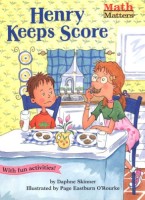
Henry Keeps Score lesson 1, How Many More, How Many Fewer
The score mat with the leftover standing, and both sentences said about it.
2
Read the leftover the other way: how many to add to make the rows match Checkpoint after this lesson
Henry Keeps Score lesson 2, One More Makes It Match
Four matched pairs of rows, with the number added recorded for each, including the zero.
3
When nothing is left over — settling equality by matching, at thirty, then breaking the tie
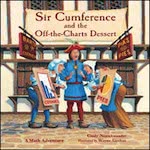
Sir Cumference and the Off-the-Charts Dessert lesson 3, The Same Number: Proving the Tie Without Counting Again
Two matched towers and a spoken sentence naming the tie with a number in it.
4
A fixed amount and a growing one: the gap as a changing quantity, and the moment it flips
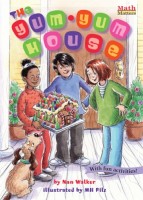
The Yum-Yum House lesson 3, How Far Behind Is Maggie?
A written list of three gaps in the order they happened, beside the two rows.
5
Say one gap both ways over an arrangement that never moves, including a pair the book never compares Checkpoint after this lesson
The Yum-Yum House lesson 8, Eight Fewer, Eight More, Same Eight
Two spoken sentences per child about one unmoved pair of rows, both carrying the same number.
6
Two tests for equal: count and weight can disagree about the same two groups
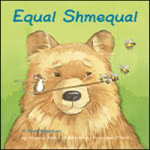
Equal Shmequal lesson 2, Two Tests for Equal
Two loaded pans with their counts, and each child saying what the counting said and what the beam said about the same two sides.
7
One word decides which test; both verdicts on one unchanged pair of piles
Equal Shmequal lesson 6, One Word, Two Tests
Two loaded pans holding the counted piles, and each child's spoken pair of verdicts with the word that produced each.
Unit vocabulary
Words students say, not words they are taught to define.
more, fewer
Said as a pair about one unmoved arrangement, never one without the other.
match
What two rows do when nothing is left over on either side.
left over
The counters with no partner. Children point at them while saying both sentences.
equal
Held back until lesson 6, where it is shown to need a stated test.
Materials
From the source lessons
Each day's materials are listed on that day's page below and on the source lesson itself. Nothing is duplicated here.
New for this unit
Checkpoint 1 page, one per child
Checkpoint 2 page, one per child
Performance task set: two rows of counters at 13 and 8, a pan balance, two large blocks and a tub of small cubes, per pair
Performance task page, one per child
Assessment plan
Daily evidence
Keep the score mat from lesson 1, the closed gap from lesson 2, and both spoken sentences from lesson 5. The evidence is a pair of sentences said over one arrangement that did not move.
Checkpoint 1, after lesson 2: Find the gap and close it
Two rows, seven and four, lined up from the same end. The child says how many more the long row has, how many fewer the short row has, and how many to add to make them match.
Book-free. Plain counters, no story.
Look for. Three, three and three. The same number answers all three questions, and the child should notice that rather than compute it three times.
Checkpoint 2, after lesson 5: Say it the other way
Two rows, twelve and five, already matched with the leftovers standing. The child says the comparison starting from the long row, then starting from the short row, without moving anything.
Book-free. Plain counters, no story.
Look for. Seven in both sentences, with the comparison word changing and the counters untouched. A child who rebuilds the rows to say the second sentence has not got it yet.
Culminating task: Two rows, two tests
Each pair builds two rows from the numbers on their card, matches them, and says the difference in both directions with a finger on the leftover counters. They then load the same two groups into the pans of a balance and read the beam. Finally each child says two sentences about the same two groups, one giving the counting verdict and one giving the balance verdict, and says which word in the question sends you to which test.
Collect. The matched rows with the leftover standing, the loaded pans, and each child's pair of verdict sentences.
What it assesses. Matching to find a difference, saying it both ways, and naming the test a comparison rests on — everything the unit built, with no subtraction written down.
Daily lesson pages
Lesson 1Match two rows and read the leftover; one arrangement answers both questions
Skill lessonHenry Keeps Score · lesson 1, How Many More, How Many Fewer · Grade 1 · 20 minutes Comparing two groups within five and telling how many more and how many fewer
I can
I can find how many more by matching.
Big idea
One leftover answers two questions at once, so the difference is a thing you can point at.
Success
The child says both sentences with a finger resting on the same leftover counter.
Connect | 5 min
First lesson. Build two rows of counters at the front and ask which has more. Take the answer, then ask how many more, and leave it open.
Taught on its own
The book keeps a running score, and every score line sets two numbers side by side.
Source core | 20 min
Pairs build both scores as rows on a mat lined up from the same end, slide the counters into pairs until one row runs out, and say the leftover as the answer to both questions about that same counter.
Collect
The score mat with the leftover standing, and both sentences said about it.
Close | 5 min
Pairs set out four flower cards against three, match them, and each tells a partner how many more and how many fewer while touching the unmatched flower.
From the source lesson: Two-color counters, ten per pair; Score mats with two labelled rows; Score-line cards, four cards with one score pair each; Flower cards, five per pair; Word cards: fewer, more, score
Watch for: Rows built from different ends, so the overhang lies. Draw a start line on the mat and insist both rows touch it.
Lesson 2Read the leftover the other way: how many to add to make the rows match
Skill lessonHenry Keeps Score · lesson 2, One More Makes It Match · Grade 1 · 20 minutes Finding how many more are needed to make two groups equal, within five
I can
I can add just enough to make the rows match.
Big idea
The number left over and the number you have to add are the same number, seen from the other side.
Success
The child adds counters one at a time until every counter has a partner, and says how many they added.
Connect | 5 min
Yesterday you found the counters with no partner. Today you fill the gap they leave, and the number turns out to be the same one.
Taught on its own
Henry has three pancakes and Harriet has four, and the book fixes it with one word: one more.
Source core | 20 min
Pairs build four against three, find the empty spot with no partner above it, add counters one at a time counting each, and say the two numbers now; then run three more matching cards, one of which needs nothing added.
Collect
Four matched pairs of rows, with the number added recorded for each, including the zero.
Close | 5 min
Each child holds up the counters they added and tells a partner the whole move in one breath, with all three numbers in it.
From the source lesson: Two paper plates per pair; Round counters, ten per pair; Matching cards, four cards with two numbers each; Word cards: match, more
Watch for: A child adds counters until the rows look level rather than until every counter has a partner. Ask them to check partner by partner.
Checkpoint after this lesson: Find the gap and close it. The page is at the end of this guide.
Lesson 3When nothing is left over — settling equality by matching, at thirty, then breaking the tie
Skill lessonSir Cumference and the Off-the-Charts Dessert · lesson 3, The Same Number: Proving the Tie Without Counting Again · Grade 1 · 20 minutes Establishing two counts are equal by matching one to one
I can
I can show two piles are the same without counting them again.
Big idea
Matching settles equality, and it settles it at thirty as surely as at five.
Success
The child says one sentence about the two towers with a number in it and without using bigger or more.
Connect | 5 min
So far there has always been something left over. Today there will be nothing, and the class has to say what that means.
Taught on its own
Twice in one night a character counts the rival's votes and finds the same number, and the story's ending hangs on that equality.
Source core | 20 min
Two pairs count a tower of thirty each, out of sight of one another, then bring the towers together base to base and push a finger up both at once without counting, and say what they find at the top.
Collect
Two matched towers and a spoken sentence naming the tie with a number in it.
Close | 5 min
One counter is added to the custard tower. Children match again, say where the match now stops, and say what is true now that was not true before.
From the source lesson: Two towers of thirty counters, built in advance in two colours; Two cups; Word cards: same, equal, match
Watch for: Children recount instead of matching. The point is that matching settles it without trusting either count, so take the cups away for the matching step.
Lesson 4A fixed amount and a growing one: the gap as a changing quantity, and the moment it flips
Skill lessonThe Yum-Yum House · lesson 3, How Far Behind Is Maggie? · Grade 1 · 20 minutes Comparing a growing amount against a fixed amount and naming the gap
I can
I can say how far behind a growing pile is.
Big idea
When one amount is fixed and the other grows, the gap is a quantity that changes — and at some point it turns around.
Success
The child writes three gaps in the order they happened and says what the list is doing.
Connect | 5 min
Yesterday two piles came out level. Today one pile is fixed at eighty-three and the other keeps growing towards it.
Taught on its own
The whole story is one comparison held against a fixed number: Grace Ann's eighty-three never moves and Maggie's pile climbs past it.
Source core | 20 min
Pairs build eighty-three in a long row and Maggie's fourteen underneath it from the same left end, count the unmatched counters to name the gap, then add to the short row twice more and name the gap each time.
Collect
A written list of three gaps in the order they happened, beside the two rows.
Close | 5 min
The neighbour arrives with more candy and the short row passes the long one. Children say the comparison now and say which words no longer fit.
From the source lesson: Two-colour counters, 100 per pair; A long desk or floor strip; Pencils; Word cards: behind, less, more than
Watch for: Children subtract instead of matching, and lose the picture. Keep both rows built and count only the counters with no partner.
Lesson 5Say one gap both ways over an arrangement that never moves, including a pair the book never compares
Math through the readingThe Yum-Yum House · lesson 8, Eight Fewer, Eight More, Same Eight · Grade 1 · 20 minutes Students say the gap between two counted piles both ways round and prove with the counters that the number does not change when the words swap.
I can
I can say the same gap two ways.
Big idea
The words turn round and the number does not, because both sentences are about one arrangement that never moved.
Success
Both sentences carry the same number, and nothing on the desk moves between them.
Connect | 5 min
Yesterday you named three gaps. Today you say one of them twice, and the counters stay exactly where they are.
Taught on its own
Every comparison in this book puts Maggie first, because the story is told by the child who is losing; the reverse sentence is never printed.
Source core | 20 min
Pairs build seventy-five against eighty-three aligned at the left end, count the eight unmatched counters, read the book's sentence, then say the sentence the book never prints and check that the same eight answer both.
Collect
Two spoken sentences per child about one unmoved pair of rows, both carrying the same number.
Close | 5 min
Pairs take three lemon drops against eleven milk balls, a pair the book counts and never compares, and say both sentences with no model to copy.
From the source lesson: Two-colour counters, 100 per pair; A long desk or floor strip; Cards reading fewer than and more than; The book's one-directional sentences displayed, so the missing direction is visible as missing
Watch for: A child goes hunting for a new fact for the second sentence. Put a hand over the counters and ask them to say it without anything moving.
Checkpoint after this lesson: Say it the other way. The page is at the end of this guide.
Lesson 6Two tests for equal: count and weight can disagree about the same two groups
Skill lessonEqual Shmequal · lesson 2, Two Tests for Equal · Grade 1 · 20 minutes Comparing two groups by count and by weight
I can
I can test two groups two different ways.
Big idea
Counting and weighing are two tests, and one arrangement can pass one and fail the other.
Success
The child reports both verdicts about the same two sides, with a number in each.
Connect | 5 min
Every comparison so far has been about how many. Today the same two groups get a second test, and it disagrees.
Taught on its own
The book's whole quarrel is that the animals keep testing the wrong thing, and it ends with two teams that fail a count and pass a balance.
Source core | 20 min
Pairs deal seven animal cards into the two teams the story ends with and count both sides, then put two large blocks in one pan for the small team and drop small cubes into the other until the beam sits level, counting the cubes.
Collect
Two loaded pans with their counts, and each child saying what the counting said and what the beam said about the same two sides.
Close | 5 min
One partner asks either whether the sides hold the same number or whether they weigh the same, and the other answers by counting or by loading, whichever the question calls for.
From the source lesson: A set of seven animal cards per two students; A length of yarn per two students; A pan balance per two students; Two large wooden blocks and a tub of small cubes per two students; Word cards: number, weight
Watch for: A child treats the balance verdict as overruling the count. Ask what each test was a test of before either answer is accepted.
Lesson 7One word decides which test; both verdicts on one unchanged pair of piles
Math through the readingEqual Shmequal · lesson 6, One Word, Two Tests · Grade 1 · 20 minutes Students swap numbers for weights in Mouse's sentence and produce both verdicts on the very same two piles.
I can
I can hear which test the sentence is asking for.
Big idea
The word equal never changes; the word next to it decides whether you count or weigh.
Success
The child produces both verdicts about one unchanged pair of piles and names the word that produced each.
Connect | 5 min
Yesterday two tests disagreed. Today the sentence decides which one you are being sent to, and the piles never change.
Taught on its own
Mouse says the numbers are equal and the teams still are not, and later says the teams have equal weight when the sides hold two animals and five.
Source core | 20 min
Pairs hear Mouse's sentence and point to the counters or the balance to show which test it names, count the three blocks and three erasers and report the verdict, then move the same two piles into the pans without changing either and read the beam.
Collect
Two loaded pans holding the counted piles, and each child's spoken pair of verdicts with the word that produced each.
Close | 5 min
Each child tells a partner, with both verdicts in hand, which word sent them to which test, using a number in each half of the sentence.
From the source lesson: A pan balance per two students; Three large wooden blocks and three small erasers per two students; A sentence strip of Mouse's line with the measure word on a removable card
Watch for: A child changes the piles between the two tests. The piles must move into the pans exactly as they are, or the lesson's point is lost.
Culminating performance task
Two rows, two tests
Each pair builds two rows from the numbers on their card, matches them, and says the difference in both directions with a finger on the leftover counters. They then load the same two groups into the pans of a balance and read the beam. Finally each child says two sentences about the same two groups, one giving the counting verdict and one giving the balance verdict, and says which word in the question sends you to which test.
Collect. The matched rows with the leftover standing, the loaded pans, and each child's pair of verdict sentences.
What it assesses. Matching to find a difference, saying it both ways, and naming the test a comparison rests on — everything the unit built, with no subtraction written down.
Teacher key and rubric
Key
Checkpoint 1: three more, three fewer, three to add.
Checkpoint 2: twelve is seven more than five; five is seven fewer than twelve.
Task: thirteen against eight gives five more and five fewer. The balance verdict depends on what you load; load it so the group with fewer objects is the heavier one, because that is the case worth meeting.
Rubric
Strand
Secure looks like
Developing
Not yet
Representation
Both rows start from the same line and are matched one to one before anything is said.
Does it with the arrangement in front of them.
Produces an answer without the arrangement or the reason.
Calculation
The difference is read off the leftover, not computed, and it is the same number in both sentences.
Does it with the arrangement in front of them.
Produces an answer without the arrangement or the reason.
Meaning
Each sentence names both groups, so a listener knows which one is larger.
Does it with the arrangement in front of them.
Produces an answer without the arrangement or the reason.
Explanation
The child says which test each verdict came from, and does not treat one as overruling the other.
Does it with the arrangement in front of them.
Produces an answer without the arrangement or the reason.
Print-ready student pages
These three pages print one to a sheet. Everything above them is the teacher guide.
Checkpoint 1 · Grade 1
Find the gap and close it
NameDate
Build the two rows and line them up from the same end. How many more does the long row have? How many fewer does the short row have? How many would you add to make them match?
Checkpoint 2 · Grade 1
Say it the other way
NameDate
The rows are matched and the leftovers are standing. Do not move anything. Say the comparison starting with the long row. Now say it starting with the short row.
Culminating task · Grade 1
Two rows, two tests
NameDate
Build the two rows from your card and match them. Point at the leftovers and say the difference twice, once each way. Now put the same two groups in the pans of the balance. What does the beam say? Say two sentences about the same two groups: one from counting, one from weighing.
Teacher planning and handoff
Children who rebuilt the rows to say the second sentence in the task need lesson 5 again before any subtraction work.
The two-tests idea in lessons 6 and 7 comes back in Grade 2 measurement, where the unit decides the number.
Five books in the catalogue carry a say-it-both-ways lesson at this grade. Only one is used here; the others are the same lesson.