The Word file and the PDF carry the whole guide. The student pages are the two checkpoints and the culminating task, one to a sheet.
About this unit
This unit gives Kindergarten the comparison that comes before counting. In every lesson children build two rows, pair them off one at a time, and read the answer off what has nobody opposite it. Nothing is counted to reach the answer — the counting, where it happens at all, is a check afterwards — and that order is the whole point: matching is available to a child whose counting is still unreliable, and it is what makes same and fewer mean something rather than being guesses about which row looks longer.
Three turns in it are hard. A row that looks longer can be the shorter one if the objects are bigger, so the rows have to be lined up at one edge before anything is read. Fewer is not a property one colour keeps: take some away from the longer row and the word moves, which lesson 2 makes children feel. And a leftover is information, not a mistake — a mark with no bone under it is how Jill finds out something is wrong. The unit ends where matching runs out: a row holding nothing still has a number, and that number is zero.
The mathematical arc
Each lesson does one job the lesson before it made possible.
The same, before anybody knows the number
Fewer is read off the leftovers, and it can move
Two rows, and the finding is that nothing is left over
One mark for one thing, and what a leftover mark tells you
Matching answers a question the book asks and does not settle
A row with nothing in it still has a number
Source books
Every lesson in this unit is already published under Math lessons. Nothing here asks you to teach anything you cannot open today.
Each day names one lesson that already exists under Math lessons, with its book, its number and its title. This guide says what that lesson is doing in the sequence and what to collect from it; the lesson itself carries the steps, the printables and the answers.
Thirty minutes a day.
Five minutes to connect to yesterday, the twenty-minute source lesson, five minutes to close on something you can see. A day that runs long should lose the close, never the core.
Teach a lesson on its own if you need to.
Every day carries a one-sentence opening for a teacher who is using that lesson outside the sequence.
Stop after a checkpoint.
The unit holds together if you stop after either checkpoint and come back to it. Stopping between a checkpoint and the next one leaves a lesson without the evidence it was built on.
Where this fits in your year
When to teach it
Early, before any unit that leans on counting a set accurately. It is also the right unit to run alongside the first weeks of one-to-one counting, because the two ideas hold each other up.
What students need first
Children can put one counter down at a time and can leave a row alone once it is built.
What this unit develops
One-to-one matching; same and fewer read off leftovers; a leftover as evidence rather than an error; matching a drawn mark to a real thing; naming an empty row with a number.
What it prepares them for
Counting a group and saying how many, where matching is the check that a count was right, and Grade 1 work on how many more and how many fewer, which turns the leftover into a number.
Curriculum connections
None claimed. The lessons in this unit carry their own standards classifications on their own pages, checked lesson by lesson. A unit-level expectation is a different claim, and none has been verified for this unit, so none is printed here. Use the placement guide above to site the unit in your year, and the individual lesson pages for the codes.
Unit at a glance
#
Mathematical move
Source lesson
Collect
1
The same, before anybody knows the number
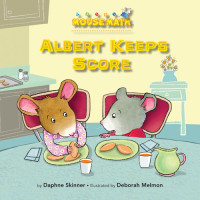
Albert Keeps Score lesson 1, Match Wanda's Row to Albert's Row
Three built and matched scores, the tea party, the library and the splinter, with the mat cleared between them.
2
Fewer is read off the leftovers, and it can move Checkpoint after this lesson
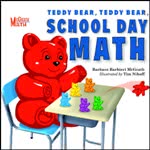
Teddy Bear, Teddy Bear, School Day Math lesson 3, Which Row Runs Out First
Two matched rows with the leftovers pointed at, and a fewer sentence a partner could rebuild the rows from without seeing the mat.
3
Two rows, and the finding is that nothing is left over
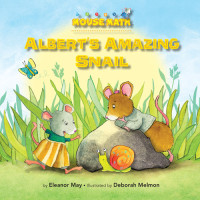
Albert's Amazing Snail lesson 3, Match the Trail to the Tricks
Two complete rows of ten with every column filled, and a spoken statement that neither row is the longer.
4
One mark for one thing, and what a leftover mark tells you Checkpoint after this lesson
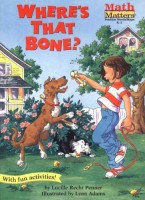
Where's That Bone lesson 4, One Mark for Every Bone
A map whose marks are each tied by yarn to a bone, and one leftover named as a mark with no bone.
5
Matching answers a question the book asks and does not settle
Albert is NOT Scared lesson 1, The Ride That Does Almost Everything He Refused
Four cards at the top of the table and one still in front of the pair, with the number of travelled cards said aloud.
6
A row with nothing in it still has a number
Albert Keeps Score lesson 3, The Score That Is Not the Same
The splinter score built with a number card above each row, one of them zero, and a spoken reason carrying both numbers.
Unit vocabulary
Words students say, not words they are taught to define.
the same
Said in lesson 1 when both rows run out on the same push, before anybody knows the number.
fewer
Lesson 2's word. Said about a pair of rows while pointing at the leftovers, never about one row alone.
left over
Used from lesson 3 onwards for the card, bear or mark with nobody opposite it.
match
One thing to one thing. A child who slides two counters against one has not matched them.
none, zero
Lesson 6. A row with nothing in it still gets a number card.
Materials
From the source lessons
Each day's materials are listed on that day's page below and on the source lesson itself. Nothing is duplicated here.
New for this unit
Checkpoint 1 page, one per child
Checkpoint 2 page, one per child
Performance task set: two sets of counters in different colours, a matching mat with two long rows, a set of number cards 0 to 5, and six picture cards with one spare, one set per pair
Performance task page, one per child
Assessment plan
Daily evidence
Keep the mat, not a written answer. Photograph or note which child pushed a whole row through in pairs without stopping, and which child stopped to count halfway: the stop is the thing this unit is trying to make unnecessary.
Checkpoint 1, after lesson 2: Which row has fewer?
Two rows of counters, seven against nine, built with the longer row's counters visibly smaller so the rows look the same length. The child matches them and says which has fewer while pointing at the leftovers.
Book-free. Counters of two sizes, no book.
Look for. The child lines the rows up at one edge before answering. A child who answers from how long the rows look, right or wrong, has not used the matching and should be asked to push the rows together.
Checkpoint 2, after lesson 4: One for one, and what is left
Five picture cards in a row and four counters. The child puts one counter on one card until they run out, then says what has nothing on it and whether it is a card with no counter or a counter with no card.
Book-free. Cards and counters, no book.
Look for. The child names which kind of thing is left over. Saying only that one is left is half the answer, because the two cases mean opposite things about what is missing.
Culminating task: Two rows, and the one left over
Each pair builds two rows from two colours of counter, lined up at one edge, and pushes them together a pair at a time without counting. They say the same or say which colour has fewer, pointing at the leftovers. They then take away from the longer row until the other colour is the fewer one and say the sentence again, naming the word that changed. Finally they lay six picture cards in a row, put one counter on each until the counters run out, name what is left over, and put a number card above the row that holds nothing.
Collect. The matched rows with the leftovers pointed at, the second sentence after the swap, and the number card laid above the empty row.
What it assesses. One-to-one matching, same and fewer read off leftovers, the word moving when the arrangement changes, and zero as the number for a row with nothing in it.
Daily lesson pages
Lesson 1The same, before anybody knows the number
Skill lessonAlbert Keeps Score · lesson 1, Match Wanda's Row to Albert's Row · Grade K · 20 minutes Deciding whether two sets are the same by matching them one to one
I can
I can push two rows together and say whether they are the same.
Big idea
Two groups can be compared before either has been counted. If the rows run out together they are the same, and that is an answer, not a guess.
Success
The child pushes a whole row through in pairs without stopping to count, and says the same or holds up the counter that was left.
Connect | 5 min
First lesson. Put out two rows of counters where one row's counters are noticeably bigger, and ask which row has more. Take the disagreement seriously; say that today nobody is allowed to count.
Taught on its own
The book puts Wanda's number beside Albert's on nearly every page, and it names the things on both sides before it does: three guests at each tea party, four books each at the library.
Source core | 20 min
Children put one counter in a child's row for each name the book gives — Lucy, Taffy and Melody for Wanda, Leo, Fred and Grandpa Andy for Albert — then slide one counter from each row against the other until a row runs out, and say the same or name whose counter is left.
Collect
Three built and matched scores, the tea party, the library and the splinter, with the mat cleared between them.
Close | 5 min
With one counter in Wanda's row for her splinter and in Albert's exactly what he asked for, children push the rows together and say out loud what happens to Wanda's counter when there is nothing to push it against.
From the source lesson: A matching mat: one sheet per pair with two long rows drawn on it, one above the other; Counters, twenty per pair, all one colour; Word cards: same, more
Watch for: Counting before matching. It is not an error, but it is the habit this unit exists to make unnecessary; ask for the push first and the count afterwards.
Lesson 2Fewer is read off the leftovers, and it can move
Skill lessonTeddy Bear, Teddy Bear, School Day Math · lesson 3, Which Row Runs Out First · Grade K · 20 minutes Deciding which of two colour groups has fewer by matching
I can
I can match two rows and say which colour has fewer.
Big idea
Fewer is not something a colour is. It is an answer about two rows as they are now, and changing the rows changes the answer.
Success
The child says a fewer sentence naming both colours while pointing at the leftover bears, and after the swap says which word had to change.
Connect | 5 min
Yesterday the rows either matched or left one over. Today they will leave several over, and there is a word for that.
Taught on its own
The book asks twice which colour has fewer and answers neither time, and it never says how many of either colour there are.
Source core | 20 min
Pairs build a row of yellow bears and a row of red, lined up at the same edge, slide them until each bear in the shorter row sits under one in the longer, point at the bears with nothing under them, and say which colour ran out first.
Collect
Two matched rows with the leftovers pointed at, and a fewer sentence a partner could rebuild the rows from without seeing the mat.
Close | 5 min
Children take bears off the longer row until it is the shorter one, match again, say the fewer sentence about the new arrangement, and tell a partner which word changed and which colour name moved.
From the source lesson: A tub of two-colour teddy bear counters, at least twenty per pair; A ten-frame strip per pair; A displayed chart of the number words one to ten; Word cards: fewer, count
Watch for: Rows that do not start at the same edge. Slide them back together rather than correcting the answer.
Checkpoint after this lesson: Which row has fewer?. The page is at the end of this guide.
Lesson 3Two rows, and the finding is that nothing is left over
Skill lessonAlbert's Amazing Snail · lesson 3, Match the Trail to the Tricks · Grade K · 20 minutes Matching two rows one to one and saying whether either row has a card left over
I can
I can deal a second row underneath the first and see whether any card is on its own.
Big idea
Matching can also show that two groups are equal. A column with a card in only one row is what would prove them unequal, and finding none is an answer.
Success
The child runs a finger down every column and says whether either row is longer, and can say how they know without counting either row.
Connect | 5 min
The rows so far have been counters. Today they are cards with pictures on them, and the two rows come from two different days in one book.
Taught on its own
Albert wakes certain that nothing happened, and what changes his mind is a match: every place he showed the snail turns up again in the slime next morning, in the same order.
Source core | 20 min
Pairs lay ten trick cards in a gap-free row, then deal the ten shuffled trail cards one at a time so each sits directly beneath the card naming the same place, sliding nothing along to close a gap.
Collect
Two complete rows of ten with every column filled, and a spoken statement that neither row is the longer.
Close | 5 min
Children point along the bottom row and say what the slime went to, place by place, then say in one sentence whether the trail missed any place and how the columns say so.
From the source lesson: A pocket chart or a length of masking tape on the table to hold two rows of ten cards; Ten trick cards per pair, one picture each, in the order Albert and Leo showed them: log in, log out, pine cones top, pine cones bottom, sunflower on, sunflower off, branch under, branch over, rock behind, rock in front; Ten trail cards per pair, the same ten pictures with a green slime mark drawn on each, shuffled before they are handed out; Word cards: match, left over, row
Watch for: A child closing gaps by sliding cards. The gap is the evidence; if it is closed, a missing card cannot be seen.
Lesson 4One mark for one thing, and what a leftover mark tells you
Skill lessonWhere's That Bone · lesson 4, One Mark for Every Bone · Grade K · 20 minutes Matching marks to objects one to one and finding the one left over
I can
I can draw one mark for one bone, and find the one that has nothing on the other end.
Big idea
A leftover is information. A mark with no bone under it says something is missing, and it says so without anybody counting.
Success
The child lays yarn from every mark to a bone, then names what is left as a mark with no bone or a bone with no mark.
Connect | 5 min
So far both rows have been things you could pick up. Today one row is on paper.
Taught on its own
Jill's rule is printed in one sentence, that she had marked an X for every bone, and the book then breaks its own rule when the last bone turns out to be missing.
Source core | 20 min
Children take turns so that one bone going down means exactly one mark being drawn, then take a prepared map and a yard corner and lay a piece of yarn from each mark to the bone it stands for until one side runs out.
Collect
A map whose marks are each tied by yarn to a bone, and one leftover named as a mark with no bone.
Close | 5 min
Each child walks to the ground the leftover mark stands for, puts a hand flat on it, and says one thing that could have happened, using the mark and the empty ground as the reason.
From the source lesson: Yard corner built on the carpet, one per group of four: a chair for the apple tree, an upturned box for the porch, a hoop for the turtle pond, a ruler standing in a lump of clay for the bird feeder, and a rock; One dog-bone cutout per child, big enough to be seen across the carpet; One blank map sheet per child: a sheet of paper with the same four landmarks already drawn in the same four corners as the yard corner on the carpet; A red crayon per child, for marks; One prepared map per pair with red marks already on it, and a matching yard corner where a bone lies at every marked place except one; A length of yarn per pair, long enough to reach from a mark to a bone; Word cards: match, left over
Watch for: Two marks drawn for one bone in the excitement. Stop the pair and rebuild from the first bone rather than rubbing one out.
Checkpoint after this lesson: One for one, and what is left. The page is at the end of this guide.
Lesson 5Matching answers a question the book asks and does not settle
Skill lessonAlbert is NOT Scared · lesson 1, The Ride That Does Almost Everything He Refused · Grade K · 20 minutes Matching each move of one ride to the refusal it answers and naming the one left over
I can
I can slide a card up for every move the ride makes, and name the one that stayed.
Big idea
The cards on the table are the working. Which card is left is not remembered from the story, it is read off the arrangement.
Success
The child says how many cards went up before saying which one stayed, and can say what the ride would have had to do to move the last one.
Connect | 5 min
Yesterday a leftover mark meant a missing bone. Today a leftover card will mean something the ride never did.
Taught on its own
Albert names five kinds of moving he will not ride, and then rides a coaster that does four of them.
Source core | 20 min
Pairs spread five refusal cards face up, touch each as it is read, and then slide a card to the top of the table the moment the coaster makes that move — keeping their hands off the hill card until both halves, the climb and the drop, have been heard.
Collect
Four cards at the top of the table and one still in front of the pair, with the number of travelled cards said aloud.
Close | 5 min
Children listen to Wanda's closing sentence, point at every card it names, then point at the cards she leaves out and finish her sentence properly for her.
From the source lesson: Five refusal cards for each pair, one picture on each: a hill, a swinging ship, a boat crossing a pond, a tunnel, a carousel; Word cards: up and down, side to side, across, through, around
Watch for: The hill card going up on the climb. Both halves belong to that card; if it moves early the count comes out at five and the lesson has nothing left to find.
Lesson 6A row with nothing in it still has a number
Skill lessonAlbert Keeps Score · lesson 3, The Score That Is Not the Same · Grade K · 20 minutes Naming an empty set with a number and saying why two counts are not the same
I can
I can put the right number card above a row that holds nothing.
Big idea
Zero is a count, not an absence of one. It is what you say about a row you have looked at and found empty.
Success
The child lays the zero card above the empty row without being told which card it is, and gives a partner a reason carrying both numbers.
Connect | 5 min
Every score so far has come out even except one. Today that one gets a number.
Taught on its own
Every score in the book comes out even until the last, where Wanda has a splinter and Albert has none, because he was asked whether he wanted one and said no.
Source core | 20 min
Children build the chip score and push it together, then clear the mat and build the splinter score, hold a flat hand over the empty place in Albert's row, say the number for a row with nothing in it and lay that card down.
Collect
The splinter score built with a number card above each row, one of them zero, and a spoken reason carrying both numbers.
Close | 5 min
Children answer Mom's question aloud the way Albert does, say the number that answer gives him, make his row show it and check the row against the card they laid down.
From the source lesson: A matching mat: one sheet per pair with two long rows drawn on it, one above the other; Counters, ten per pair; Number cards 0 to 5, one set per pair; Word cards: none, zero
Watch for: A child who leaves the empty row uncarded because there is nothing to count. Ask them to look at the row and say what they see; none is the answer they are looking for.
Culminating performance task
Two rows, and the one left over
Each pair builds two rows from two colours of counter, lined up at one edge, and pushes them together a pair at a time without counting. They say the same or say which colour has fewer, pointing at the leftovers. They then take away from the longer row until the other colour is the fewer one and say the sentence again, naming the word that changed. Finally they lay six picture cards in a row, put one counter on each until the counters run out, name what is left over, and put a number card above the row that holds nothing.
Collect. The matched rows with the leftovers pointed at, the second sentence after the swap, and the number card laid above the empty row.
What it assesses. One-to-one matching, same and fewer read off leftovers, the word moving when the arrangement changes, and zero as the number for a row with nothing in it.
Teacher key and rubric
Key
Checkpoint 1: the row of seven. The counters are sized to make the wrong answer look right, so a child who answers correctly without matching should still be asked to push the rows together.
Checkpoint 2: a card with no counter. Both halves of the answer are needed.
Task: any true pair of sentences. Build the card row with exactly one more card than there are counters, and check it yourself before the lesson, because a miscounted set makes the leftover disappear.
Rubric
Strand
Secure looks like
Developing
Not yet
Representation
The two rows start at the same edge and are pushed together a pair at a time, with nothing slid along to close a gap.
Does it with the arrangement in front of them.
Produces an answer without the arrangement or the reason.
Calculation
One thing to one thing throughout; a count, where one is made, is one touch to one number word.
Does it with the arrangement in front of them.
Produces an answer without the arrangement or the reason.
Meaning
Same and fewer are said about two rows, with both named, and the leftovers are pointed at while the sentence is said.
Does it with the arrangement in front of them.
Produces an answer without the arrangement or the reason.
Explanation
A leftover is reported as what it is — a card with no counter, or a counter with no card — and not simply as one extra.
Does it with the arrangement in front of them.
Produces an answer without the arrangement or the reason.
Print-ready student pages
These three pages print one to a sheet. Everything above them is the teacher guide.
Checkpoint 1 · Kindergarten
Which row has fewer?
NameDate
Here are two rows. Which row has fewer? Push them together first. Now point at what is left over and say it.
Checkpoint 2 · Kindergarten
One for one, and what is left
NameDate
Put one counter on one card. Keep going until you run out. What has nothing on it? Is it a card with no counter, or a counter with no card?
Culminating task · Kindergarten
Two rows, and the one left over
NameDate
Build two rows, one of each colour, starting at the same edge. Push them together two at a time. Do not count. Are they the same? If not, which colour has fewer? Point at what is left over. Now take some off the long row until the other colour is fewer, and say it again. Which word changed? Last, lay out the cards, put one counter on each, and tell me what is left over.
Teacher planning and handoff
A child who counts each row before matching is not wrong, but has not got what this unit is for. Note them, and give them the matching mat again at the start of the counting unit.
Lesson 6 is the only place on this shelf where zero is given a card of its own. If the class is going on to any unit that records a count, do not skip it.
Albert Keeps Score's lessons on counting to five and on one more were left out because they are counting rather than matching, and the counting unit already carries them.