The Word file and the PDF carry the whole guide. The student pages are the two checkpoints and the culminating task, one to a sheet.
About this unit
The unit opens on the easy case and makes it earn its place. When the bottom number is a hundred, the fraction, the decimal and the percent are the same three numerals in three costumes, and children say why nothing has to be calculated before they start producing the missing two forms at speed — first with coins on the desk as the referee, then from the numerals alone, and finally by rebuilding one numeral-only answer in coins to prove all three forms describe one pile.
Renaming comes next, in the smallest arithmetic in the unit. A recipe takes two lines over the red pepper where every other ingredient takes one: it writes the quarter teaspoon as two eighth teaspoons, and only then takes an eighth away. Children try the subtraction without the rename, find out what stops them, and write a because sentence that has to name the pieces they could not slide away rather than repeat the answer. Then the hard case of the three forms: denominators of two, four and five, where the book states the procedure in three sentences and stops before carrying it out. Children finish the division and check each result against a dollar built in coins. A percent is then cut with scissors — a strip marked in thirty single dollars folded into ten equal pieces, one piece counted — so ten percent is one piece out of ten before it is ever a rule, and the method has to travel to a price the book never taxes.
The last three lessons are about judgement. All three forms say the same thing, but a pie eater reaches for a fraction and a ballplayer reaches for a decimal, so children write both scenes in all three forms — including the ones nobody would use — and then argue an occasion with the numbers in the argument. The unit ends on the boundary case. A time signature stacks two numbers with no line between them and they answer different questions: the top one counts beats in a measure and the bottom one names the note that gets a beat, and they are never combined. The book says the signature is not a math fraction and also says the two are alike, so children build both objects — a filled measure and a folded strip — take a side, and fund it with the two counts they made.
The mathematical arc
Each lesson does one job the lesson before it made possible.
When the bottom number is a hundred, the three forms are already there
A rename changes the pieces and not the amount — and you have to say why
When the bottom number is not a hundred, finish the division
Ten percent is one piece out of ten, and it acts on a stated amount
All three say the same thing, and the occasion still picks one
Two numbers stacked, each answering a different question
The book contradicts itself: take a side and fund it with counts
Source books
Every lesson in this unit is already published under Math lessons. Nothing here asks you to teach anything you cannot open today.
Each day names one lesson that already exists under Math lessons, with its book, its number and its title. This guide says what that lesson is doing in the sequence and what to collect from it; the lesson itself carries the steps, the printables and the answers.
Thirty minutes a day.
Five minutes to connect to yesterday, the twenty-minute source lesson, five minutes to close on something you can see. A day that runs long should lose the close, never the core.
Teach a lesson on its own if you need to.
Every day carries a one-sentence opening for a teacher who is using that lesson outside the sequence.
Stop after a checkpoint.
The unit holds together if you stop after either checkpoint and come back to it. Stopping between a checkpoint and the next one leaves a lesson without the evidence it was built on.
Where this fits in your year
When to teach it
After fractions with like denominators and after place value to hundredths. It is a good unit to run before any work on data where percents appear.
What students need first
Children can count mixed coins to a dollar, divide a one-digit number by 2, 4 and 5, and read a fraction with a denominator of 100.
What this unit develops
Producing all three forms of a hundredths amount; justifying a rename by naming the pieces; turning a fraction whose denominator is not 100 into a decimal by dividing; finding a tenth and reading it as ten percent; saying what amount a percent acts on; choosing a form to suit an occasion and defending it; reading a stacked pair of numbers that is not a single amount.
What it prepares them for
Grade 5 work on percent increase and decrease, and comparing quantities that arrive in different forms.
Curriculum connections
None claimed. The lessons in this unit carry their own standards classifications on their own pages, checked lesson by lesson. A unit-level expectation is a different claim, and none has been verified for this unit, so none is printed here. Use the placement guide above to site the unit in your year, and the individual lesson pages for the codes.
Unit at a glance
#
Mathematical move
Source lesson
Collect
1
When the bottom number is a hundred, the three forms are already there
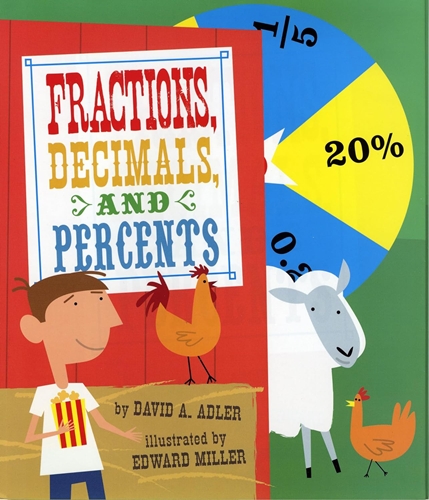
Fractions, Decimals, and Percents lesson 2, Three Ways, Fast
Eight amounts written in all three forms, four with the coins as referee and four from the numerals alone, with every dispute settled by counting rather than asserting.
2
A rename changes the pieces and not the amount — and you have to say why
Civil War Recipes lesson 4, Why the Quarter Teaspoon Became Eighths
Both renames and both subtractions done, each with a finished because sentence naming the pieces that could not be slid away and the pieces that could.
3
When the bottom number is not a hundred, finish the division Checkpoint after this lesson
Fractions, Decimals, and Percents lesson 4, Finish the Division the Book Starts
Three completed rows — fraction, decimal, percent — each checked against half a dollar, three quarters of a dollar and four fifths of a dollar built in coins.
4
Ten percent is one piece out of ten, and it acts on a stated amount
Follow Your Money lesson 5, One Piece Out of Ten: What the Cashier Adds
One piece of ten counted and set against the three dollars the book printed, and a tenth of the forty-dollar price found and the amount a shopper would hand over said aloud.
5
All three say the same thing, and the occasion still picks one Checkpoint after this lesson
Fractions, Decimals, and Percents lesson 5, Same Amount, Different Occasion
Both scenes written in all three forms, and one occasion argued by a pair with one child pushing back with a different form, both using the numbers.
6
Two numbers stacked, each answering a different question
Music Math lesson 4, The Two Numbers Do Two Different Jobs
Two measures built from bare signature cards, each with the beats counted and checked against the top number.
7
The book contradicts itself: take a side and fund it with counts
Music Math lesson 8, Is a Time Signature a Fraction or Not?
A filled measure and a folded strip side by side, and a position stated aloud with both numbers in it and what each number shows. A position without both numbers is sent back.
Unit vocabulary
Words students say, not words they are taught to define.
equivalent
Naming the same amount. Lesson 1 proves it by rebuilding an amount in coins.
hundredths
The easy case. A denominator of a hundred makes the three forms the same numerals.
rename
Writing an amount in different pieces without changing it. Lesson 2 will not accept a rename that cannot be justified.
percent
So many out of a hundred. Lesson 4 cuts one out of ten with scissors before anybody calls it a rule.
acts on
What a percent is taken of. The same ten percent is a different number of dollars on a different price.
time signature
Two numbers stacked that are not one amount. Lessons 6 and 7 are about why.
Materials
From the source lessons
Each day's materials are listed on that day's page below and on the source lesson itself. Nothing is duplicated here.
New for this unit
Checkpoint 1 page, one per child
Checkpoint 2 page, one per child
Performance task set: a three-column sheet headed fraction, decimal and percent, a coin set to ninety-nine cents, a dollar strip marked in forty single dollars, scissors, four occasion cards, and a pencil, one set per pair
Performance task page, one per child
Assessment plan
Daily evidence
Keep the because sentences from lesson 2. A rename is the one move in this unit that children will happily perform without being able to say why, and a sentence that names the pieces — the quarter could not be slid away in halves, the eighths could — is the difference between a procedure and an understanding. Sentences that only restate the answer should go back once.
Checkpoint 1, after lesson 3: Write it three ways
Four amounts: 75 out of 100, 0.30, 40 percent, and three quarters. Coins are available. The child writes the two missing forms for each and says which one needed dividing.
Book-free. Four printed amounts and a coin set, no book.
Look for. The first three converted without calculating and the fourth reached by dividing three by four. A child who writes 3.4 for three quarters has read the fraction as a pair of digits.
Checkpoint 2, after lesson 5: Which form, and why that one?
One amount — forty out of a hundred — and three occasions: a shop window, a batting average and a share of a pie. The child writes the amount three ways and matches a form to each occasion with a reason.
Book-free. One amount and three occasion cards, no book.
Look for. A reason that uses the number, not the sound of the words. Any match is defensible if the child says what the form shows the reader; what is not acceptable is because that is what people say.
Culminating task: One amount, three forms, and the occasion that picks one
Each pair takes four amounts — two given as hundredths, one as a decimal and one as a fraction whose denominator is not a hundred — and completes all three forms for each, dividing where the easy rule does not work and checking one row by building it in coins. They then take a forty-dollar price, cut a forty-dollar strip into ten equal pieces to find ten percent, count one piece, and say what a shopper would hand over. Last they draw an occasion card for each of their four amounts, choose the form that belongs there, and write one sentence per card that uses the number rather than the sound of the words — with one card arguing against a partner who has drawn a different occasion for the same amount.
Collect. The completed three-column sheet with the divided rows marked, one row rebuilt in coins, the cut strip with one piece counted and the amount handed over, and four occasion sentences each using its number.
What it assesses. Four amounts held in all three forms, one percent taken by cutting rather than by rule, and a form chosen for an occasion with a reason that rests on the number — which is what makes the three forms useful rather than a conversion exercise.
Daily lesson pages
Lesson 1When the bottom number is a hundred, the three forms are already there
Skill lessonFractions, Decimals, and Percents · lesson 2, Three Ways, Fast · Grade 4 · 20 minutes Producing the three equivalent forms of a hundredths amount at speed
I can
I can write any hundredths amount as a fraction, a decimal and a percent.
Big idea
One amount, three names. With a denominator of a hundred nothing has to be calculated — the same numerals do all three jobs — and coins can prove that the three describe one pile.
Success
The child produces both missing forms for eight amounts, four with coins available and four from the numerals alone, and rebuilds one numeral-only answer in coins.
Connect | 5 min
First lesson. Put sixty-five cents on the desk and ask three children to write down how much is there. Compare what they wrote.
Taught on its own
The book's rule for hundredths is one sentence long: when the bottom number is a hundred, the fraction, the decimal and the percent are already the same three numerals.
Source core | 20 min
Children read the rule and test it on the two amounts the book has already worked, saying in their own words why nothing has to be calculated, then one partner deals an amount in coins under a dollar and the other counts it and writes all three forms, swapping until each has done four amounts.
Collect
Eight amounts written in all three forms, four with the coins as referee and four from the numerals alone, with every dispute settled by counting rather than asserting.
Close | 5 min
Each child picks one amount they wrote from numerals alone, rebuilds it in coins to prove all three forms describe that one pile, and circles the proved row on the record sheet.
From the source lesson: Printed source passage in this step; Coin set with at least 99 cents in mixed coins, one per pair; Three-column record sheet headed fraction, decimal, percent, one per student; Pencil per student; Form cards showing single hundredths amounts, one deck per class; Two catch-out cards, one under a dime and one whole dollar; Word cards: denominator, numerator, equivalent, hundredths
Watch for: A percent sign left off, or a decimal written as a whole number. Read the row aloud as three names for one pile and the omission is heard.
Lesson 2A rename changes the pieces and not the amount — and you have to say why
Skill lessonCivil War Recipes · lesson 4, Why the Quarter Teaspoon Became Eighths · Grade 4 · 20 minutes Justifying a rename before subtracting like fractions
I can
I can rename an amount before subtracting and say why the rename had to come first.
Big idea
Writing a quarter as two eighths changes nothing about how much there is. It changes the pieces, and it is the pieces that decide whether the taking away can be done at all.
Success
The child produces the rename and the subtraction for both amounts and writes a because sentence for each that names the pieces rather than repeating the answer.
Connect | 5 min
Yesterday one amount had three names and nothing changed. Today one amount gets renamed in the middle of a recipe, and the reason matters.
Taught on its own
For the red pepper the book takes two lines where every other ingredient takes one: first it writes the quarter teaspoon as two eighth teaspoons, and only then does it take one eighth away.
Source core | 20 min
Children read the two red pepper cards in order and put a finger on the line that takes nothing away, then lay one quarter strip on the mat and try to slide half of it away without touching an eighth strip — saying out loud what stops them — before laying two eighth strips over the quarter and sliding one away.
Collect
Both renames and both subtractions done, each with a finished because sentence naming the pieces that could not be slid away and the pieces that could.
Close | 5 min
Children rename the half teaspoon of ginger themselves, take half of it away, write both lines, point at the renaming line and the taking-away line, and say why the renaming could not have come second.
From the source lesson: The book's two red pepper lines on separate cards; Fraction strips in halves, quarters, and eighths; Recording sheet with a because frame; Word cards: eighth, equal
Watch for: A because sentence that restates the answer. Have a partner say whether it names pieces; if it does not, it goes back once.
Lesson 3When the bottom number is not a hundred, finish the division
Skill lessonFractions, Decimals, and Percents · lesson 4, Finish the Division the Book Starts · Grade 4 · 20 minutes Changing a fraction whose denominator is not 100 into a decimal by dividing
I can
I can turn a fraction into a decimal by dividing, and check it against coins.
Big idea
The easy rule only works for hundredths. Everything else is a division — the top number by the bottom one — and the answer can be checked against an amount of a dollar you can build.
Success
The child predicts each answer, carries out all three divisions, writes each result as a decimal and a percent, and checks each against the matching amount built in coins.
Connect | 5 min
Hundredths needed no arithmetic. Write one half, three quarters and four fifths on the board and ask what stops the easy rule working.
Taught on its own
The book names three fractions whose denominators are not a hundred, states the procedure in three short sentences, and stops at the last one without ever carrying it out.
Source core | 20 min
Children reread the easy rule, read the three fractions that break it, predict each answer before any dividing, number the procedure's moves in order on a strip, then divide one by two, three by four and four by five, writing each quotient as a decimal and then as a percent.
Collect
Three completed rows — fraction, decimal, percent — each checked against half a dollar, three quarters of a dollar and four fifths of a dollar built in coins.
Close | 5 min
Each pair reads aloud the book's last procedure sentence and then their own three answers, naming what the book left undone.
From the source lesson: Printed source passage in this step; Prediction slip, one per student; Pencil per student; Procedure strip with two numbered slots, one per student; Coin set with at least 99 cents in mixed coins, one per pair; Three-row working sheet headed fraction, decimal, percent, one per student; Extra fraction card reading 3 over 8, one per pair; Word cards: divide, quotient, denominator, numerator
Watch for: Three quarters written as 3.4. The fraction is being read as a pair of digits; build three quarters of a dollar in coins and count it.
Checkpoint after this lesson: Write it three ways. The page is at the end of this guide.
Lesson 4Ten percent is one piece out of ten, and it acts on a stated amount
Skill lessonFollow Your Money · lesson 5, One Piece Out of Ten: What the Cashier Adds · Grade 4 · 20 minutes Finding one tenth of a whole-dollar amount and reading it as ten percent
I can
I can find a tenth of an amount and say what a percent was taken of.
Big idea
A percent is not a number on its own. It is a share of a stated amount, and ten percent is one piece when the amount is cut into ten equal ones.
Success
The child names the three amounts in the tax sentence including the one the book never prints, cuts the strip into ten equal pieces and counts one, finds a tenth of a price the book never taxes, and says what each percent acts on.
Connect | 5 min
The three forms are on the desk. Ask what ten percent of thirty dollars is, and then ask how anybody would know without being told.
Taught on its own
The book states a ten percent tax on a thirty dollar hat and gives the answer, three dollars, without showing a single step.
Source core | 20 min
Children find the sentence where the number on the tag is not the number paid, say the price and the tax and then the third number the book does not print, and write all three on the strip — then fold and cut a strip marked in thirty single dollars into ten equal pieces, checking each piece carries the same number of dollars before cutting, and count one piece.
Collect
One piece of ten counted and set against the three dollars the book printed, and a tenth of the forty-dollar price found and the amount a shopper would hand over said aloud.
Close | 5 min
Children read the bank passage, find the percent, the amount it acts on and the answer, and say what makes it different from the tax — one was added to what you pay and one to what you already had — pointing at the word in each passage that told them which.
From the source lesson: Three-box strip labelled price, tax, paid, one per student; Pencil per student; Dollar strip marked in thirty single dollars, one per student; Scissors, one pair per two students; Blank tenths strip, one per student; Percent sentence card, bank passage, one per pair; Pre-marked ten-fold strip, one per student; Twenty-dollar strip, one per student; Chocolate bar and hot chocolate ledger cards, one per student; Word cards: percent, tenth, tax
Watch for: A percent quoted with nothing named after it. Ask ten percent of what, every time.
Lesson 5All three say the same thing, and the occasion still picks one
Skill lessonFractions, Decimals, and Percents · lesson 5, Same Amount, Different Occasion · Grade 4 · 20 minutes Choosing which of the three equivalent forms fits a situation
I can
I can choose the form that fits an occasion and say why with the number in it.
Big idea
Equivalent forms are not interchangeable in use. A pie eater reaches for a fraction and a ballplayer for a decimal, and the reason has to be about what the form shows the reader.
Success
The child writes both of the book's scenes in all three forms, including the ones nobody would use, and argues one occasion with the numbers in the argument.
Connect | 5 min
Every amount so far has been written three ways. Ask which of the three a shop window uses, and why it is not the fraction.
Taught on its own
The book makes a claim about people rather than about numbers: all three forms say the same thing, but a pie eater reaches for a fraction and a ballplayer reaches for a decimal.
Source core | 20 min
Children confirm on one familiar amount that all three forms name the same amount, then write the pie eater's amount and the ballplayer's amount in all three forms — including the ones the book says nobody would use — so that every later choice is between forms they have produced.
Collect
Both scenes written in all three forms, and one occasion argued by a pair with one child pushing back with a different form, both using the numbers.
Close | 5 min
Children read the sale passage, write the sale price the book gives and then the other two forms of it, and say why a shop window would still show the percent.
From the source lesson: Printed source passage in this step; Coin set with at least 99 cents in mixed coins, one per pair; Two-scene record sheet with three form columns, one per student; Pencil per student; Pre-written form cards for both scenes, one set per pair; Word cards: equivalent, percent, average, occasion
Watch for: An argument made of the sound of the words. Ask what the form shows a reader and require the number.
Checkpoint after this lesson: Which form, and why that one?. The page is at the end of this guide.
Lesson 6Two numbers stacked, each answering a different question
Skill lessonMusic Math · lesson 4, The Two Numbers Do Two Different Jobs · Grade 4 · 20 minutes Reading a pair of numbers where each number answers a different question
I can
I can read a time signature as two answers and never combine them.
Big idea
Not every pair of stacked numbers is one amount. Here the top counts beats in a measure and the bottom names the note that gets a beat, and combining them produces nothing.
Success
The child reads both numbers from a bare card, builds the measure the numbers ask for, and gives another pair two sentences that let them build it without seeing the card and without the word fraction.
Connect | 5 min
Everything so far has been one amount written several ways. Show a signature card and ask what amount it is. Take the answers and hold them.
Taught on its own
The book gives the two numbers of a time signature one sentence each: the top one says how many beats are in a measure, the bottom one says which note gets a beat.
Source core | 20 min
Children read the sentence about the top number and then the one about the bottom, say back which gives a count and which gives a name, then take the card reading three over four, answer the top question aloud and then the bottom, and fill one measure box with that many of that card — checking the beats laid match the top number.
Collect
Two measures built from bare signature cards, each with the beats counted and checked against the top number.
Close | 5 min
Children read the two lines where the book compares a signature with a fraction, say what three quarters means in arithmetic and what the three and the four just asked them to do, point at the measure they built and say which reading it shows — then say aloud what they would have built under the other reading.
From the source lesson: The two number sentences printed on one card, one card per pair; Signature cards, one set per pair, each showing two numbers with no line between them; A strip of paper ruled into four equal boxes, one measure per strip, four strips per pair; Beat cards for each pair: eight cards reading one beat, four reading one half beat, four reading one and a half beats; The measure built in the previous step; A report line, one per student; Signature cards with the two questions printed beside the numbers, for the Support; A signature card showing 2 on top and 2 on the bottom, for the Extension; Word cards: top number, bottom number, measure, beat
Watch for: The pair read as a single amount. Ask what the bottom number named, and whether a name can be divided into anything.
Lesson 7The book contradicts itself: take a side and fund it with counts
Math through the readingMusic Math · lesson 8, Is a Time Signature a Fraction or Not? · Grade 4 · 20 minutes The book says a time signature is different from a math fraction and also that music and math fractions have similarities; students take a side, fund it with beats they have counted, and argue it to the musician the book keeps addressing.
I can
I can take a position on whether a time signature is a fraction and support it with two counts I made.
Big idea
A source can say two things that do not fit together. Settling it means building both objects the question is about and arguing from what they count, not from what the book calls them.
Success
The child fills the measure and folds the strip, states a position with both counts in it, and answers the strongest objection using a count rather than a repetition.
Connect | 5 min
Yesterday the two numbers did two jobs. Read the book's three lines about signatures and fractions and ask which two of them disagree.
Taught on its own
The book says a time signature is different from a math fraction and also says that music and math fractions have similarities, and adds that in both the parts are added up to a whole.
Source core | 20 min
Children read the three lines and say which two disagree and what each would commit them to, then fill a measure box to what a stated signature requires and count the beats aloud, and fold a whole strip into the number of equal parts the bottom number names and count the parts — both objects staying on the desk.
Collect
A filled measure and a folded strip side by side, and a position stated aloud with both numbers in it and what each number shows. A position without both numbers is sent back.
Close | 5 min
Each child says aloud the best objection to their own position, taken from what their partner actually said or from the line that contradicts them, and answers it using one of their two counts rather than repeating the position.
From the source lesson: Beat cards and a measure strip, per pair; A whole paper strip for folding, per student; A signature card, per pair; Position cards with one number placed, for the Support; The three contradicting lines, shown together; A folded strip beside a filled measure, held up once
Watch for: A position that quotes the book instead of the counts. Point at the two objects and ask which one the claim is about.
Culminating performance task
One amount, three forms, and the occasion that picks one
Each pair takes four amounts — two given as hundredths, one as a decimal and one as a fraction whose denominator is not a hundred — and completes all three forms for each, dividing where the easy rule does not work and checking one row by building it in coins. They then take a forty-dollar price, cut a forty-dollar strip into ten equal pieces to find ten percent, count one piece, and say what a shopper would hand over. Last they draw an occasion card for each of their four amounts, choose the form that belongs there, and write one sentence per card that uses the number rather than the sound of the words — with one card arguing against a partner who has drawn a different occasion for the same amount.
Collect. The completed three-column sheet with the divided rows marked, one row rebuilt in coins, the cut strip with one piece counted and the amount handed over, and four occasion sentences each using its number.
What it assesses. Four amounts held in all three forms, one percent taken by cutting rather than by rule, and a form chosen for an occasion with a reason that rests on the number — which is what makes the three forms useful rather than a conversion exercise.
Teacher key and rubric
Key
Checkpoint 1: 0.75 and 75 percent; 30 out of 100 and 30 percent; 0.40 and 40 out of 100; 0.75 and 75 percent again — the fourth is the one that needs three divided by four.
Checkpoint 2: 0.40, 40 percent and two fifths. Accept any match that is defended with the number; the shop window wanting the percent is the book's own case.
Task: include one fraction with a denominator of eight so that the division does not come out in two places, and let the class meet a decimal that does not stop neatly. Four dollars is a tenth of forty, so the shopper hands over forty-four dollars.
Rubric
Strand
Secure looks like
Developing
Not yet
Representation
All three forms are written for an amount, and an equivalence is proved physically — coins counted, a strip cut into equal pieces — rather than asserted.
Does it with the arrangement in front of them.
Produces an answer without the arrangement or the reason.
Calculation
Hundredths are converted without calculating, a fraction whose denominator is not a hundred is turned into a decimal by dividing, and a tenth of a stated amount is found correctly.
Does it with the arrangement in front of them.
Produces an answer without the arrangement or the reason.
Meaning
A rename is described as changing the pieces and not the amount, and a percent is described as acting on a stated amount rather than as a number on its own.
Does it with the arrangement in front of them.
Produces an answer without the arrangement or the reason.
Explanation
A choice of form is defended with the number it shows the reader, and a position about the time signature is funded by the two counts the child made rather than by the book's wording.
Does it with the arrangement in front of them.
Produces an answer without the arrangement or the reason.
Print-ready student pages
These three pages print one to a sheet. Everything above them is the teacher guide.
Checkpoint 1 · Grade 4
Write it three ways
NameDate
Write each of these the other two ways. Which one of the four made you do some arithmetic, and what arithmetic was it?
Checkpoint 2 · Grade 4
Which form, and why that one?
NameDate
Write this amount three ways. Now put one form with each occasion and tell me why that form there. Use the numbers in your reason.
Culminating task · Grade 4
One amount, three forms, and the occasion that picks one
NameDate
Fill in all three forms for each of these four amounts, and mark the ones where you had to divide. Prove one row with coins. Now cut the forty-dollar strip into ten pieces, count one, and tell me what ten percent tax would make the shopper hand over. Then draw an occasion for each amount, pick the form that belongs there, and write why — with the number in your reason.
Teacher planning and handoff
Three quarters written as 3.4 is the error to watch for in lesson 3. It comes from reading a fraction as a pair of digits, and the coins settle it in seconds.
A percent with nothing named after it — twenty percent off, but of what — is worth challenging every time it appears after lesson 4. The last step of that lesson exists for it.
Fractions, Decimals, and Percents has a fourth lesson in which the coin box the book asks about is counted and the later sentence that proves the answer is found. It is a good extra day and it needs nothing from this unit but the coins.
Lessons 6 and 7 will unsettle children who have just learned that a number over a number is a fraction, which is the point. Keep the filled measure and the folded strip on the desk together; the two objects side by side are the whole argument.
Known gaps in this unit
Comparing two amounts that arrive in different forms. Nothing among the candidates asks whether 0.4 is more than three eighths, or whether a thirty percent discount beats a third off — which is the situation the three forms exist for. Every lesson here converts or chooses; none compares across forms.
A percent of anything other than a whole-dollar amount, and any percent over one hundred. The cutting method in lesson 4 works on thirty single dollars and would have to be rethought for a price with cents in it.