The Word file and the PDF carry the whole guide. The student pages are the two checkpoints and the culminating task, one to a sheet.
About this unit
This unit gives Kindergarten the language of place before any of the measuring that later depends on it. Children put a counter where a sentence tells them to, discover that every thing in a yard has two places at it rather than one, then turn the job round and say the sentence themselves so that a partner can find something they cannot see. Nothing is measured and no distance is named; the question is always which word, and from what.
It takes two turns that five-year-olds find genuinely hard. First, that a position word is incomplete until a landmark is named after it — behind sends nobody anywhere until behind what has been said — and that some words need two landmarks where others need one. Second, that where a thing is and which way it moved are different questions answered by different words. It ends by putting a place on paper, where a mark and an arrowhead have to carry what a sentence carried before.
The mathematical arc
Each lesson does one job the lesson before it made possible.
The word arrives before the hand does
Every thing has two places at it, not one
Say it so that somebody who was not watching can find it
Behind what? The word needs a thing, and some words need two
A mark on paper stands for a place on the floor
Which way it went is a different question from where it is
A dot and an arrowhead carry what the sentence carried
Source books
Every lesson in this unit is already published under Math lessons. Nothing here asks you to teach anything you cannot open today.
Each day names one lesson that already exists under Math lessons, with its book, its number and its title. This guide says what that lesson is doing in the sequence and what to collect from it; the lesson itself carries the steps, the printables and the answers.
Thirty minutes a day.
Five minutes to connect to yesterday, the twenty-minute source lesson, five minutes to close on something you can see. A day that runs long should lose the close, never the core.
Teach a lesson on its own if you need to.
Every day carries a one-sentence opening for a teacher who is using that lesson outside the sequence.
Stop after a checkpoint.
The unit holds together if you stop after either checkpoint and come back to it. Stopping between a checkpoint and the next one leaves a lesson without the evidence it was built on.
Where this fits in your year
When to teach it
Any time in the year. It needs no counting at all until the performance task, which makes it a good unit for the first weeks, and it pairs naturally with a classroom-routines focus because the whole unit is children directing each other accurately.
What students need first
Children can follow a one-step spoken instruction and can name half a dozen things in the room.
What this unit develops
Position words with a named landmark; opposite places at one thing; how many landmarks a word needs; describing one place two true ways; direction words for a move; a mark on a map standing for a place in the room.
What it prepares them for
Grade 1 work on where a shape's sides and corners are, and any later work that reads a grid or a map, where a mark on paper has to be trusted to mean a place.
Curriculum connections
None claimed. The lessons in this unit carry their own standards classifications on their own pages, checked lesson by lesson. A unit-level expectation is a different claim, and none has been verified for this unit, so none is printed here. Use the placement guide above to site the unit in your year, and the individual lesson pages for the codes.
Unit at a glance
#
Mathematical move
Source lesson
Collect
1
The word arrives before the hand does
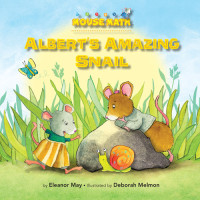
Albert's Amazing Snail lesson 1, Put the Snail Where the Words Say
A tray whose five things have each been visited, and ten places reached with the word said aloud at every one.
2
Every thing has two places at it, not one Checkpoint after this lesson
Albert's Amazing Snail lesson 2, The Two Places at Every Thing
Five matched sets of cards, each with two counters placed at its thing, and a spoken count of how many sets there were.
3
Say it so that somebody who was not watching can find it
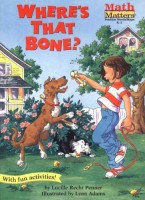
Where's That Bone lesson 1, The Bone Is Behind the Bird Feeder
A sentence from every child that the hider accepted, and one successful walk to a partner's bone from the words alone.
4
Behind what? The word needs a thing, and some words need two
Where's That Bone lesson 3, Behind What?
Two piles of words with the landmark cards that justify them, and one bone described two true ways that both send a partner to the same patch of carpet.
5
A mark on paper stands for a place on the floor Checkpoint after this lesson
Where's That Bone lesson 2, Jill Draws the Yard
A marked map from every child, and one walk to a partner's mark made without looking at where the bone really is.
6
Which way it went is a different question from where it is
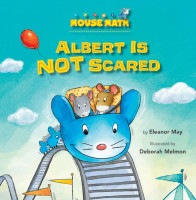
Albert is NOT Scared lesson 3, Which Way Did It Go?
Seven direction words used while something moved, and one invented move the rest of the class named correctly.
7
A dot and an arrowhead carry what the sentence carried
Albert is NOT Scared lesson 5, Draw the Path, Then Point the Arrow
Four drawn paths, each with a starting dot and one arrowhead, read correctly by another pair.
Unit vocabulary
Words students say, not words they are taught to define.
under, on, behind
Said with a thing named after them from lesson 1 onwards, never alone.
in front of, at the bottom, over the top
Learned in lesson 2 as the other place at a thing the class has already visited.
landmark
Lesson 4's word for the thing a position word is measured from.
between
The word that needs two landmarks, which is why lesson 4 sorts it away from the others.
through, around, across
Lesson 6's words. These describe a move, not a place, and the unit keeps the two kinds of word apart.
Materials
From the source lessons
Each day's materials are listed on that day's page below and on the source lesson itself. Nothing is duplicated here.
New for this unit
Checkpoint 1 page, one per child
Checkpoint 2 page, one per child
Performance task set: one yard corner per pair built from four classroom objects, one small object to hide, a blank map sheet with the four objects drawn on it, and a red crayon
Performance task page, one per child
Assessment plan
Daily evidence
Keep each child's spoken sentence from lesson 3 and the map sheet from lesson 5. The evidence this unit collects is mostly spoken and mostly witnessed by a partner: the record is whether the partner arrived, so note the child who had to say it twice.
Checkpoint 1, after lesson 2: The other place at the same thing
A box and a counter. The teacher puts the counter behind the box and says so. The child moves it to the other place at the same thing and says the words for where it now is, naming the box.
Book-free. One box and one counter, no book.
Look for. The child names the thing as well as the word — in front of the box, not just in front. A word said alone is a partial answer, and it is the exact partial answer lesson 4 goes on to attack.
Checkpoint 2, after lesson 5: Read the mark, walk to the place
A map of the yard corner with one mark on it, drawn by somebody else. The child says where the object must be, using a position word and a landmark, then walks to that spot and puts a hand on it.
Book-free. The yard corner and a map sheet, no book.
Look for. The sentence comes before the walk. A child who walks first and talks afterwards may be reading the room rather than the mark, so ask for the sentence with the map still in hand.
Culminating task: Hide it, say it, draw it
Each pair builds a yard corner from four classroom objects and names all four. One child hides a small object while the other watches, and then the watcher does three things in order: says one sentence that names a position word and one of the four objects, says a second true sentence about the same place using a different object, and puts one mark on the map sheet where the object is. The pair then swaps with another pair and each child finds the hidden object from the other pair's map alone.
Collect. The two spoken sentences, the marked map sheet, and whether the other pair arrived at the right place from the mark without a second guess.
What it assesses. A position word with a landmark named after it, one place described two true ways, and a mark on paper that stands for a place in the room — every move the unit built, with no measuring and no counting beyond four.
Daily lesson pages
Lesson 1The word arrives before the hand does
Skill lessonAlbert's Amazing Snail · lesson 1, Put the Snail Where the Words Say · Grade K · 20 minutes Placing an object at a named position and saying the position word
I can
I can put the snail where the words tell me.
Big idea
A position word is an instruction. If you have understood it, your hand goes to one place and not to any other.
Success
The child says the position word out loud before letting go of the counter, and the counter is where the sentence put it.
Connect | 5 min
First lesson. Put a counter behind a box without saying anything, and ask the class to tell a child who had their eyes shut where it is. Let the answer be pointing, and say that today the words will have to do it.
Taught on its own
Albert and Leo show a snail what a trick is, and every trick they pick is a place: in one end of the log and out the other, on top of the pine cones and then at the bottom.
Source core | 20 min
Pairs set five models along a tray and name them, then move a snail counter to the place each read sentence names, saying the position word aloud before they let go. They swap jobs so that one child names a place from a card and the other moves the counter to it.
Collect
A tray whose five things have each been visited, and ten places reached with the word said aloud at every one.
Close | 5 min
Each pair moves the counter through all ten places in the book's own order, saying the position word at every stop and both words at a thing before travelling on.
From the source lesson: A yard tray per pair with five models set out in a row: a cardboard tube for the hollow log, a small heap of pine cones, a paper sunflower stuck in a lump of clay, a twig laid across two blocks for the branch, and a smooth stone for the rock; One snail counter per pair, a shell or a marked cube small enough to pass through the tube; Ten place cards per pair, each picturing the snail at one place with the words printed under it for the teacher: in one end, out the other end, on top, at the bottom, on, off, under, over the top, behind, in front of; Word cards: under, over, behind, in front of
Watch for: A child who watches the teacher's face instead of listening to the sentence. Say the word once, keep your hands still, and wait.
Lesson 2Every thing has two places at it, not one
Skill lessonAlbert's Amazing Snail · lesson 2, The Two Places at Every Thing · Grade K · 20 minutes Matching each position word with the opposite place at the same thing
I can
I can find the other place at the same thing.
Big idea
Position words come in pairs at one thing. Knowing under is not finished until you can say over the top of the same branch.
Success
The child hands over the partner card for any place without touching the tray, and names the thing as well as the word.
Connect | 5 min
Yesterday the counter went to ten places. Ask how many things there were, get five, and ask why ten places needed only five things.
Taught on its own
Nothing in this yard is visited once. The book says both halves every time — on the sunflower and off it, behind the rock and in front of it — first in the yard and again next morning when the slime is read.
Source core | 20 min
Pairs lay ten place cards beside the things they belong to, hunt out the five matched pairs, and put two counters at once on one model so that under the twig and over the top of it are both occupied while both words are said aloud.
Collect
Five matched sets of cards, each with two counters placed at its thing, and a spoken count of how many sets there were.
Close | 5 min
With the tray covered, the teacher reads one card and each child says the words for the other place at the same thing, naming the thing too.
From the source lesson: A yard tray per pair with five models set out in a row: a cardboard tube for the hollow log, a small heap of pine cones, a paper sunflower stuck in a lump of clay, a twig laid across two blocks for the branch, and a smooth stone for the rock; Ten place cards per pair, each picturing the snail at one place with the words printed under it for the teacher: in one end, out the other end, on top, at the bottom, on, off, under, over the top, behind, in front of; One snail counter per pair, a shell or a marked cube small enough to pass through the tube; A second snail counter per pair in a different colour; Word cards: on top, at the bottom, under, over the top
Watch for: A child who answers behind the rock with in front and stops. The thing is half the answer; ask for it every time.
Checkpoint after this lesson: The other place at the same thing. The page is at the end of this guide.
Lesson 3Say it so that somebody who was not watching can find it
Skill lessonWhere's That Bone · lesson 1, The Bone Is Behind the Bird Feeder · Grade K · 20 minutes Describing where an object is with a position word and a named landmark
I can
I can say where the bone is so my partner can go straight to it.
Big idea
A sentence about a place is right or wrong in a way anybody can check: the person you said it to either arrives or does not.
Success
The child's one sentence sends a partner to the bone without a second guess, and the sentence names a word from the chart and a thing in the yard.
Connect | 5 min
Up to now the sentence has come from a card. Today the child makes it. Hide a bone while everyone watches and ask for the sentence rather than a finger.
Taught on its own
Bingo buries every bone somewhere and then cannot say where, so the book hands the reader eight words for it, printed in one line at the back.
Source core | 20 min
Groups of four build a yard corner on the carpet and watch one child walk a bone to a hiding place in silence. Each child then says one whole sentence in the form the bone is ___ the ___, and the child who hid it says yes or no.
Collect
A sentence from every child that the hider accepted, and one successful walk to a partner's bone from the words alone.
Close | 5 min
Each child closes their eyes while a partner moves the bone, then listens to one sentence and walks straight to it. A wrong landing is worked out together: which word sent you wrong?
From the source lesson: The eight-term position line from the back of the book, copied large onto chart paper with a picture beside each term; Yard corner built on the carpet, one per group of four: a chair for the apple tree, an upturned box for the porch, a hoop for the turtle pond, a ruler standing in a lump of clay for the bird feeder, and a rock; One dog-bone cutout per child, big enough to be seen across the carpet; Word cards: behind, between, under, outside
Watch for: Pointing while speaking. A hand that points does the work the sentence is supposed to do, so ask for hands behind backs.
Lesson 4Behind what? The word needs a thing, and some words need two
Skill lessonWhere's That Bone · lesson 3, Behind What? · Grade K · 20 minutes Naming the landmark a position word is measured from, and how many it needs
I can
I can say what the word is measured from, and how many things it needs.
Big idea
A position word with nothing after it sends nobody anywhere. Under needs one thing; between needs two, and both have to be said.
Success
The child sorts the chart words into a one-landmark pile and a two-landmark pile and can say why any word is where they put it.
Connect | 5 min
Yesterday a partner sometimes went to the wrong place. Say only behind, and wait. Let the class find that nobody can move.
Taught on its own
The book describes one buried bone twice over, once as between the tree and a rock and once as to the right of the apple tree, which shows that the word is never about the bone alone.
Source core | 20 min
Children try to obey a position word said with nothing after it, then put a landmark card down for every thing a word needs before it can send anybody anywhere, sorting the eight chart words into a one-card pile and a two-card pile.
Collect
Two piles of words with the landmark cards that justify them, and one bone described two true ways that both send a partner to the same patch of carpet.
Close | 5 min
A partner says a between sentence and then leaves one of its two things out. The child tries to find the bone, cannot, and says which card would put it back.
From the source lesson: The eight-term position line from the back of the book, copied large onto chart paper with a picture beside each term; Yard corner built on the carpet, one per group of four: a chair for the apple tree, an upturned box for the porch, a hoop for the turtle pond, a ruler standing in a lump of clay for the bird feeder, and a rock; Two landmark cards per pair, each a photograph or drawing of one thing in the yard corner, plus one blank card marked with a question mark; One dog-bone cutout per child, big enough to be seen across the carpet; Word cards: between, landmark
Watch for: A child who puts between in the one-card pile because they only said one thing out loud. Make them send a partner with it; the partner stopping is the argument.
Lesson 5A mark on paper stands for a place on the floor
Skill lessonWhere's That Bone · lesson 2, Jill Draws the Yard · Grade K · 20 minutes Marking a place on a map of a real space and reading the mark back into it
I can
I can put a mark on the map where the bone is, and read somebody else's mark back into the room.
Big idea
The drawing has to stand for the room. A mark in the wrong corner of the paper sends a child to the wrong corner of the carpet, and everybody can see it.
Success
The child's mark is in the corner of the map that matches the corner of the carpet, and they can say the position sentence their own mark stands for.
Connect | 5 min
Sentences have done all the work so far, and they vanish. Ask what you could leave on the table so that somebody coming in tomorrow would still know.
Taught on its own
Jill's dog cannot remember where he buried anything, so she draws the backyard on a sheet of paper and marks the drawing wherever a bone goes down.
Source core | 20 min
Standing at one edge of the yard corner, children point at each of four things on the carpet and then at the same four on the paper. They watch a bone go down, put one red mark on their own map at the matching place, and say the position sentence aloud as they draw.
Collect
A marked map from every child, and one walk to a partner's mark made without looking at where the bone really is.
Close | 5 min
The teacher marks the big paper in the wrong corner on purpose. Children walk to where it says, find nothing, and say which landmark the mark sits beside and which one the bone sits beside.
From the source lesson: Yard corner built on the carpet, one per group of four: a chair for the apple tree, an upturned box for the porch, a hoop for the turtle pond, a ruler standing in a lump of clay for the bird feeder, and a rock; One blank map sheet per child: a sheet of paper with the same four landmarks already drawn in the same four corners as the yard corner on the carpet; One dog-bone cutout per child, big enough to be seen across the carpet; A red crayon per child, for marks; Word cards: map, mark
Watch for: A map turned round on the table. Rotate it back with the child and point at two things on both before they draw anything, or every mark will be wrong for a reason that is not theirs.
Checkpoint after this lesson: Read the mark, walk to the place. The page is at the end of this guide.
Lesson 6Which way it went is a different question from where it is
Skill lessonAlbert is NOT Scared · lesson 3, Which Way Did It Go? · Grade K · 20 minutes Naming the direction a ride moves
I can
I can say the word for the way something moved while it is still moving.
Big idea
Some words name a place and some name a path. Through and around can use the same tube and mean two different journeys.
Success
The child says the direction word while the mouse is still moving, and can make a new move of their own that the same word fits.
Connect | 5 min
Every word so far has answered where is it. Walk a mouse up a card hill and ask where it is; take the answer, then ask what it just did.
Taught on its own
Every ride in this book moves one way, and the book prints one word for that way on a page of its own.
Source core | 20 min
Pairs walk a mouse up a folded card hill and down the far side, saying up and down while it moves, then race the page by holding up the word card before the teacher reads it. Each pair then invents a move nobody in the book made that their own word still fits.
Collect
Seven direction words used while something moved, and one invented move the rest of the class named correctly.
Close | 5 min
Two moves are made with the same tube: in one end and out the other, and staying outside and circling it. Children say which one is through, and run a finger along both to say what the finger has to do differently.
From the source lesson: A toy mouse or a wooden bead for each pair; A folded card that stands up as a hill; A cardboard tube; A hoop or a chair leg to move around; A strip of blue paper for the pond; Word cards: up, down, left, right, across, through, around
Watch for: The word arriving after the mouse has stopped. Slow the mouse down rather than hurrying the child.
Lesson 7A dot and an arrowhead carry what the sentence carried
Skill lessonAlbert is NOT Scared · lesson 5, Draw the Path, Then Point the Arrow · Grade K · 20 minutes Drawing a ride's path and marking the direction it travels
I can
I can draw the path and show which way it goes.
Big idea
A move is gone the moment it stops. A line with a starting dot and an arrowhead keeps it, and a stranger can run it the right way round.
Success
Another pair runs the child's path the right way from the dot and the arrowhead alone, and names the word for it without being told which ride it was.
Connect | 5 min
Yesterday's moves were gone as soon as they finished. Ask how you could leave one on the paper the way lesson 5 left a place.
Taught on its own
The book's rides are paths: a hill up one side and down the other, a carousel that comes back to where it started.
Source core | 20 min
Children trace five drawn paths with one finger, saying the words while the finger moves, then draw the hill and the loop on their own paper as one unbroken line each, marking where each path starts.
Collect
Four drawn paths, each with a starting dot and one arrowhead, read correctly by another pair.
Close | 5 min
Pairs swap papers, put a finger on the other pair's starting dot, run it the way the arrow points and say the word for that path. A path whose start cannot be found goes back to be marked more clearly.
From the source lesson: A large sheet carrying five drawn paths: a hill, a swing, a straight line over a blue strip, a tube and a closed loop; Plain paper; Fat pencils or crayons; Word cards: up, down, across, through, around
Watch for: An arrowhead in the middle of a loop with no dot. Ask where a stranger would start, and let the missing dot answer it.
Culminating performance task
Hide it, say it, draw it
Each pair builds a yard corner from four classroom objects and names all four. One child hides a small object while the other watches, and then the watcher does three things in order: says one sentence that names a position word and one of the four objects, says a second true sentence about the same place using a different object, and puts one mark on the map sheet where the object is. The pair then swaps with another pair and each child finds the hidden object from the other pair's map alone.
Collect. The two spoken sentences, the marked map sheet, and whether the other pair arrived at the right place from the mark without a second guess.
What it assesses. A position word with a landmark named after it, one place described two true ways, and a mark on paper that stands for a place in the room — every move the unit built, with no measuring and no counting beyond four.
Teacher key and rubric
Key
Checkpoint 1: whichever word is the genuine opposite at that thing — in front of for behind, on for under. The point is that the thing gets named, not which thing you chose.
Checkpoint 2: the place the mark actually names. A child who says the right place but cannot say a position word for it has half the answer; ask again and take the second attempt.
Task: any two true sentences that send a partner to the same spot. Check the map's four objects are drawn in the same four corners as the real ones before the lesson, because a rotated map makes every mark wrong and it will look like the child's error.
Rubric
Strand
Secure looks like
Developing
Not yet
Representation
The mark on the map is in the corner that matches the corner of the room the object is in.
Does it with the arrangement in front of them.
Produces an answer without the arrangement or the reason.
Calculation
The landmarks a word needs are all named: one for under, both for between.
Does it with the arrangement in front of them.
Produces an answer without the arrangement or the reason.
Meaning
Every position word is said with a thing after it, so the sentence could send somebody who was not watching.
Does it with the arrangement in front of them.
Produces an answer without the arrangement or the reason.
Explanation
When a partner arrives in the wrong place, the child says which word or which thing sent them there.
Does it with the arrangement in front of them.
Produces an answer without the arrangement or the reason.
Print-ready student pages
These three pages print one to a sheet. Everything above them is the teacher guide.
Checkpoint 1 · Kindergarten
The other place at the same thing
NameDate
Watch where I put the counter. Now put it at the other place at the same thing. Where is it? Say the box as well as the word.
Checkpoint 2 · Kindergarten
Read the mark, walk to the place
NameDate
Look at the mark on the map. Do not look at the floor yet. Where is it? Now go and put your hand on that place.
Culminating task · Kindergarten
Hide it, say it, draw it
NameDate
Build your yard corner and name all four things. Watch where it goes. Now say where it is, and say the thing as well as the word. Say it again a different way, using a different thing. Put one mark on your map where it is. Now swap maps and go and find theirs.
Teacher planning and handoff
Children who still say a bare position word in the performance task will need lesson 4 again before any map or grid work in Grade 1.
Lesson 6 is the one that most often gets cut for time and is the one to keep: the difference between where a thing is and which way it went is the distinction that makes lesson 7's arrowhead mean anything.
Where's That Bone's fifth and sixth lessons and Albert's Amazing Snail's third were left out because the moves they teach are already carried by lessons 3 and 4 of this unit.