The Word file and the PDF carry the whole guide. The student pages are the two checkpoints and the culminating task, one to a sheet.
About this unit
Children learn to subtract by watching things leave, and then get stuck the moment the question changes shape. This unit keeps three numbers on the table at every moment — the start, the part that goes, the part that stays — and makes children say all three every time, so the question can ask for any one of them.
The unit also does the thing early subtraction usually skips: it makes the amount removed something to be read rather than something to be told. A condition can remove exactly one member. A word can decide whether one thing leaves or everything does. And the last lesson turns the whole thing round and asks for the change between two totals rather than the result.
The mathematical arc
Each lesson does one job the lesson before it made possible.
Three numbers in a fixed order, and the one you want is what stayed
Successive removals from one total, without recounting, down to zero
Write the action down, and what the middle word claims
The amount removed named by a word, not a number
A stated condition removes exactly one, and the count checks it
The two piles always make twelve — find the part you cannot see
Find the change between two totals rather than the result
Source books
Every lesson in this unit is already published under Math lessons. Nothing here asks you to teach anything you cannot open today.
Each day names one lesson that already exists under Math lessons, with its book, its number and its title. This guide says what that lesson is doing in the sequence and what to collect from it; the lesson itself carries the steps, the printables and the answers.
Thirty minutes a day.
Five minutes to connect to yesterday, the twenty-minute source lesson, five minutes to close on something you can see. A day that runs long should lose the close, never the core.
Teach a lesson on its own if you need to.
Every day carries a one-sentence opening for a teacher who is using that lesson outside the sequence.
Stop after a checkpoint.
The unit holds together if you stop after either checkpoint and come back to it. Stopping between a checkpoint and the next one leaves a lesson without the evidence it was built on.
Where this fits in your year
When to teach it
After the class can count on to add. Lessons 1 to 4 sit comfortably in the first half of the year; lessons 5 to 7 want fluency to twelve behind them.
What students need first
Children can count a group accurately to twenty, can count on, and can hold a number while a group is moved.
What this unit develops
Take-away with the three numbers named; successive removals from a running total; the subtraction sentence and the equals sign; removal driven by a stated condition; part–part–whole with an unknown part; finding the change between two totals.
What it prepares them for
Two-digit subtraction with regrouping in Grade 2, and any later work where the unknown moves position in the sentence.
Curriculum connections
None claimed. The lessons in this unit carry their own standards classifications on their own pages, checked lesson by lesson. A unit-level expectation is a different claim, and none has been verified for this unit, so none is printed here. Use the placement guide above to site the unit in your year, and the individual lesson pages for the codes.
Unit at a glance
#
Mathematical move
Source lesson
Collect
1
Three numbers in a fixed order — the one you want is what your hand did not touch
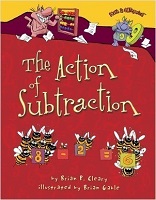
The Action of Subtraction lesson 1, Seven Bulldogs, Three Gone, Four Left
Two scenes built, and each child's spoken three-number sentence for each.
2
Successive removals from one total without recounting, and two ways to reach zero
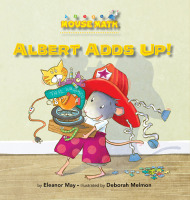
Albert Adds Up! lesson 2, The Pile Comes Back Down
A line of removed counters at the mat's edge showing every take, and the mat emptied to zero.
3
Write the action down: 10 minus 8 is 2, and what the middle word claims Checkpoint after this lesson
The Action of Subtraction lesson 3, Ten Pins, Eight Down, and What Is Means
Two card lines matching two mats, with the last number said aloud when nothing is standing.
4
The amount removed named by a word, not a number: one penguin, or all of them
The Penguin Lady lesson 5, One Penguin or All of Them
Two mats visible at once, with the number standing on each said aloud.
5
A stated condition removes exactly one member, and the count polices the logic
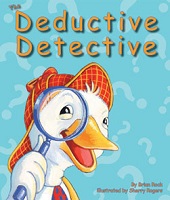
Deductive Detective lesson 2, One Clue Sends One Baker Home
The row counted after each clue, with the cleared pile counted against it.
6
The two piles always make twelve — find the part you cannot see Checkpoint after this lesson
Deductive Detective lesson 4, The Two Piles Always Make Twelve
Both piles counted with the twelve rebuilt, and the ten frames filled and read.
7
Find the change between two stated totals rather than the result
Albert Adds Up! lesson 5, How Many More Did He Need?
Two completed trips with the number that left the cup counted and said, checked against the book's equation strips.
Unit vocabulary
Words students say, not words they are taught to define.
take away
The action, said as the counters leave the mat.
left
The part that stays. Children answer with it, not with the part that went.
minus, equals
Introduced in lesson 3, where the symbols first appear.
altogether
Used in lesson 6, when the two piles are pushed back together.
Materials
From the source lessons
Each day's materials are listed on that day's page below and on the source lesson itself. Nothing is duplicated here.
New for this unit
Checkpoint 1 page, one per child
Checkpoint 2 page, one per child
Performance task set: fifteen counters, a mat and a cup per pair, plus a card naming a start and a finish total
Performance task page, one per child
Assessment plan
Daily evidence
Keep the three-number sentence from lesson 1, the written line from lesson 3, and the hidden-pile answer from lesson 6. Each is a whole sentence, not a bare number.
Checkpoint 1, after lesson 3: Say all three numbers
Nine counters. Four are taken away. The child says the start, the part that went and the part that stayed, and writes the line.
Book-free. Plain counters, no story.
Look for. Nine, four, five, in that order, and 9 − 4 = 5 written. A child who answers only five has given a third of the answer.
Checkpoint 2, after lesson 6: Find the part you cannot see
Twelve counters split into two piles; one pile is covered and the other holds seven. The child says how many are hidden and then checks.
Book-free. Plain counters, no story.
Look for. Five, reached by counting on to twelve or by knowing the pair, and then verified by uncovering. A guess that happens to be right should be re-run with a different split.
Culminating task: What happened in between?
Each pair is given a start total and a finish total on a card, and a cup. They set the mat at the start, move counters into the cup until the mat shows the finish, and count what left the cup. They then say the whole thing as three numbers in order and write the line. Finally they run one card the other way: the mat starts low and grows, and they say how many arrived.
Collect. The written line for the removal, the count of what left, and the spoken sentence for the arrival card.
What it assesses. The three numbers of a take-away, the change as the unknown, and the written sentence — everything the unit built, with no number above twenty.
Daily lesson pages
Lesson 1Three numbers in a fixed order — the one you want is what your hand did not touch
Skill lessonThe Action of Subtraction · lesson 1, Seven Bulldogs, Three Gone, Four Left · Grade 1 · 20 minutes Taking away from a group and counting what is left
I can
I can say the three numbers of a take-away.
Big idea
A take-away has a start, a part that goes and a part that stays, and the one you are asked for is what your hand did not touch.
Success
Every sentence the child says has all three numbers in it.
Connect | 5 min
First lesson. Put seven counters on the mat and take three off without saying anything. Ask what just happened, and collect answers that name only one number.
Taught on its own
The book hands over two clean take-away scenes with every number printed: seven bulldogs with three scared off, and thirteen hornets with ten buzzing away.
Source core | 20 min
Pairs count seven onto the mat and say the number, slide three into the cup one at a time saying take away, count what stays and say the three numbers in order; then run the hornets the same way before checking the book.
Collect
Two scenes built, and each child's spoken three-number sentence for each.
Close | 5 min
Each child points at the mat and says the start, the part that left and the part still there, once for the bulldogs and once for the hornets.
From the source lesson: Two-colour counters, ten per pair; Subtraction mats, one per pair; Small cup for the taken-away counters, one per pair; Word cards: take away, left, start
Watch for: A child answers with the part that left. Ask them which counters are still on the mat before the sentence is accepted.
Lesson 2Successive removals from one total without recounting, and two ways to reach zero
Skill lessonAlbert Adds Up! · lesson 2, The Pile Comes Back Down · Grade 1 · 20 minutes Taking one or two away from a total within 11
I can
I can take away again and again without starting over.
Big idea
The mouth says what stays while the hand takes only what is refused, so the pile can be emptied a few at a time.
Success
The child never sweeps the mat and recounts from one, and reaches zero two different ways.
Connect | 5 min
Yesterday one removal, three numbers. Today the same pile is taken down over and over and the count never goes back to the start.
Taught on its own
Once Albert's pile reaches eleven the book runs the whole climb backwards, and every difference is said aloud down to zero.
Source core | 20 min
Pairs load eleven, slide one off for the puzzle and say ten, then one and then two, then one and one and then two, lining the removed counters at the edge so every take stays visible.
Collect
A line of removed counters at the mat's edge showing every take, and the mat emptied to zero.
Close | 5 min
Pairs take the last three off in one sweep and say zero, then put them back and take them off one at a time, and say which way emptied the mat in fewer moves.
From the source lesson: Two-color counters, twenty per pair; Ten-frame, one per pair; Trade mat, a sheet labeled Albert's Pile; Word cards: away, leaves, left
Watch for: The child recounts the whole mat after each take. The partner's job is to stop the count the moment it restarts.
Lesson 3Write the action down: 10 minus 8 is 2, and what the middle word claims
Skill lessonThe Action of Subtraction · lesson 3, Ten Pins, Eight Down, and What Is Means · Grade 1 · 20 minutes Reading a subtraction sentence and matching it to objects
I can
I can write down what I did.
Big idea
The written line records the three numbers, and the word in the middle claims that the two sides are worth the same.
Success
The card line matches the mat, number for number, and the child can say what the middle word is doing.
Connect | 5 min
Yesterday the takes were spoken. Today the same take gets written down, and every number on the line has a job on the mat.
Taught on its own
The book writes two subtraction sentences in symbols and then stops to explain its own equals sign.
Source core | 20 min
Pairs stand ten counters as pins, sweep eight over, count what stands, and lay number cards to match the mat, pointing at each card as the line is said back; then roll the second ball and build the line for that.
Collect
Two card lines matching two mats, with the last number said aloud when nothing is standing.
Close | 5 min
Each child points at the middle of the card line, says what that word is doing, then says the line again swapping is for equals and checks nothing about the pins changed.
From the source lesson: Ten counters or blocks per pair to stand as pins; Number cards 0 to 13, one set per pair; Word cards: minus, equals, zero
Watch for: A child writes the line before the pins are knocked down. The action comes first and the line describes it.
Checkpoint after this lesson: Say all three numbers. The page is at the end of this guide.
Lesson 4The amount removed named by a word, not a number: one penguin, or all of them
Math through the readingThe Penguin Lady · lesson 5, One Penguin or All of Them · Grade 1 · 20 minutes Students act out the ramp sentence twice, once with the word all and once with the word one, and look at the two different mats the two words leave behind.
I can
I can hear how much the sentence takes away.
Big idea
The amount removed can be named by a word rather than a number, and one word is the difference between one leaving and all of them.
Success
Two mats stand side by side, one nearly full and one bare, and the child names the word that emptied the house.
Connect | 5 min
So far every removal has come with a number. Today the sentence has no number in it at all, and the word has to do the work.
Taught on its own
Every quantity in the story is a group that arrives and stays, and the only thing that ever reduces the pile is the word all in the ramp sentence.
Source core | 20 min
Pairs build the running pile of cubes from the arrival sentences, then run the swapped sentence by moving one cube to the truck and saying the number left, rebuild, and run the book's sentence by loading the whole train.
Collect
Two mats visible at once, with the number standing on each said aloud.
Close | 5 min
Partners each say one sentence naming the word that emptied the house and the number left, then test the same word in Penelope's refusal and say why the pile did not change there.
From the source lesson: Linking cubes, thirty per pair; A house mat, one sheet of paper per pair; A paper truck, one per pair; The ramp sentence and the swapped sentence, read aloud one after the other; The sentence in which Penelope says what she cannot do
Watch for: A child breaks the train apart to load it. The whole train goes into the truck in one hand; that is what all means here.
Lesson 5A stated condition removes exactly one member, and the count polices the logic
Skill lessonDeductive Detective · lesson 2, One Clue Sends One Baker Home · Grade 1 · 20 minutes Using a stated condition to remove members from a set and counting what remains
I can
I can use a clue to send exactly one away.
Big idea
A stated condition can do the removing, and the count is what says whether it removed the right number.
Success
After every clue the row has gone down by exactly one, and the cleared pile has grown by one.
Connect | 5 min
Yesterday a word decided how much left. Today a whole sentence decides who leaves, and the count is going to check it.
Taught on its own
Duck's clues each name a single feature and each clears exactly one baker, and the book prints the resulting count every time.
Source core | 20 min
Pairs match each clue to the card it names, decide whether it clears that baker, move only the cards the clue clears, and count the row after every removal, checking the number went down by one.
Collect
The row counted after each clue, with the cleared pile counted against it.
Close | 5 min
When one card remains, the child names the animal and says why every other baker was sent home, naming two of the clues.
From the source lesson: Twelve baker cards per pair, one for each animal named in the book; A paper strip long enough to hold twelve cards in one row; A marked space or small tray for the cleared bakers; A number line to twelve, one per pair; Word cards: clue, suspect
Watch for: A child clears two on one clue. The count is the referee: send them back to find the card that should not have moved.
Lesson 6The two piles always make twelve — find the part you cannot see
Skill lessonDeductive Detective · lesson 4, The Two Piles Always Make Twelve · Grade 1 · 20 minutes Splitting twelve into two parts and rebuilding the whole
I can
I can find the pile I cannot see.
Big idea
A whole splits many ways and the pieces always rebuild it, which is what makes a missing part findable rather than guessable.
Success
The child says how many must be hiding before uncovering the pile, and is right.
Connect | 5 min
Yesterday you watched cards leave one at a time. Today both piles are counted, and then one of them is hidden.
Taught on its own
The book keeps a whole and two parts on the table at every moment, and never once counts the cleared side.
Source core | 20 min
Pairs count twelve into the row, move four to the cleared space and count both, slide them back and count the whole again, then fill two ten frames with the two piles and say what pouring them together would give.
Collect
Both piles counted with the twelve rebuilt, and the ten frames filled and read.
Close | 5 min
One partner hides the cleared pile and says only how many are left in the row. The other says how many must be hiding, then uncovers and counts.
From the source lesson: Twelve baker cards per pair, one for each animal named in the book; A paper strip long enough to hold twelve cards in one row; A marked space or small tray for the cleared bakers; Two ten frames per pair; Word cards: altogether, left
Watch for: A child guesses. Ask for the number before the pile is uncovered every time, and re-run with a different split if the guess was lucky.
Checkpoint after this lesson: Find the part you cannot see. The page is at the end of this guide.
Lesson 7Find the change between two stated totals rather than the result
Skill lessonAlbert Adds Up! · lesson 5, How Many More Did He Need? · Grade 1 · 20 minutes Finding how many things arrived between two stated totals
I can
I can find how many arrived between two totals.
Big idea
When the start and the finish are both known, the change is the number you are looking for.
Success
The child counts what left the cup, not what is on the mat, and says the whole trip in the frame.
Connect | 5 min
All week the question has asked what is left. Today both ends are given and the middle is missing.
Taught on its own
What the pile held before each of Albert's trips and after is stated, but never how many things he carried in.
Source core | 20 min
Pairs set the mat at three, move counters from the cup one at a time until the mat holds five, and count what left the cup; then clear, set seven, and fill to ten in groups of two and one.
Collect
Two completed trips with the number that left the cup counted and said, checked against the book's equation strips.
Close | 5 min
Each partner takes one of the book's one-thing trips, builds it, and tells the other the whole trip in the frame; the listener rebuilds the mat from the telling alone.
From the source lesson: Two-color counters, twenty per pair; Trade mat, a sheet labeled Albert's Pile; A small cup for the loose counters, one per pair; Equation strips cut from the book's thirteen number sentences, one set per pair; Word cards: altogether, group, more
Watch for: A child reports the finish total as the answer. Ask which counters came out of the cup and count only those.
Culminating performance task
What happened in between?
Each pair is given a start total and a finish total on a card, and a cup. They set the mat at the start, move counters into the cup until the mat shows the finish, and count what left the cup. They then say the whole thing as three numbers in order and write the line. Finally they run one card the other way: the mat starts low and grows, and they say how many arrived.
Collect. The written line for the removal, the count of what left, and the spoken sentence for the arrival card.
What it assesses. The three numbers of a take-away, the change as the unknown, and the written sentence — everything the unit built, with no number above twenty.
Teacher key and rubric
Key
Checkpoint 1: nine, four, five; 9 − 4 = 5.
Checkpoint 2: five hidden.
Task: the change is the difference between the two numbers on the card. Choose starts and finishes inside twenty and check each card yourself before the lesson.
Rubric
Strand
Secure looks like
Developing
Not yet
Representation
Counters leave the mat into the cup, so the part that went stays countable.
Does it with the arrangement in front of them.
Produces an answer without the arrangement or the reason.
Calculation
The part that stayed is found by counting the mat, and the part that went by counting the cup.
Does it with the arrangement in front of them.
Produces an answer without the arrangement or the reason.
Meaning
All three numbers are said, in order, with what each one counts.
Does it with the arrangement in front of them.
Produces an answer without the arrangement or the reason.
Explanation
The child can say which number the question asked for and why the other two were needed.
Does it with the arrangement in front of them.
Produces an answer without the arrangement or the reason.
Print-ready student pages
These three pages print one to a sheet. Everything above them is the teacher guide.
Checkpoint 1 · Grade 1
Say all three numbers
NameDate
Nine counters. Take four away into the cup. Say the three numbers: what you started with, what went, and what is left. Now write the line.
Checkpoint 2 · Grade 1
Find the part you cannot see
NameDate
Twelve counters, split into two piles. One pile is covered. The pile you can see holds seven. How many are hiding? Say the number before you look.
Culminating task · Grade 1
What happened in between?
NameDate
Set your mat at the start number on your card. Move counters into the cup until the mat shows the finish number. Count what left the cup. Say the three numbers in order and write the line. Now do the other card, where the mat has to grow: how many arrived?
Teacher planning and handoff
Children who answered with one number in the task need lesson 1 again before Grade 2's regrouping work.
Lesson 6 is the part–part–whole lesson; if the class is going on to missing addends, that is the one to revisit.
The Action of Subtraction and Deductive Detective both open with take-away; only one opening is used, so the other is free for reading time.