Two friends disagree about socks, fish, games, height, independence, and attention - yet their contrasting voices are exactly what make the series work.
6 core booksGrades 1-3Catalogue reviewed
You are the teacher.
Use what works. Change what doesn’t. Make it yours.
Teaching purpose
Students compare how Bink and Gollie's contrasting personalities and dialogue create both conflict and affection. The sequence focuses on voice, perspective, disagreement, compromise, and repair across several short episodes.
Recommended grade band: Grades 1-3
The Big Question
How can two people stay close without becoming the same?
Source and confidence boundary
Titles, book IDs, authors, formats, and listed reading levels were checked against the updated TumbleBookLibrary Book_List.xlsx. Grade-band recommendations are instructional recommendations for the set, not catalogue claims about every individual title.
Standards status
This curated reading sequence is not itself a region-specific standards claim. Review the documentary status on any linked lesson plan.
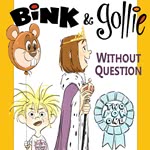
Why it belongs: Gollie imagines herself climbing the Andes while Bink repeatedly interrupts, turning the episode into a comic negotiation over imagination, attention, and personal space.
Unique contribution: It expands the friendship study from direct disagreement to boundaries: one friend wants uninterrupted imaginative space while the other keeps seeking connection.
AskHow do Bink and Gollie handle wanting different amounts of togetherness at the same moment?
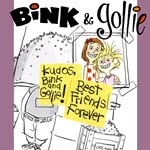
Why it belongs: At the state fair, a fortune-teller episode turns uncertainty about the future into a question about what the two friends can count on.
Unique contribution: It gives the friendship a future-facing test and resolves uncertainty with reassurance that their connection will continue.
AskWhat does the fortune-teller episode suggest Bink and Gollie can be certain about?
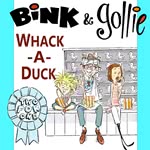
Why it belongs: Bink and Gollie try to earn a place in a record book by finding something extraordinary to collect.
Unique contribution: It turns ambition and comparison into a series-level test of what each friend values and how they respond when being 'the best' is the goal.
AskWhat does the record-book challenge reveal about what each friend thinks is worth celebrating?
Optional extensions
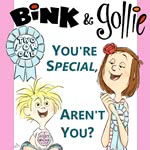
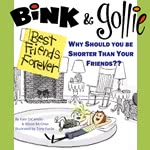
Bink and Gollie, Two for One: You're Special, Aren't You?Book ID 6951Kate DiCamillo & Alison McGhee · Catalogue reviewedWhy optional: A useful extension for identity, affirmation, and how friends respond to each other's self-image. Bink and Gollie, Best Friends Forever: Why Should You Be Shorter than Your
Friends?Book ID 6943Kate DiCamillo & Alison McGhee · Catalogue reviewedWhy optional: A strong extension for comparison, difference, and the absurd logic friends sometimes use with each other.
Selection note: The core is limited to six titles so every book has a distinct job. The point of an author/series set is not to catalogue everything held; it is to make recurring craft, structure, or instructional design visible.
Across-the-set teaching moves
Read dialogue with distinct voices and justify the performance from the words.
Track what each friend wants before deciding who is 'right.'
Notice how conflict ends: persuasion, compromise, acceptance, distraction, or repair.
Compare episodes where the disagreement is direct with episodes involving a game, object, or third interest.
Use repeated reading to identify series expectations about each character.
Book-to-book connections
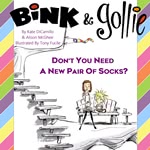
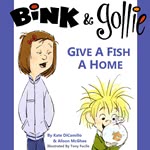
New Pair of Socks + Give a Fish a Home: Compare disagreement over taste with conflict over attention.
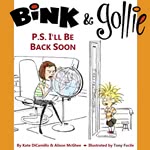
P.S. I'll Be Back Soon + Whack-A-Duck: Compare friendship under separation with friendship during shared action.
Without Question + Kudos!: Compare an individual disagreement with a later episode read through accumulated series knowledge.
Culminating discussion
Choose three episodes and explain how Bink and Gollie remain recognizably different while the friendship continues.
Teacher look-fors
Uses dialogue or action as evidence of character voice.
Names both characters' wants or perspectives.
Explains repair without assuming agreement is always necessary.
Recognizes recurring series patterns while allowing each episode its own problem.
Existing-set duplication check
Closest existing Text Set: Kindness and friendship
What overlaps: Both examine relationships, disagreement, care, and repair.
Why this set is genuinely different: The broader friendship set compares many kinds of relationships; this series set gives students repeated evidence from the same two characters, making voice, perspective, and continuity much easier to track.