You are the teacher.
You know your students and what they need today.
Use what works. Change what doesn’t. Make it yours.
The catalogue's food books are mostly about kitchens rather than farms, so this set follows the chain that is actually in them — the hands a dish passes through. It opens on a cumulative farm tale where every animal adds one ingredient, and ends with a child sorting real nutrition information from nonsense.
Who else had to do something before this reached your plate?
This curated reading sequence is not itself a region-specific standards claim. Review the documentary status on any linked lesson plan.
The sequence
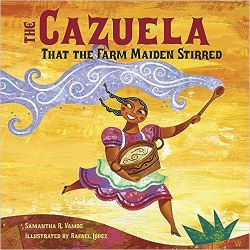
The Cazuela That the Farm Maiden Stirred
Book ID 8009A farm maiden makes arroz con leche and every animal adds one ingredient or one action, piling up in a cumulative chain the class can chant back. Four minutes, bilingual, and it states the set's whole idea before anything has to be explained.

Monster Lunch
Book ID 5542Rhyming poems about lunch, soup, gardens and birthday cake, each one followed by an interview section explaining the real food topic underneath. The structure teaches the move this set needs: enjoy it, then find out what is actually going on.
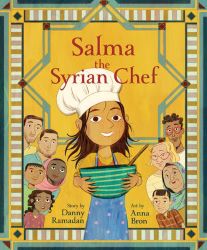
Salma the Syrian Chef
Book ID 7715Salma, a young Syrian refugee in a Vancouver welcome centre, decides to cook foul shami to make her homesick mother laugh again — and needs half the building's help to do it. Cooking as a chain of people, in the most literal sense here.
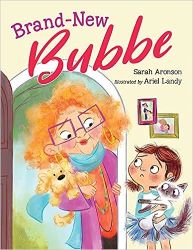
Brand-new Bubbe
Book ID 8346Jillian already has two grandmothers, does not want a Bubbe, and stages a protest — until a pot of soup gets somewhere talking did not. Read straight after Salma: two children, two pots, and food doing the thing words could not.
The Great Shape-Up
Book ID 4948Jay wants to get fit for soccer tryouts and reaches for fad diets and a friend's confident nonsense; his younger sister Amelia works out what actually helps. The set ends where a class needs it to — on how to tell real food information from the other kind.
Also in the collection


This set is honest about what the catalogue holds. There is very little farm-to-table nonfiction here, so it does not pretend to teach agriculture. What it does teach — that a dish is a chain of people, and that food carries meaning between them — is genuinely in these books.
Books 3 and 4 belong on the same day. Two children, two pots of food, two families changing shape. Neither child can say what they mean, and both cook instead.