You are the teacher.
You know your students and what they need today.
Use what works. Change what doesn’t. Make it yours.
One book cannot show a child that a life cycle is a shape rather than a list of stages. Seven can. This set states the idea in one minute, puts numbers on it, then runs the same cycle through a beehive, a bumblebee's year, a butterfly, six different eggs and finally a plant — until the class notices that the shape survives the change of animal.
What stays the same when everything about the animal is different?
This curated reading sequence is not itself a region-specific standards claim. Review the documentary status on any linked lesson plan.
The sequence
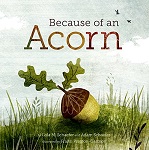
Because of an Acorn
Book ID 7387One acorn becomes a forest, in about a hundred words. The whole idea of the set arrives before anyone has to hold a vocabulary word. A minute long — read it twice on the first day and again on the last.
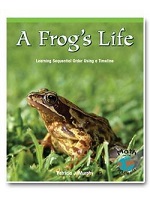
A Frog's Life
Book ID 439The frog's cycle laid out on a timeline: about five days for eggs to hatch, eight to ten weeks for back legs, sixteen weeks to adult. A life cycle stops being a story and becomes something a class can measure and compare.
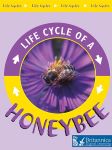
Life Cycle of a Honeybee
Book ID 7590Egg, larva, pupa, adult — the four-stage cycle named plainly, with the queen, workers and drones doing different jobs around it. The first book in the set where the cycle belongs to a whole colony rather than one animal.

The Bumblebee Queen
Book ID 6616A bumblebee queen wakes underground in spring, feeds alone, builds a honey pot, lays, and raises the workers who take over. Read straight after the honeybee: the stages match, the telling does not, and the difference is the season.
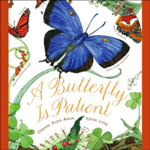
A Butterfly is Patient
Book ID 4670Metamorphosis, camouflage, migration and pollination in one account, and the title is the argument — the change cannot be hurried. The longest listen and the highest level in the set; place it after four books have built the pattern, not before.
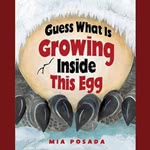
Guess What is Growing Inside This Egg
Book ID 6747Penguins, alligators, ducklings, sea turtles, spiders and octopuses, each hidden inside an egg and guessed at before the reveal. The closing section compares incubation times directly, which is the comparison the class has been building toward since the frog timeline.
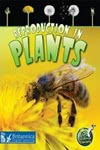
Reproduction in Plants
Book ID 6933Spores, cones, bulbs, tubers, runners, rhizomes and seeds that fly. Plants run life cycles too, and they run more kinds of them than any animal in this set. Ends the sequence by making the pattern bigger than animals.
Also in the collection
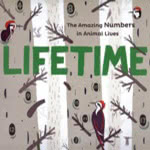
Animalogic — 6 short videos
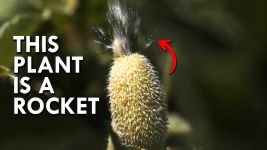
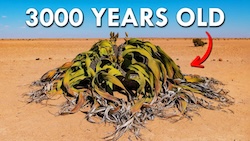
Books 3 and 4 belong together. Life Cycle of a Honeybee and The Bumblebee Queen are the same four stages told twice — once as a diagram of a colony, once as one queen's year. Read apart, they are two bee books. Read together, they are the moment a class sees that a life cycle is a shape and not a story.
The level range in this set is wide on purpose: Because of an Acorn is TL02 and A Butterfly is Patient is TL13. That is a read-aloud spread, not an assignment spread. Where a book has no lesson plan, the Ask question is the lesson.