You are the teacher.
You know your students and what they need today.
Use what works. Change what doesn’t. Make it yours.
The order is the teaching. This set moves outward — from one girl's obsession, to the mission she loves, to the photograph that turned the camera back on us, then out past the moon to the sun, to the beginning of everything, and finally back to the atoms in a child's hand. Read them in sequence and each book answers a question the one before it raised.
How far can we see — and what did we find out by looking back?
This curated reading sequence is not itself a region-specific standards claim. Review the documentary status on any linked lesson plan.
The sequence
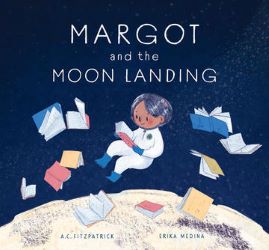
Margot and the Moon Landing
Book ID 7717A child who loves the moon landing and cannot get anyone to listen. Before any facts, the class meets someone who feels how they might feel. Ask what Margot wants — the answer is not ‘to go to the moon.’
Eight Days Gone
Book ID 6356Apollo 11 in short, rhythmic verse. Two minutes long. Read it twice — once for the story, once for the rhythm — and the eight days become a shape the class can hold.
Earthrise
Book ID 8095Apollo 8, and the photograph taken looking backward. This is the hinge of the set: we went all that way and the thing worth photographing was home. Uses real dialogue from the NASA transcripts.
Faces of the Moon
Book ID 8098Now the moon as an object that behaves in a pattern. Poetry, but the phases are the content. Follow with a month of moon-watching out the window if the term allows.

What Is the Sun?
Book ID 6932Past the moon to our own star, and to stars as a category. The most straightforwardly informational book in the set — place it after four books that earned the class's attention, not before.

Older than the Stars
Book ID 4772The Big Bang, in verse, running from the first instant to the atoms in a child's hand. Thirteen minutes. The longest listen in the set and worth every second.
You Are Stardust
Book ID 6837The same idea as the book before it, turned around to face the reader. Pair these two on the same day. Nothing else in the set lands as hard as this pairing does.
The Astronomer Who Questioned Everything: The Story of Maria Mitchell
Book ID 8406Maria Mitchell, taught by her father to read the stars, who became an astronomer. End where you began — with a child looking up — except this one grew up and did it.
Also in the collection
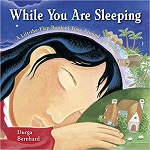
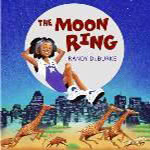
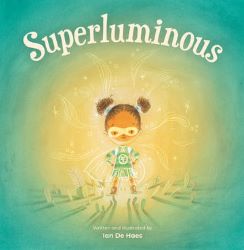
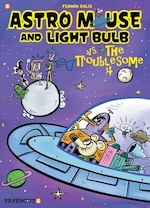
Books 6 and 7 belong together. Older than the Stars and You Are Stardust are the same idea told twice, once facing out and once facing in. Read them on the same day; separating them loses the effect.
The sequence spans TL04 to TL11, so this is a read-aloud spread rather than an assignment spread. Where a title has no full lesson, the Ask question is the lesson.