TumbleTA · Text Set
Text set ID TTA-TS-026

Trees & forests — five books, one seed to a canopy

From one seed to a whole canopy, and what lives in each layer.

five in sequenceGrades K–6TL02–TL11 where levelled25 min listening6 books + 12 videos in the collection

You are the teacher.

You know your students and what they need today.

Use what works. Change what doesn’t. Make it yours.

A forest is the easiest ecosystem for a child to stand inside and the hardest to see whole. This set builds it from one acorn upward, teaches the class to read a tree in winter when the leaves are gone, then goes underground to the organism that connects them all.

The question that runs through all five

Is a forest a lot of trees, or one thing?

Standards status

This curated reading sequence is not itself a region-specific standards claim. Review the documentary status on any linked lesson plan.

Set worksheet (PDF) — the worksheet is one row per book, filled in after each one.

The sequence

1
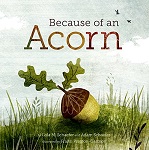
Cover of Because of an Acorn
Start here. One minute, one acorn.

Because of an Acorn

Book ID 7387
Lola M. Schaefer and Adam Schaefer
Gr K-2Non-fictionTL02100L1 min

A single acorn becomes trees, birds, seeds, flowers, fruit, animals and finally people. The set's entire claim, stated at TL02 before anyone defines a word — and the back matter names ecosystem, food chain and erosion for the teacher.
AskThe book says because of an acorn. How many things does it get to say that about?
2
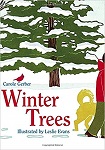
Cover of Winter Trees
Now look at one tree.

Winter Trees

Book ID 7416
Carole Gerber
Gr K-3Non-fictionTL08620L5 min

A winter walk identifying trees by shape, bark, twigs, buds and needles. Winter is the right season for this because the obvious clue is missing — the class has to look at structure, which is what the rest of the set depends on.
AskTwo bare trees, different shapes. What made the shapes different?
3
Cover of Trout Are Made of Trees
What falls off the tree.

Trout Are Made of Trees

Book ID 4953
April Pulley Sayre
Gr 1-4Non-fictionTL07AD450L6 min

Leaves into a stream, bacteria and algae, insects, trout. The forest stops at the water's edge and its effects do not, which is the first time in the set that a tree is doing something at a distance.
AskThe tree never touches the trout. How does it feed it?
4
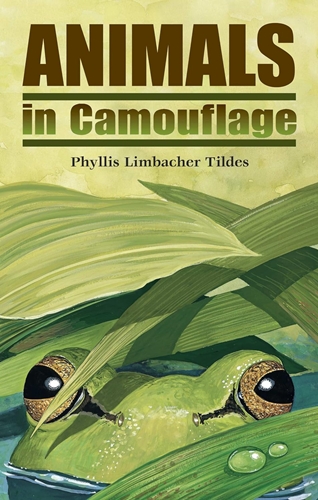
Cover of Animals in Camouflage
Who is hiding in it.

Animals in Camouflage

Book ID 4541
Phyllis Limbacher Tildes
Gr K-3Non-fictionTL08AD660L4 minOpen lessons

Camouflage riddles across snow, leaves, flowers and seaweed — the leaf insect and the tree frog belong to this set specifically. The forest becomes a place with layers, each with something in it you cannot see.
AskThe leaf insect looks like the thing it sits on. What does that tell you about the thing hunting it?
5
Cover of Reproduction in Plants
How it makes more of itself.

Reproduction in Plants

Book ID 6933
Julie Lundgren
Gr 3-6Non-fictionTL11910L9 min

Spores, cones, bulbs, tubers, runners, rhizomes and seeds built to fly. The mechanism behind the acorn in book 1, now named and multiplied — and the highest level in the set, so it needs the four books before it.

AskAn acorn is one way. Which of these gets a plant furthest from where it started?

Also in the collection

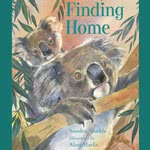
Cover of Finding Home
Finding HomeBook ID 7040A koala and joey looking for eucalyptus after fire. What it means when the forest is gone.

Animalogic — 12 short videos
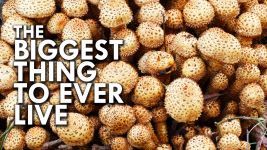
Cover of Humongous Fungus
Humongous FungusBook ID 7661Video. Armillaria — a fungus that may be the largest organism alive, spreading under the trees for thousands of years. The strongest answer to this set's question.
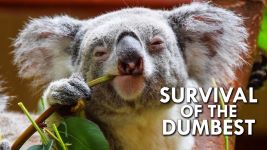
Cover of Koala
KoalaBook ID 7633Video. The koala again, and the poisonous leaves it lives on.
Cover of Porcupine
PorcupineBook ID 8299Video. Porcupine — a forest animal that solves danger with equipment.
Cover of Red Panda
Red PandaBook ID 8302Video. Red panda, and life spent up in the canopy.
Cover of Glow Worm
Glow WormBook ID 7610Glowworms turning an Australian forest at night into a living constellation.
Cover of Weaver Ants
Weaver AntsBook ID 7612Weaver ants building leaf cities in the canopy and farming other insects.
Cover of Sundew
SundewBook ID 7662The sundew — a plant with sticky tentacles and an appetite. Layer four of the forest.
Cover of Spectacled Bear
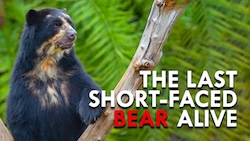
Spectacled BearBook ID 8305The Andean spectacled bear, shy and tree-climbing, in conflict with people.
Cover of Gliders
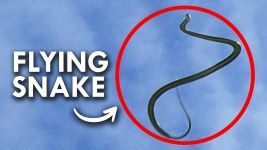
GlidersBook ID 7686Gliders. Squirrels, snakes and fish that cross the canopy without wings.
Cover of Chevrotain
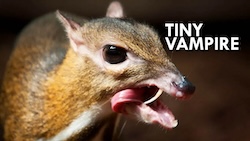
ChevrotainBook ID 8291Chevrotain — mouse-like, deer-like, and able to vanish underwater.
Cover of Moose
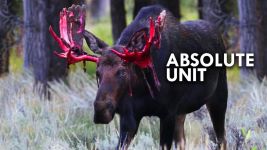
MooseBook ID 7608Moose. The northern forest's heavyweight, and what it is struggling with.
Cover of Evolution of Bears
Evolution of BearsBook ID 8319From tiny ancestors to polar bears and pandas. The forest on a much longer clock.
Teaching this set

The extra is the answer. The set asks whether a forest is many things or one, and the class will mostly answer 'many'. Then Humongous Fungus shows a single organism running underneath the whole thing, connecting trees to each other for thousands of years. Hold it back until after book 5 and play it as the reply.

Winter Trees is the one to take outdoors. It only needs a walk and a bare tree, and the identification it teaches — shape, bark, buds — works in any schoolyard in the northern half of the year.

Return to TumbleBookLibrary home