A first communal sound grows into voice, listening, practice, performance, and public purpose.
6 core booksGrades 1-350 min across 6 timed titlesCatalogue-metadata reviewed
You are the teacher.
You know your students and what they need today.
Use what works. Change what doesn’t. Make it yours.
Teaching purpose
Students compare music as communal invention, improvisation, attentive listening, disciplined performance, and public action. The sequence does not ask students to identify technical musical features that the catalogue metadata cannot verify.
Recommended grade band: Grades 1-3
The Big Question
What can music communicate that words sometimes cannot?
Source and confidence boundary
This set was built from TumbleBookLibrary catalogue metadata, not full-text review. All 6 core titles are publication-eligible: 6 HIGH and 0 MEDIUM confidence; no LOW-confidence title is included.
Invite students to listen for the role music plays rather than whether they like a particular sound. Track who makes, hears, joins, or acts because of the music in each book.
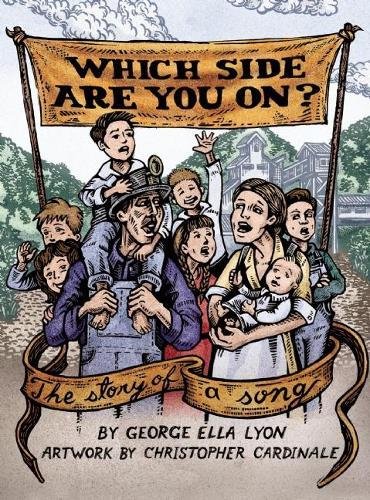
Gr 2-5Informational / Non-FictionTL06560L9 minMetadata confidence HIGH
Why it belongs: A song becomes a rallying voice during a labour struggle.
Unique contribution: It closes by showing music communicating solidarity and purpose at community scale.
AskWhy might a shared song move people in a way that one spoken statement cannot?
Optional extensions
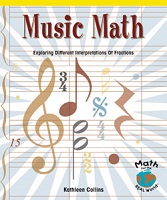
Music MathBook ID 445Kathleen Collins · Metadata confidence HIGHWhy optional: Fractions, beats, and time signatures provide a strong cross-curricular extension for Grades 3-5, above much of the core band.
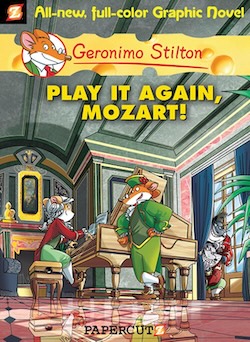
Geronimo Stilton, Volume 8: Play it Again, Mozart!Book ID 8265Geronimo Stilton · Metadata confidence HIGHWhy optional: The historical-fiction Mozart adventure adds composing and music history, but its time-travel plot shifts attention away from the set's communication arc.
Across-the-set teaching moves
Track maker, listener, audience, and purpose for each musical act.
Compare music created together with music performed by one person.
Notice when listening changes what someone understands or does.
Discuss what practice and recovery add to a performance.
Classify music's role as invitation, expression, attention, perseverance, or collective action.
Book-to-book connections
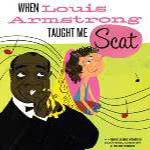
The First Music + When Louis Armstrong Taught Me Scat: Compare a community combining sounds with a neighbourhood joining an improvised voice.
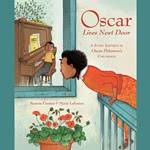
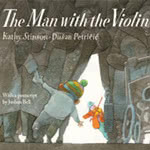
Oscar Lives Next Door + The Man with the Violin: Compare learning to hear the world with choosing to stop and listen.
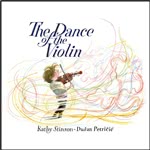
The Dance of the Violin + Which Side Are You On? The Story of a Song: Compare the courage of one performer with the power of many people sharing a song.
Culminating discussion
Choose three books in which music serves different purposes. What can the music accomplish that ordinary speech might not?
Teacher look-fors
Names the role music plays using evidence from metadata-supported events.
Compares maker, listener, and purpose across books.
Distinguishes practice or performance from music as collective action.
Avoids claiming unverified musical details.
Existing-set duplication check
Closest existing Text Set: Poetry and wordplay
What overlaps: Both attend to sound, rhythm, and language.
Why this set is genuinely different: The protected set studies what rhythm does to words; this set compares the social and expressive roles of music and musicians.