You are the teacher.
You know your students and what they need today.
Use what works. Change what doesn’t. Make it yours.
Two ideas in one set, in the order that makes them one idea. Three books name shapes and find them in ordinary things, then two move to patterns — spotting, extending and finally naming the rule as AB or ABB. The last book turns the whole thing into a problem a kingdom has to solve, which is what geometry is actually for.
What is the rule, and what would break it?
This curated reading sequence is not itself a region-specific standards claim. Review the documentary status on any linked lesson plan.
The sequence
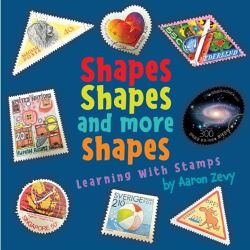
Shapes, Shapes, and More Shapes
Book ID 8033Circles, diamonds, hearts, rectangles, squares, triangles and ovals, each named twice with a matching stamp to find. Predictable text, so a pre-reader can join in — this is the book that gets every child in the room participating on day one.
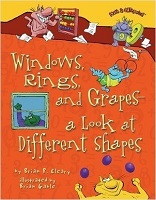
Windows, Rings, and Grapes
Book ID 536Windows, rings and grapes — each shape tied to an everyday object, in rhyme you can sing. The jump from book 1 is the important one: a shape stops being a stamp on a page and becomes something the world is already made of.
Shapeasaurus
Book ID 2612A baby T. rex hatches from an oval egg and finds circles, squares, crescents, diamonds, cones and stars through a dinosaur world. Shapes carried by a narrative, which is what makes them stick past the lesson.
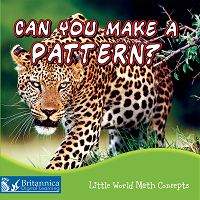
Can You Make a Pattern?
Book ID 468What a repeating pattern is, then spotting them in colours, lines and animal markings, then making one. The set pivots here from naming things to finding rules, and the making is the part that proves it.
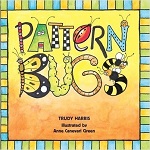
Pattern Bugs
Book ID 2610Butterflies, beetles, bees, caterpillars and crickets carrying AB, ABCD, AAB and ABB patterns in sound, colour, shape and size. The notation is the payoff — the class can now describe a pattern rather than just continue it.
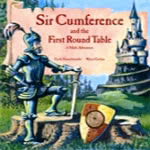
Sir Cumference and the First Round Table
Book ID 76King Arthur's knights cannot meet around any table that works, and Sir Cumference, Lady Di, Radius and Geo try shape after shape until the round one solves it. Grades 2–4, and the first time in the set that a shape is chosen for a reason.
Also in the collection
Books 4 and 5 are the hinge of the set. Can You Make a Pattern? asks a class to continue and invent; Pattern Bugs gives them the notation to describe what they invented. Do them in that order and on the same day — naming a rule you have already made is far easier than making one from a name.
Sir Cumference is a level above everything else here and is worth it. It is the only book in the set where somebody needs a shape in order to fix something, which is the answer to the question a class always asks about geometry.