TumbleTA · Text Set
Text set ID TTA-TS-028

Where our water goes — five books, one drop, all the way

Follow one drop from cloud to tap to drain and back.

five in sequenceGrades K–6TL07–TL11 where levelled29 min listening7 books + 14 videos in the collection

You are the teacher.

You know your students and what they need today.

Use what works. Change what doesn’t. Make it yours.

The water cycle is usually taught as a diagram with four arrows, and children can label it without believing it. This set never draws the diagram. It follows single things instead — a dropped can, a leaf, a salmon, an otter — and lets the class discover that water is what connects them.

The question that runs through all five

Where does it actually go after it leaves you?

Standards status

This curated reading sequence is not itself a region-specific standards claim. Review the documentary status on any linked lesson plan.

Set worksheet (PDF) — the worksheet is one row per book, filled in after each one.

The sequence

1
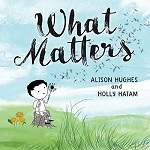
Cover of What Matters
Start here. Two minutes.

What Matters

Book ID 7378
Alison Hughes
Gr K-2Non-fictionTL08AD560L2 min

A boy puts one can in a recycling bin, and the book follows the consequence outward — ants, snails, worms, birds, then streams, rivers, tide pools, the ocean. The ripple structure is the argument, and it is short enough to read again at the end of the unit.
AskOne can. Trace it as far as the book does — where does the ripple stop?
2
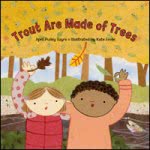
Cover of Trout Are Made of Trees
Upstream, in a real stream.

Trout Are Made of Trees

Book ID 4953
April Pulley Sayre
Gr 1-4Non-fictionTL07AD450L6 min

A leaf falls in, and a whole food web turns it into a trout. It also names what a stream needs to stay a stream: shade, fallen branches, clean water. The first book here where water is a habitat rather than a substance.
AskCut down the trees along a stream and the trout go. Why?
3
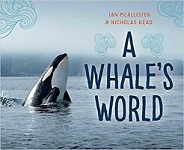
Cover of A Whale's World
Out to the coast.

A Whale's World

Book ID 7366
Nicholas Read
Gr K-3Non-fictionTL11920L8 min

Orcas, salmon, bears and wolves in the Great Bear Sea, connected by one food web that runs from open water into the rainforest. The scale jumps from a stream to a coastline without changing the argument.
AskThe book says the ocean feeds the forest. What is doing the carrying?
4
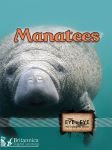
Cover of Manatees
One animal, and what warm water means.

Manatees

Book ID 7530
Precious McKenzie
Gr 2-5Non-fiction940L10 min

Manatees mistaken for mermaids, and the reason they must have warm water to survive. This is the set's first hard conservation turn: the threat is not a predator, it is where the water is and what temperature it is.
AskWhy is an animal that has no natural predators still endangered?
5
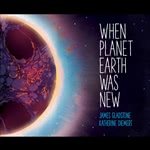
Cover of When Planet Earth Was New
All the way back.

When Planet Earth Was New

Book ID 7106
James Gladstone
Gr 2-6Non-fictionTL08530L3 min

Earth from boiling and barren to oceans, oxygen and life, with humans placed at the very end of the span. Three minutes, and it resets the timescale the class has been working in from a season to billions of years.

AskThe oceans came before the life. What made the difference once they arrived?

Also in the collection

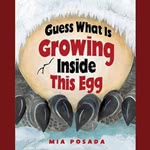
Cover of Guess What is Growing Inside This Egg
Guess What is Growing Inside This EggBook ID 6747Six eggs, several of them ocean animals. Good bridge to the life-cycles set.
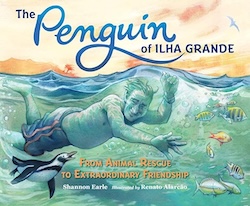
Cover of The Penguin of Ilha Grande: From Animal Rescue to Extraordinary Friendship
The Penguin of Ilha Grande: From Animal Rescue to Extraordinary FriendshipBook ID 8057A rescued penguin and the man who saved him. The human end of the same story.

Animalogic — 14 short videos
Cover of Sea Otters
Sea OttersBook ID 7638Video. Sea otters, the kelp forest, and one animal holding an ecosystem together.
Cover of Basking Sharks
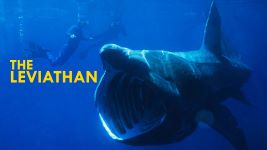
Basking SharksBook ID 7609Video. A shark that filters instead of hunting — feeding, from the other direction.
Cover of Grey Whale
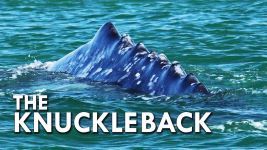
Grey WhaleBook ID 7648Video. Grey whales and the people who go out to watch them.
Cover of Beaver
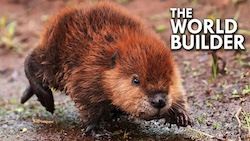
BeaverBook ID 8284Beaver. One animal whose dams reshape a whole river system — the set's clearest case.
Cover of Chimaera
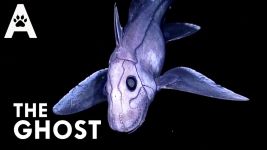
ChimaeraBook ID 7614The deep-sea chimaera, a shark relative that looks assembled from spare parts.
Cover of Japanese Spider Crab
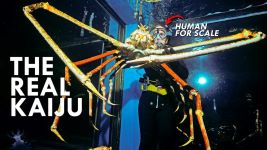
Japanese Spider CrabBook ID 7645Japanese spider crab, big enough to look like a kaiju, and how it grows.
Cover of Mudskipper
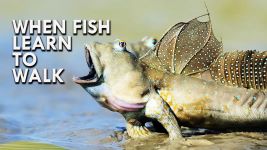
MudskipperBook ID 7651The mudskipper — a fish that walks, climbs and breathes air.
Cover of Sea Lions
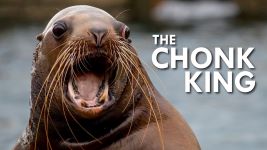
Sea LionsBook ID 7622Sea lions, and life as the loud powerful ones on the rocks.
Cover of Little Penguin
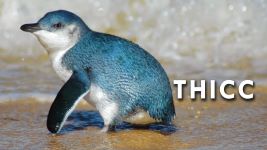
Little PenguinBook ID 7643The world's smallest penguin, waddling home under the stars.
Cover of Megalodon
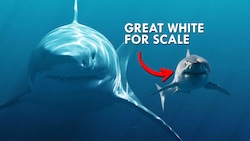
MegalodonBook ID 8323Megalodon. The biggest shark that ever lived, and what the ocean held before us.
Cover of Snapping Turtle
Snapping TurtleBook ID 8315A giant snapping turtle, and why the fearsome ones are usually misunderstood.
Cover of Coconut Crab
Coconut CrabBook ID 7630Coconut crab — climbs trees, cracks coconuts, outsizes everything around it.
Cover of Leech
LeechBook ID 7644The leech: a medical instrument with a wild evolutionary story.
Cover of Evolution of Crabs
Evolution of CrabsBook ID 8318Why nature keeps reinventing the crab. Evolution running the same experiment twice.
Teaching this set

Open and close on the same book. What Matters is two minutes long. Read it on day one, when the ripple is a surprise, and again on the last day, when the class can name every animal and every body of water it passes through. The book does not change; what the class hears in it does.

This is the set with the widest span in the library — a dropped can to the formation of the oceans. Keep the order. The scale only works because each book steps out from the one before it.

Return to TumbleBookLibrary home