The Word file and the PDF carry the whole guide. The student pages are the two checkpoints and the culminating task, one to a sheet.
About this unit
This unit puts the tape in children's hands from the first lesson. They lay it flush against an object with no gap, read the number where the object stops, and say it aloud with its unit before it is written down — and when two pairs disagree they relay both tapes side by side rather than being told who is right. From there lengths get ordered from a shared starting line, because three lengths only compare when they start together.
The middle of the unit builds the units themselves out of inch tiles: twelve, twenty-four, thirty-six, so that one length can be named three ways with a finger on the part of the line each name counts. Then comes the lesson the unit exists for. A character picks a two-hundred-foot path over a hundred-yard one because two hundred is more than a hundred, and the book overturns him with a fact about the units rather than a calculation. Children hold a yardstick against a foot ruler and argue it out with the sticks in their hands.
The mathematical arc
Each lesson does one job the lesson before it made possible.
Lay the tape flush and say the number with its unit
Three lengths only compare when they start together
Twelve inches make a foot, and three feet make a yard
Mark a distance, then check it two different ways
The bigger number is not always the longer distance
Around and across are two different measurements of one object
Order nine stated distances, and find where the line has to break
Source books
Every lesson in this unit is already published under Math lessons. Nothing here asks you to teach anything you cannot open today.
Each day names one lesson that already exists under Math lessons, with its book, its number and its title. This guide says what that lesson is doing in the sequence and what to collect from it; the lesson itself carries the steps, the printables and the answers.
Thirty minutes a day.
Five minutes to connect to yesterday, the twenty-minute source lesson, five minutes to close on something you can see. A day that runs long should lose the close, never the core.
Teach a lesson on its own if you need to.
Every day carries a one-sentence opening for a teacher who is using that lesson outside the sequence.
Stop after a checkpoint.
The unit holds together if you stop after either checkpoint and come back to it. Stopping between a checkpoint and the next one leaves a lesson without the evidence it was built on.
Where this fits in your year
When to teach it
After the class can count to one hundred and read numbers off a scale. It needs floor space for the ribbon and trail work in lessons 3 to 7.
What students need first
Children can count to fifty reliably and can read a number off a ruler.
What this unit develops
Measuring a length in whole inches and recording it with its unit; ordering lengths from a common starting line; building a foot and a yard from inches; marking and checking a measured distance two ways; comparing lengths given in different units; the distance around against the distance across; ordering stated distances and finding which fit on a measured line.
What it prepares them for
Grade 3 perimeter and area work, and any later measurement where a conversion decides the answer.
Curriculum connections
None claimed. The lessons in this unit carry their own standards classifications on their own pages, checked lesson by lesson. A unit-level expectation is a different claim, and none has been verified for this unit, so none is printed here. Use the placement guide above to site the unit in your year, and the individual lesson pages for the codes.
Unit at a glance
#
Mathematical move
Source lesson
Collect
1
Lay the tape flush and say the number with its unit
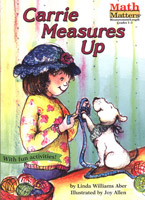
Carrie Measures Up lesson 1, The Measuring Spy's List
A measuring spy list carrying ten lines — six basket objects and four paper stand-ins — each with a number and a unit.
2
Three lengths only compare when they start together Checkpoint after this lesson
Carrie Measures Up lesson 3, Shortest to Longest on the Line
Three cut pieces in order from a shared line, with a measured fourth piece slid in between the right two.
3
Twelve inches make a foot, and three feet make a yard
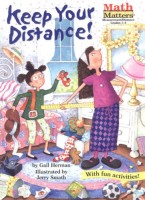
Keep Your Distance! lesson 1, Twelve Inches Make a Foot
Three rows of twelve tiles checked against a yard tape, with twelve, twenty-four and thirty-six all counted and said.
4
Mark a distance, then check it two different ways
Keep Your Distance! lesson 2, Measure Jen's Line
A floor line at two feet, checked once with rulers and once by counting twenty-four inch tiles along it.
5
The bigger number is not always the longer distance Checkpoint after this lesson
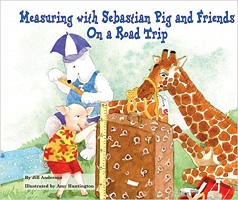
Measuring with Sebastian Pig and Friends on a Road Trip lesson 3, The Biggest Number Is Not Always the Winner
Both trails walked and marked, with Ben's sentence tested against the two sticks and a verdict given.
6
Around and across are two different measurements of one object
Measuring with Sebastian Pig and Friends on a Road Trip lesson 4, Around It Like a Belt
Two numbers for one object with the word inches on each, and three round objects measured around and put in order smallest first.
7
Order nine stated distances, and find where the line has to break
Keep Your Distance! lesson 5, Nine Places on One Line
A ribbon line carrying the four short distances and a floor tape carrying the five mile-sized cards in order, each placement justified.
Unit vocabulary
Words students say, not words they are taught to define.
inches
Said after every number from lesson 1. A measurement with no unit is sent back.
starting line
Lesson 2's rule: three lengths only compare when their left ends touch one line.
foot, yard
Built from tiles in lesson 3 and named for a length children have laid out themselves.
across, around
Lesson 6's pair. Two different numbers for one round object, and each answers a different question.
farther
Lesson 7's word, used of cards laid in order along the floor past the end of the ribbons.
Materials
From the source lessons
Each day's materials are listed on that day's page below and on the source lesson itself. Nothing is duplicated here.
New for this unit
Checkpoint 1 page, one per child
Checkpoint 2 page, one per child
Performance task set: a tape measure marked in inches, three paper strips cut to whole-inch lengths, an ordering mat with a starting line, a yardstick, a foot ruler, and two path cards, one set per pair
Performance task page, one per child
Assessment plan
Daily evidence
Keep the spy list from lesson 1 and the sentence from lesson 5. The list shows whether the unit was written beside every number; the sentence shows whether the child's reason names a unit or only a number, which is the distinction this unit is built on.
Checkpoint 1, after lesson 2: Measure it and say it
Three paper strips of different whole-inch lengths and a tape. The child measures each, says the measurement aloud with its unit, then lays all three in order from a starting line.
Book-free. Strips and a tape, no book.
Look for. The tape's end flush against the strip's end, and the unit said aloud every time. A child who starts at the 1 will be out by an inch on every strip and the order may still come out right, so watch the tape rather than the answer.
Checkpoint 2, after lesson 5: Which is longer?
Two cards, one reading 10 yards and one reading 20 feet, with a yardstick and a foot ruler on the desk. The child says which is longer and gives a reason.
Book-free. Two cards and two measuring sticks, no book.
Look for. The reason names the units and not just the numbers, and the sticks get used. A child who answers twenty feet because twenty is more has made exactly the error the unit is about.
Culminating task: Measure it, order it, and say which unit won
Each pair does three things. They measure three strips with a tape laid flush and write each measurement with its unit on a list. They lay all three in order from a shared starting line and slide in a fourth unlabelled strip they have measured themselves, saying which two it sits between. Then they are given two distances in different units and have to say which is longer, with the yardstick and the foot ruler on the desk, and give a reason that names a unit.
Collect. The list with a unit beside every number, the ordered strips with the fourth placed and its neighbours named, and the spoken comparison with its reason.
What it assesses. A measurement made and recorded with its unit, lengths ordered from a shared line, and a comparison decided by the size of the unit — the three things the unit built, with no number left bare.
Daily lesson pages
Lesson 1Lay the tape flush and say the number with its unit
Skill lessonCarrie Measures Up · lesson 1, The Measuring Spy's List · Grade 2 · 20 minutes Measuring a length in whole inches with a tape and recording it
I can
I can measure something in inches and say how long it is.
Big idea
A measurement is a number and a unit together. Where the tape starts decides the number, so the end goes flush against the end of the object.
Success
The child says each number aloud with the word inches after it before writing it, and settles a disagreement by relaying both tapes side by side.
Connect | 5 min
First lesson. Hold up a pencil and ask how long it is. Take the answers — a few, seven, this long — and say that today every answer will have to carry a unit.
Taught on its own
Grandma hands Carrie a tape measure and a job, and the book then names five things Carrie measures and prints a number for exactly one of them.
Source core | 20 min
Children put the tape's very end flush against one end of an object with no gap and no overhang, hold it straight, read the number where the object stops and say it aloud with the word inches, writing one line per object on the spy list.
Collect
A measuring spy list carrying ten lines — six basket objects and four paper stand-ins — each with a number and a unit.
Close | 5 min
Children look down the list, find the biggest number of inches and say which object it is and how long, then find the smallest and say that one too, without taking the numbers apart.
From the source lesson: A cloth or paper tape measure marked in inches, one per pair; A basket of six flat classroom objects per pair, each between two and eleven inches long, each with a name card; A measuring spy list, one per pair, ruled with six blank lines each headed object and inches; An envelope of four paper stand-ins per pair, cut to whole-inch lengths, labelled paw, mitten, laptop and knocker; Word cards: measure, inches, length, tape measure
Watch for: A tape started at the 1. Every reading will be out by an inch and the list will look consistent; check the tape rather than the numbers.
Lesson 2Three lengths only compare when they start together
Skill lessonCarrie Measures Up · lesson 3, Shortest to Longest on the Line · Grade 2 · 20 minutes Ordering three lengths by measuring each from a common starting line
I can
I can put lengths in order from a starting line.
Big idea
An order read off an arrangement is only true if the arrangement is fair. Left ends on one line is what makes the longest piece the longest.
Success
The child slides a measured fourth piece into the right place without moving the others and names both of its neighbours with their lengths.
Connect | 5 min
The list has numbers on it now. Today the lengths themselves get laid side by side, and where they start turns out to matter.
Taught on its own
The back-matter chart gives three yarn pieces three different lengths and prints them in no particular arrangement.
Source core | 20 min
Children lay each yarn piece along the tape from its very beginning and cut it to the chart's length, saying each length aloud, then line all three up on the mat with their left ends touching the starting line, shortest at the top.
Collect
Three cut pieces in order from a shared line, with a measured fourth piece slid in between the right two.
Close | 5 min
Children slide one piece so it starts an inch further along, say what now looks true that is not, push it back and say the rule out loud in their own words.
From the source lesson: Three lengths of yarn per pair in red, blue and yellow, each cut long for trimming; A cloth or paper tape measure marked in inches with half-inch lines, one per pair; Scissors, one pair per two children; An ordering mat per pair with one vertical starting line down the left side; A fourth unlabelled piece of yarn per pair, cut to two and a half inches; Word cards: shorter, longer, shortest, longest
Watch for: A piece cut from the 1 rather than from the tape's start. Cut again; an inch here changes the order.
Checkpoint after this lesson: Measure it and say it. The page is at the end of this guide.
Lesson 3Twelve inches make a foot, and three feet make a yard
Skill lessonKeep Your Distance! · lesson 1, Twelve Inches Make a Foot · Grade 2 · 20 minutes Building one foot from twelve inches and one yard from three feet
I can
I can build a foot and a yard out of inches.
Big idea
The units are not separate facts. A yard is three of one thing and thirty-six of another, and the same length can be named all three ways.
Success
The child names one length three ways with a finger on the part of the line each name counts.
Connect | 5 min
Everything so far has been measured in inches. Today the inches get gathered into bigger units with names of their own.
Taught on its own
This book says the same distance twice in different words on nearly every page, and the back matter does it in a table: one foot equals twelve inches, one yard equals three feet and thirty-six inches.
Source core | 20 min
Children lay one-inch tiles end to end along a foot ruler from the zero end, count them by ones, then add a second row of twelve beginning where the first stopped with no gap at the join and count the whole line — first from one and then by counting on from twelve.
Collect
Three rows of twelve tiles checked against a yard tape, with twelve, twenty-four and thirty-six all counted and said.
Close | 5 min
With a hand on each end of the yard tape so the length cannot change, children say that length as thirty-six inches, then as three feet, then as one yard, putting each floor card under the part of the line its name counts.
From the source lesson: One-inch square tiles, thirty-six per pair; A one-foot ruler per pair; A paper strip three feet long marked off in inches, one per pair; A one-yard tape or ribbon per pair; Three floor cards reading one yard, three feet, thirty-six inches; Word cards: inch, foot, feet, yard, equals
Watch for: A gap at a join. Push the rows together; a gap makes thirty-six tiles longer than a yard and the check will fail for the wrong reason.
Lesson 4Mark a distance, then check it two different ways
Skill lessonKeep Your Distance! · lesson 2, Measure Jen's Line · Grade 2 · 20 minutes Measuring a two-foot distance with a tape measure and checking it in inches
I can
I can mark two feet on the floor and check it in inches.
Big idea
A measurement you have made can be checked by a different route. Two rulers end to end and twenty-four tiles should both finish on the same mark.
Success
The child's floor strip survives both checks, and where it does not, they find the gap rather than moving the tape.
Connect | 5 min
The units are built. Today one of them gets used on the floor, and then tested twice.
Taught on its own
One thing in this book actually gets measured, and the book says so in two short sentences: Jen fetches a tape measure and measures two feet.
Source core | 20 min
One child stands with heels together while a partner lays the tape flat with its end at their toes and sticks a strip down at two feet, then checks it by laying two one-foot rulers end to end from the same toes so the second ruler finishes on the strip.
Collect
A floor line at two feet, checked once with rulers and once by counting twenty-four inch tiles along it.
Close | 5 min
Children swap places so that one stands somewhere near the strip and the other runs the tape from the first child's toes, reads how far away the partner's toes really are and says whether that is on the line, inside it or past it.
From the source lesson: A tape measure per pair, marked in feet and inches; Masking tape for marking a line on the floor; Two one-foot rulers per pair; One-inch square tiles, thirty-six per pair; A lolly stick to mark where a partner's toes land; Word cards: tape measure, measure, inches, feet
Watch for: A tape that wanders across the floor. Run it along a table edge instead; a curved tape reads long.
Lesson 5The bigger number is not always the longer distance
Skill lessonMeasuring with Sebastian Pig and Friends on a Road Trip · lesson 3, The Biggest Number Is Not Always the Winner · Grade 2 · 20 minutes Deciding which of two lengths is longer when they are given in different units, by comparing the size of the units
I can
I can say which of two lengths is longer when the units are different.
Big idea
Two hundred is more than one hundred and two hundred feet is less than one hundred yards. The comparison is settled by the size of the unit, not by the size of the number.
Success
The child's reason names both units and uses the sticks, and they can say what the character looked at and what he forgot to look at.
Connect | 5 min
The units have been built and used. Today they disagree with the numbers, and the class has to decide which to trust.
Taught on its own
The map offers a path of a hundred yards and a path of two hundred feet, and Ben picks the wrong one out loud because two hundred is more than a hundred.
Source core | 20 min
Children hold the yardstick and the foot ruler up together with the bottoms level, lay the short one along the long one and move it up to find how many times it fits, then walk ten of each unit from two tape lines and see which mark is further from the start.
Collect
Both trails walked and marked, with Ben's sentence tested against the two sticks and a verdict given.
Close | 5 min
Children say the rule in their own words — when can you trust the bigger number and when can you not — then say which path wins and check whether a partner's sentence has a unit in it or only a number.
From the source lesson: Yardstick or metre rule marked in inches on one side and centimetres on the other, one per pair; Foot ruler, one per child; Masking tape to mark two starting lines on the floor; Two path cards, one reading 100 yards and one reading 200 feet; Word cards: foot, longer, yard
Watch for: A verdict with no unit in the reason. Ask which is bigger, a yard or a foot, and make them start again from there.
Checkpoint after this lesson: Which is longer?. The page is at the end of this guide.
Lesson 6Around and across are two different measurements of one object
Skill lessonMeasuring with Sebastian Pig and Friends on a Road Trip · lesson 4, Around It Like a Belt · Grade 2 · 20 minutes Measuring the distance around a round object with a tape, and telling it apart from the distance across
I can
I can measure around a round thing and say how it differs from across.
Big idea
One object can give two different numbers, and each answers a different question. A stiff ruler cannot answer the around question at all.
Success
The child says which of their two numbers is across and which is around, and can say why the stiff ruler could not have produced the second.
Connect | 5 min
Everything measured so far has been straight. Today the object is round, and the tape has to bend.
Taught on its own
Ben holds a rigid ruler across the top of a round pie and Gina stops him, because she wants the distance around the pumpkin rather than the distance across it.
Source core | 20 min
Children lay the stiff ruler across the widest part of a round object and write the number, then wrap the soft tape round its middle like a belt until it comes back to where it started, hold the spot with a thumb and write that number underneath.
Collect
Two numbers for one object with the word inches on each, and three round objects measured around and put in order smallest first.
Close | 5 min
Children look at their two numbers, say which is across and which is around and which is bigger, say why the around number could not have come from the stiff ruler, and finish the sentence: my ___ is ___ inches around.
From the source lesson: Three round objects per group of clearly different sizes, a pumpkin, a ball and a tin; Rigid ruler marked in inches, one per pair; Measurement record sheet, one per pair, ruled for a number and a unit word; Flexible tape measure marked in inches, one per pair; Word cards: across, around, biggest, measure
Watch for: A tape that spirals rather than sitting flat. It reads long; wrap it level with the widest part.
Lesson 7Order nine stated distances, and find where the line has to break
Skill lessonKeep Your Distance! · lesson 5, Nine Places on One Line · Grade 2 · 20 minutes Ordering the book's stated distances and showing which of them fit on a measured line
I can
I can put the book's distances in order and say which ones will not fit on our line.
Big idea
Some distances cannot be drawn to the same scale as the others. Where the picture has to break is a fact about the units, and it can be said with the book's own figures.
Success
The child places the four short cards by measuring from one standing place and orders the five mile-sized cards with a reason given for each placement.
Connect | 5 min
The class can measure, convert and compare. Today all nine of the book's distances have to go in one picture, and four of them will not fit.
Taught on its own
Jen names nine distances and the book puts a number on every one, from the one inch Lucy stands at to the two hundred and forty thousand miles of the moon.
Source core | 20 min
Children sort the nine cards by unit, lay six one-yard ribbons end to end, and place the four short cards on the ribbon line at their own places — measuring the three shortest with the tape from one standing place and finding the six-yard card's place by counting ribbons, because the tape will not reach.
Collect
A ribbon line carrying the four short distances and a floor tape carrying the five mile-sized cards in order, each placement justified.
Close | 5 min
Standing at the join, children say why the mile cards had to leave the ribbons, read the sentence giving six yards in feet and the sentence giving one mile in feet, say both numbers one after the other, and say whether their picture agrees with the book's last line.
From the source lesson: Nine place cards, each printing one distance the book gives; Six one-yard ribbons per group; A tape measure per pair, marked in feet and inches; A long strip of floor tape running past the end of the ribbons; Two cards, one printing six yards equals 18 feet and one printing one mile equals 5,280 feet; Word cards: inch, foot, yard, mile, farther
Watch for: A mile card squeezed onto the ribbons. Ask how many ribbons a mile would take, and let the figure answer it.
Culminating performance task
Measure it, order it, and say which unit won
Each pair does three things. They measure three strips with a tape laid flush and write each measurement with its unit on a list. They lay all three in order from a shared starting line and slide in a fourth unlabelled strip they have measured themselves, saying which two it sits between. Then they are given two distances in different units and have to say which is longer, with the yardstick and the foot ruler on the desk, and give a reason that names a unit.
Collect. The list with a unit beside every number, the ordered strips with the fourth placed and its neighbours named, and the spoken comparison with its reason.
What it assesses. A measurement made and recorded with its unit, lengths ordered from a shared line, and a comparison decided by the size of the unit — the three things the unit built, with no number left bare.
Teacher key and rubric
Key
Checkpoint 1: whatever your strips measure. Cut them to whole inches yourself and check them, because a strip cut to seven and a half inches makes a correct reading look wrong.
Checkpoint 2: ten yards, because a yard is three feet, so ten yards is thirty feet against twenty. A right answer with a reason about the numbers is only half an answer.
Task: use one pair of distances where the bigger number is the shorter distance. If both halves of the comparison agree, the task cannot tell you whether the child looked at the unit.
Rubric
Strand
Secure looks like
Developing
Not yet
Representation
The tape starts flush against the end of the object, and lengths being compared have their left ends on one line.
Does it with the arrangement in front of them.
Produces an answer without the arrangement or the reason.
Calculation
Inches are counted one tile to one number word with no gap at a join, and a foot is twelve of them.
Does it with the arrangement in front of them.
Produces an answer without the arrangement or the reason.
Meaning
Every number is said and written with its unit, and one length can be named in more than one unit.
Does it with the arrangement in front of them.
Produces an answer without the arrangement or the reason.
Explanation
A comparison between two units is argued from the size of the units, with the sticks or tiles as the reason.
Does it with the arrangement in front of them.
Produces an answer without the arrangement or the reason.
Print-ready student pages
These three pages print one to a sheet. Everything above them is the teacher guide.
Checkpoint 1 · Grade 2
Measure it and say it
NameDate
Measure each of these and say how long it is. Now put them in order with their left ends on this line.
Checkpoint 2 · Grade 2
Which is longer?
NameDate
Which of these is longer? Tell me how you know. You can use these if you want to.
Culminating task · Grade 2
Measure it, order it, and say which unit won
NameDate
Measure these three and write each one down with its unit. Put them in order with their left ends on the line. Here is a fourth — measure it and slide it in without moving the others, and tell me which two it sits between. Last: which of these two distances is longer? Tell me how you know.
Teacher planning and handoff
A child who answers the checkpoint comparison from the numbers alone will make the same mistake with centimetres and metres. Put the yardstick and the ruler back in their hands before any further measurement work.
Lesson 6 is the one most often skipped and the one that makes a round object measurable at all. If the class is going on to perimeter in Grade 3, keep it.
Carrie Measures Up's half-inch lesson and its yarn-cutting lesson were left out because half inches are a further step and the cutting is already lesson 2's work; both would have been a third and fourth from one book.