The Word file and the PDF carry the whole guide. The student pages are the two checkpoints and the culminating task, one to a sheet.
About this unit
Children arrive at school already sorting. What this unit adds is the rule: the sentence that decides, before a single object moves, which things belong together. Once a rule is said out loud it can be tested against the last object as well as the first, it can be handed to somebody else, and it can be changed on purpose to make different piles out of the same tray.
Every lesson here runs on real objects a child picks up, holds against a rule, and places. Nothing is sorted from a picture. The unit ends where sorting gets hard for a five-year-old — on the word that says when the job is finished.
The mathematical arc
Each lesson does one job the lesson before it made possible.
A pile obeys one stated rule, and every object gets tested against it
The sorter chooses the rule, and says it before touching anything
The same objects give different piles when the rule changes
Read a pile backwards: name the rule that gathered it
A rule can be a test you run rather than a name you are told
All, or some: the word that says when the sorting is finished
Source books
Every lesson in this unit is already published under Math lessons. Nothing here asks you to teach anything you cannot open today.
Each day names one lesson that already exists under Math lessons, with its book, its number and its title. This guide says what that lesson is doing in the sequence and what to collect from it; the lesson itself carries the steps, the printables and the answers.
Thirty minutes a day.
Five minutes to connect to yesterday, the twenty-minute source lesson, five minutes to close on something you can see. A day that runs long should lose the close, never the core.
Teach a lesson on its own if you need to.
Every day carries a one-sentence opening for a teacher who is using that lesson outside the sequence.
Stop after a checkpoint.
The unit holds together if you stop after either checkpoint and come back to it. Stopping between a checkpoint and the next one leaves a lesson without the evidence it was built on.
Where this fits in your year
When to teach it
Early in the year, in the first six weeks. It needs no counting beyond three and it gives the class a shared way of talking about groups that every later unit uses.
What students need first
Children can name colours and common classroom objects, and can hold an object while somebody else speaks.
What this unit develops
Sorting a set by one stated attribute; recognising that the same set sorts differently under a different attribute; naming the rule a finished pile obeys; testing every member of a set against a condition.
What it prepares them for
Counting a sorted group and saying how many; comparing two groups; and, later, the two-circle diagrams and bar graphs of Grade 2, where a category still has to be named before anything is counted.
Curriculum connections
None claimed. The lessons in this unit carry their own standards classifications on their own pages, checked lesson by lesson. A unit-level expectation is a different claim, and none has been verified for this unit, so none is printed here. Use the placement guide above to site the unit in your year, and the individual lesson pages for the codes.
Unit at a glance
#
Mathematical move
Source lesson
Collect
1
A pile is everything that makes one stated rule true — test every object, to the last one
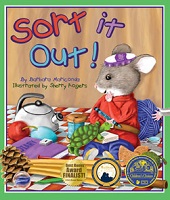
Sort it Out! lesson 1, All Things That Are Green
One filled hoop per group with its rule card beside it, and each child finishing the sentence "these are all things that ___".
2
You choose the rule: say it before you touch anything, and hold it to the end Checkpoint after this lesson
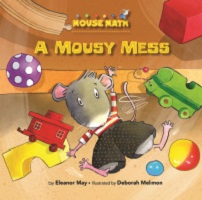
Mouse Math, a Mousey Mess lesson 2, One Rule, One Pile
A mat holding one pile, with the child's spoken rule, and the partner's guess at that rule.
3
Sort the same set again a different way — the piles come from the rule, not the objects
Mouse Math, a Mousey Mess lesson 3, Sort It Again a Different Way
Two arrangements of one tray, and each child naming an object that landed in different company the second time.
4
Read a pile backwards: name the rule that gathered it, then test the rule with a fourth object
Sort it Out! lesson 4, Guess Packrat's Rule
A three-object pile with a stated rule and a fourth object accepted or sent back by the class.
5
Sort by a test you run yourself — flat, or sticking up off the table at eye level Checkpoint after this lesson
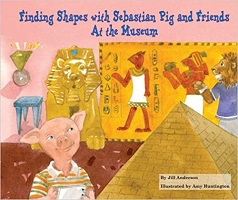
Finding Shapes with Sebastian Pig and Friends at the Museum lesson 2, Flat, or Sticking Up Off the Table
Two loops holding ten shapes, plus one classroom object the book never showed, placed and defended.
6
All the blocks or some: the word that says when the sorting is finished
Mouse Math, a Mousey Mess lesson 5, All of Them, or Only Some
Each child's spoken judgement, in the frame "___ the blocks went in the bin", with the carpet named as evidence.
Unit vocabulary
Words students say, not words they are taught to define.
rule
Children say their own rule before they sort, and say it again when a partner challenges an object.
all
Used to decide whether a pile is finished — a rule that says all has to be true of the last object as well as the first.
some
Used for the piles that are left open, so children can hear that the two words do different jobs.
pile
The set an object goes into, named by its rule rather than by where it is lying.
Materials
From the source lessons
Each day's materials are listed on that day's page below and on the source lesson itself. Nothing is duplicated here.
New for this unit
Checkpoint 1 page, one per child
Checkpoint 2 page, one per child
Performance task tray: twelve objects per pair, spanning at least three attributes, with two objects that fit more than one rule
Performance task page, one per child
Assessment plan
Daily evidence
Keep the hoop or mat photograph, or a note of the rule each child said aloud, from lessons 1, 2 and 4. Three rules said correctly about piles the child built is the evidence this unit collects.
Checkpoint 1, after lesson 2: Say the rule that made this pile
Six objects are laid out in a hoop and four are left outside it. The child says the rule the hoop obeys, then takes one object from outside and says whether it belongs, using the rule.
Book-free. The objects are the classroom's own, not the book's, and no book is open.
Look for. The child names an attribute the objects share, not a name for the objects. Hearing "they are all green" is a pass; hearing "they are toys" for a hoop of green things is not.
Checkpoint 2, after lesson 5: Sort it twice
Eight objects that differ in two ways. The child sorts them, says the rule, sweeps them back together, sorts them again by something else, and says the second rule.
Book-free. A fresh tray, no book.
Look for. Two different rules, both stated, and every object placed under each. A child who makes the same piles twice has not changed the rule.
Culminating task: Set a rule for somebody else
Each pair gets a tray of twelve objects. One child chooses a rule, says it to the teacher only, and builds the pile it makes, testing every object on the tray. The partner then names the rule out loud and tests it by handing over one object from the leftovers and saying whether it belongs and why. The pair swap and do it again with a different rule.
Collect. The two finished piles, and each child's spoken rule and challenge answer.
What it assesses. Every mathematical move in the unit is used and nothing new is introduced: choose a rule, apply it to a whole set, read a pile back to its rule, and defend one object against the rule.
Daily lesson pages
Lesson 1A pile is everything that makes one stated rule true — test every object, to the last one
Skill lessonSort it Out! · lesson 1, All Things That Are Green · Grade K · 20 minutes Sorting a set into a pile that obeys one stated attribute rule
I can
I can put every thing that follows the rule into the hoop.
Big idea
A pile is everything the rule is true of, so the last object has to be tested as carefully as the first.
Success
The hoop holds every object on the carpet that obeys the rule card, and the child can finish the sentence "these are all things that..." about it.
Connect | 5 min
First lesson. Spill the bag together and ask each group to say one way two of the things are alike, and leave the answers standing without deciding anything.
Taught on its own
Packrat spills his whole collection on the bed and his mother tells him to sort it, and the book gives the rule for every pile in words.
Source core | 20 min
Groups of three draw one of the book's rule cards, say it back before touching anything, then pick up all fifteen objects one at a time and place each inside or outside the hoop by the rule.
Collect
One filled hoop per group with its rule card beside it, and each child finishing the sentence "these are all things that ___".
Close | 5 min
Each group points at its objects one at a time and reads the hoop back with the book's sentence, and another group hands them one object from the carpet to accept or refuse.
From the source lesson: A cloth bag per group, standing in for Packrat's red checkered bag; Tray of 15 real objects per group of three, one object for each thing Packrat names: a toy turtle, a clover leaf, a green bean, a plastic egg, an acorn, a pine cone, a cherry, a marble, a ball of yarn, a blunt plastic needle, a spool of thread, a locket or small hinged tin, a metal kettle or small saucepan, a child's umbrella, a board book, a square of sandpaper, and a scrubbing brush; Rule cards, one set per group: green, hard outer shell, from a tree, round, for sewing, metal, opens and closes, scratchy; Three yarn loops or hoops per group, each big enough to hold three objects; Word cards: sort, rule, all, pile, alike
Watch for: Children stop testing once the hoop looks full. Say the rule again when a group's hands slow down, and ask them to name the last object they tested.
Lesson 2You choose the rule: say it before you touch anything, and hold it to the end
Skill lessonMouse Math, a Mousey Mess · lesson 2, One Rule, One Pile · Grade K · 20 minutes Sorting a mixed set into piles by one attribute the child names
I can
I can say my own rule first and then sort by it.
Big idea
The rule is a choice the sorter makes, and it has to be said before the sorting starts or nobody can tell whether the pile is right.
Success
The child says a rule aloud, builds a pile that obeys it, and a partner can guess the rule from the pile alone.
Connect | 5 min
Yesterday the rule came on a card. Hold up one of those cards and ask who decided it. Today the rule is theirs.
Taught on its own
Albert is told to make piles of things that are alike and is not told which likeness counts, so he picks one.
Source core | 20 min
Each child tips out a mixed tray, says one likeness aloud in the form "my rule is ___", and then tests every object against it, keeping the rule fixed even when a tempting object turns up.
Collect
A mat holding one pile, with the child's spoken rule, and the partner's guess at that rule.
Close | 5 min
Partners swap mats without speaking, each guesses the other's rule, and then tests the guess by placing one more object from the carpet.
From the source lesson: Tray of 12 to 16 mixed sorting objects per pair: counting bears, plastic links, buttons and lids in two sizes and three colors; Sorting mat, one per child, with a blank rule card taped at the top; Word cards: similar, alike, rule, same, color, shape, pile
Watch for: A child changes the rule partway through so that a favourite object can go in. Ask them to say the rule again with the object in their hand.
Checkpoint after this lesson: Say the rule that made this pile. The page is at the end of this guide.
Lesson 3Sort the same set again a different way — the piles come from the rule, not the objects
Skill lessonMouse Math, a Mousey Mess · lesson 3, Sort It Again a Different Way · Grade K · 20 minutes Sorting one set of objects two different ways and comparing the two results
I can
I can sort the same things again a different way.
Big idea
The piles come from the rule, not from the objects, so one tray makes different piles depending on what the sorter decides to look at.
Success
The child can name one object and say which pile it was in before and which pile it is in now.
Connect | 5 min
Hold up two mats from yesterday with different rules and the same kind of objects, and ask whether the objects changed.
Taught on its own
Wanda tells Albert and Leo they were not wrong, only sorting by something else.
Source core | 20 min
Pairs sort a tray by colour and say four objects aloud with the pile each is in, then sweep everything back into one heap and sort the same objects by size, using no other rule.
Collect
Two arrangements of one tray, and each child naming an object that landed in different company the second time.
Close | 5 min
Each child picks up the four objects they named and says, for each, the pile it was in and the pile it is in now, finishing with what changed.
From the source lesson: Tray of 12 to 16 mixed sorting objects per pair: counting bears, plastic links, buttons and lids in two sizes and three colors; Sorting mat, one per child, with a blank rule card taped at the top; Word cards: color, size, big, small, different
Watch for: Children tidy the first sort away before saying anything about it. Insist the four objects are named out loud while the colour piles are still standing.
Lesson 4Read a pile backwards: name the rule that gathered it, then test the rule with a fourth object
Skill lessonSort it Out! · lesson 4, Guess Packrat's Rule · Grade K · 20 minutes Naming the attribute rule that a given set of three objects all satisfy
I can
I can look at a pile and say the rule that made it.
Big idea
A finished pile carries its rule, and a rule that is right survives a fourth object.
Success
The group says a rule true of all three objects, then adds a fourth object the other groups agree with.
Connect | 5 min
Yesterday the class chose rules and built piles. Today the piles come first and the rule has to be found.
Taught on its own
Every verse of the book names three things and then says the rule that gathered them.
Source core | 20 min
The teacher builds one of the book's three-object piles without saying the rule. Groups say a rule using the book's frame, then test it by adding a fourth object from the carpet and defending it.
Collect
A three-object pile with a stated rule and a fourth object accepted or sent back by the class.
Close | 5 min
Each group builds a pile for another group to name, answering only yes or no while the other group tries rules on them.
From the source lesson: Tray of 15 real objects per group of three, one object for each thing Packrat names: a toy turtle, a clover leaf, a green bean, a plastic egg, an acorn, a pine cone, a cherry, a marble, a ball of yarn, a blunt plastic needle, a spool of thread, a locket or small hinged tin, a metal kettle or small saucepan, a child's umbrella, a board book, a square of sandpaper, and a scrubbing brush; Rule cards, one set per group: green, hard outer shell, from a tree, round, for sewing, metal, opens and closes, scratchy; Three yarn loops or hoops per group, each big enough to hold three objects; Word cards: rule, all, true, guess
Watch for: A rule that is true of only two of the three. Send the group back to the object their rule leaves out rather than telling them the answer.
Lesson 5Sort by a test you run yourself — flat, or sticking up off the table at eye level
A rule can be a test a child performs rather than a name a teacher supplies, and the same test settles an object nobody has named.
Success
Every shape is in a loop because of what the child saw at eye level, and the child can say what they saw before saying which loop.
Connect | 5 min
So far the rules have been about what a thing is. Today the rule is about what you can see when you put your chin on the table.
Taught on its own
The back of the book gives two categories and one physical test for each: flat, or sticking up from the surface it is sitting on.
Source core | 20 min
Pairs put each of ten shapes on the table, drop their chin to the table top, look along it, and place the shape in the loop for shapes that stick up or the loop for shapes that lie flat.
Collect
Two loops holding ten shapes, plus one classroom object the book never showed, placed and defended.
Close | 5 min
The teacher hands each pair an object that is not on the tray. The pair runs the eye-level test, places it, and says what they saw.
From the source lesson: A tray of ten wooden or plastic shape solids and flat shape tiles per pair: circle, oval, square, rectangle and triangle tiles, and a sphere, cone, cube, cylinder and pyramid solid; A flat table or desk surface each pair can look at from eye level; Two large loops of yarn or two hoops laid on the floor; A ball, a party hat, a block box and a tube from the classroom, one set per pair; Word cards: flat, solid
Watch for: Children sort by the shape's name instead of by looking. Cover the tray and hand the shapes over one at a time so the name arrives after the look.
Checkpoint after this lesson: Sort it twice. The page is at the end of this guide.
Lesson 6All the blocks or some: the word that says when the sorting is finished
Math through the readingMouse Math, a Mousey Mess · lesson 5, All of Them, or Only Some · Grade K · 20 minutes Children carry out Wanda's tidying twice, once under the word all and once under the word some, and say which floor the book's sentence describes.
I can
I can tell whether the sorting is finished.
Big idea
All means keep going until there are none left; some leaves the job open, and the floor shows which word was obeyed.
Success
The child says all or some about a floor somebody else built and points at what on the carpet made them say it.
Connect | 5 min
Every pile so far has been finished. Today half the room will be told to stop early, and the other half will have to work out who did.
Taught on its own
Wanda's instructions are made of words that fix how much: only four piles, everything sorted by kind, all the blocks in the block bin.
Source core | 20 min
Half the pairs move blocks into the bin until no block is left on the carpet; the other half move four and stop. Pairs then visit a floor they did not build and judge which word it obeys, naming the leftovers as the reason.
Collect
Each child's spoken judgement, in the frame "___ the blocks went in the bin", with the carpet named as evidence.
Close | 5 min
Every pair returns to a some floor and turns it into an all floor, saying the book's sentence together as the last block goes in.
From the source lesson: Shared heap of 20 to 24 objects in four kinds: small blocks, marbles, small balls and toy train cars; One labelled block bin and one labelled marble jar per pair; A sentence card reading All the blocks went in the block bin, with a second card that covers All and shows Some
Watch for: A child guesses the word from how tidy the floor looks. Ask what is still on the carpet before the word is accepted.
Culminating performance task
Set a rule for somebody else
Each pair gets a tray of twelve objects. One child chooses a rule, says it to the teacher only, and builds the pile it makes, testing every object on the tray. The partner then names the rule out loud and tests it by handing over one object from the leftovers and saying whether it belongs and why. The pair swap and do it again with a different rule.
Collect. The two finished piles, and each child's spoken rule and challenge answer.
What it assesses. Every mathematical move in the unit is used and nothing new is introduced: choose a rule, apply it to a whole set, read a pile back to its rule, and defend one object against the rule.
Teacher key and rubric
Key
Checkpoint 1: any attribute rule the six objects share and the four leftovers do not. The challenge object either satisfies it or does not; both answers are correct if the child names the attribute.
Checkpoint 2: any two different attributes, with all eight objects placed under each. Colour then size is the commonest pair; kind then size is equally correct.
Task: no fixed answer. The rule is correct if every object on the tray obeys it or is correctly left out, and the partner's named rule is correct if it admits the same objects.
Rubric
Strand
Secure looks like
Developing
Not yet
Representation
The pile holds every object that obeys the rule and no object that does not.
Does it with the arrangement in front of them.
Produces an answer without the arrangement or the reason.
Calculation
Every object on the tray was tested, including the ones placed last.
Does it with the arrangement in front of them.
Produces an answer without the arrangement or the reason.
Meaning
The rule names an attribute of the objects, not a name for them.
Does it with the arrangement in front of them.
Produces an answer without the arrangement or the reason.
Explanation
The child defends one object by saying the rule about that object, rather than pointing at the pile it is lying in.
Does it with the arrangement in front of them.
Produces an answer without the arrangement or the reason.
Print-ready student pages
These three pages print one to a sheet. Everything above them is the teacher guide.
Checkpoint 1 · Kindergarten
Say the rule that made this pile
NameDate
Look at the things inside the hoop. Say the rule they all follow. Then take one thing from outside the hoop. Does it belong? Say the rule about that one thing.
Checkpoint 2 · Kindergarten
Sort it twice
NameDate
Sort your tray. Say your rule out loud. Now push them all back together and sort them again a different way. Say your second rule.
Culminating task · Kindergarten
Set a rule for somebody else
NameDate
Pick a rule and do not say it. Build the pile it makes, and test every single thing on the tray. Your partner will look at your pile and say what your rule was. Then hand them one more thing and ask whether it belongs.
Teacher planning and handoff
Children who could not read a pile back to its rule in lesson 4 will need the sentence frame again in the counting unit, where a number has to be attached to what was counted.
The all-or-some distinction from lesson 6 comes back in Grade 1's tally work, where one mark must stand for one thing.
This unit uses only three books; the other Kindergarten sorting lessons in the catalogue were left out because they repeat these moves.