You are the teacher.
You know your students and what they need today.
Use what works. Change what doesn’t. Make it yours.
Most ancient-history units run one civilisation at a time and never get to the comparison. This set inverts that: two graphic novels put a class inside the two most famous structures on earth, one book shows that the alphabet they are reading with is itself an ancient invention, and then three books make the same argument from three continents — that these peoples invented what we still use.
Why do we call some of this history and the rest of it just how things are?
This curated reading sequence is not itself a region-specific standards claim. Review the documentary status on any linked lesson plan.
The sequence
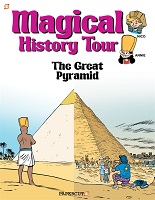
Magical History Tour Volume 1: The Great Pyramid
Book ID 7801Nico and Annie tour the Great Pyramid and ask the questions a class would ask — how big, how built, what for. The comic format carries a genuinely dense history, and it is the lowest-friction way into an ancient world.
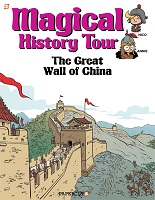
Magical History Tour Volume 2: The Great Wall of China
Book ID 7802The Great Wall through the Qin, Han, Ming, Yuan and Qing — and the fact that what the Wall meant changed with every one of them. Read straight after the pyramid: same format, same narrators, and the comparison is set up for you.

Ox, House, Stick: The History of Our Alphabet
Book ID 6142Every letter from A to Z traced back through Roman, Greek, Phoenician, Sinaitic and Egyptian forms — ox, house, stick. Forty-five minutes and the highest level here, but it makes the point nothing else can: the class is using an ancient invention to read about ancient inventions.

Africans Thought of It
Book ID 5514African innovations in farming, architecture, metalworking, medicine and music. The first of three books with the same structure and the same claim, which is why they belong together and in a row.
Latin Americans Thought of It
Book ID 5520Latin American inventions, foods, dances, sports and engineering, and how far they travelled. By the second book of the trio a class starts predicting what kind of thing will be on the next page — which is the comparison doing its work.
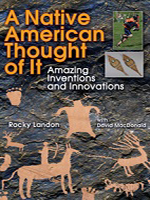
A Native American Thought of It
Book ID 5516Native innovations in shelter, hunting, food, medicine, transport, communication and games — many of them still in daily use in North America. Placed last because it is the hardest for a class to hold at a distance.
Also in the collection
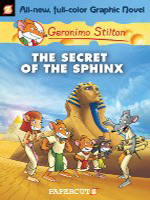
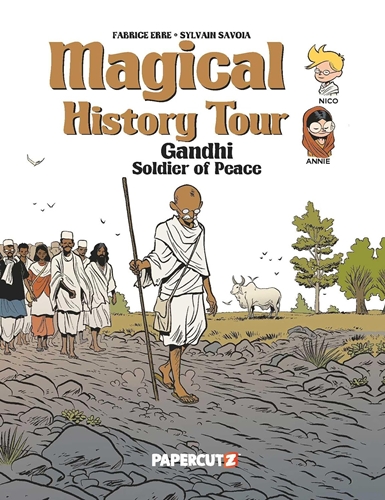

Books 4, 5 and 6 are a trio and lose most of their force apart. Same structure, same claim, three continents. One of them reads as a list of facts; three in a row read as an argument about who gets called an inventor.
This is the highest-level set in the collection — Ox, House, Stick is TL14 and forty-five minutes. It is built for grades 3–6 and for reading in parts, not for a single sitting.