TumbleTA · Text Set
Text set ID TTA-TS-042

Art, Artists and Seeing

Making a mark, entering a museum, studying an artist, and looking again all change what counts as seeing.

6 core booksGrades 1-4Catalogue reviewed

You are the teacher.

Use what works. Change what doesn’t. Make it yours.

Teaching purpose

Students move from making art to looking at art, then to considering the artist's life, point of view, and choices. The sequence treats art as both creation and interpretation, with room for uncertainty, judgment, and revision.

Recommended grade band: Grades 1-4

The Big Question

What changes when we look at art like an artist?

Source and confidence boundary

Core title IDs, authors, formats, and reading levels shown here were rechecked against the updated Book_List.xlsx. Descriptive framing was tightened during this audit; where the catalogue does not provide a reading level, none is invented.

Standards status

This curated reading sequence is not itself a region-specific standards claim. Review the documentary status on any linked lesson plan.

Teacher guide (PDF)

Before reading

Ask students to distinguish three actions: making, looking, and interpreting. A person can do all three, but they are not the same job.

Core reading sequence

1
Cover of The Dot
MAKE A MARK

The Dot

Book ID 4178
Peter H. Reynolds
Story BookReading level 1.9Catalogue reviewed

Why it belongs: A reluctant maker begins with one small mark and discovers that creating can start before confidence arrives.

Unique contribution: It gives the set its simplest entry: art begins with an act of making.

AskWhen does the dot stop being just a dot?
2
Cover of Art's Supplies
NOTICE THE MATERIALS

Art's Supplies

Book ID 4137
Chris Tougas
Story BookReading level 1.9Catalogue reviewed

Why it belongs: Art materials become part of a playful story world, foregrounding the tools artists choose and use.

Unique contribution: It moves attention from confidence to medium and materials.

AskHow can the tool or material change what an artist is able to make?
3
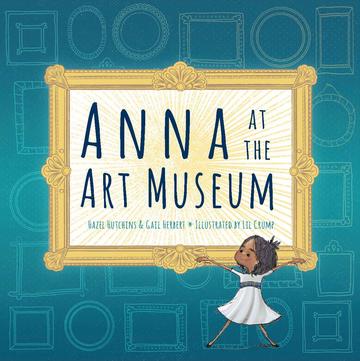
Cover of Anna at the Art Museum
LEARN TO LOOK

Anna at the Art Museum

Book ID 7716
Hazel Hutchins and Gail Herbert
Story BookCatalogue reviewed

Why it belongs: A child's museum visit connects art appreciation, imagination, rules, and a new experience.

Unique contribution: It shifts the sequence from making art to encountering art made by others.

AskWhat does Anna notice after she begins looking differently?
4
Cover of Monet Paints a Day
FOLLOW AN ARTIST

Monet Paints a Day

Book ID 5497
Julie Danneberg
Non FictionReading level 4.8Teacher read-aloudCatalogue reviewed

Why it belongs: A biographical art title places Monet, nature, and the work of painting inside a specific historical life.

Unique contribution: It adds process and context: an artwork comes from a person working in a place and time.

AskWhat does knowing how an artist worked add to the way we see the finished art?
5
Cover of The Artist and Me
QUESTION THE VIEWER

The Artist and Me

Book ID 7705
Shane Peacock
Story BookReading level 4.2Shared readingCatalogue reviewed

Why it belongs: A story connected with an artist asks readers to think about art appreciation, judgment, bullying, dreams, and truth.

Unique contribution: It complicates the idea that viewers automatically recognize or welcome what is new.

AskWhat can a viewer get wrong about an artist or artwork?
6
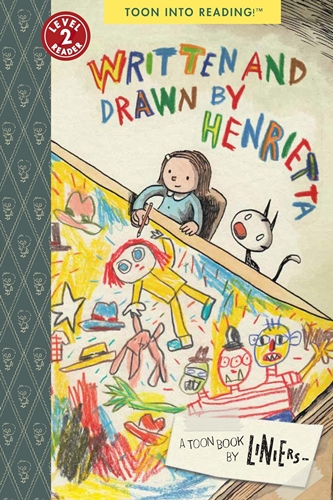
Cover of Written and Drawn by Henrietta (Graphic Novel)
SYNTHESIZE

Written and Drawn by Henrietta (Graphic Novel)

Book ID 7999
Liniers
Graphic NovelReading level 2.3Catalogue reviewed

Why it belongs: Henrietta makes a graphic story in which drawing, narration, imagination, and revision are visible together.

Unique contribution: It reunites making and seeing: the artist is also the first viewer and critic of the work.

AskHow does Henrietta use pictures to discover what her story should become?

Optional extensions

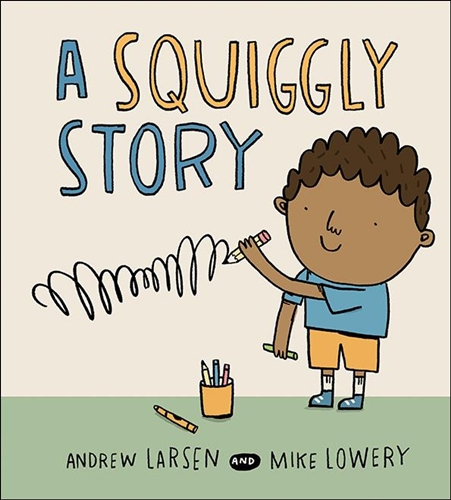
Cover of A Squiggly Story
A Squiggly StoryBook ID 8391Andrew Larsen · Catalogue reviewedWhy optional: Useful for connecting early mark-making with storytelling and self-expression.

Selection note: The core sequence is limited to six titles so each book has a distinct instructional job. Optional titles should extend the question rather than merely add more books on the same topic.

Across-the-set teaching moves
  1. Use the verbs make, notice, interpret, judge, and revise precisely.
  2. Ask what evidence in an image supports an interpretation.
  3. Compare an artist's intention with a viewer's response without assuming they must match.
  4. Notice how medium and format shape what can be expressed.
  5. Return to the same image twice and ask what changed in the viewer, not the artwork.
Book-to-book connections
  • The Dot + Art's Supplies: Compare confidence to create with the materials used to create.
  • Anna at the Art Museum + Monet Paints a Day: Compare the viewer's experience with the artist's process.
  • The Artist and Me + Written and Drawn by Henrietta: Compare being judged by others with judging and revising one's own work.
Culminating discussion

Using three books, explain how making art and seeing art are connected but not identical.

Teacher look-fors
  • Uses evidence from an artwork, action, or artist choice.
  • Distinguishes maker and viewer perspectives.
  • Explains how context or materials can change interpretation.
  • Allows more than one defensible interpretation when evidence supports it.
Existing-set duplication check

Closest existing Text Set: Perspectives and Point of View

What overlaps: Both ask students to notice that different people can see the same thing differently.

Why this set is genuinely different: Perspectives and Point of View focuses broadly on narrative viewpoint; this set centers visual creation, art appreciation, and the relationship between artist and viewer.
Return to TumbleBookLibrary home