Camouflage, heat, cold, body regulation, and behavior connect an animal's traits to the problem of survival.
6 core booksGrades 3-5Catalogue reviewed
You are the teacher.
Use what works. Change what doesn’t. Make it yours.
Teaching purpose
Students compare several ways animals survive rather than treating adaptation as a list of unusual traits. The revised sequence removes the much harder Animal Snoops title and keeps the instructional demand elementary: what feature or behavior helps, under what conditions, and how?
Recommended grade band: Grades 3-5
Reading routes
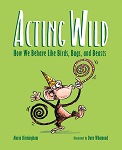
Two titles sit above the independent range for this band and are marked in the sequence: Too Hot? Too Cold? as shared reading, Acting Wild as a teacher read-aloud.
The Big Question
How does a feature or behavior help an animal survive?
Source and confidence boundary
Core title IDs, authors, formats, and reading levels shown here were rechecked against the updated Book_List.xlsx. Descriptive framing was tightened during this audit; where the catalogue does not provide a reading level, none is invented.
Standards status
This curated reading sequence is not itself a region-specific standards claim. Review the documentary status on any linked lesson plan.
Introduce the causal frame: This animal has or does ____. That helps because ____. Require the second part so a trait is never called an adaptation without explaining its function.
Why it belongs: A graphic format brings unusual animal behaviors together and supports cross-species comparison.
Unique contribution: It closes by asking students to connect behavior to function across very different animals.
AskWhich behavior looks strangest until you explain the survival problem it solves?
Optional extensions
Animal Adaptations (Playlist)Book ID 5509Various Authors · Catalogue reviewedWhy optional: A multimedia extension after students have learned the feature -> function -> survival chain.
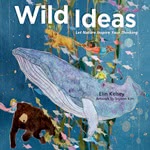
Wild IdeasBook ID 7072Elin Kelsey · Catalogue reviewedWhy optional: An extension from animal problem solving to the ways people can learn from animal strategies.
Selection note: The core sequence is limited to six titles so each book has a distinct instructional job. Optional titles should extend the question rather than merely add more books on the same topic.
Across-the-set teaching moves
Always complete the chain: feature or behavior -> function -> survival problem.
Sort examples by problem solved: temperature, hiding, food, predators, movement, or sensing.
Compare different animals solving similar problems in different ways.
Distinguish a body feature from a behavior when the text supports it.
Do not call every interesting animal trait an adaptation without evidence of function.
Book-to-book connections
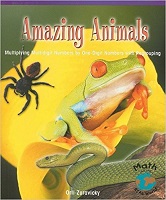
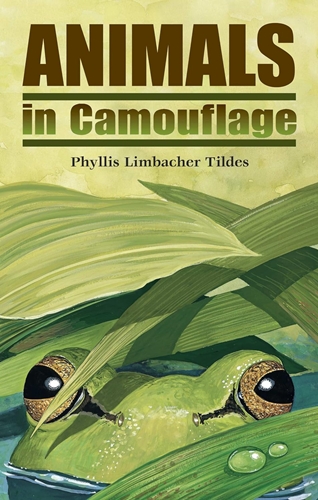
Amazing Animals + Animals in Camouflage: Move from a broad wonder list to one clearly explained adaptation.
Do Frogs Drink Hot Chocolate? + Do Lizards Eat Ice Cream?: Compare strategies for surviving cold and heat.
Too Hot? Too Cold? + Acting Wild: Move from one environmental pressure to a broader comparison of behaviors and survival functions.
Culminating discussion
Choose three animals from three books. For each, explain the survival problem, the feature or behavior, and how it helps.
Teacher look-fors
States a causal relationship, not just a trait.
Names the environmental or survival problem being solved.
Compares two different solutions to a similar problem.
Avoids using adaptation as a synonym for interesting fact.
Existing-set duplication check
Closest existing Text Set: Animals Up Close
What overlaps: Both focus closely on animal bodies and behavior.
Why this set is genuinely different: Animals Up Close emphasizes observation and detail; this set explicitly organizes those details by survival function and causal explanation.