From picture books and early readers to full-length novels, relationships keep changing what characters can understand, feel, and become.
6 core booksGrades 2-5Catalogue reviewed
You are the teacher.
Use what works. Change what doesn’t. Make it yours.
Teaching purpose
Students trace a recurring concern across Kate DiCamillo's work while also noticing how that concern changes with form and audience. The sequence deliberately spans a picture book, two early-reader series worlds, a middle-grade novel, and two more demanding novels. The instructional question is no longer how Mercy Watson or Bink & Gollie work as series; those now have their own sets. Here, the focus is what persists when DiCamillo moves from short comic forms into longer fiction shaped by loneliness, loyalty, loss, courage, and mercy.
Recommended grade band: Grades 2-5
The Big Question
What stays recognizable in DiCamillo's treatment of relationships when the form, tone, and audience change?
Source and confidence boundary
Titles, book IDs, authors, formats, and listed reading levels were checked against the updated TumbleBookLibrary Book_List.xlsx. Grade-band recommendations are instructional recommendations for the set, not catalogue claims about every individual title.
Standards status
This curated reading sequence is not itself a region-specific standards claim. Review the documentary status on any linked lesson plan.
Make a two-column chart: 'What the character needs at the beginning' and 'What another character makes possible.' Add a third note after each book: 'What does this form let DiCamillo do differently?'
Story BookReading level 2.5collaborative titleCatalogue reviewed
Why it belongs: Two very different friends negotiate taste, independence, and affection without becoming the same person.
Unique contribution: It contributes one compact early-reader example of relationship-through-disagreement; the dedicated Bink & Gollie set studies the series mechanics in depth.
AskWhat do Bink and Gollie accept about each other without changing?
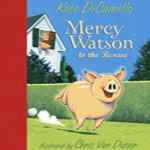
Why it belongs: Mercy's appetite and misunderstandings drive comedy, but the household depends on affection and loyalty.
Unique contribution: It contributes a comic series world in which care is expressed through action; the dedicated Mercy Watson set studies repetition and variation across the whole series.
AskWhich actions show care even when the characters are being ridiculous?
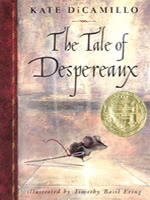
Why it belongs: Several lonely characters' stories intersect around courage, hurt, forgiveness, and the possibility of acting differently.
Unique contribution: It closes with multiple relationship arcs and moral choices, showing the fullest version of the set's recurring concern.
AskWhich character most changes what another character believes is possible?
Optional extensions
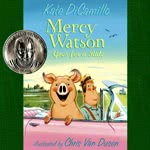
Mercy Watson Goes for a RideBook ID 6141Kate DiCamillo · Catalogue reviewedWhy optional: Use when comparing how a second Mercy story varies a familiar comic relationship pattern; the dedicated Mercy Watson set is the better home for extended series study.
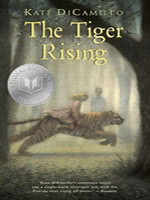
Tiger Rising (EBook)Book ID 6578Kate DiCamillo · Catalogue reviewedWhy optional: A Grades 4-5 extension for grief, secrecy, friendship, and the cost of keeping pain contained.
Selection note: The core is intentionally cross-form rather than series-complete. Mercy Watson and Bink & Gollie appear here as compact examples of DiCamillo's relationship writing; their dedicated sets are the place to study each series in depth.
Across-the-set teaching moves
Track what each main character lacks before a relationship develops.
Compare what a short picture/early-reader form can establish quickly with what a novel can develop over time.
Notice recurring outsiders, unusual animals, and characters who do not fit expectations.
Compare comic relationships with relationships shaped by grief, loss, or moral choice.
Use the longer novels as read-alouds or selected excerpts rather than implying independent Grade 2 reading.
Book-to-book connections
Good Rosie + Bink and Gollie: Compare finding a friend with maintaining a friendship between very different people.
Mercy Watson + Because of Winn-Dixie: Compare two animals whose presence reorganizes the human relationships around them - first in comedy, then across a broader community.
Edward Tulane + Despereaux: Compare longer forms in which love, courage, and mercy require sustained change over time.
Culminating discussion
Use three DiCamillo texts from different forms or reading demands to explain what remains consistent in her treatment of relationships and what the longer form allows her to develop more fully.
Teacher look-fors
Identifies the character's initial emotional need.
Explains a relationship as a cause of change, not merely a plot event.
Compares how short and long forms develop relationship change differently.
Uses evidence from both accessible early-reader/picture-book work and longer fiction.
Existing-set duplication check
Closest existing Text Set: Mercy Watson: How a Series Repeats and Changes; Bink & Gollie: Two Voices, One Friendship
What overlaps: Two core titles now anchor their own dedicated series studies, so all three sets examine relationship patterns in DiCamillo-associated work.
Why this set is genuinely different: The Mercy Watson and Bink & Gollie sets study how individual series work. This set deliberately crosses forms and reading demands to ask what persists in DiCamillo's treatment of loneliness, connection, mercy, courage, and change from short comic texts into full-length novels.