You are the teacher.
You know your students and what they need today.
Use what works. Change what doesn’t. Make it yours.
Money is two subjects wearing one name — arithmetic, and the decision about what to do with what you have. This set does the arithmetic first, in three books, and then spends three more on wanting something, earning toward it, and finally on where the money goes after it leaves your hand.
You have some. What decides where it goes?
This curated reading sequence is not itself a region-specific standards claim. Review the documentary status on any linked lesson plan.
The sequence

The Coin Counting Book
Book ID 91A rhyming chant through pennies, nickels, dimes, quarters, half-dollars and dollars, showing that the same amount can be built several ways. The chant is the mechanism — a K–2 class ends up knowing the values by rhythm before they know them as facts.
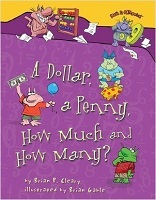
A Dollar, a Penny, How Much and How Many
Book ID 530A hundred pennies, ten dimes and four quarters, all making the same dollar. Book 1 says it in passing; this one makes it the whole question, which is the first genuinely mathematical idea in the set.
Jenny Found a Penny
Book ID 2609Jenny finds and earns coins working toward a purchase at the dollar store, and discovers it is harder than it looked. The arithmetic is the same as book 2; what is new is that it is now in service of wanting something.
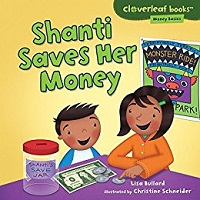
Shanti Saves Her Money
Book ID 514Shanti wants to ride the Monster at Fun Park, and the whole family has to work out what tickets and extras actually cost. Saving stops being a virtue and becomes a calculation with a deadline.
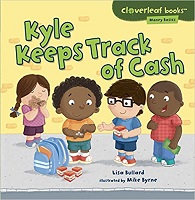
Kyle Keeps Track of Cash
Book ID 512Kyle's club needs to pay for a camping trip, so they make a budget and sell candy — and he has to add cash, make change and keep a record. The first book here where money comes in as well as going out.
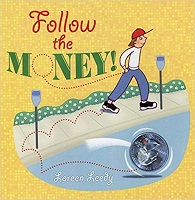
Follow the Money!
Book ID 566One quarter followed through a mint, a bank, a shop, a till, a piggy bank, a vending machine, a charity box, a pet shop and a yard sale. The set ends by showing that the coin's story does not stop when a child spends it.
Also in the collection
The set turns at book 3. Books 1 and 2 are arithmetic and can be taught with no story at all. From Jenny Found a Penny on, every book has a child who wants something, and the sums only matter because of that. Skipping to the second half leaves a class doing feelings without fluency; stopping after the first leaves them counting for no reason.
Most of these are from the TumbleMath collection and carry no reading level or run time, so plan them by page count rather than by minutes.