You are the teacher.
You know your students and what they need today.
Use what works. Change what doesn’t. Make it yours.
A forest is the easiest ecosystem for a child to stand inside and the hardest to see whole. This set builds it from one acorn upward, teaches the class to read a tree in winter when the leaves are gone, then goes underground to the organism that connects them all.
Is a forest a lot of trees, or one thing?
This curated reading sequence is not itself a region-specific standards claim. Review the documentary status on any linked lesson plan.
The sequence
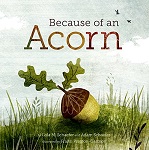
Because of an Acorn
Book ID 7387A single acorn becomes trees, birds, seeds, flowers, fruit, animals and finally people. The set's entire claim, stated at TL02 before anyone defines a word — and the back matter names ecosystem, food chain and erosion for the teacher.
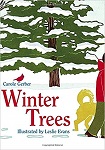
Winter Trees
Book ID 7416A winter walk identifying trees by shape, bark, twigs, buds and needles. Winter is the right season for this because the obvious clue is missing — the class has to look at structure, which is what the rest of the set depends on.
Trout Are Made of Trees
Book ID 4953Leaves into a stream, bacteria and algae, insects, trout. The forest stops at the water's edge and its effects do not, which is the first time in the set that a tree is doing something at a distance.
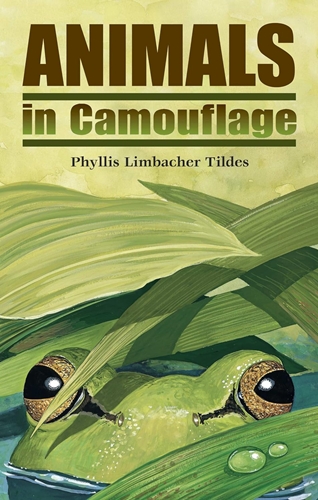
Animals in Camouflage
Book ID 4541Camouflage riddles across snow, leaves, flowers and seaweed — the leaf insect and the tree frog belong to this set specifically. The forest becomes a place with layers, each with something in it you cannot see.
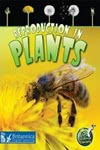
Reproduction in Plants
Book ID 6933Spores, cones, bulbs, tubers, runners, rhizomes and seeds built to fly. The mechanism behind the acorn in book 1, now named and multiplied — and the highest level in the set, so it needs the four books before it.
Also in the collection
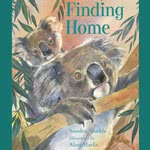
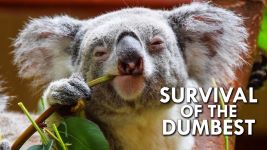
Animalogic — 12 short videos
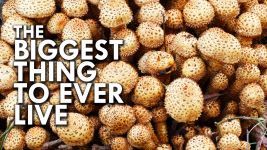


The extra is the answer. The set asks whether a forest is many things or one, and the class will mostly answer 'many'. Then Humongous Fungus shows a single organism running underneath the whole thing, connecting trees to each other for thousands of years. Hold it back until after book 5 and play it as the reply.
Winter Trees is the one to take outdoors. It only needs a walk and a bare tree, and the identification it teaches — shape, bark, buds — works in any schoolyard in the northern half of the year.