Repeated language, accumulating characters, recurring episodes, and circular returns make structure visible.
6 core booksGrades K-234 min across 6 timed titlesCatalogue-metadata reviewed
You are the teacher.
You know your students and what they need today.
Use what works. Change what doesn’t. Make it yours.
Teaching purpose
Students compare verified repetitive, cumulative, and circular structures rather than collecting books that happen to contain a refrain. The sequence moves from a familiar chain to accumulating action, patterned chase, collaborative cumulative tale, repeated problem episodes, and a circular return.
Recommended grade band: Grades K-2
The Big Question
What does repetition help a reader notice or predict?
Source and confidence boundary
This set was built from TumbleBookLibrary catalogue metadata, not full-text review. All 6 core titles are publication-eligible: 6 HIGH and 0 MEDIUM confidence; no LOW-confidence title is included.
Tell students that repetition can do more than make a book easy to join. It can mark sequence, increase tension, invite prediction, show accumulation, or return a story to its beginning.
Gr K-3Concept / WordlessTL08AD460L4 minMetadata confidence HIGH
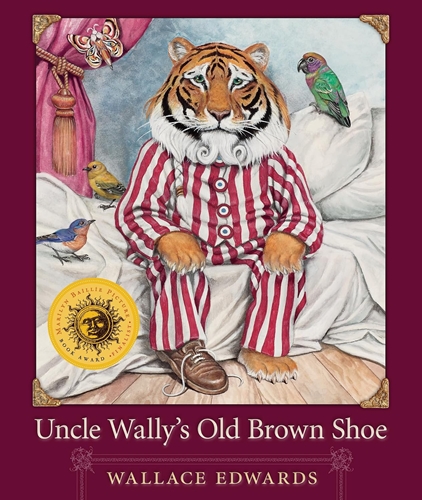
Why it belongs: An old shoe begins a cumulative chain that loops through dreamlike events and returns to the shoe.
Unique contribution: It combines accumulation with circular structure, requiring students to track both forward sequence and return.
AskHow does the ending make the beginning mean something new?
Optional extensions
The Wheels on the BusBook ID 6605Traditional · Metadata confidence MEDIUMWhy optional: Its repeated motions and refrains are highly accessible, but missing catalogue grade data makes it better as a teacher-selected oral-language extension.
Retro Radio RainbowBook ID 7916Aaron Zevy · Metadata confidence HIGHWhy optional: The repeated colour-identification frame supports prediction, but its concept-book purpose is narrower than the story structures in the core.
Across-the-set teaching moves
Mark exactly what repeats and exactly what changes.
Pause before a repeated unit and ask for an evidence-based prediction.
Classify the structure as chain, cumulative, repeated episode, refrain, or circular return.
Ask how repetition changes tension, memory, participation, or meaning.
Compare an ending that breaks a pattern with one that completes it.
Book-to-book connections
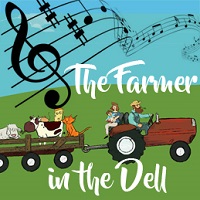
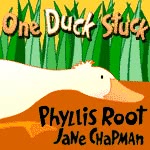
The Farmer in the Dell + One Duck Stuck: Compare a chain of participants with helpers whose accumulation solves a problem.
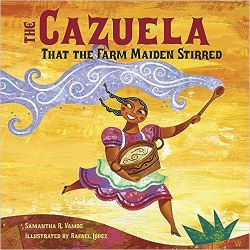
Marsupial Sue Presents: The Runaway Pancake + The Cazuela That the Farm Maiden Stirred: Compare a repeated boast in a chase with repeated additions toward a communal result.
Mud Puddle + Uncle Wally's Old Brown Shoe: Compare changing responses in repeated episodes with a story that circles back to its beginning.
Culminating discussion
Choose two different structures. What does repetition let the reader predict in each, and what important change would be missed if we noticed only the repeated words?
Teacher look-fors
Names both the repeated element and the changing element.
Makes a prediction from an established pattern.
Distinguishes cumulative, episodic, and circular structures.
Explains a purpose for repetition beyond entertainment.
Existing-set duplication check
Closest existing Text Set: Poetry and wordplay
What overlaps: Both attend to rhythm, repeated language, and sound.
Why this set is genuinely different: The protected set studies sound and word choice; this set explicitly compares how repetition organizes narrative structure and prediction.